Fri, 09 Oct 2026 16:31:07 +0000 Motor1.com Car News, Reviews, Owner Tips and Information | Motor1.com https://www.motor1.com/ https://www.motor1.com/reviews/811101/used-lexus-lc-500-buying-guide/ Thu, 08 Oct 2026 14:00:00 +0000 Why A Used Lexus LC 500 Is A Great Buy A 471-hp naturally aspirated V8, concept-car styling, and Lexus reliability make the LC 500 one of the most compelling coupes on the market.
There aren't many modern cars like the Lexus LC 500. Even when it debuted nearly a decade ago, the LC looked like something you'd find on a concept-car stand, not a showroom.
Somehow, Lexus put the LC into production and dropped a naturally aspirated 5.0-liter V8 under the hood for good measure. The result was a 471-horsepower grand tourer with rear-wheel drive, a 10-speed automatic, a beautifully finished interior, and one of the best exhaust notes available for nearly six figures.
Sure, it was pricey when new; the 2018 LC 500 started at $92,000 before destination, and a well-optioned example easily pushed past $100,000. Today, though, if you know where to look, you might be able to find one for closer to $60,000.
Volvo V60 Polestar: Why Buy?
A Used Audi RS3 Is A 400-HP Bargain. Here's Why You Should Buy One
A Used Mercedes-AMG S65 Doesn't Make Sense. Here's Why You Should Buy One Anyway
A Used Lexus LS 500 Is A Luxury Bargain. Here's Why You Should Buy One
Why Buy The Lexus LC 500?
There's no doubt about it. That engine is sublime.
The LC 500 uses Lexus's 5.0-liter naturally aspirated V8, producing 471 horsepower and 398 pound-feet of torque. It revs to 7,300 rpm, drives the rear wheels through a 10-speed automatic, and launches the coupe to 60 miles per hour in about 4.4 seconds.
Those numbers aren't outrageous by modern standards; plenty of newer performance cars make significantly more power. But outright speed misses the point here when we're talking about Japan's own version of the Chevrolet Corvette.
The LC's V8 delivers power progressively rather than dumping a huge wave of torque into the rear tires. You have to rev it, and you're rewarded with one of the best-sounding engines Lexus has ever built. This one is only outclassed by the near-mythical LFA.
When we reviewed the LC in 2018, we said it "bridges the gap somewhere between everyday supercar and capable touring car."
'Even in the most crowded parking lot, your eyes will be immediately drawn to the LC’s dramatic concept car-like styling.' 'The seats are big and comfortable, and the cabin, while tight, doesn’t have the same cockpit-style feel as some of its rivals, making it considerably more comfortable to drive daily. ' 'With a strong V8 and gorgeous interior, the LC is as comfortable as it is capable.'
How Much Is A Used Lexus LC 500?
Kelley Blue Book currently lists a 2018 Lexus LC 500 at approximately $61,350 for a typical dealer purchase. KBB puts the same car's private-party value at roughly $57,640 in good condition. Since this is more of an enthusiast car, prices will vary.
Remember, this was a car with an original base price of $92,000, and Motor1's 2018 test car stickered at $104,380 after options. Prices don't rise dramatically as you move through the first few model years, either.
2018 LC 500: $61,350 2019 LC 500: $63,100 2020 LC 500: $66,900 2021 LC 500: $75,900
That makes the early LC 500 especially interesting. You're getting something that still looks like a six-figure exotic for roughly the price of a well-equipped new luxury crossover.
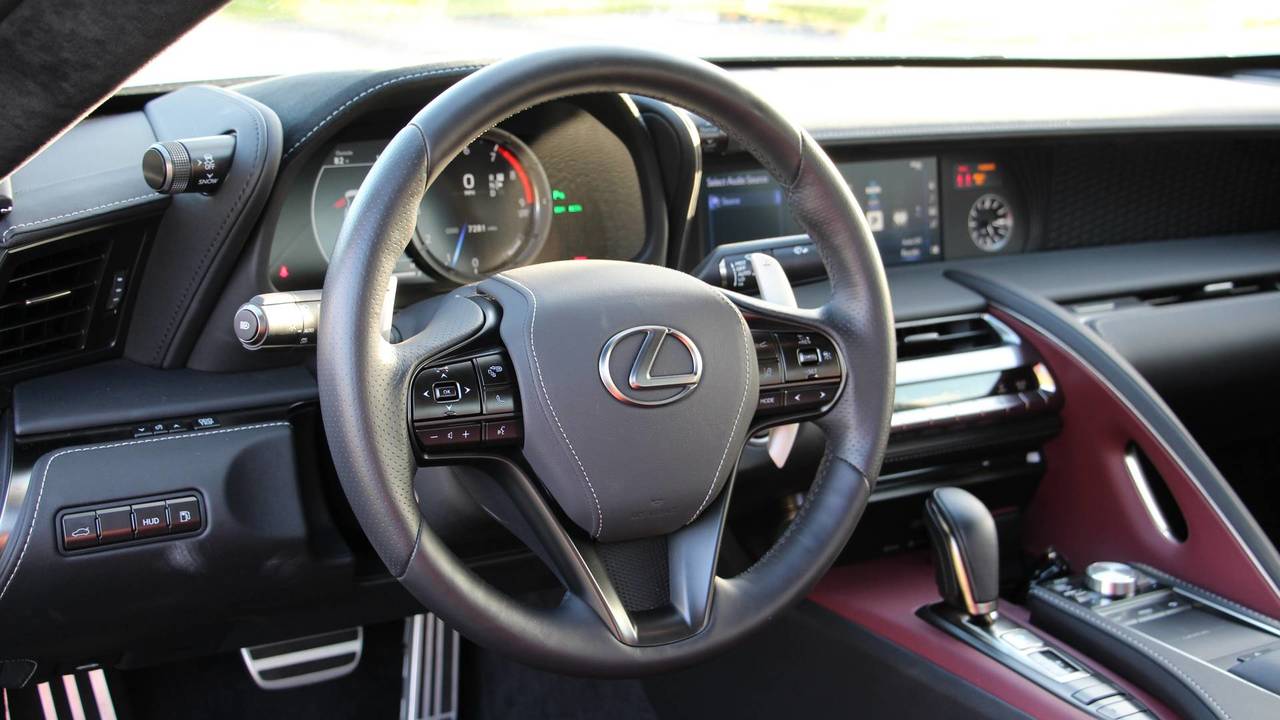
Which Lexus LC 500 Should You Buy?
For maximum value, the 2018 LC 500 is the one I'd buy.
The fundamentals barely changed throughout the LC's production run. The 2018 car already came with the 471-hp V8, 10-speed automatic, adaptive suspension, rear-wheel drive, and essentially the same dramatic styling that carried the LC through its final model year.
And at around $60,000, according to KBB, it's among the cheapest ways to get into a V8 LC.
But there are reasons to spend more. For 2021, Lexus removed roughly 22 pounds of unsprung weight using lighter suspension components, revised the suspension tuning for a smoother stroke and sharper turn-in, altered the transmission programming, and added Active Cornering Assist and Android Auto as standard features.
In 2024, Lexus finally ditched the LC's frustrating touchpad-based infotainment interface in favor of its newer Lexus Interface system and a standard 12.3-inch touchscreen. It's a substantial usability improvement, but you'll pay considerably more for one.
For pure value, stick with 2018 through 2020.
What Could Go Wrong?
This is where the LC 500 has a major advantage over many similarly priced European grand tourers. It's a Lexus. Still, there are a few things worth checking.
Early LC 500s were included in multiple fuel-pump recalls. One involved the high-pressure fuel pumps, which could develop a damaged cover, potentially causing fuel leaks. The remedy involved replacing the pumps with improved components. Early cars were also included in Toyota's much broader low-pressure fuel-pump recall.
Owners have also reported failures involving the LC's trick pop-out exterior door handles. The actuator can fail, leaving a handle unable to extend or retract correctly. It's frequently discussed among LC owners, particularly on early cars.
The usual performance-car checks apply, too. Twenty- or 21-inch tires are expensive, carbon-fiber body components won't be cheap to replace, and large brakes can turn an otherwise routine service into a four-figure bill.
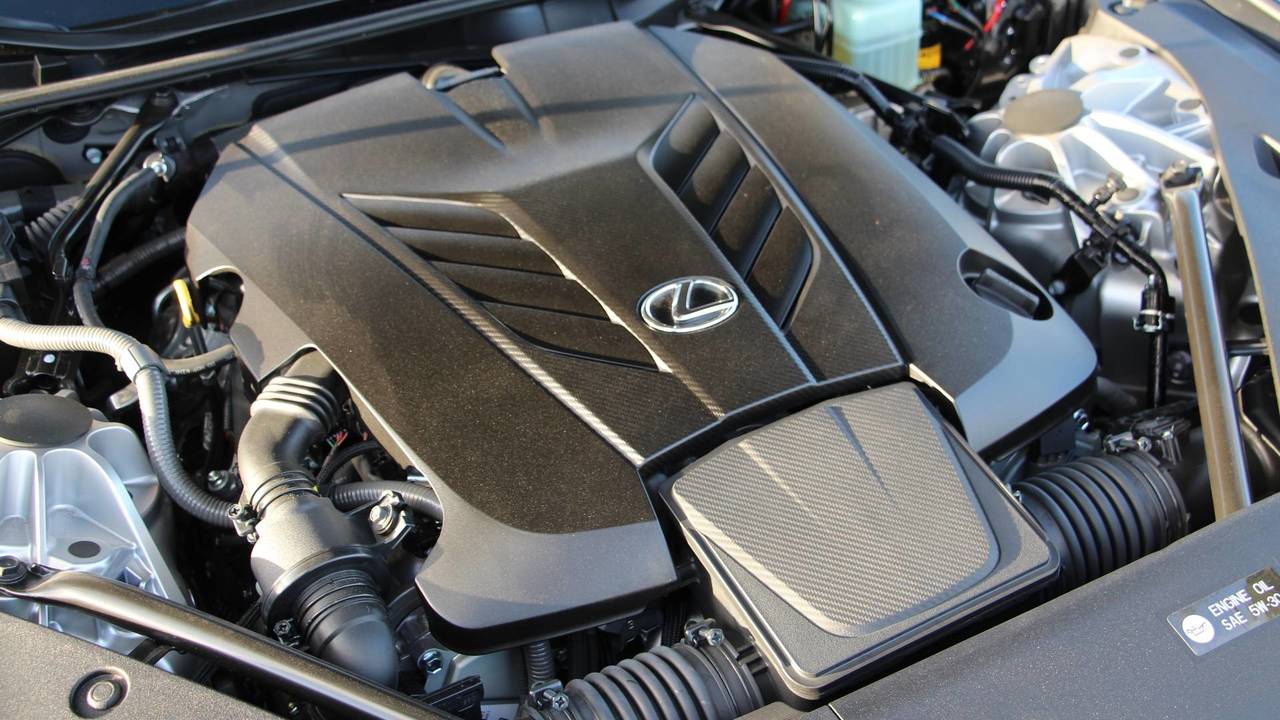
What Are The Alternatives?
There are plenty of used performance cars for $60,000. Finding another one that does exactly what the LC does, though, is considerably harder. Here are some options:
Chevrolet Corvette Jaguar F-Type / R
The Jaguar F-Type R might be its closest philosophical rival. It's beautiful, dramatic, and powered by a supercharged V8 with even more horsepower. It also delivers more outright aggression than the Lexus. The tradeoff is considerably more anxiety about long-term running costs.
Even a C8 Chevrolet Corvette enters the conversation at this price. It's quicker and far more capable on a track, but it doesn't deliver the same combination of luxury, craftsmanship, and grand-touring refinement.
Why The Lexus LC 500 Makes Sense
Buying a used LC 500 requires accepting one important fact: You're probably never going to exploit everything this car can do on a track. That's fine. Lexus didn't build it for that.
The LC 500 is about making an ordinary drive feel special. You sit low behind one of Lexus's best interiors, stare out over that absurdly long hood, fire up a naturally aspirated V8, and listen to it wind past 7,000 rpm.
And you can now get that experience for around $60,000.
2025 Lexus LC Engine5.0-Liter V8 Transmission10-Speed Automatic Output471 Horsepower / 398 Pound-Feet Drive TypeRear-Wheel Drive Speed 0-60 MPH4.4 Seconds Maximum speed168 Miles Per Hour Seating CapacityFour Base Price$92,000 (2018)
]]> feedback@motor1.com (Jeff Glucker) https://www.motor1.com/reviews/811101/used-lexus-lc-500-buying-guide/ https://www.motor1.com/reviews/811112/2027-mercedes-gle-first-drive-review/ Thu, 08 Oct 2026 01:00:00 +0000 The Mercedes GLE Just Keeps Getting Better: Driven The current GLE may be nearly a decade old, but fresh tech and a new V8 keep Mercedes’ mid-size SUV feeling surprisingly fresh.
Every few years, the Mercedes-Benz GLE gets an update—a minor nip here, a small tuck there, and occasionally, a new engine for good measure. Rather than completely revamping its popular mid-size SUV, Mercedes seems content to keep tweaking the GLE nearly a decade into its current generation.
So if you were expecting a major overhaul for 2027, sorry to disappoint. Mercedes has once again tweaked the GLE for the new model year, giving it an updated design, a refreshed interior, and a bit more power. The company does boast 40 percent new parts over its predecessor.
But can you really blame them for taking the safe route? Even on a platform that’s getting up there in age, the latest GLE does enough to make an already great SUV even better.
Stars. Stars Everywhere.
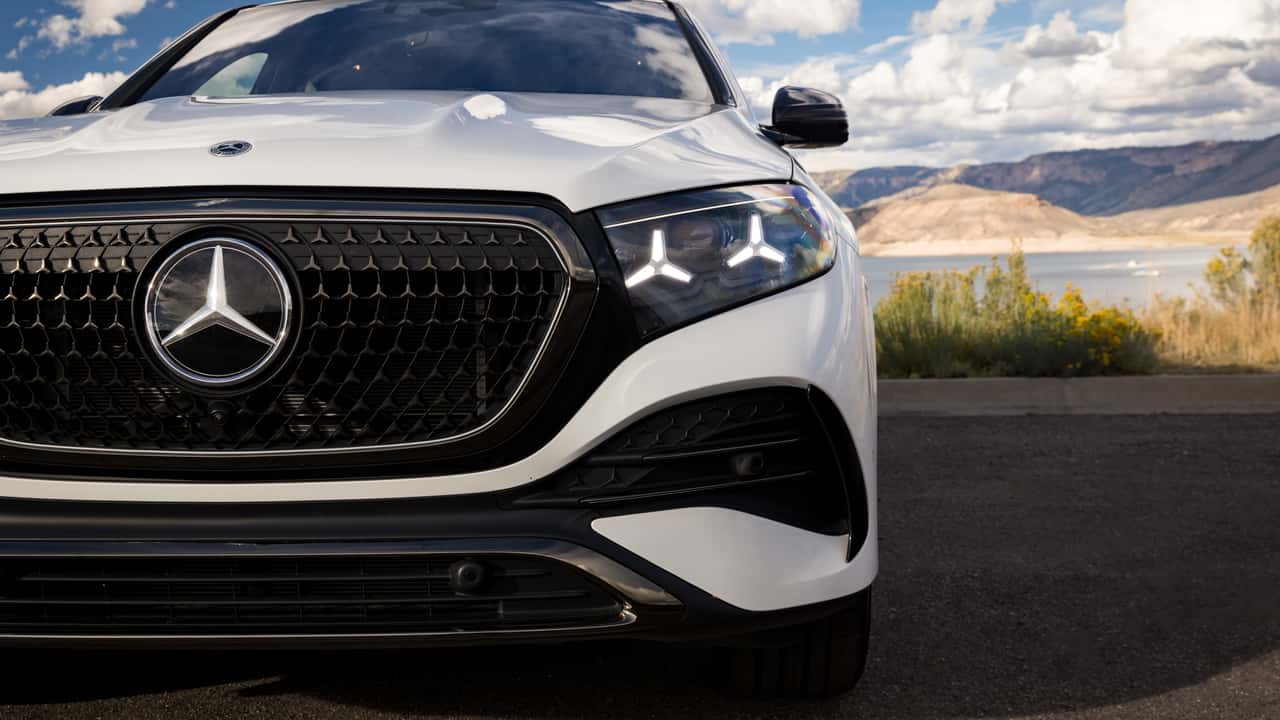 Photo by: Mercedes-Benz
It starts with the design. The first thing you’ll probably notice (as did I) is the sheer number of Three-Pointed Stars scattered across the exterior—the grille, headlights, hood, and more. Fun fact: There are 162 of them on the Coupe. I counted.
The GLE’s new look is part of a broader Mercedes-Benz design refresh that’s spreading like wildfire across nearly the entire lineup. In your author’s humble opinion, it’s not necessarily an improvement.
The headlights are chunky and blend into an equally oversized grille, while the lower bumper gets a new treatment that looks a little clunky on an otherwise svelte SUV. Compared with the pre-facelift model from 2018—or even the first facelifted GLE from 2023—all those stars and oversized design elements make the new exterior feel a little tacky.
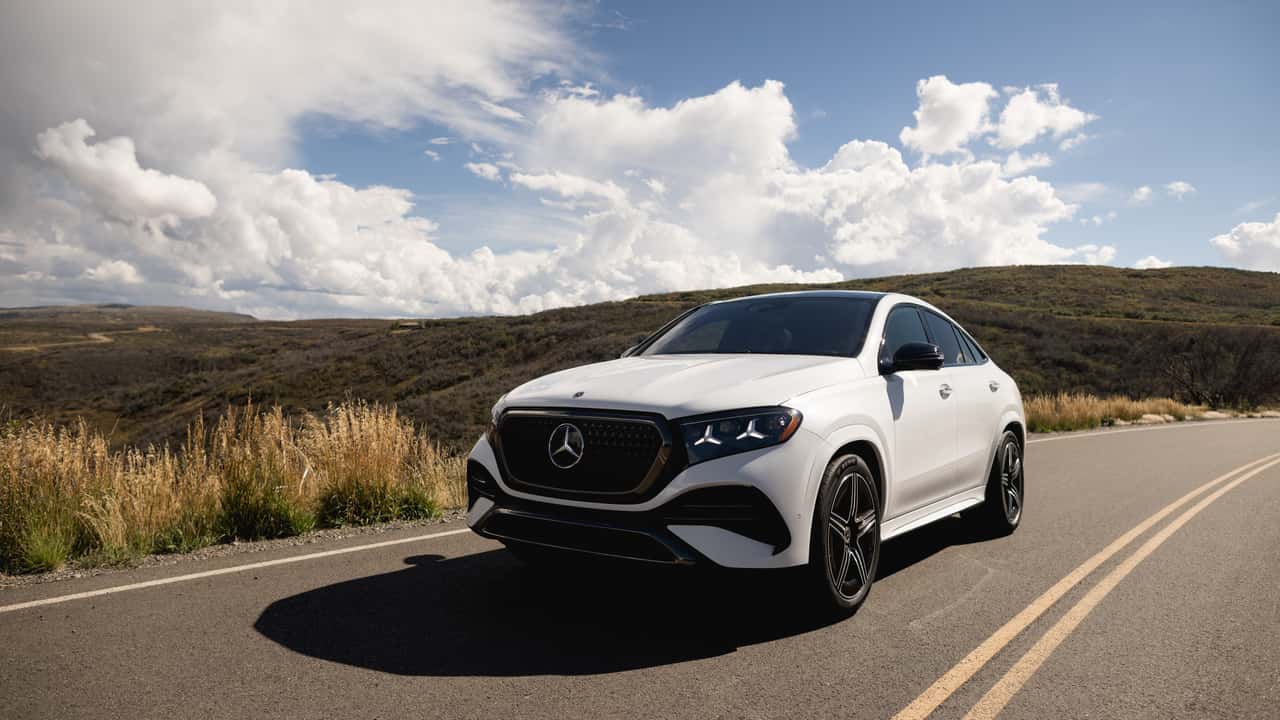 Photo by: Mercedes-Benz
 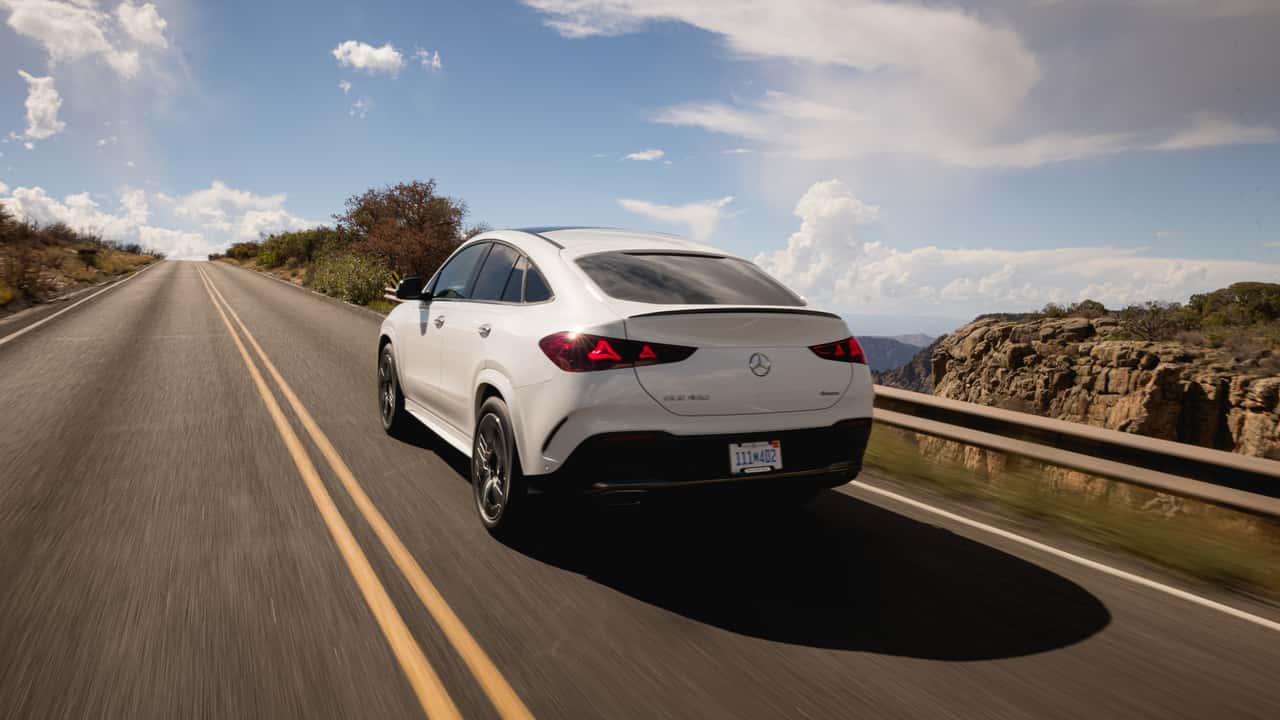 Photo by: Mercedes-Benz Photos by: Mercedes-Benz
Buyers still have to make the choice between the traditional SUV and Coupe body styles, the latter of which carries over for 2027 despite rumors that it might be on the chopping block. Interestingly, I think the updated design actually works better on the Coupe. Its sleeker roofline blends more naturally with the new taillights and bumper treatment.
There is some good news elsewhere, though: new paint. Buyers can now choose Patagonia Red Metallic or Dark Petrol Solid, the latter of which is one of the prettiest paint colors I’ve seen on an SUV in a while. The new hues are joined by updated 22- and 23-inch wheel options.
Sixes, Eights, And Hybrids, Oh My
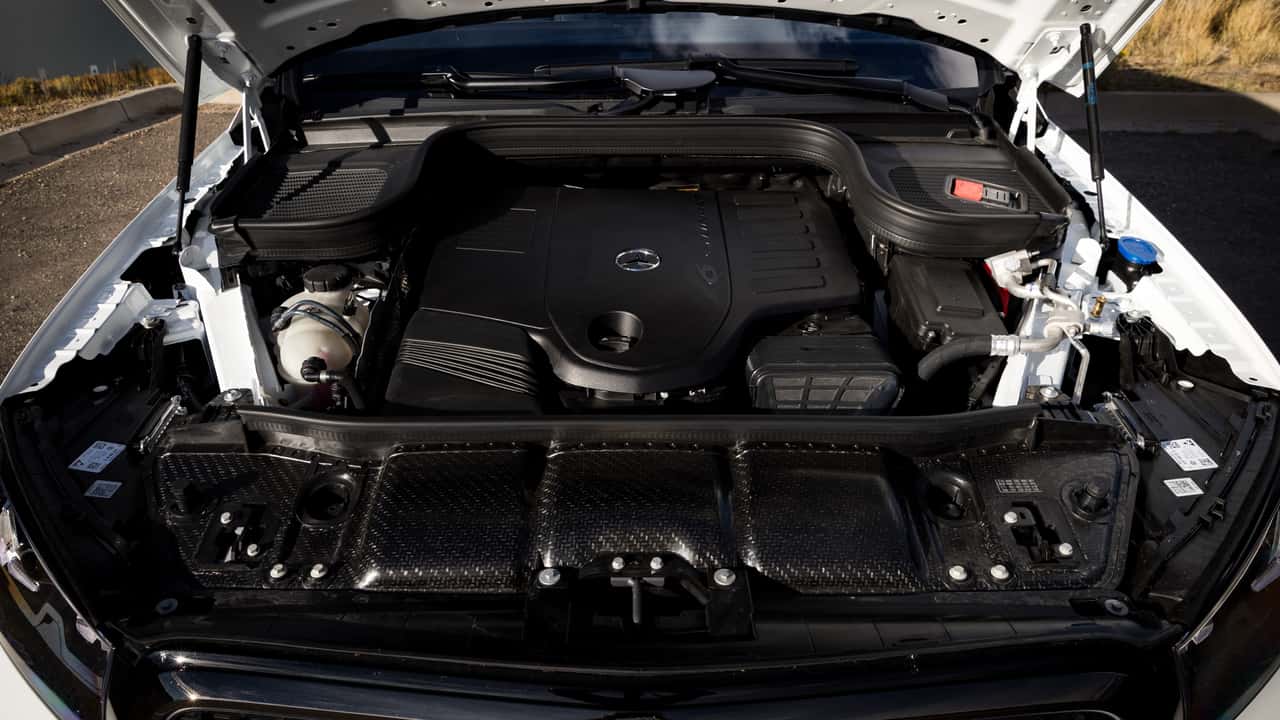 Photo by: Mercedes-Benz
The 2027 GLE offers multiple powertrains, ranging from the four-cylinder base GLE 350 to six-cylinder, V8, and plug-in-hybrid options higher up the lineup. The GLE 450 and GLE 580 are the two models I drove.
The GLE 450 gets an updated version of Mercedes’ turbocharged 3.0-liter inline-six paired with a 48-volt mild-hybrid system. Total output is 375 horsepower and 413 pound-feet of torque, giving it an additional 44 lb-ft over last year.
As expected, the result is a buttery-smooth powertrain with just enough punch to keep things interesting. Mash the throttle and power arrives almost instantly, thanks in part to that 48-volt system. Keep your foot planted and the GLE 450 builds speed surprisingly quickly, even as you approach the top of the rev range.
The optional Airmatic air suspension keeps the GLE composed through corners, with minimal body roll and plenty of responsiveness. The steering is a little light for my taste, but it’s still sharp.
As expected, the result is a buttery-smooth powertrain with just enough punch to keep things interesting.
The GLE 580 gets the biggest change for 2027 with the arrival of a new flat-plane-crank 4.0-liter V8 borrowed from the S-Class. Here, it produces 530 hp and 553 lb-ft of torque—gains of 20 hp and 15 lb-ft over the 2026 model. And boy, does it move.
More so than in the larger GLS, Mercedes’ new flat-plane V8 feels right at home in the GLE. It’s powerful, smooth, and—especially for a mid-size luxury SUV—sounds fantastic. Just put your foot down and go. And kudos to Mercedes for keeping a V8 around in the first place.
On the handling side, the GLE 580 gets the optional E-Active Body Control system, which can predict body movements before they happen. Clever? Very. Necessary? Not really.
The GLE is perfectly pleasant to drive with the standard Airmatic adaptive suspension. Adding E-Active Body Control doesn’t fundamentally change its character. Save yourself a few thousand bucks.
Hello, Mercedes
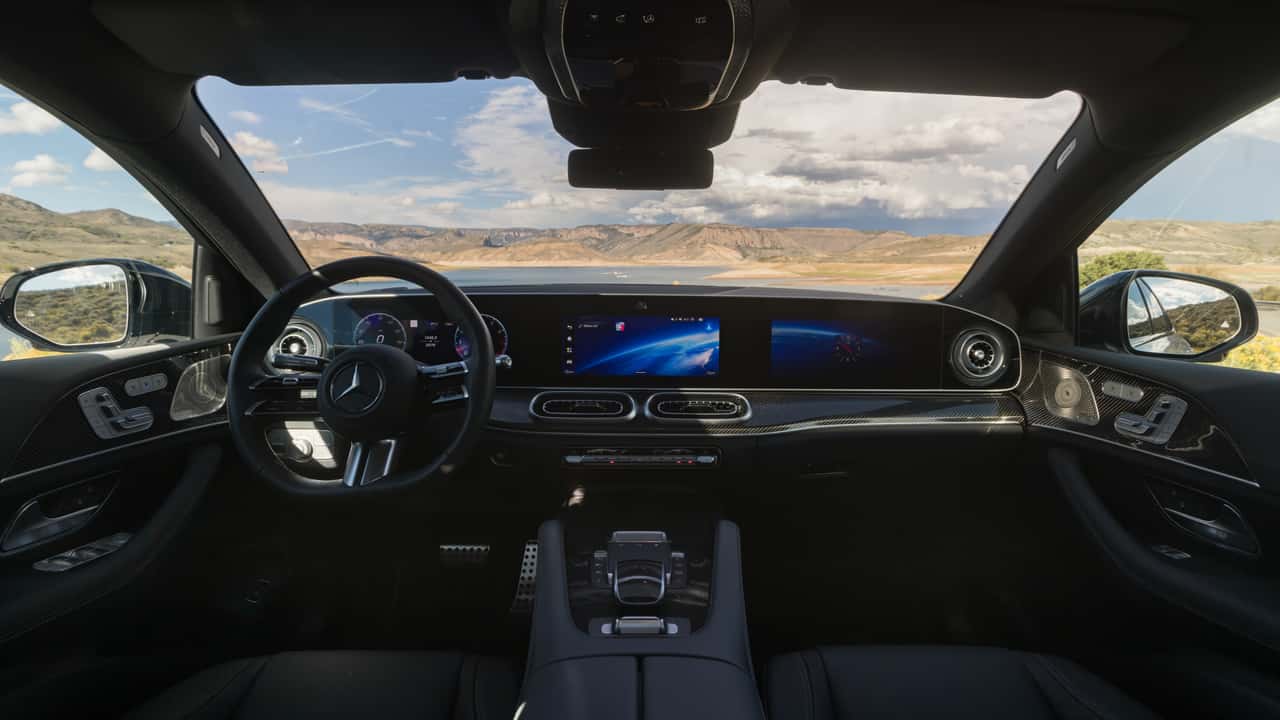 Photo by: Mercedes-Benz
Inside the 2027 GLE, you’re greeted by Mercedes-Benz’s latest MBUX Superscreen setup, complete with three 12.3-inch displays: one for the digital instrument cluster, one for the center touchscreen, and another for the front passenger.
The interface itself isn’t radically different from what we’ve seen before. It runs MB.OS with the fourth-generation MBUX, bringing some modest updates and a cleaner overall experience to the GLE for 2027.
All in all, it works well. The screen is relatively easy to navigate, and Mercedes has thankfully retained a handful of physical buttons for frequently used functions.
Mercedes also set out to improve its "Hey, Mercedes" voice-command system for 2027, and the improvements are noticeable. With AI now baked into the system, it can respond to more natural requests, making things like turning down the A/C or switching off lane centering much easier.
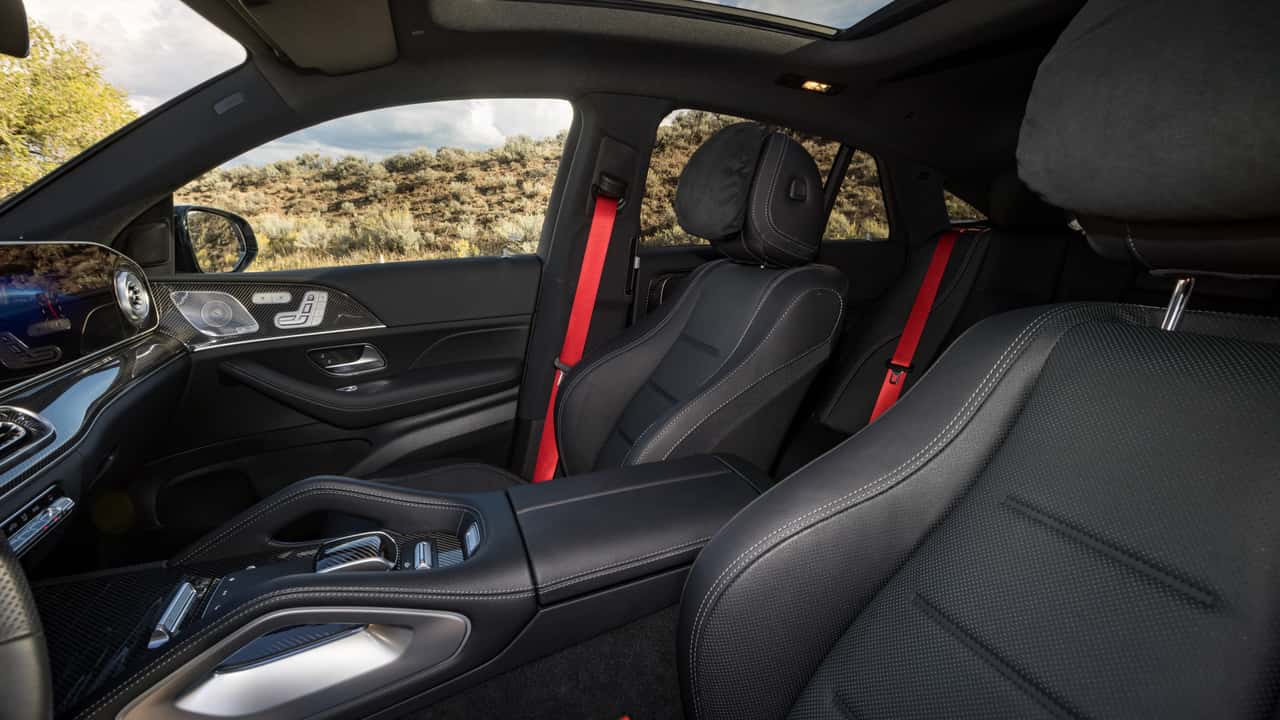 Photo by: Mercedes-Benz
There’s still one thing I really dislike, though: the steering-wheel controls.
Mercedes says it updated the controls for 2027 based on customer feedback, and it even added a volume rocker, which is a welcome change. But they’re still far from perfect.
Accidental inputs happen constantly while driving, with your fingers and thumbs easily sliding over all sorts of controls. I found myself accidentally changing the instrument-cluster display or shutting off the music more than once. It’s frustrating, especially when you’re trying to make a simple adjustment without taking your eyes off the road.
Verdict: Why Mess With A Good Thing?
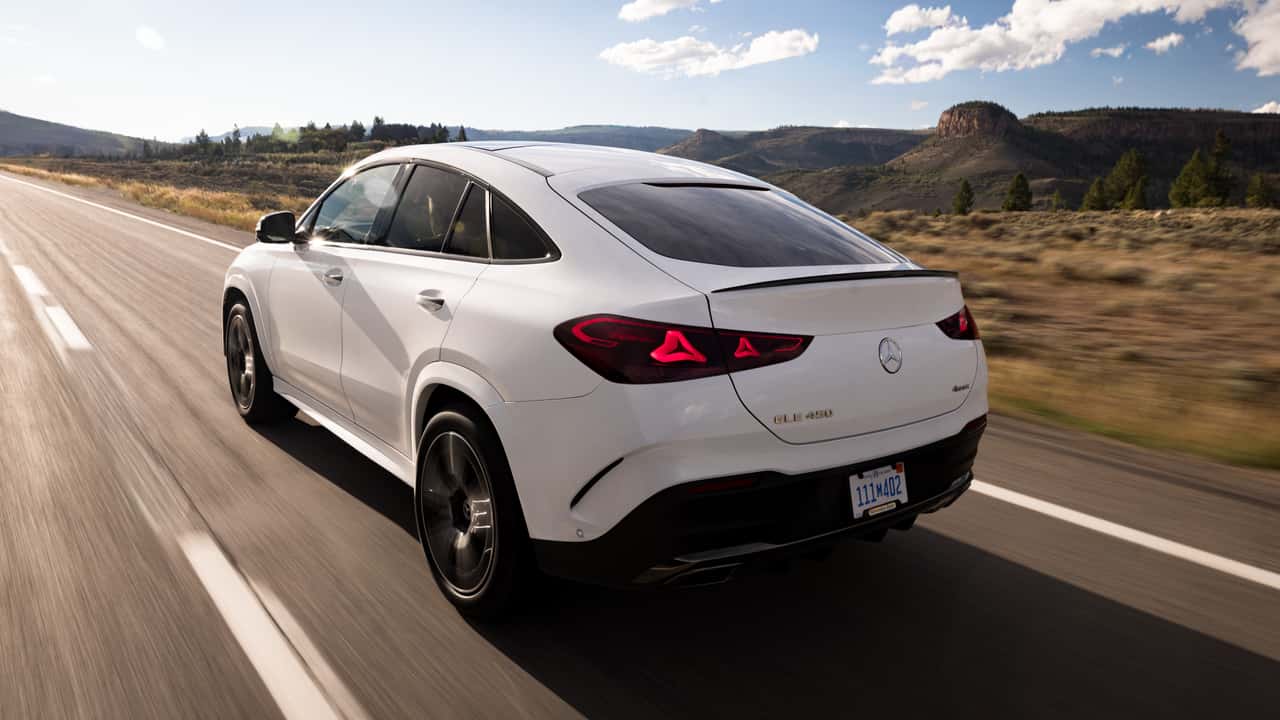 Photo by: Mercedes-Benz
Getting into a new GLE for 2027 will cost at least $69,850 for the base GLE 350. The GLE 450 starts at $76,250, while the V8-powered GLE 580 costs $97,750. The AMG 53 and 63 models push the price even higher, but we’ll have full reviews of those versions next week.
Aside from a few quibbles with the redesign and some lingering frustration with the steering-wheel controls, it’s really hard to hate the Mercedes-Benz GLE.
When I drove the original version of this generation way back in 2018, I called it “one of the smartest things on four wheels.” Nearly a decade later, that still feels like an appropriate description.
The GLE has gotten more powerful, more technologically advanced, and more capable without losing the qualities that made it so good in the first place. It may not be an all-new SUV, but it doesn’t really need to be.
Mercedes-Benz GLE Competitors
Audi Q7 BMW X5 Genesis GV90 The V12 Mercedes-Maybach S680 Makes You Feel Like A Villain: Driven
I Drove Mercedes' $130,000 Luxury Van. America Might Not Be Ready
The Mercedes-AMG GLC 53 Coupe Is Still Odd, But The Inline-Six Helps: Review
Sorry, Internet—The 2027 Mercedes S-Class Is Still A Proper S-Class: Review
2027 Mercedes-Benz GLE 580 Specs EngineTwin-Turbocharged 4.0-Liter V8 Mild-Hybrid TransmissionNine-Speed Automatic Drive TypeAll-Wheel Drive Speed 0-60 MPH4.2 Seconds (est.) Weight5,479 Pounds EfficiencyTBD Seating Capacity5 Towing7,700 Pounds (Max) Cargo Volume33.3 / 74.9 Cubic Feet Base Price$69,850 Trim Base Price$97,750 On SaleNow
]]> feedback@motor1.com (Jeff Perez) https://www.motor1.com/reviews/811112/2027-mercedes-gle-first-drive-review/ https://www.motor1.com/reviews/811104/2027-mercedes-gls-first-drive-review/ Thu, 08 Oct 2026 01:00:00 +0000 The 2027 Mercedes GLS Shines Brighter With A New V8: Driven Mercedes’ biggest three-row SUV gets a smoother, stronger V8 and a tech-heavy cabin for 2027.
The sheer number of three-row luxury SUVs on the market today is enough to make your head spin. But for nearly a decade, Mercedes-Benz has quietly had one of the better ones: the GLS.
You could easily miss it among the other behemoth family haulers in the local grocery store parking lot. The Mercedes GLS certainly isn't the flashiest family mover out there, but it doesn't need to be. It does its job—and does it well.
For 2027, Mercedes has taken an "if it ain't broke, don't fix it" approach with a heavily refreshed model. It looks familiar at first glance, but dig a little deeper, and you'll find a GLS that builds on what made the SUV successful in the first place. And there's one pretty big secret hiding underneath it all.
Pros
Excellent New V8 Refined Cabin Upgraded Technology
Cons
Too Many Stars Awkward Seating Position
Spot The Changes
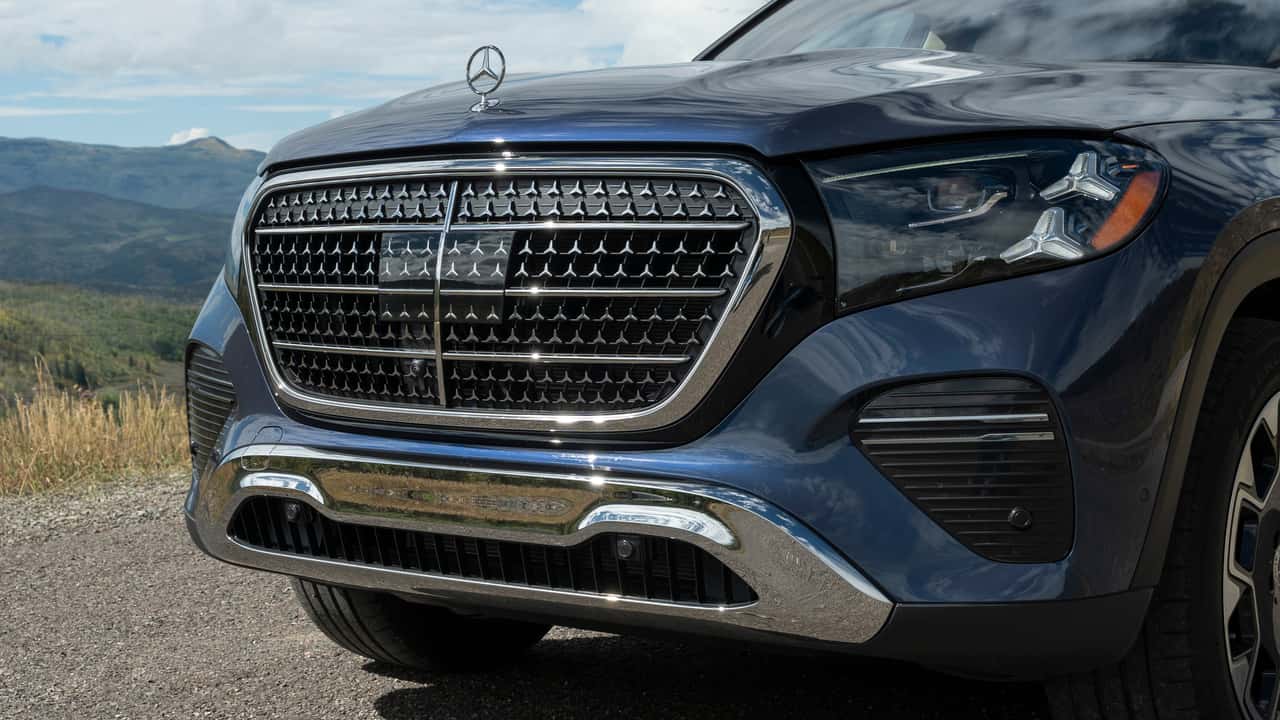 Photo by: Mercedes-Benz
Squint hard enough and you might be able to see what’s different: a sharper front end, fresh wheel designs, new bumpers, and, oh yeah, a whole hell of a lot of Mercedes-Benz "stars." By my count, there are more than 150 of them in the grille alone.
Like several Mercedes models these days, the GLS leans heavily into the three-pointed-star motif. They're not just scattered across the grille, either. The new headlight and taillight assemblies get their own share, with three stars in each GLS light fixture and two in the smaller GLE.
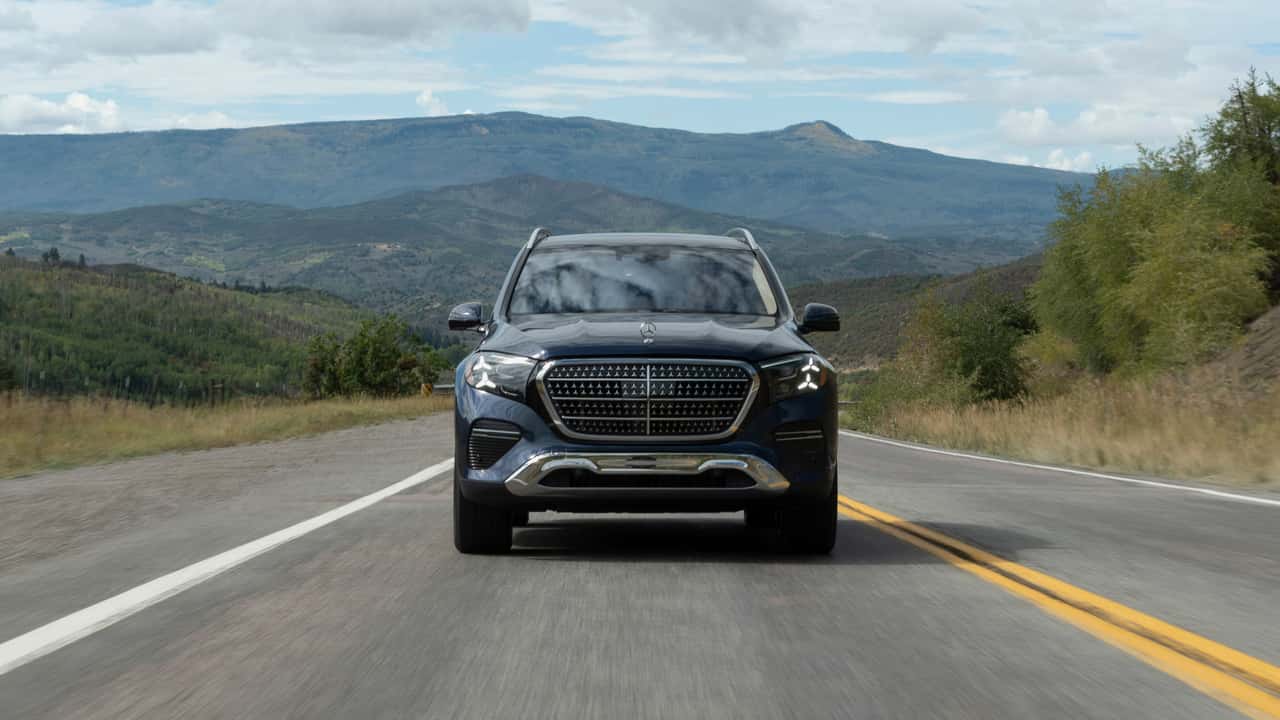 Photo by: Mercedes-Benz
 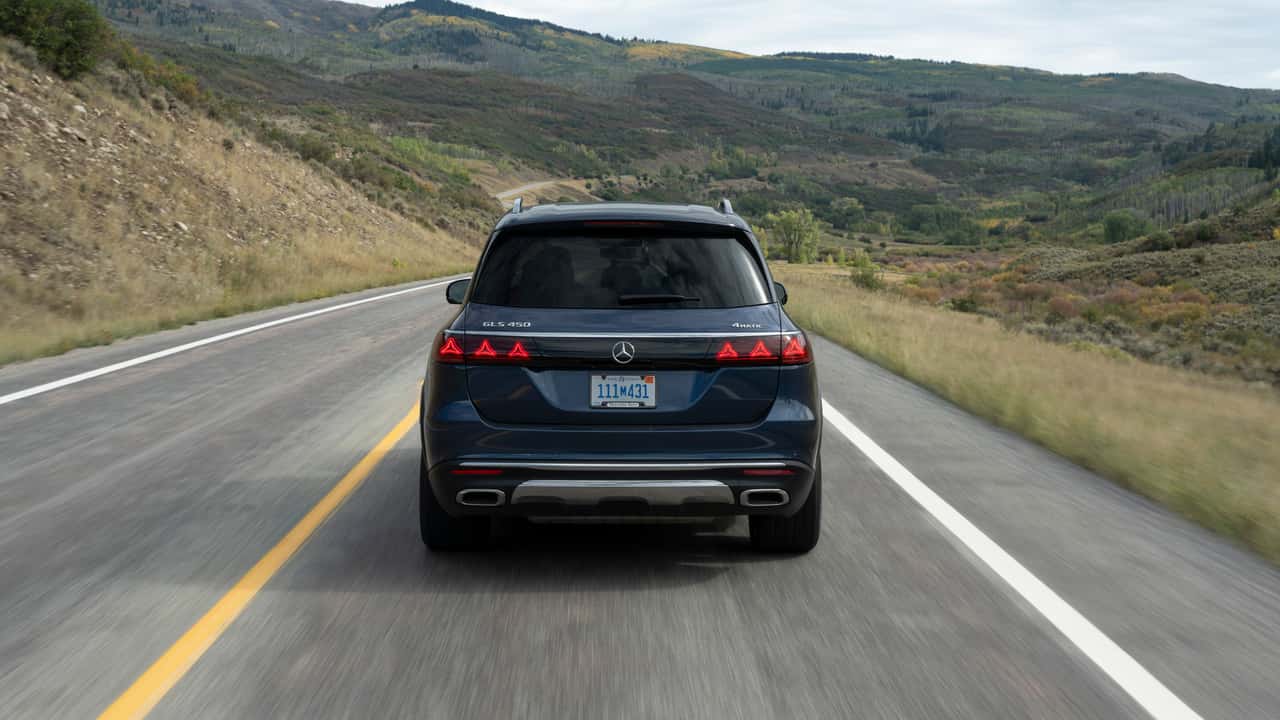 Photo by: Mercedes-Benz Photos by: Mercedes-Benz
Does the new GLS look good? I guess.
The previous model was already a handsome SUV, so there wasn't much to fix. This version cleans up the front fascia and sharpens the rear end slightly, but the changes aren't exactly transformative.
I'm less sold on the new headlights, which look a little clunky to my eye. They now connect to a gloss-black trim piece surrounding a wider grille and larger housing. And personally, I could do with fewer stars sprinkled throughout the light fixtures. But that's just me.
The V8 Is The Star Of The Show
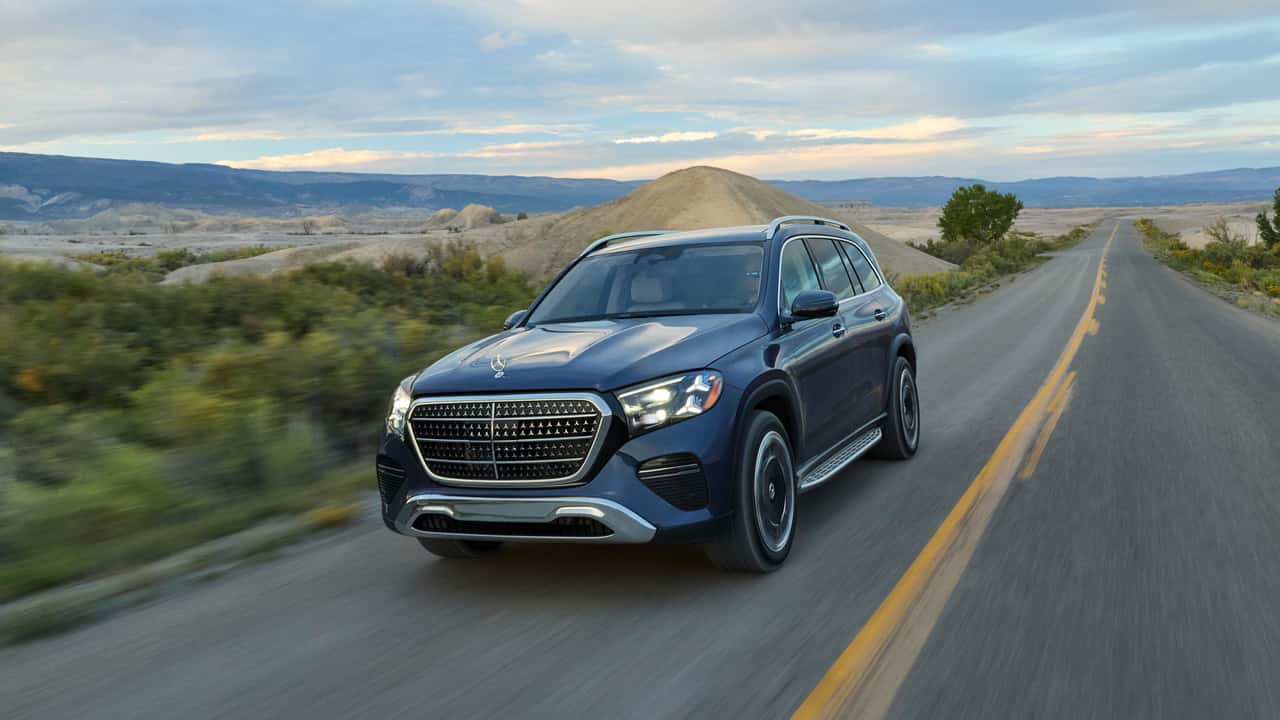 Photo by: Mercedes-Benz
Depending on your budget—and how much you're willing to spend at the pump—Mercedes offers two GLS powertrains: an updated 3.0-liter turbocharged inline-six mild-hybrid and a new flat-plane-crank V8 borrowed from the S-Class.
Most buyers will probably stick with the entry-level GLS 450 and its 3.0-liter inline-six mild-hybrid with an integrated starter-generator (version 2.0). It produces 375 horsepower and 413 pound-feet of torque, an improvement of 44 lb-ft over its predecessor.
But real ones know the 580 is the one to get.
The GLS 580 features a new 4.0-liter V8 producing 530 hp and 553 lb-ft of torque—20 more horsepower and 15 more lb-ft than before. Mercedes says that's enough to propel this enormous three-row SUV to 60 miles per hour in just about 4.5 seconds. Not bad for a family hauler.
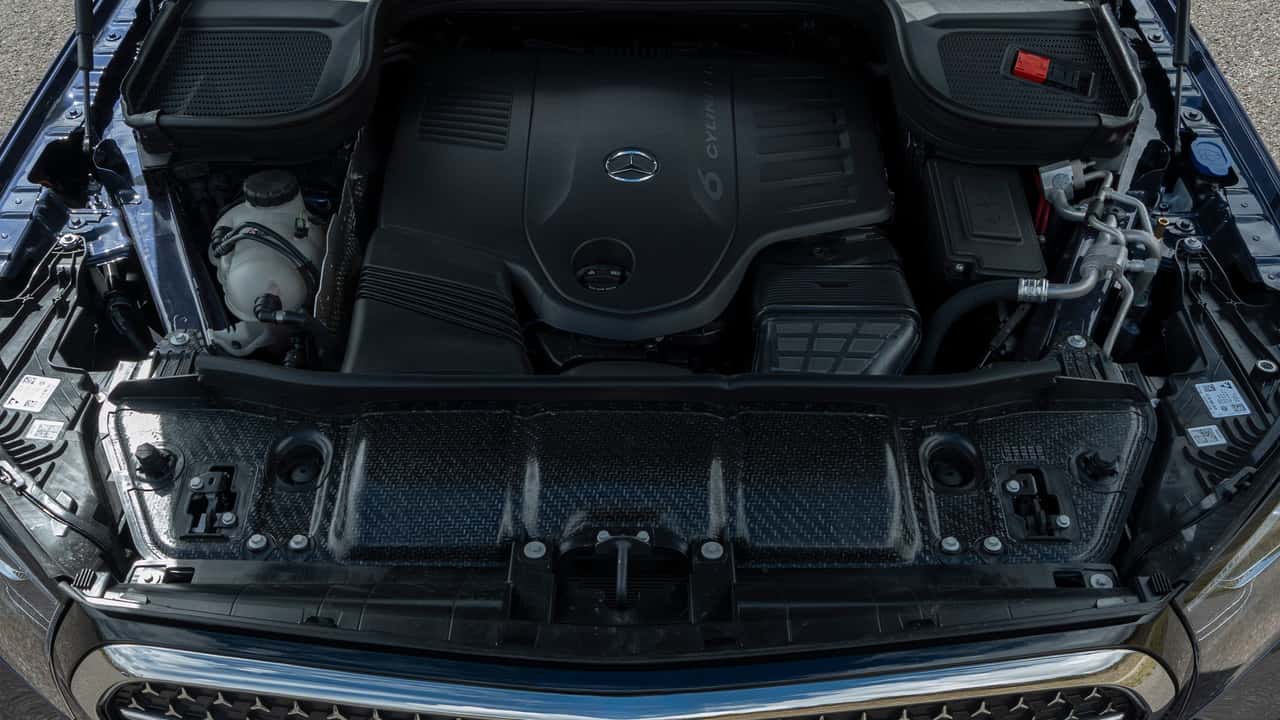 Photo by: Mercedes-Benz
And that engine really is the star here. Power delivery is smooth, torque is plentiful, and even high in the mountains of Western Colorado, the GLS 580 never feels like it's searching for more oomph. Just press the accelerator and go.
Beyond the new engine, the driving experience remains familiar. The GLS is still a comfortable and capable three-row SUV, with a ride that benefits from standard Airmatic air suspension. Body roll is kept in check by Mercedes' active roll-control system, which comes standard on the 580, while the steering remains light but responsive.
Mercedes has also worked to reduce noise, vibration, and harshness overall, making the GLS even better suited to long-distance driving. After spending time on Colorado's mountain roads, through local towns, and even on a few dirt roads, I can confirm that the big Mercedes is a serene place to spend time.
A High-Tech Cabin That Actually Works
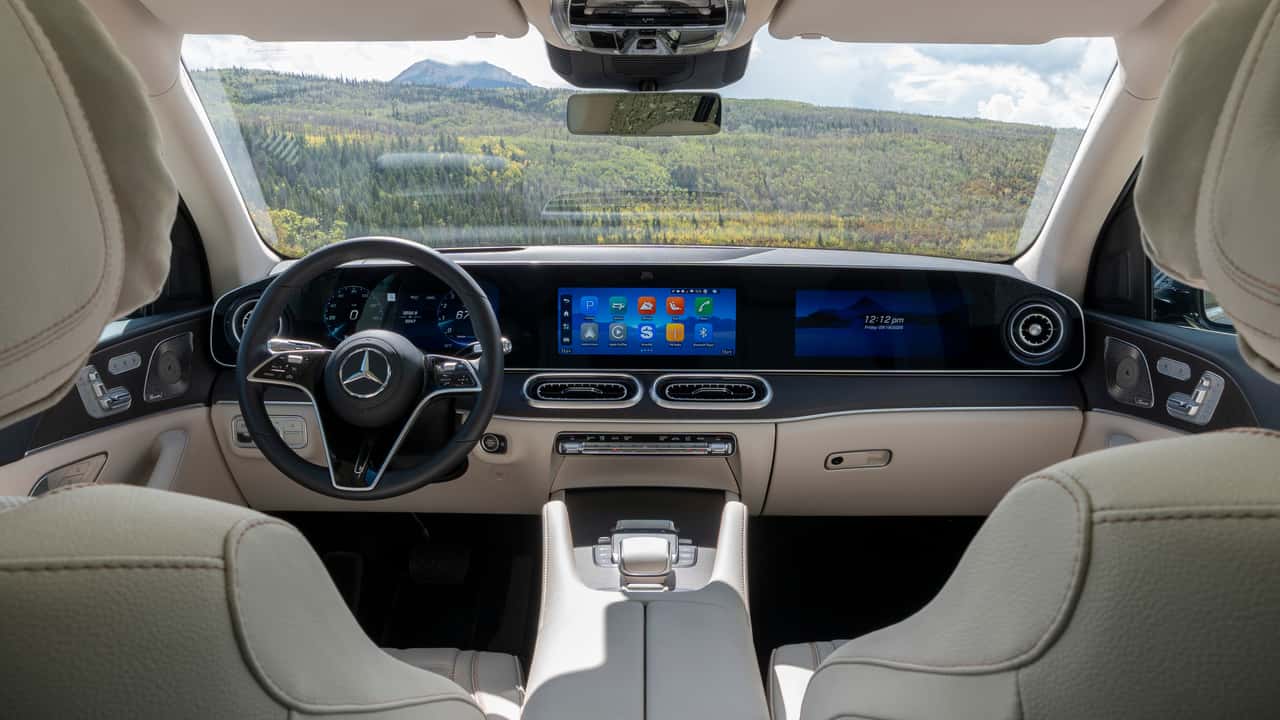 Photo by: Mercedes-Benz
Inside, Mercedes has given the GLS its latest MBUX technology, centered around three 12.3-inch displays: one for the digital instrument cluster, one for the central touchscreen, and another for the front passenger.
That passenger screen supports streaming services like YouTube and Disney+. Using the apps themselves is mostly seamless, although the built-in browser is still a bit clunky. Second-row passengers get their own pair of 11.6-inch displays with similar streaming capabilities.
The screens run Mercedes' latest MB.OS software, which brings new over-the-air update capabilities and an updated virtual assistant that's better at understanding conversational commands.
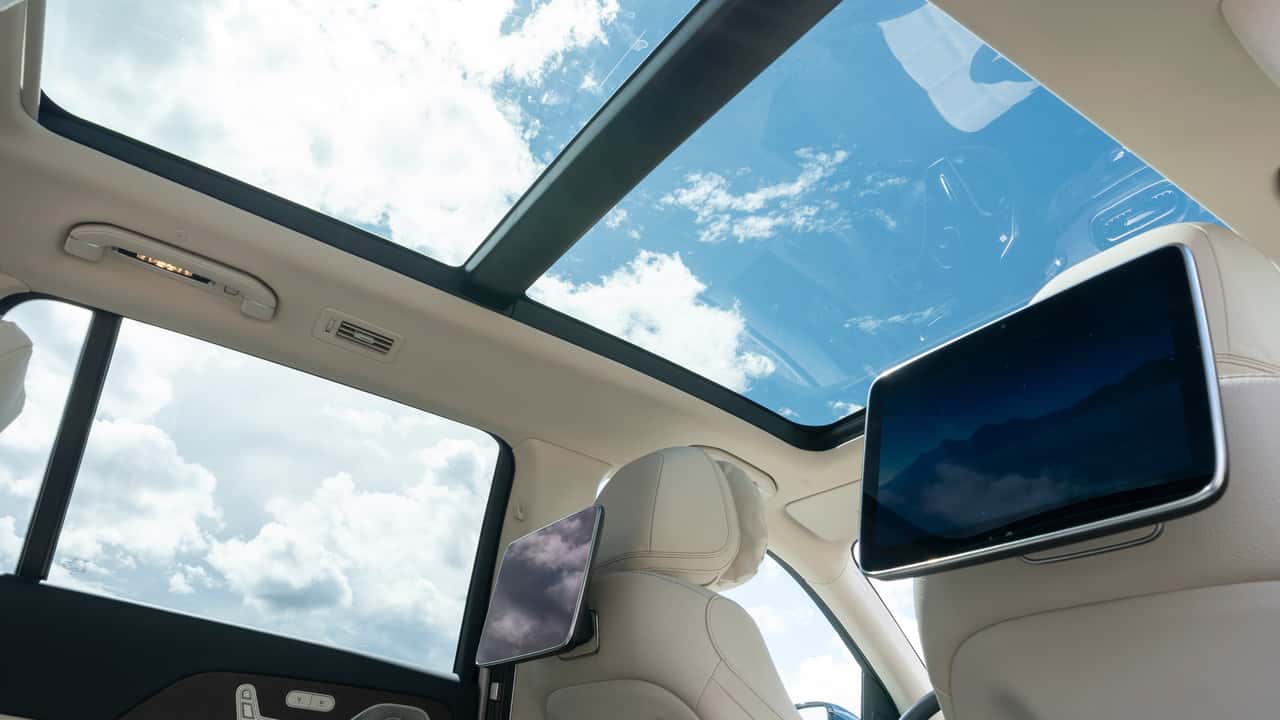 Photo by: Mercedes-Benz
 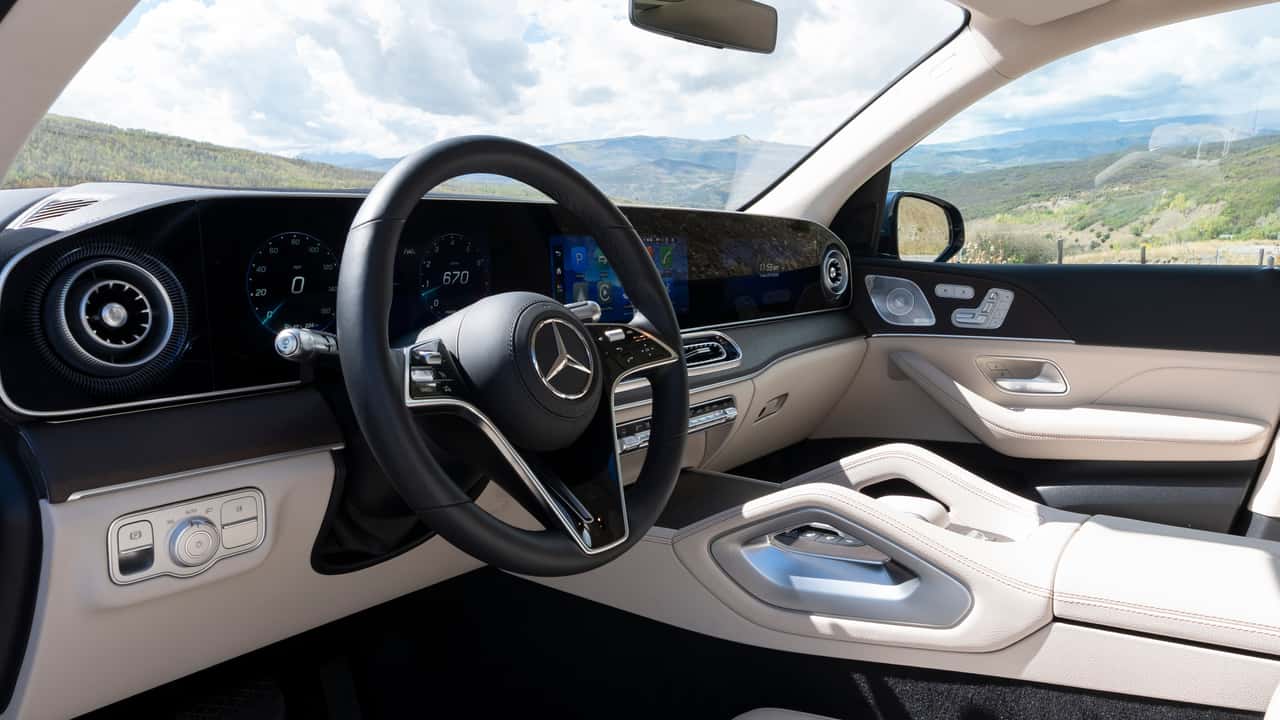 Photo by: Mercedes-Benz Photos by: Mercedes-Benz
For example, I wanted the car to turn off lane centering, so I simply said, "Hey Mercedes, turn off the lane centering." And it just... did it. What a novel concept. The same goes for a handful of other commands available on this latest version.
Mercedes also upgraded adaptive cruise control and most of its driver-assistance technology, with five radar sensors, 10 exterior cameras, and 12 ultrasonic sensors located throughout the SUV. The company says that MB.Drive Assist Pro Level 2++ system—or, point-to-point driving—should be available in 2027.
Verdict: Still Great, Just A Bit Better
Photo by: Mercedes-Benz
The 2027 Mercedes-Benz GLS is essentially the same SUV it's always been, which is to say, a good one. The new flat-plane-crank V8 gives the GLS 580 a worthwhile performance upgrade, while the refreshed cabin and latest technology make an already comfortable SUV even nicer to live with.
The exterior design is more subjective. I'm not convinced the new headlights are an improvement, and Mercedes' newfound obsession with covering everything in three-pointed stars won't be for everyone. But I also can't imagine a few extra stars will do much to dissuade people already shopping for a GLS.
The 2027 GLS 450 starts at $93,950 before destination, while the GLS 580 costs $120,950. With prices climbing across the industry, those aren't unreasonable MSRPs for two highly capable three-row luxury SUVs, particularly when compared with rivals such as the Audi Q7/Q9 and BMW X7.
The GLS didn't need a major overhaul, and Mercedes didn't give it one. Instead, the automaker focused on areas that mattered, making an already well-rounded luxury SUV that much better.
Mercedes-Benz GLS Competitors
Audi Q7 BMW X7 Genesis GV90 The Mazda CX-90 PHEV Gets Electrification Just Right: Driven
The BMW XM's Biggest Flaw Isn't The Way It Looks: Driven
The Volvo EX30 Is (Was?) A Swing And A Miss
I Drove The 2026 Hyundai Ioniq 9. It's The Electric SUV For Real Families
2027 Mercedes-Benz GLS 580 Specs EngineTwin-Turbocharged 4.0-Liter V8 Mild-Hybrid Output530 Horsepower / 553 Pound-Feet TransmissionNine-Speed Automatic Drive TypeAll-Wheel Drive Speed 0-60 MPH4.5 Seconds Weight5,820 Pounds Seating Capacity7 Towing7,700 Pounds (Max) Cargo Volume17.4 / 84.7 Cubic Feet Base Price$95,500 Trim Base Price$122,500 On SaleNow
]]> feedback@motor1.com (Jeff Perez) https://www.motor1.com/reviews/811104/2027-mercedes-gls-first-drive-review/ https://www.motor1.com/reviews/810674/used-volvo-v60-polestar-buying-guide/ Tue, 06 Oct 2026 17:00:00 +0000 Volvo V60 Polestar: Why Buy? One of Volvo's rarest modern performance cars combines speed, AWD, and everyday practicality for around $30,000.
Performance wagons are having a bit of a moment, but buying a new one can get expensive quickly. Fortunately, depreciation has made one of the coolest performance wagons of the last decade surprisingly attainable. If you know where to look.
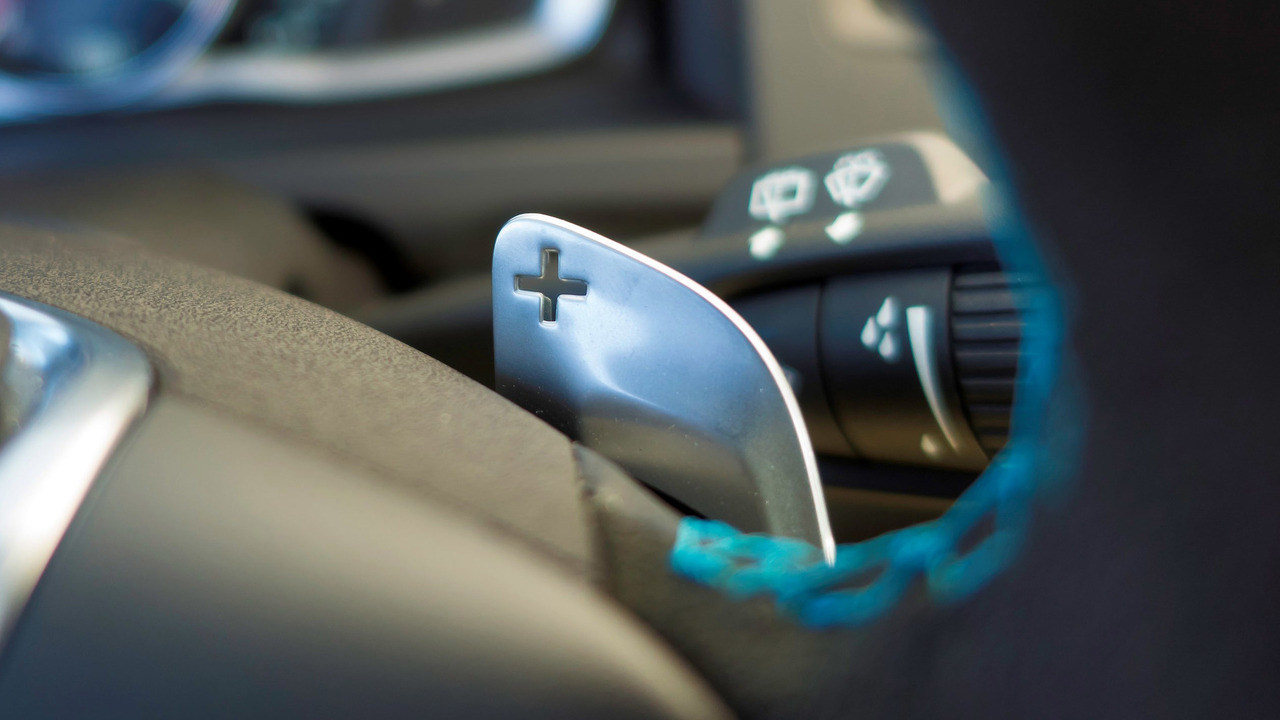
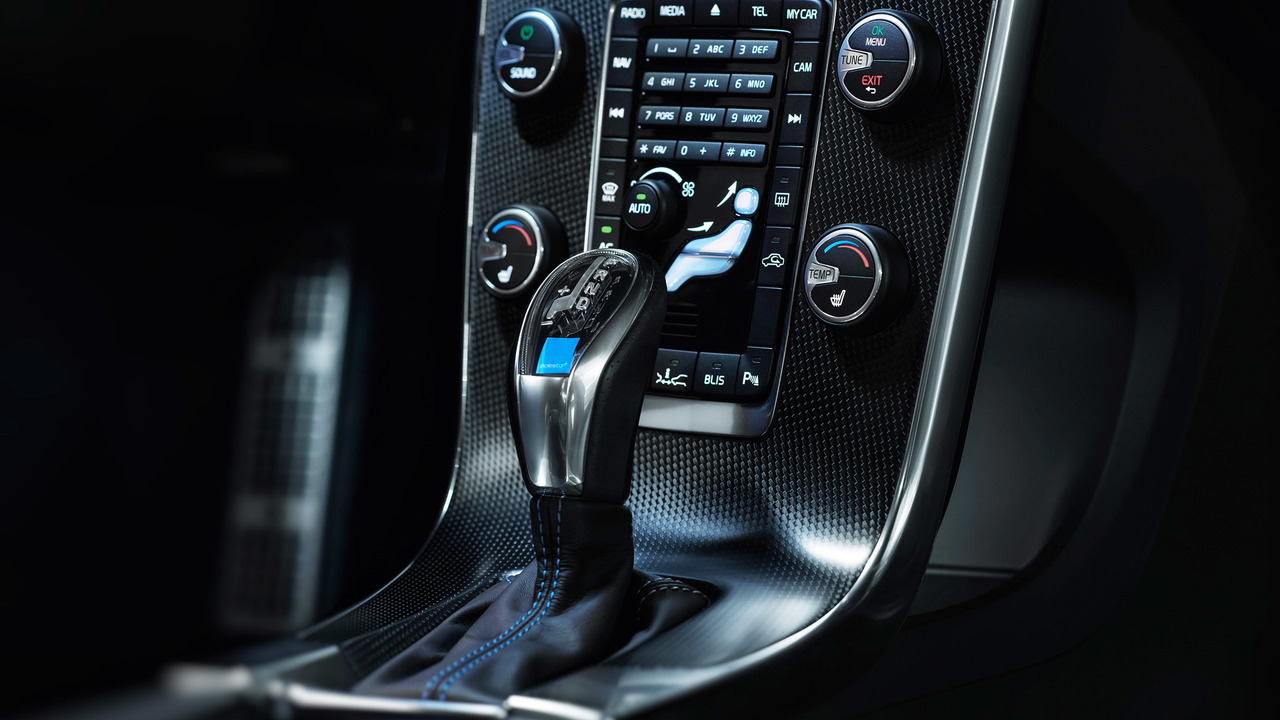
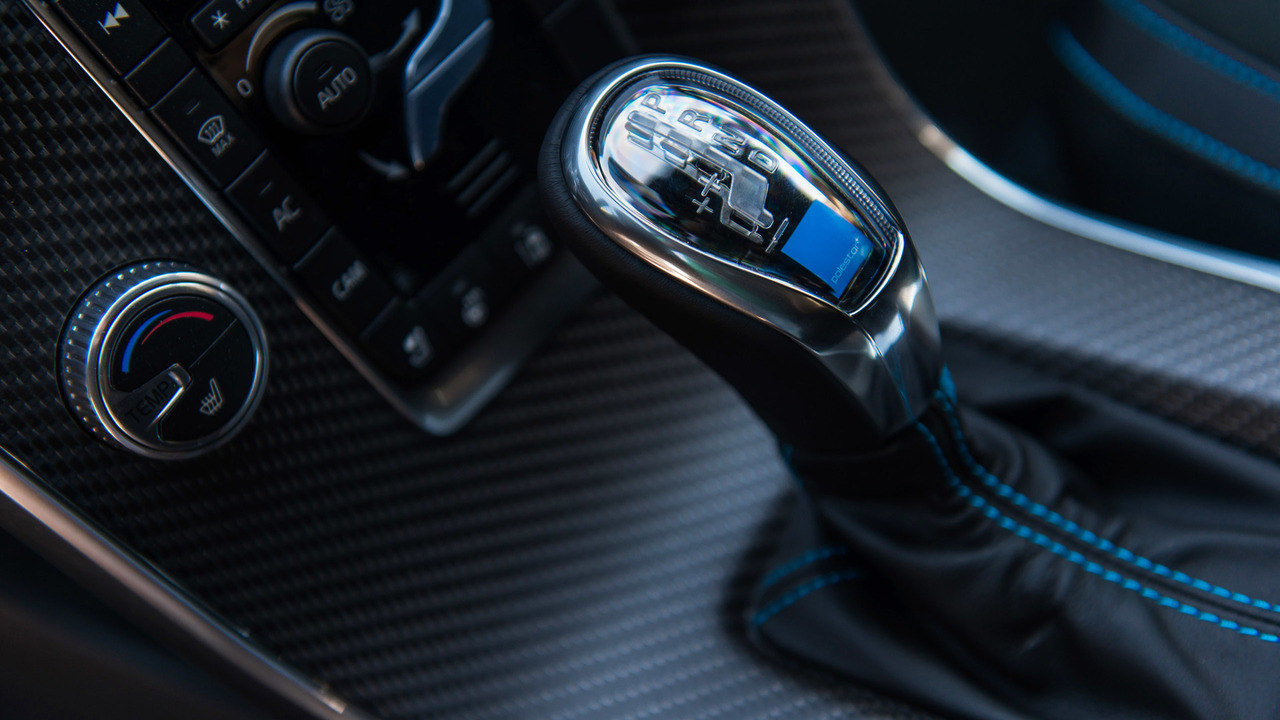
The first-generation Volvo V60 Polestar packed genuine performance hardware into an otherwise sensible Swedish family wagon. For 2017, that meant 362 horsepower, all-wheel drive, manually adjustable Öhlins dampers, big Brembo brakes, and enough cargo room to work as your only car.
There's a good chance you won't see another one on your daily commute. This makes it an intriguing, unique, but also extremely usable super sleeper.
A Used Audi RS3 Is A 400-HP Bargain. Here's Why You Should Buy One
A Used Mercedes-AMG S65 Doesn't Make Sense. Here's Why You Should Buy One Anyway
A Used Lexus LS 500 Is A Luxury Bargain. Here's Why You Should Buy One
The Acura NSX Finally Makes Sense As A Used Supercar. Here's Why You Should Buy One
Why Buy The Volvo V60 Polestar?
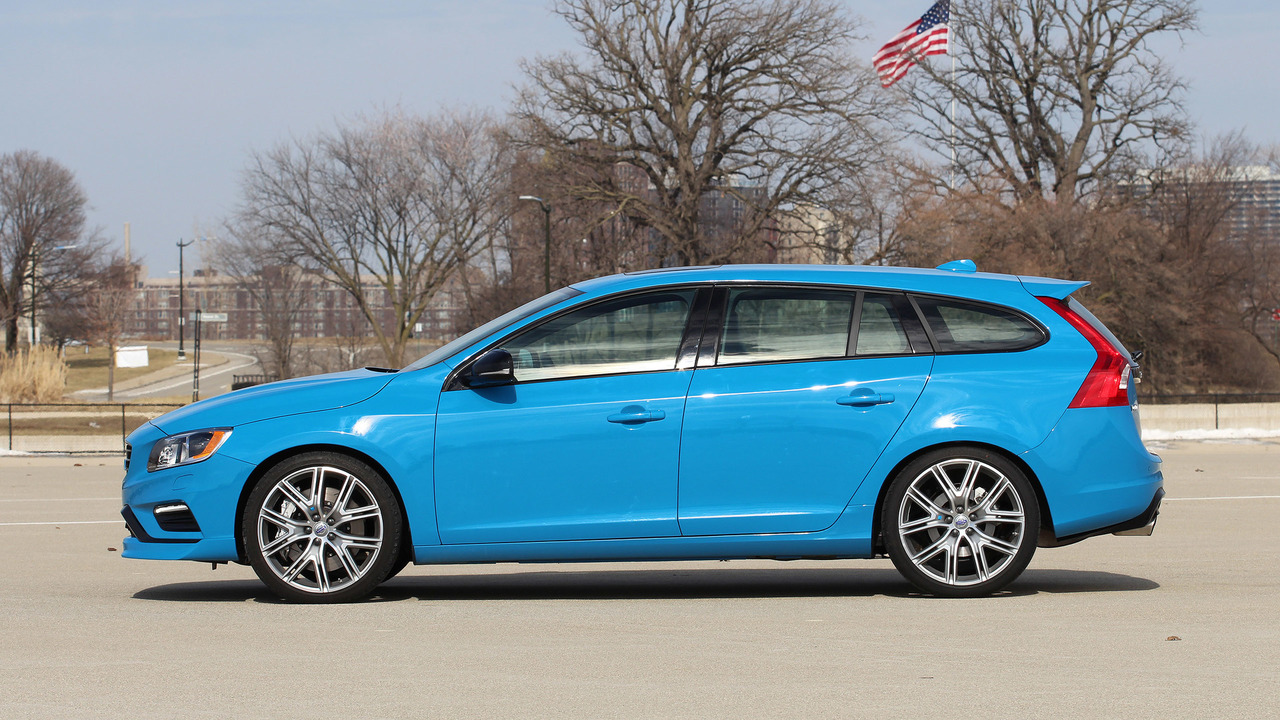
Because there still aren't many cars that combine this much performance, practicality, and obscurity for the money.
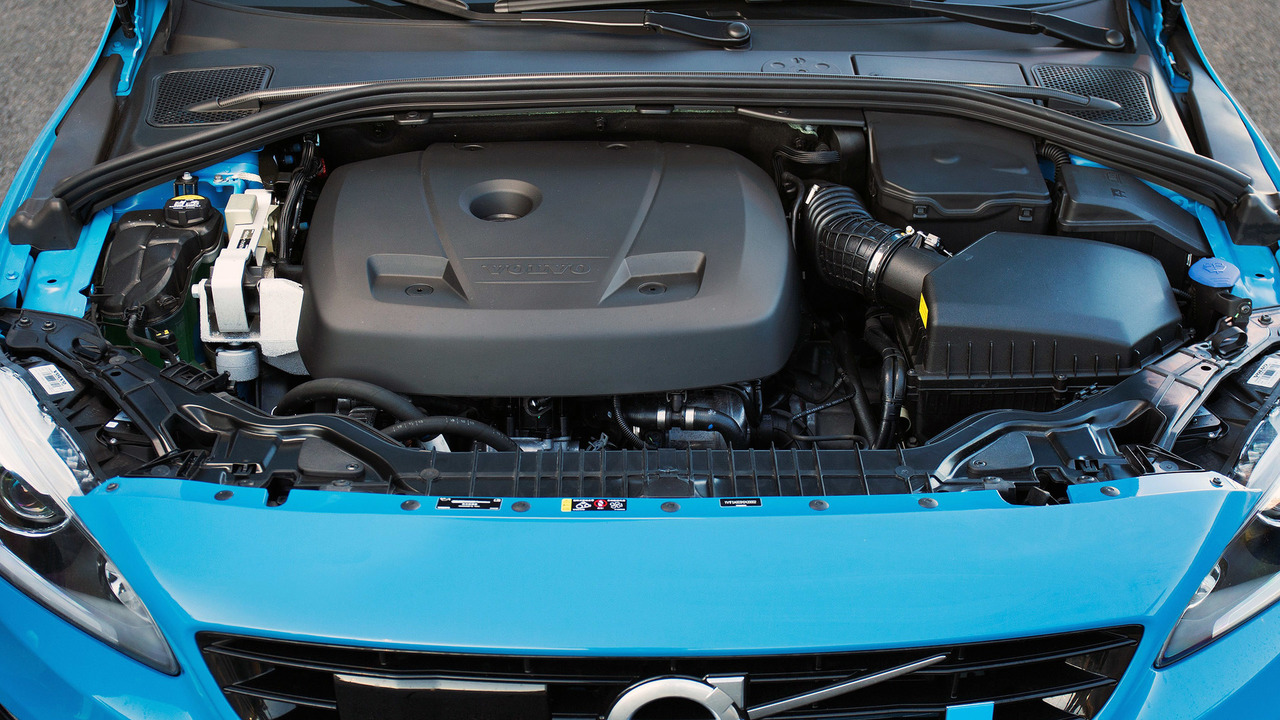
The 2017 V60 Polestar uses Volvo's wonderfully strange 2.0-liter four-cylinder engine with both a turbocharger and a supercharger. Polestar extracted 362 horsepower and 347 pound-feet of torque from it, pairing the engine with an eight-speed automatic transmission and all-wheel drive.
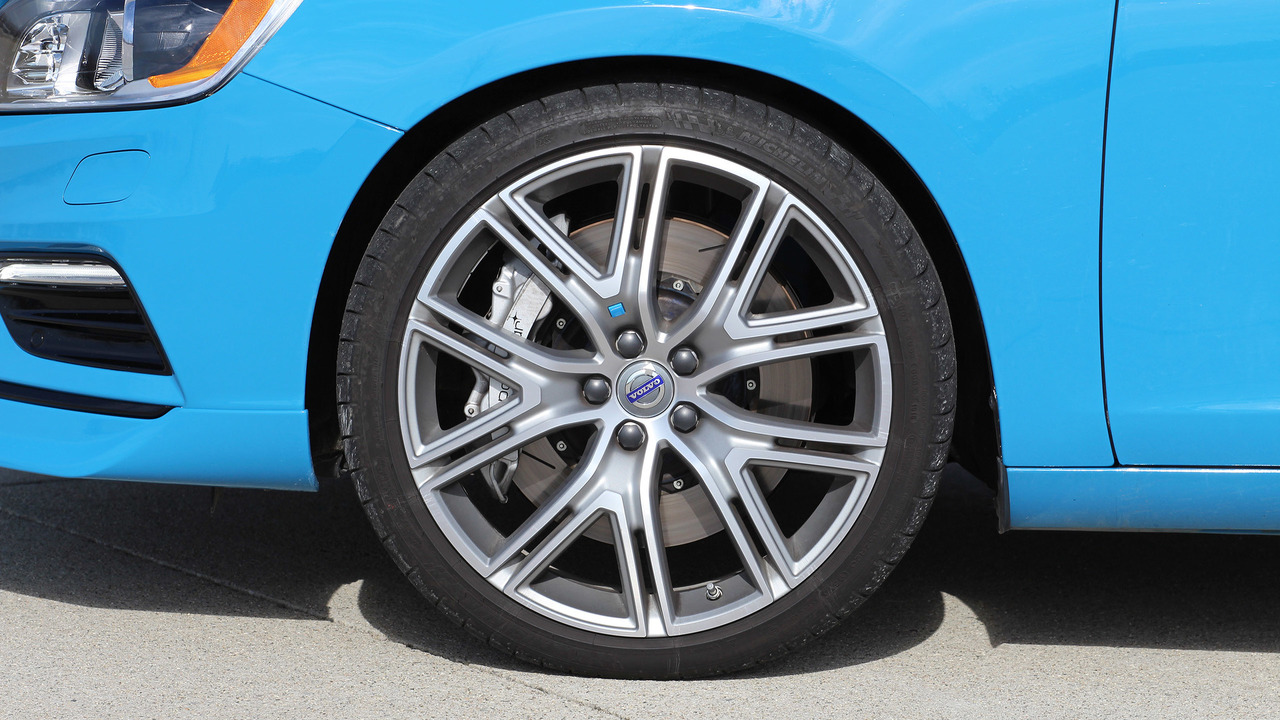
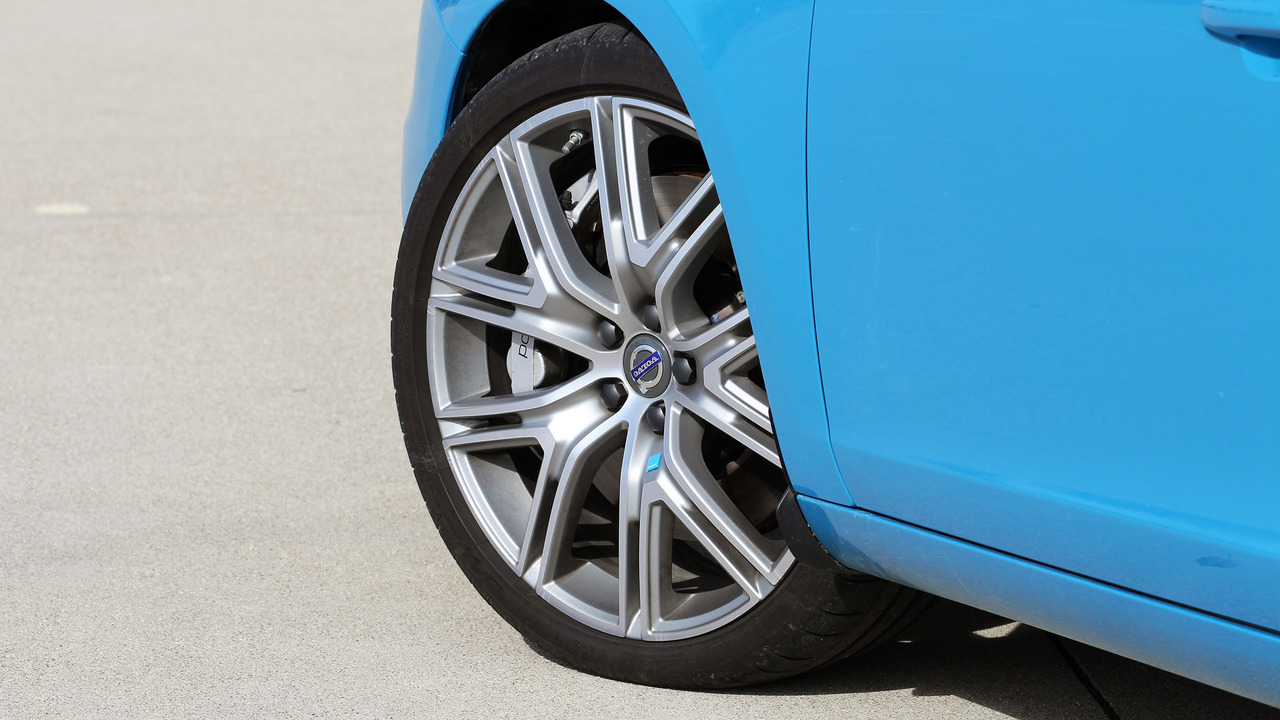
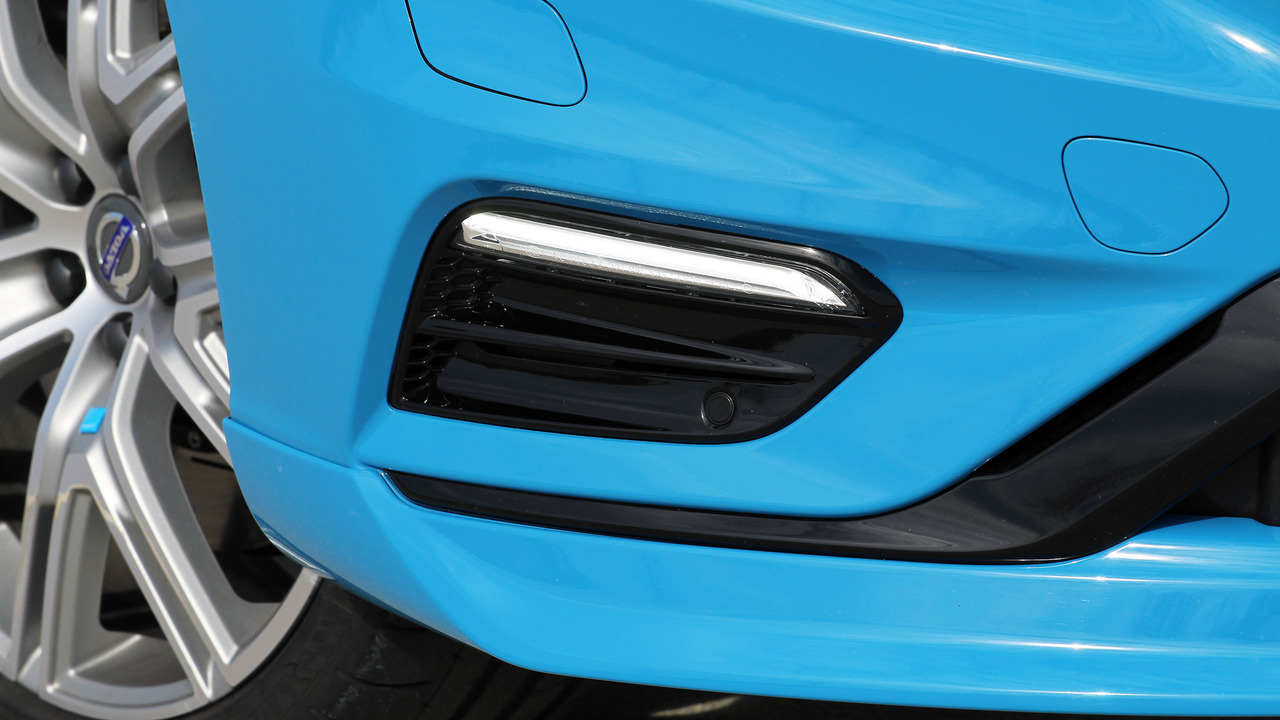
The V60 Polestar also received manually adjustable Öhlins dampers, significantly stiffer springs, Polestar-specific chassis tuning, 20-inch wheels, and six-piston Brembo front brakes. The all-wheel-drive system was also recalibrated to send more power toward the rear under hard driving.
The result was a wagon capable of reaching 60 miles per hour in roughly 4.5 seconds while still seating five people and offering a maximum cargo capacity of 43.8 cubic feet.
When we drove the V60 Polestar back in 2017, we called it "the complete package:"
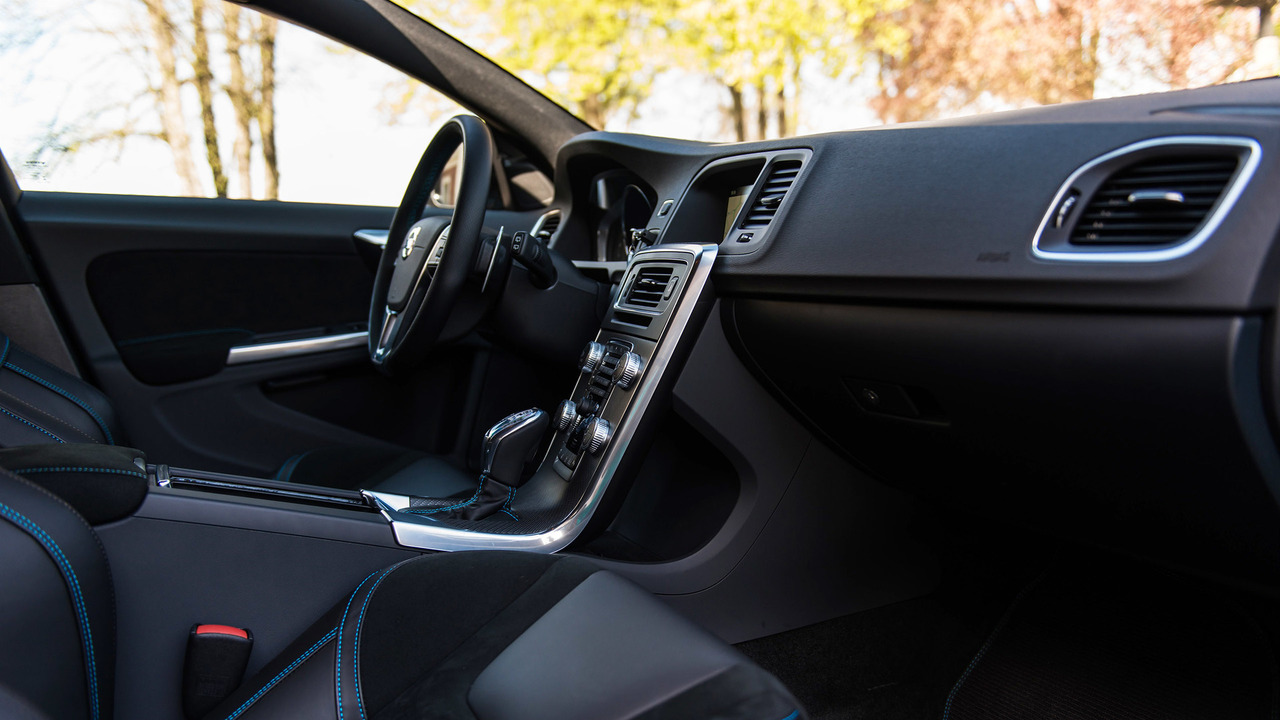
The powertrain delivers '181 hp per liter of displacement—higher specific output than a McLaren 675LT.' 'Lay into the throttle, get the forced induction working, and the rear end slams down to power you out of a tight corner.' 'The seats in this generation of S60/V60 are some of the best thrones on the market today.'
How Much Is A Used Volvo V60 Polestar?

Kelley Blue Book currently lists a 2017 Volvo V60 T6 Polestar at a Fair Purchase Price of approximately $20,610. A good-condition example has a private-party value of around $18,850, while an excellent-condition car is closer to $20,100.
2016 Volvo V60 Polestar: $20,700 2017 Volvo V60 Polestar: $20,610 2018 Volvo V60 Polestar: $25,000
Given that this is an enthusiast car, though, those figures may not be totally accurate. A quick search tells us that prices for well-kept examples are closer to the mid-$30,000 mark. Things like mileage, condition, and location affect the price as well.
Of course, those figures still represent a substantial drop from the car's original $62,595 MSRP. Considering what you're getting—a rare AWD performance wagon with Öhlins dampers and Brembo brakes—roughly $30,000 is still a compelling entry price.
Check Out Used Volvo V60 Polestar Listings
Which Volvo V60 Polestar Should You Buy?

There are essentially two versions of the first-generation V60 Polestar worth considering.
The 2015 (.5) and 2016 models use Volvo's turbocharged 3.0-liter inline-six. That engine produced 345 horsepower and 369 pound-feet of torque and was paired with a six-speed automatic transmission.
Then came a substantial powertrain change for 2017. Volvo replaced the inline-six with its twin-charged 2.0-liter four-cylinder. Output climbed to 362 hp, but torque dropped to 347 lb-ft, and the six-speed transmission was replaced with an eight-speed automatic. The newer powertrain also removed weight from the nose, helping improve the car's handling balance.
There's an argument to be made for either one. The earlier six-cylinder is arguably the more charismatic engine. It has two additional cylinders, plenty of torque, and a sound that the later four-cylinder simply can't reproduce.
But the 2017 and 2018 cars are the ones I'd target if outright performance matters most. You get more horsepower, an eight-speed gearbox, and less weight over the front axle. The 2017 is especially appealing because depreciation has already brought its KBB value down to around $20,500.
What Could Go Wrong?
The V60 Polestar may cost around $20,000 to buy, but owners should remember that they're still maintaining what was originally a $60,000-plus European performance car. So, be careful.
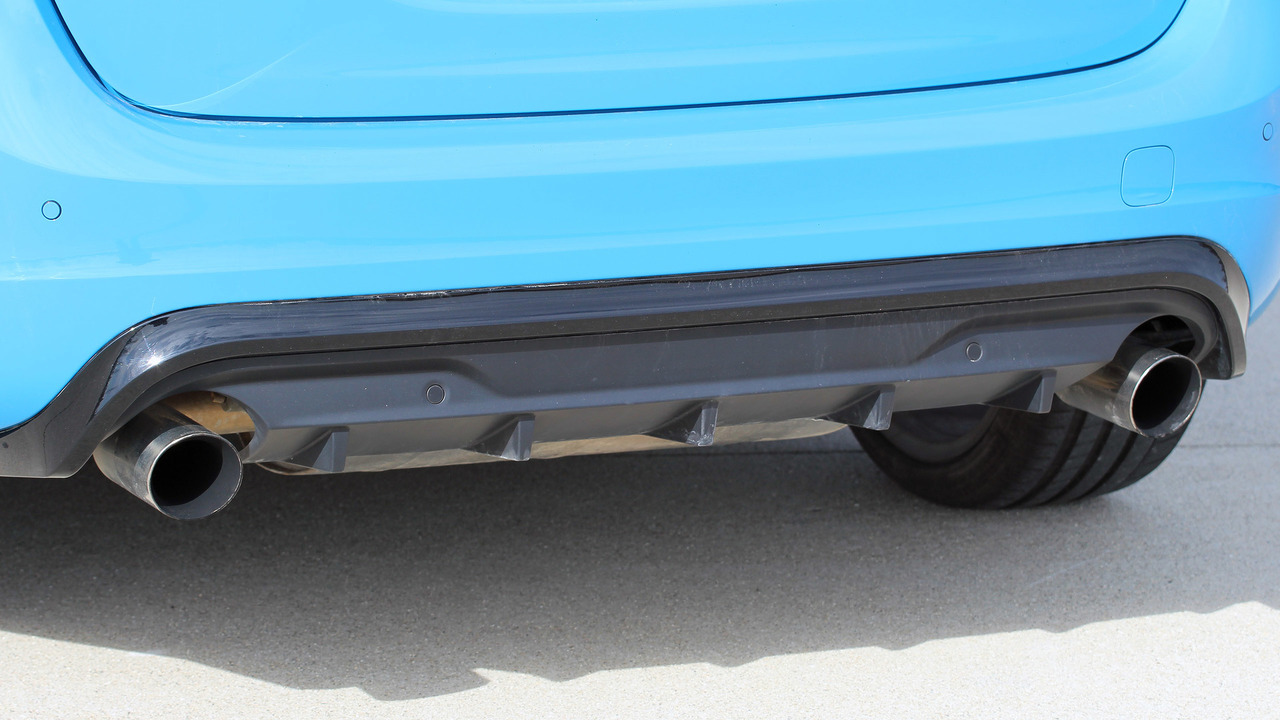
The biggest concern with the 2017 model is complexity. Its 2.0-liter engine uses both a turbocharger and a supercharger, and Polestar added a larger turbocharger, strengthened internal components, upgraded intake hardware, a higher-capacity fuel system, and a freer-flowing exhaust. There's simply more hardware here than in an ordinary V60.
Then there's the Polestar-specific suspension. Those manually adjustable Öhlins dampers were a major selling point when the car was new, but they're also substantially more expensive to replace than conventional shocks.
The same applies to the brakes. Six-piston Brembo calipers and 14.6-inch front rotors give the V60 impressive stopping power, but servicing them won't cost as much as it does on a base V60.
A documented maintenance history should be near the top of your shopping list. Check the AWD system, suspension, brakes, cooling system, and engine carefully, and look for evidence of any modifications or tuning.
What Are The Alternatives?

The problem with shopping for a V60 Polestar is that there aren't many direct competitors.
A Mercedes-AMG E63 Wagon delivers substantially more performance and a V8 soundtrack, but used examples generally occupy a much higher price bracket and can be considerably more expensive to maintain.
The Cadillac CTS-V Wagon provides a supercharged V8, rear-wheel drive, and a manual transmission in particularly rare examples. But values have climbed dramatically as enthusiasts recognize how special those cars are.
For something newer and less exotic, a Volkswagen Golf R offers all-wheel drive, strong performance, and hatchback practicality. It isn't a wagon, though, and it lacks much of the Volvo's rarity and sleeper appeal.
There are a handful of Audi and BMW wagons from this era, too. None can match the stand-alone intrigue inherent in the V60 Polestar.
That's the problem—and appeal—of the V60 Polestar. There really isn't another $20,000 used car that replicates the entire package.
Audi A4 Allroad BMW 328d xDrive Sports Wagon Cadillac CTS-V Wagon Mercedes-AMG E63 Wagon Volkswagen Golf R
Why The Volvo V60 Polestar Makes Sense
On paper, buying a decade-old, twin-charged European performance wagon sounds like a questionable financial decision. But look at what roughly $30,000 gets you.
The V60 Polestar has 362 horsepower, all-wheel drive, Öhlins suspension, six-piston Brembo brakes, room for five people, and genuine wagon cargo capacity. It's fast enough to keep up with many modern performance cars while remaining comfortable and practical enough for everyday driving.
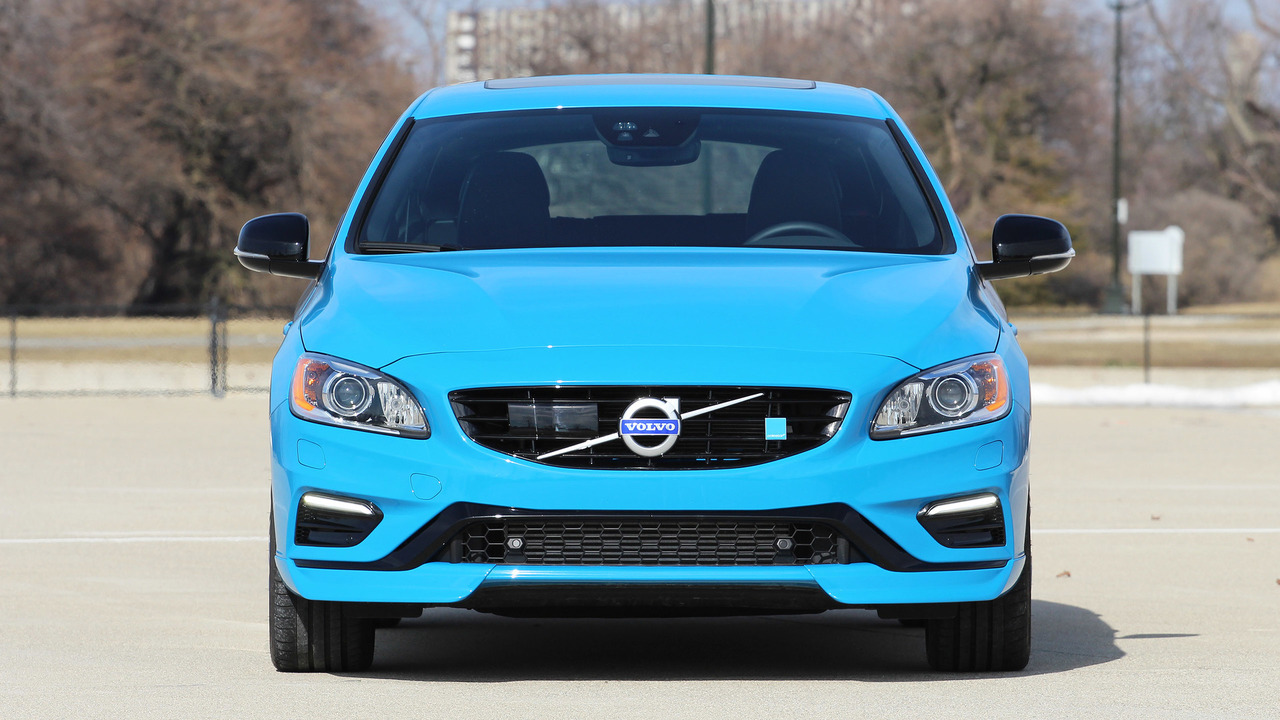
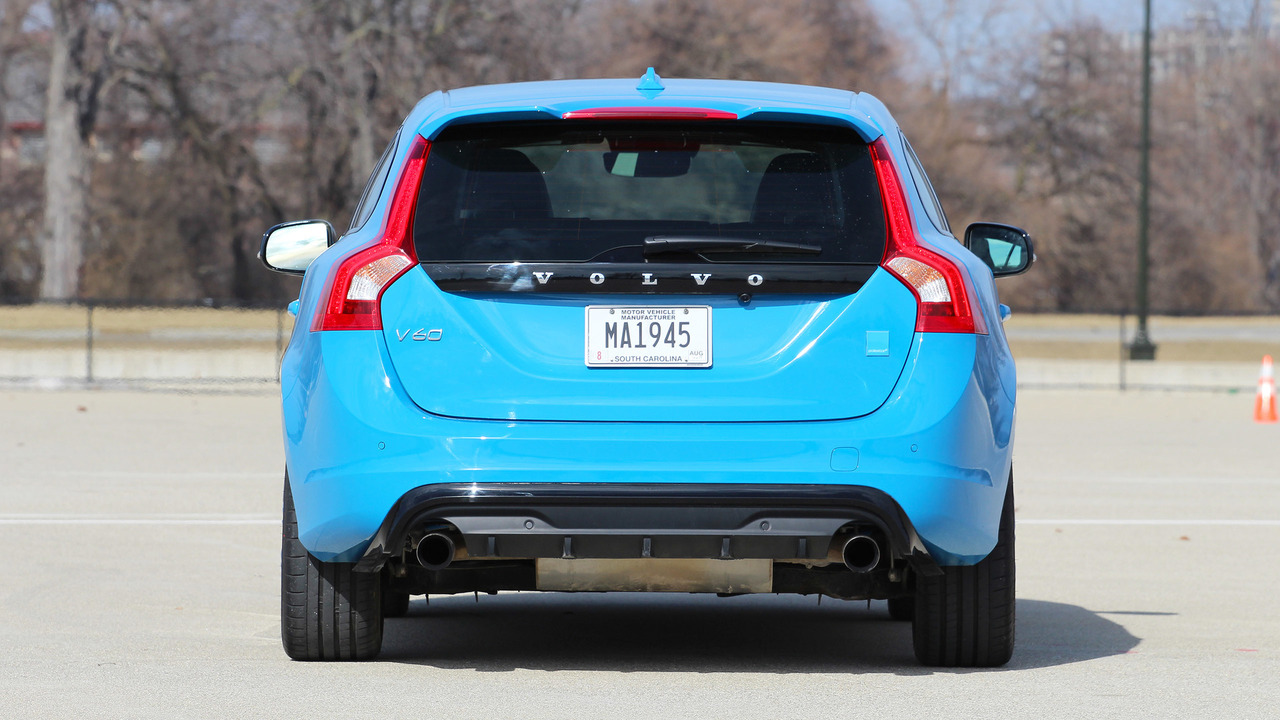
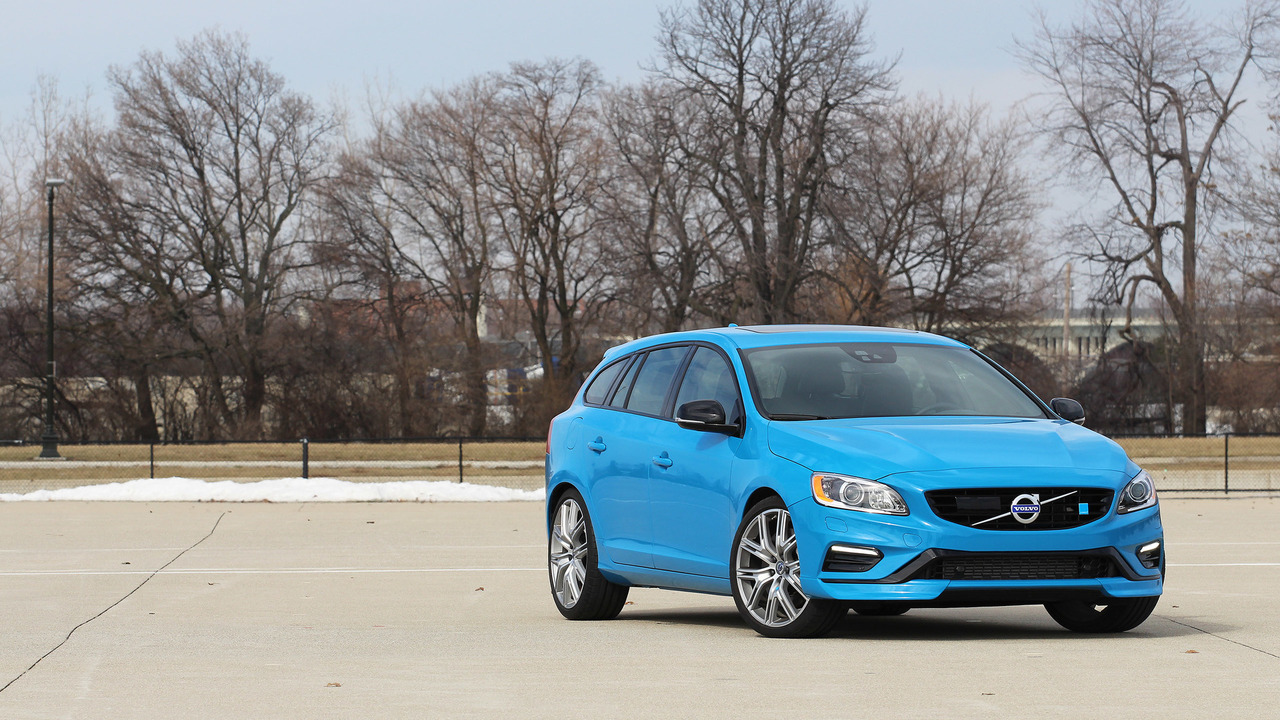
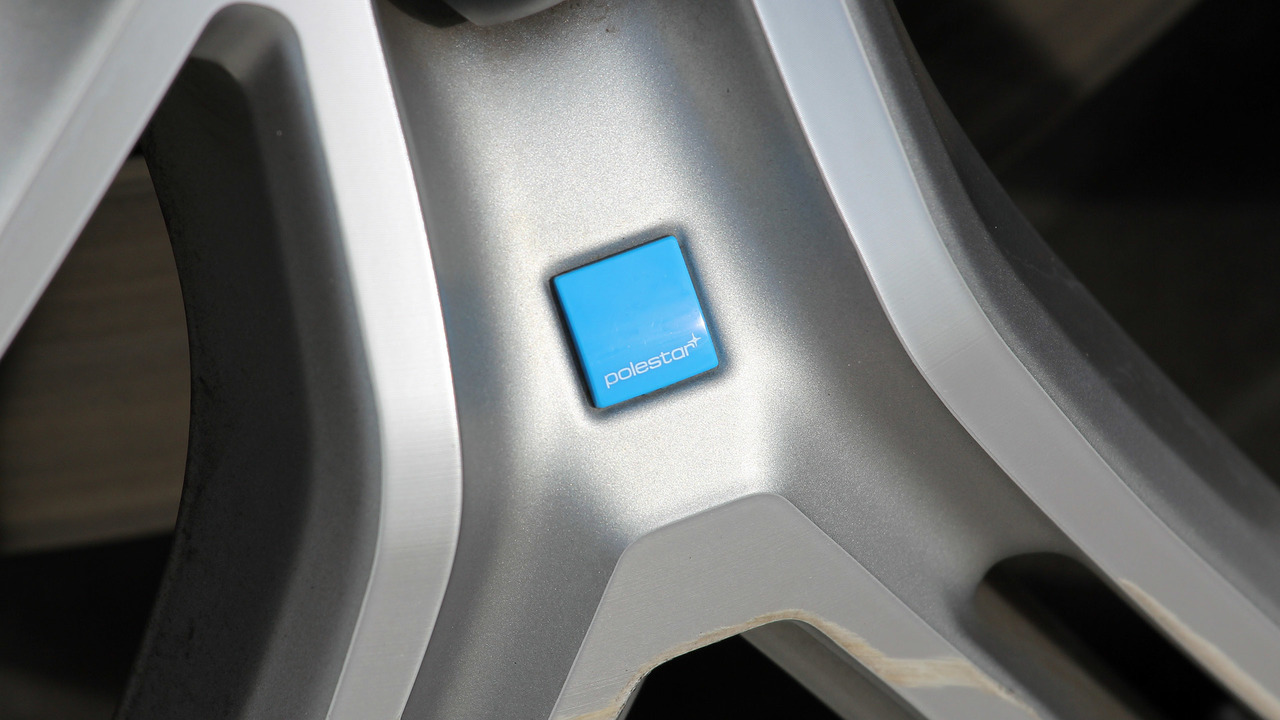
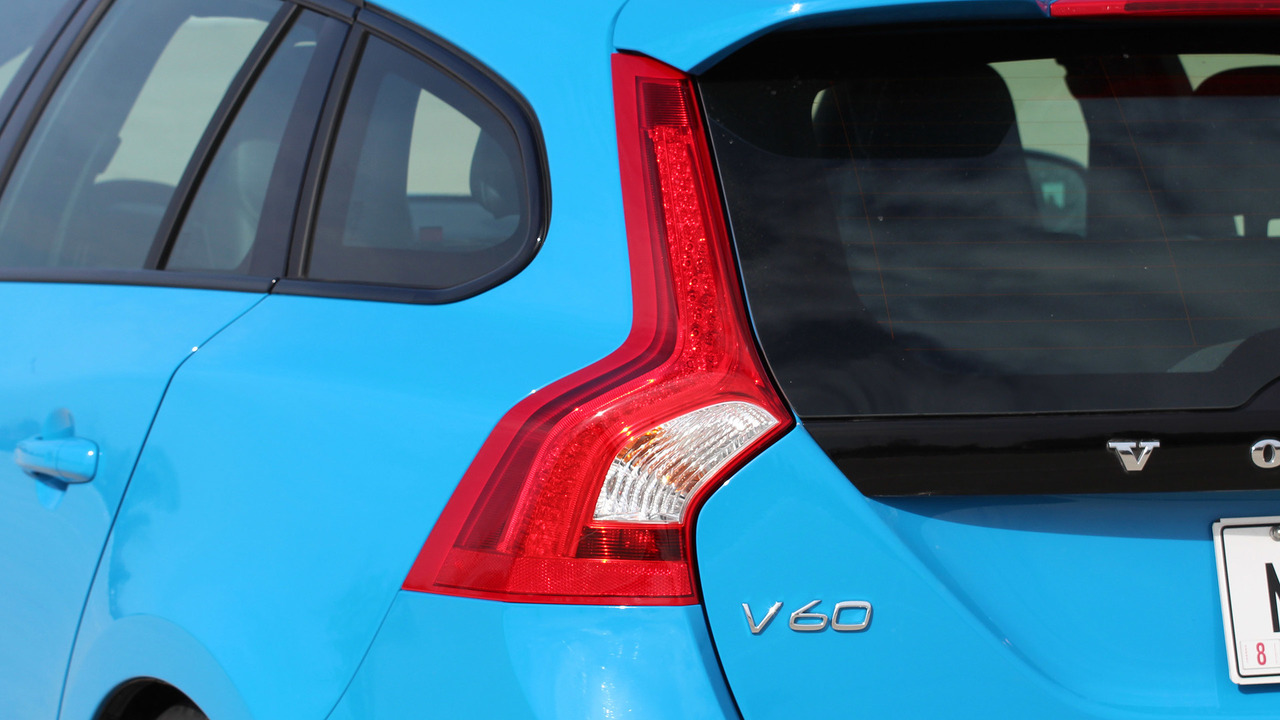
It's also rare without being flashy. You can park one almost anywhere without attracting much attention (unless you get in Rebel Blue), yet the people who know what they're looking at will immediately recognize that this isn't an ordinary Volvo wagon.
If you want an AWD performance car that can haul your family, your luggage, and just about everything else without looking like you're trying too hard, the V60 Polestar is difficult to beat.
Volvo V60 Polestar EngineTwin charged 2.0-liter Inline-Four Output362 Horsepower / 347 Pound-Feet TransmissionEight-Speed Automatic Speed 0-60 MPH4.5 Seconds Drive TypeAll-Wheel Drive Weight3,971 Pounds Seating CapacityFive Base Price$61,600 (2017)


]]> feedback@motor1.com (Jeff Glucker) https://www.motor1.com/reviews/810674/used-volvo-v60-polestar-buying-guide/ https://www.motor1.com/reviews/810850/2027-volkswagen-atlas-first-drive-review/ Tue, 06 Oct 2026 14:00:00 +0000 The 2027 Volkswagen Atlas Fixes What Wasn't Broken: Driven The second-generation Volkswagen Atlas gets nearly all the right updates.
The three-row Atlas is one of Volkswagen's most important models—not just today, but throughout the automaker's history. It's currently on track to account for roughly one-third of Volkswagen's US sales despite its age, putting considerable pressure on the second-generation replacement that recently debuted.
The 2027 Volkswagen Atlas modernizes the brand's best-selling SUV with an all-new exterior and a fresh cabin inspired by the Tiguan. But while the changes are significant, they're more evolutionary than revolutionary.
The Atlas now rides on an updated version of Volkswagen's MQB Evo architecture and gets a familiar powertrain with more power than before. Volkswagen hasn't reinvented the Atlas, but it has changed enough to make the new model worth a closer look.
Pros
Comfortable Ride Punchy Engine Well-Appointed Interior
Cons
Very Few Knobs Finicky Capacitive Temperature Controls Too Much Piano Black Plastic
Capable Highway Cruiser
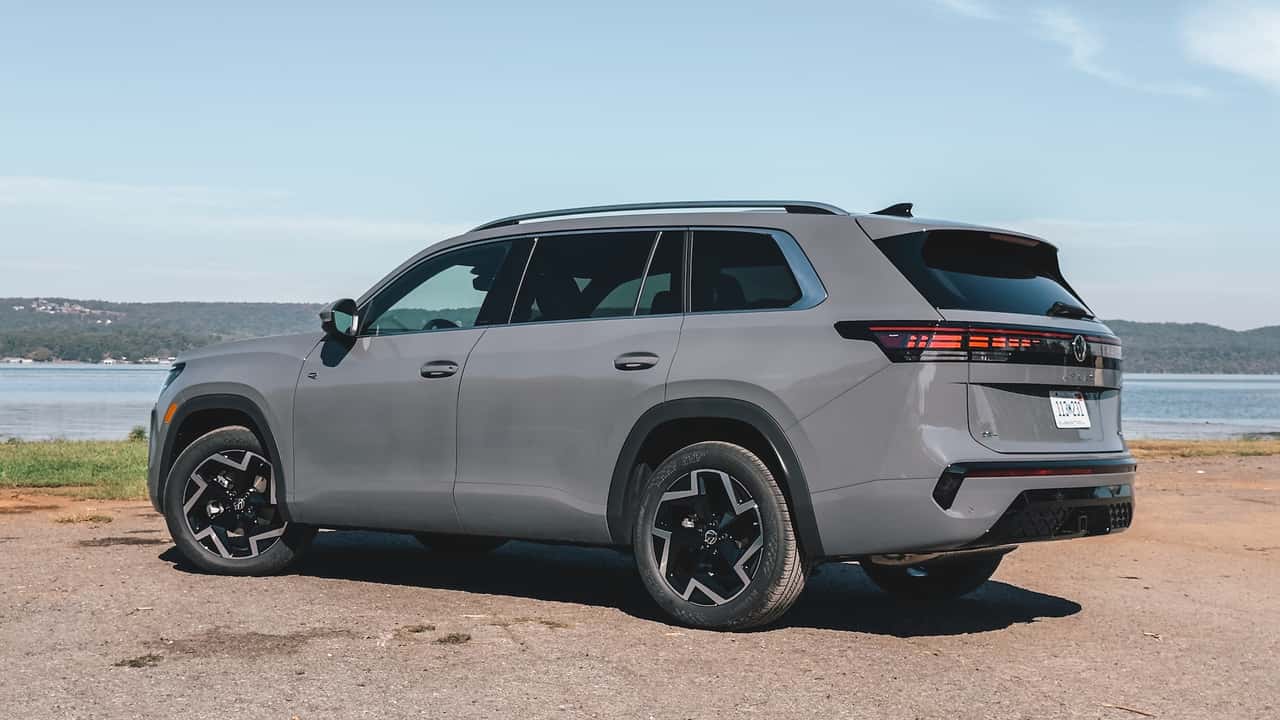 Photo by: Anthony Alaniz / Motor1
On the twisty roads outside Huntsville, Alabama, the Atlas’ 282-horsepower turbocharged 2.0-liter four-cylinder has plenty of power. It accelerates quickly when you need it and makes passing and merging feel effortless. The eight-speed automatic does a good job of keeping the engine in its powerband, too, rarely hunting for the right gear or letting the engine rev unnecessarily.
Switch to Sport mode, and the transmission holds the gear you select, giving you more control when the road gets interesting. The paddle shifters help here too, letting you shift manually when you want.
Front-wheel drive comes standard, while 4Motion all-wheel drive is available for relatively little extra money. If you live somewhere that sees regular snow, it's probably worth the upgrade.
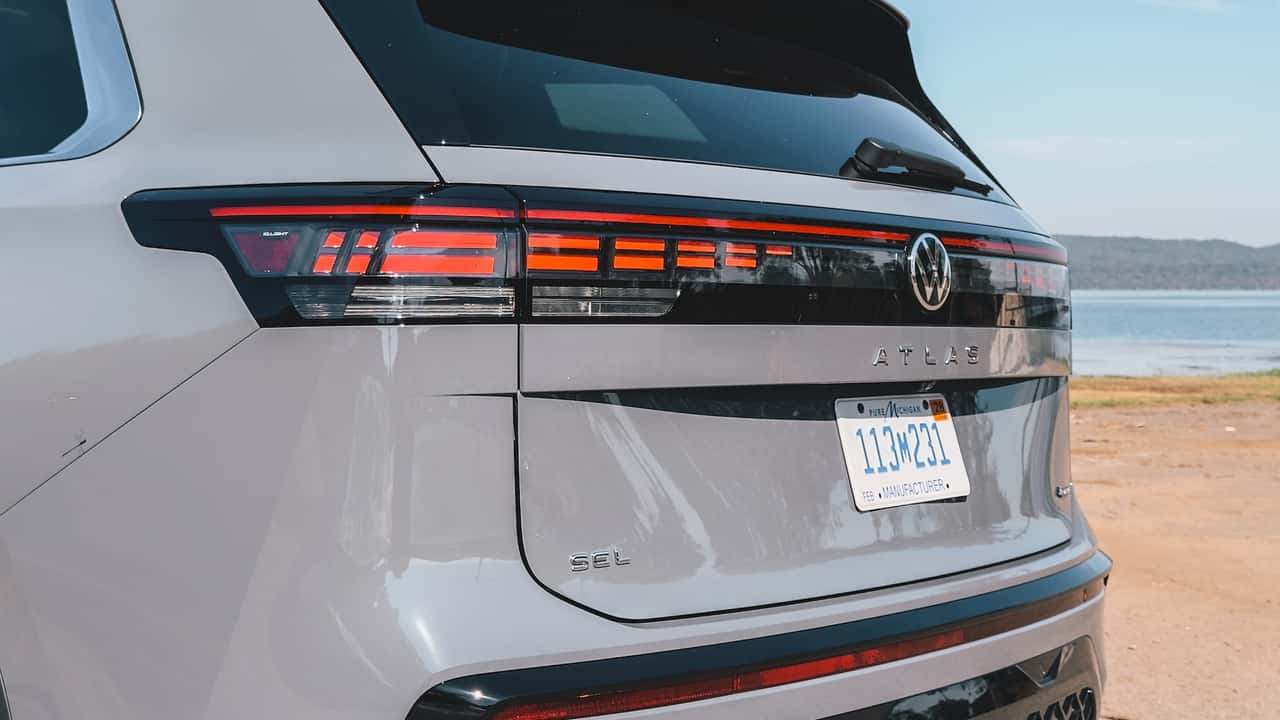 Photo by: Anthony Alaniz / Motor1
 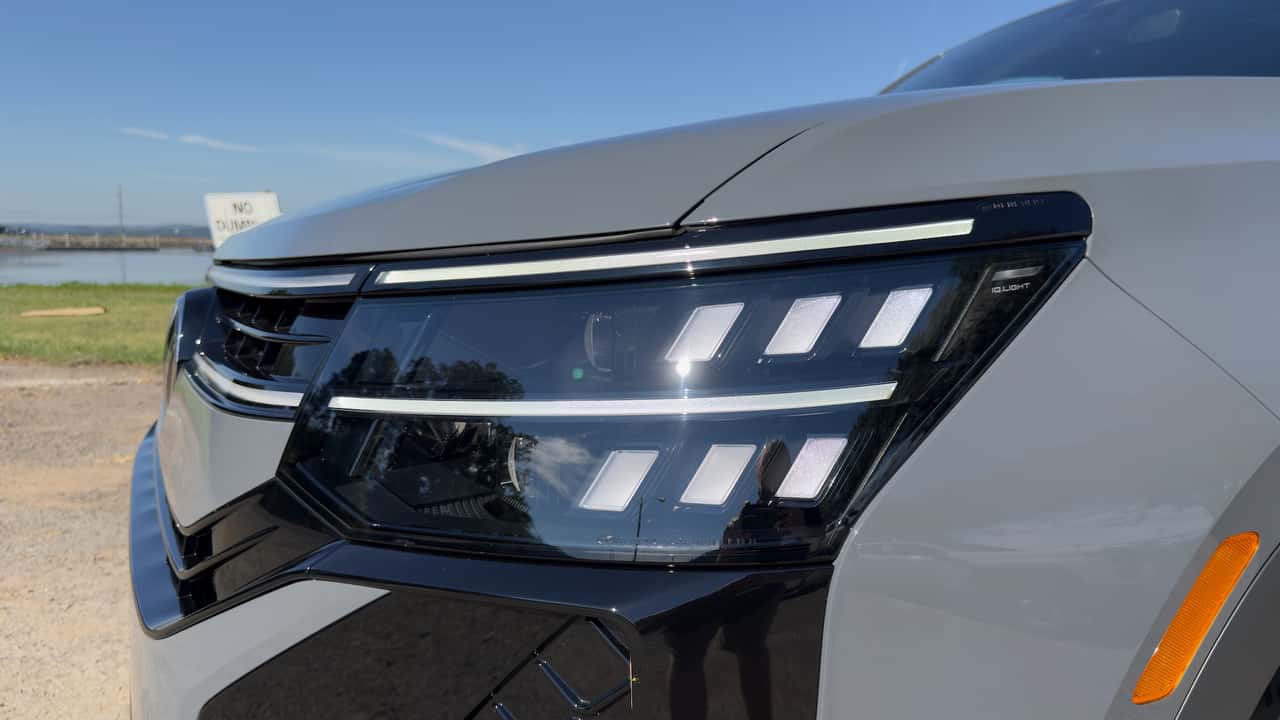 Photo by: Anthony Alaniz / Motor1 Photos by: Anthony Alaniz / Motor1
The ride is firmer than the outgoing model, but never harsh or uncomfortable. The Atlas stays composed through corners, with relatively little body roll for a three-row SUV. It's not trying to be a sporty SUV, but the tighter suspension tuning gives it a more confident feel when you push it through the curves.
The steering is direct, but it's also numb and isolated, offering little in the way of feedback. You can point the Atlas where you want it without much effort, but the steering wheel doesn't tell you much about what the front tires are doing. That's hardly a dealbreaker for a family SUV, but enthusiasts will probably wish for a bit more connection between the road and their fingertips.
Luxury Veneer
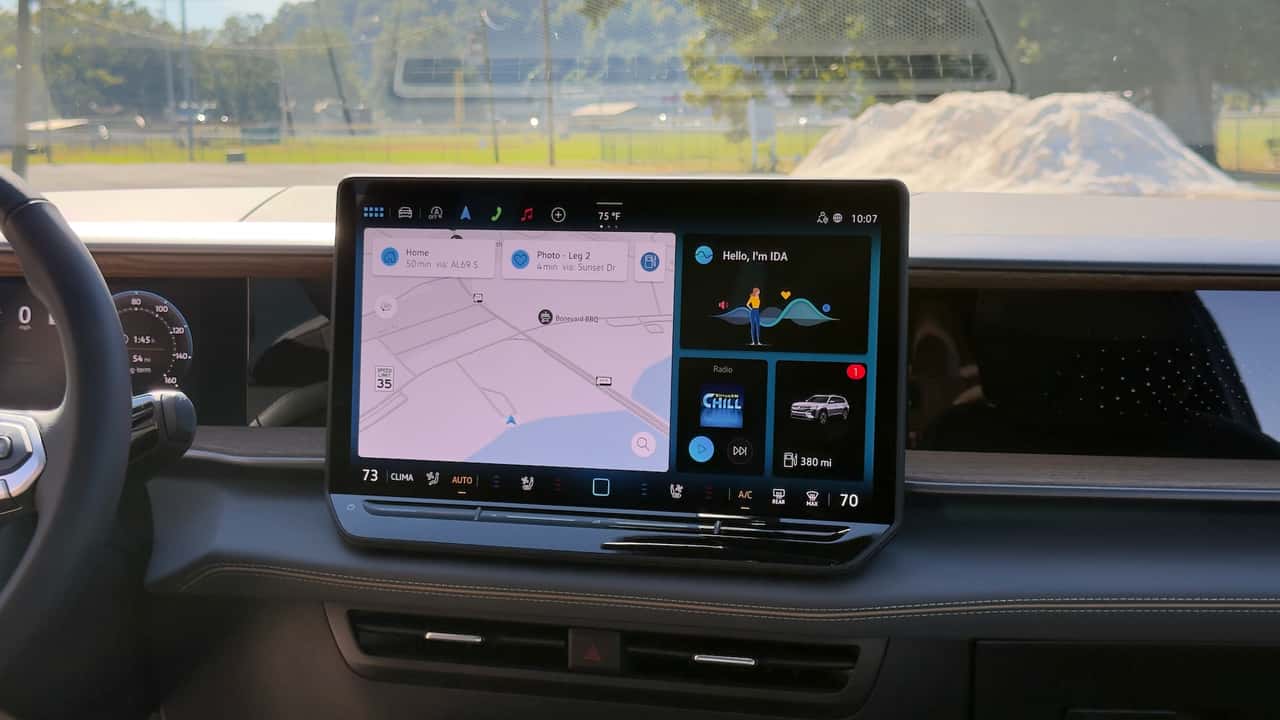 Photo by: Anthony Alaniz / Motor1
The interior of the 2027 Volkswagen Atlas SEL R-Line is a noticeable improvement over the outgoing model. The new materials and updated layout make the cabin look more expensive than it actually is, although that veneer of luxury starts to fade under closer inspection.
The Atlas now gets real wood trim on the dashboard, which looks nice but feels surprisingly thin. There's also still a considerable amount of piano-black plastic throughout the cabin, and, as expected, it quickly collects fingerprints and dust.
This Atlas is equipped with the larger 15.0-inch infotainment screen, along with capacitive controls for the temperature and volume. I called out the same issue in my Tiguan review: The controls can be difficult to see in direct sunlight, and that problem carries over to the Atlas.
The new materials and updated layout make the cabin look more expensive than it actually is, although that veneer of luxury starts to fade under closer inspection.
Thankfully, the temperature controls are almost foolproof. Raised ridges in the plastic separate them from the volume control, so all you have to do is slide your finger in roughly the right direction to raise or lower the temperature.
It's not perfect, but it's also far from the worst solution we've seen.
Unfortunately, there are no other physical HVAC controls, so everything else is handled through the touchscreen. Like the Tiguan, the Atlas does have a physical volume knob between the seats, which also doubles as a selector for the drive modes.
Verdict: Better, But Still Not Perfect
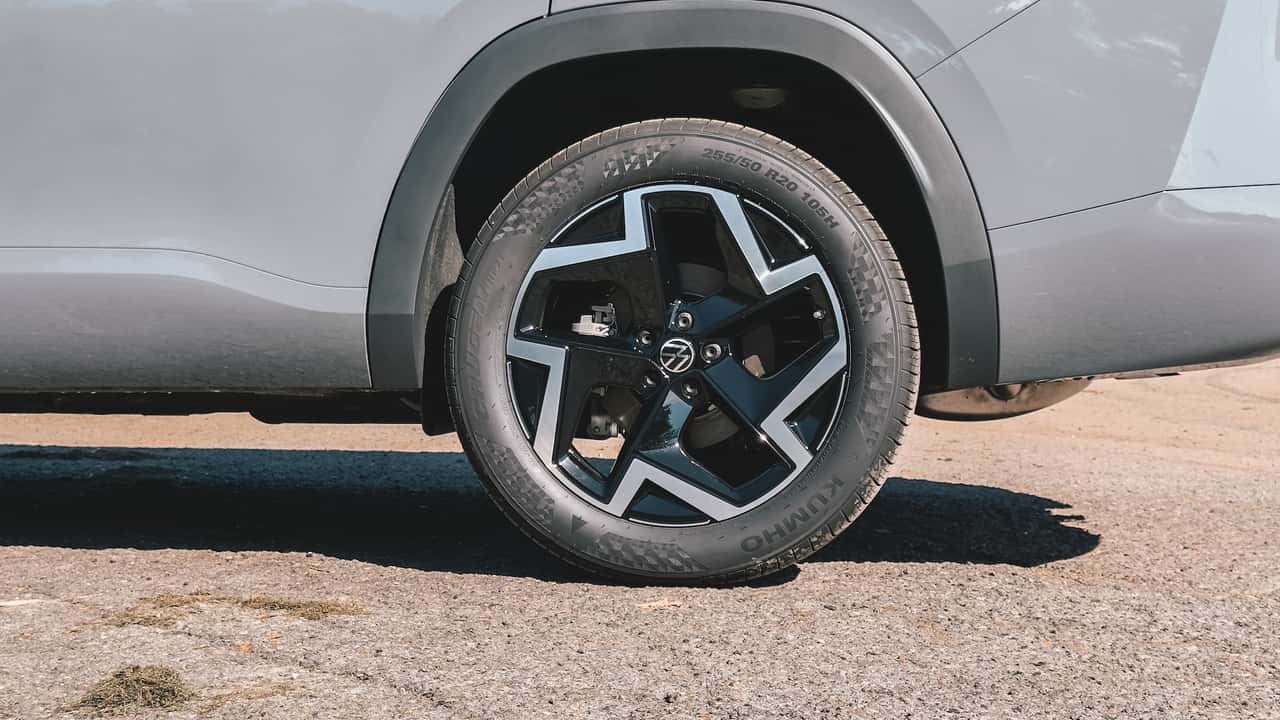 Photo by: Anthony Alaniz / Motor1
Three-row SUVs are everywhere, and choosing the right one ultimately comes down to personal preference. The Atlas is quiet, comfortable, and capable, but if you can't stand capacitive controls, you may want to look elsewhere.
The 2027 Volkswagen Atlas also costs more to get into than several of its competitors. The base SE starts at $43,135, including the $1,525 destination charge. That's more than the 2027 Chevrolet Traverse ($43,085), 2027 Hyundai Palisade ($41,385), and 2027 Ford Explorer ($40,475), all of which offer more horsepower.
The 2027 Atlas is a significant improvement over the outgoing model, but all the added technology seems to have taken some of the personality out of it. The Atlas feels less special than it once did. Big screens, connectivity features, and increasingly comprehensive safety systems are becoming standard across the industry, making it harder for any three-row SUV to truly stand out.
Volkswagen Atlas Competitors
Ford Explorer Honda Pilot Hyundai Palisade Kia Telluride Toyota Highlander The 2026 Honda Pilot Plays It Safe Yet Still Delivers: Review
The 2025 Ford Explorer Is Better (But Angrier): Review
The 2026 Hyundai Palisade Is Better Where It Matters: Review
The 2027 Kia Telluride Flourishes In The Flagship Role: Review
2027 Volkswagen Atlas EngineTurbocharged 2.0-Liter Four-Cylinder Output282 Horsepower / 258 Pound-Feet TransmissionEight-Speed Automatic Drive TypeAll-Wheel Drive Weight4,568 Pounds Efficiency20 City / 27 Highway / 23 Combined Seating Capacity7 Towing5,000 Pounds Cargo Volume21.2 / 55.9 Cubic Feet Base Price$43,135 As-Tested Price$54,426
]]> feedback@motor1.com (Anthony Alaniz) https://www.motor1.com/reviews/810850/2027-volkswagen-atlas-first-drive-review/ https://www.motor1.com/reviews/810838/2027-kia-ev3-first-drive-review/ Tue, 06 Oct 2026 13:00:00 +0000 The Kia EV3 Is The Affordable EV You've Been Waiting For: Driven The EV3 starts at under $32,000 and has up to 321 miles of range. It's one heck of a bargain.
How’s your monthly fuel spend going at the moment? If you own a diesel truck and I just made you cry a little, I apologize. You probably need that rig, though, and have to keep on trucking. For anyone else who’s been EV-curious, however, Kia just delivered an incredibly intriguing option.
The 2027 Kia EV3 checks a whole lot of boxes for a wide range of car buyers. It’s a compact crossover. The starting price is under $32,000 (and that includes destination). And you can have up to 321 miles of range, depending on the trim you choose.
There are no tricks to disclose, either. The trim you’re most likely to want runs about $35,000 and gives you that max mileage figure. This 2027 EV3 really is a battery-electric crossover with mass appeal.
Pros
Priced To Sell Well Equipped Solid Range
Cons
Rear Suspension Feels Unsettled Over Bumpy Roads Can Still Be Better At Charging Base Model Has The Smaller Battery
Simple, Inexpensive, But Not Cheap
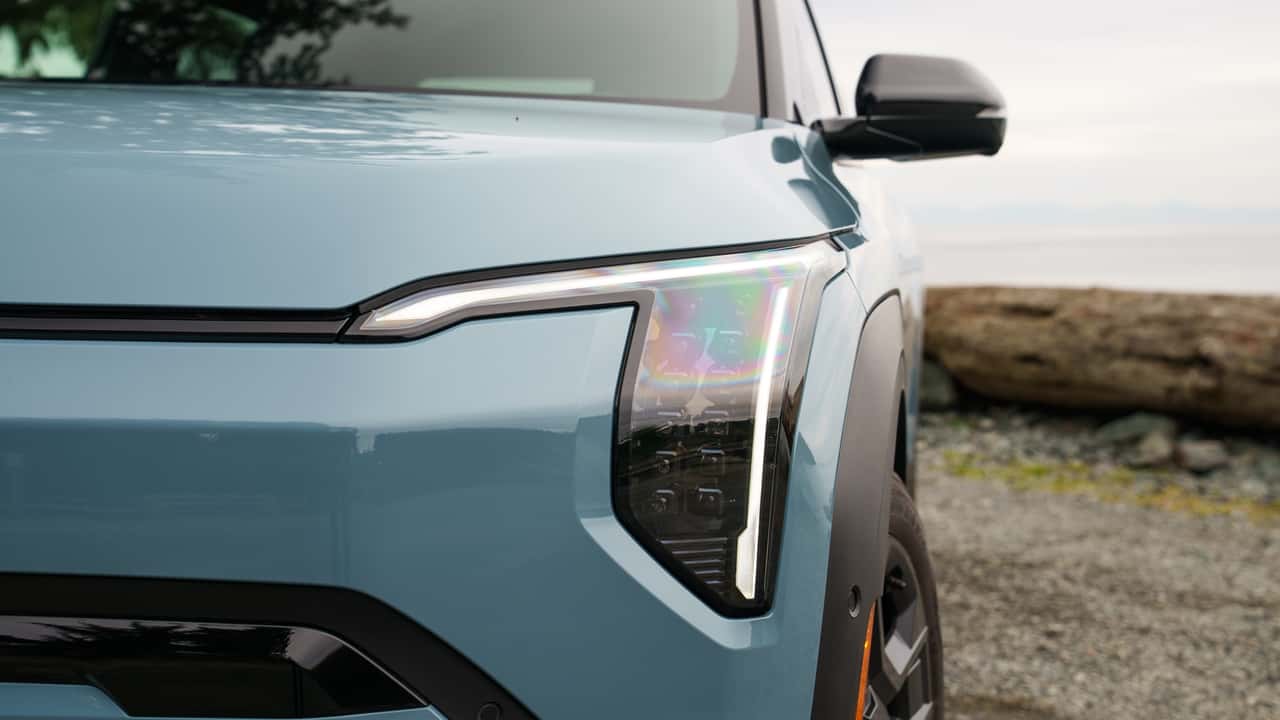 Photo by: Jeff Glucker | Motor1
Kia’s EV3 represents a perfect entry point for anyone looking to switch from a gas or hybrid vehicle to a full-on, battery-electric daily driver. As our world has been stuck at a point where the average new vehicle transaction price lives above $50,000, any vehicle under that seems like a good deal. Especially when it’s not completely void of enticing standard features.
If you had to choose the base EV3 Light, you'd be giving up a fair bit of range and power. That one is front-wheel drive only, produces 201 horsepower, and delivers 221 miles of driving range. Even still, Kia fits it with a dual 12.3-inch panoramic display screen, wireless Apple CarPlay and Android Auto, one-pedal driving, dual-zone climate control, and smart cruise control.
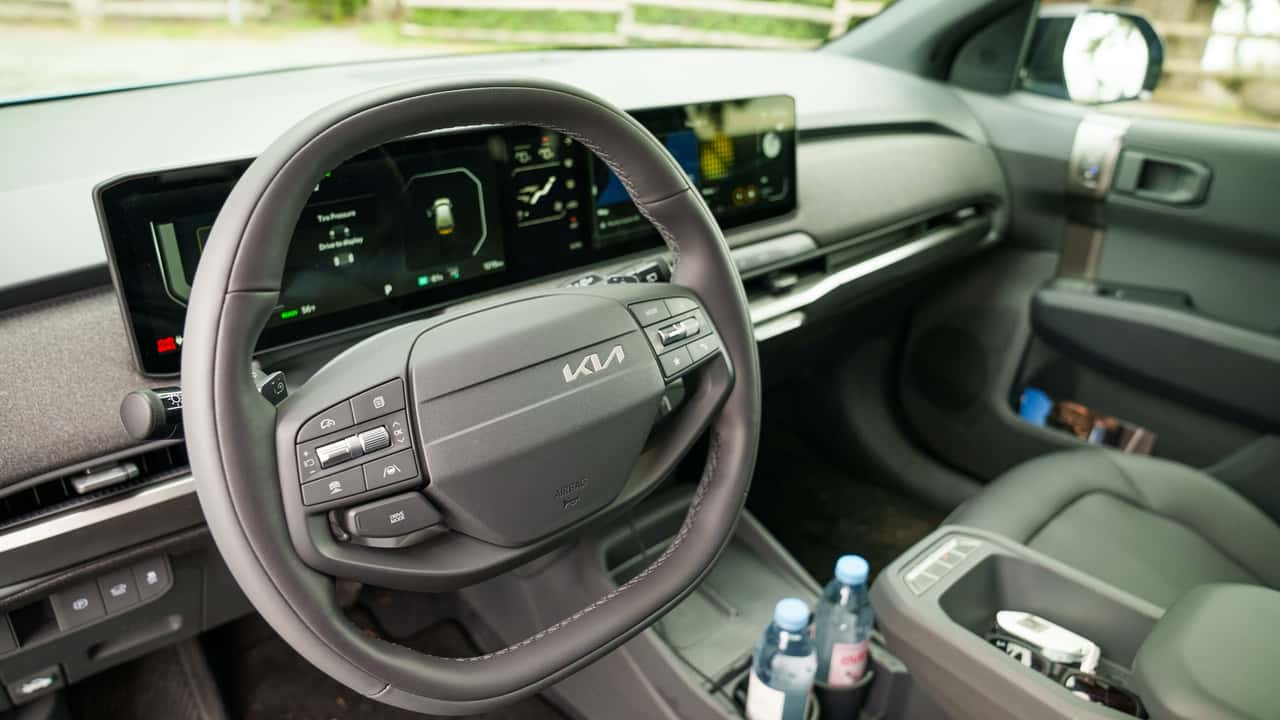 Photo by: Jeff Glucker | Motor1
 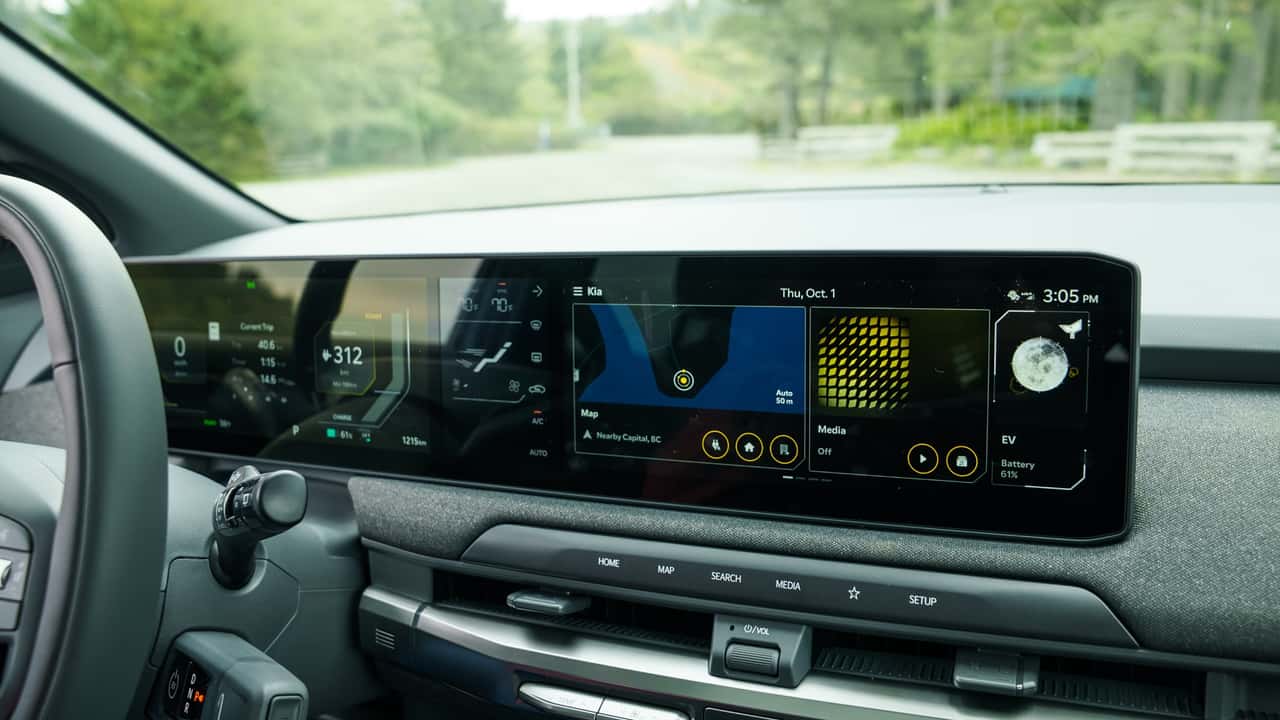 Photo by: Jeff Glucker | Motor1 Photos by: Jeff Glucker | Motor1
Every other model in the lineup builds from there, offering more range, power, exterior trim upgrades, and interior amenities. You could choose to spend a bit more on the EV3 Wind to maximize your range, go mid-grade for the Land to get more power, or jump to the GT-Line or GT for the most power and style.
Regardless, you’ll never touch that $50,000 mark. The top-of-the-line Kia EV3 GT starts at $47,385. And the version you’ll actually want will most likely be under $40,000. Stepping up just one trim from the base to the Wind nets you a 321-mile driving range, 10-way power driver’s seat, heated front seats, a wireless phone charger, and acoustic front glass.
Well Damped, Just Mind Bigger Bumps
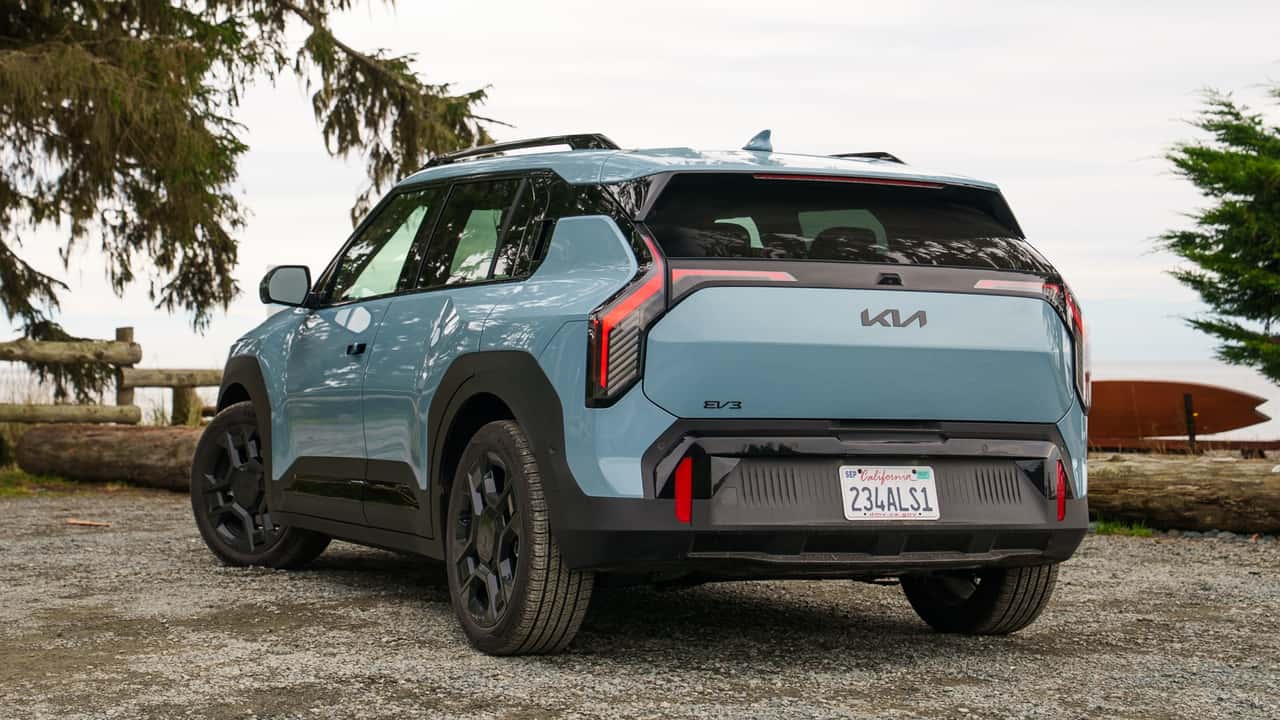 Photo by: Jeff Glucker | Motor1
Piloting the 2027 Kia EV3 around Canada’s stunning Vancouver Island, I find the power delivery perfectly acceptable. I start my day in an EV3 GT-Line. Here, a dual-motor all-wheel-drive setup comes standard and features 261 hp and 284 pound-feet of torque. Range dips to 280 miles, per the EPA, which I believe still sits in the realm of daily-driver acceptability for the average consumer.
Steering is predictably light. I’m not expecting sports-car heft here, so the tiller's weight is proportional to the vehicle's type. It’s effortless around town, and if you need a touch more, you can put the EV3 into Sport mode, which adds a dash of off-center weight.
Initially, I’m quite impressed with the way the suspension is damped. The ride is extremely comfortable, especially for a vehicle in this segment. There’s no suspension crashing, even as I hustle my way around the more open roads outside of Victoria. And the brakes are comfortable and consistent. If you want to let the car handle more of the braking, however, Kia equips the EV3 with the third generation of its i-Pedal system.
Initially, I’m quite impressed with the way the suspension is damped. The ride is extremely comfortable, especially for a vehicle in this segment.
This affords you a greater range of regen modes, including full one–pedal driving. Plus, you can now use the system when driving in reverse. I’m not sure who needs that, but when Kia announced it, there was a smattering of cheers in the room. So this one seems like a win for one-pedal reverse driving enthusiasts.
Eventually, however, the driving experience and the segment level catch up to each other.
There’s a stretch of road on the Western side of Vancouver Island, somewhere between Port Renfrew and Victoria, that’s filled with what I assume are frost heaves. If you take this stretch of road a bit over the posted speed limit, the frost heaves quickly unsettle the car's rear end. Slow down, and everything’s fine, and everything was fine on all other bits of the road I encountered on this lovely spot of land off Canada’s western coast.
Acceptable Styling, Inside And Out
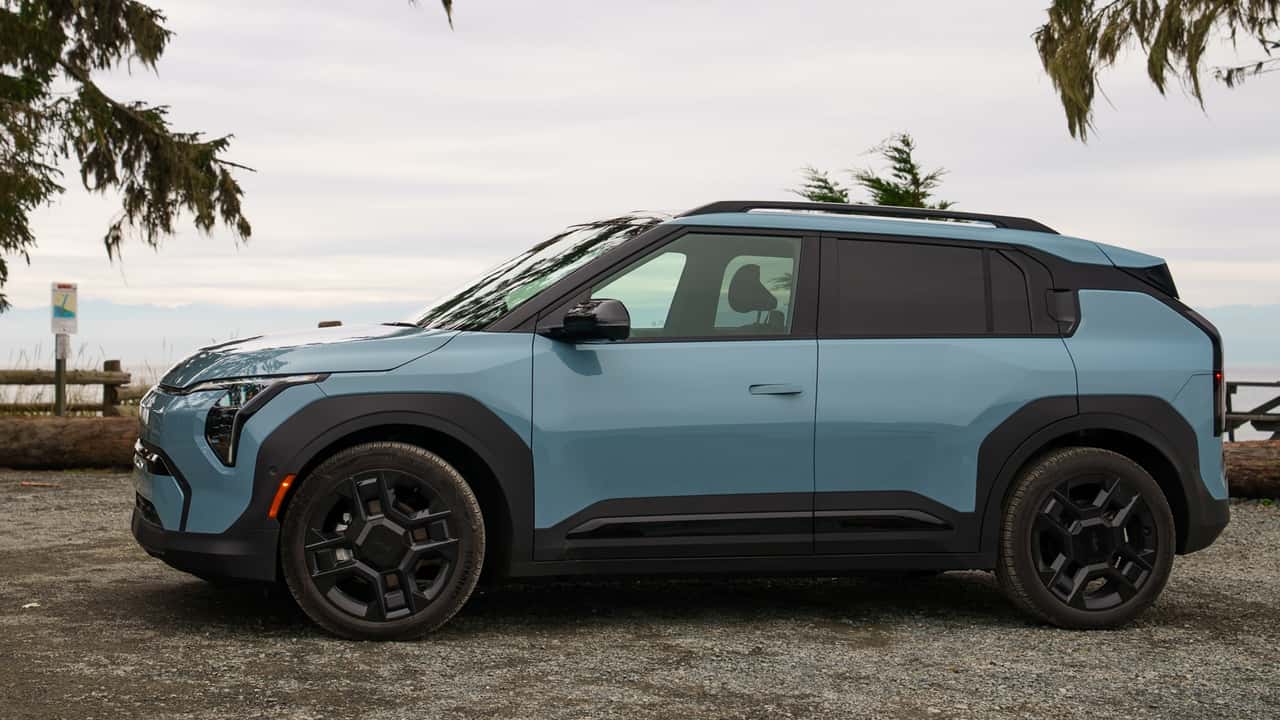 Photo by: Jeff Glucker | Motor1
Kia’s “Tiger Nose” design language works better than you might expect on what should be a boring vehicle. No one gets too excited about a compact crossover. But this one will stand out in the otherwise “sea of same” that is the segment. Short overhangs hint at a roomy interior, hidden door handles lend a premium touch, and the daytime running lamps tie the car into the rest of the family.
It looks like a scaled-down EV9, which should be a sweet spot for potential buyers.
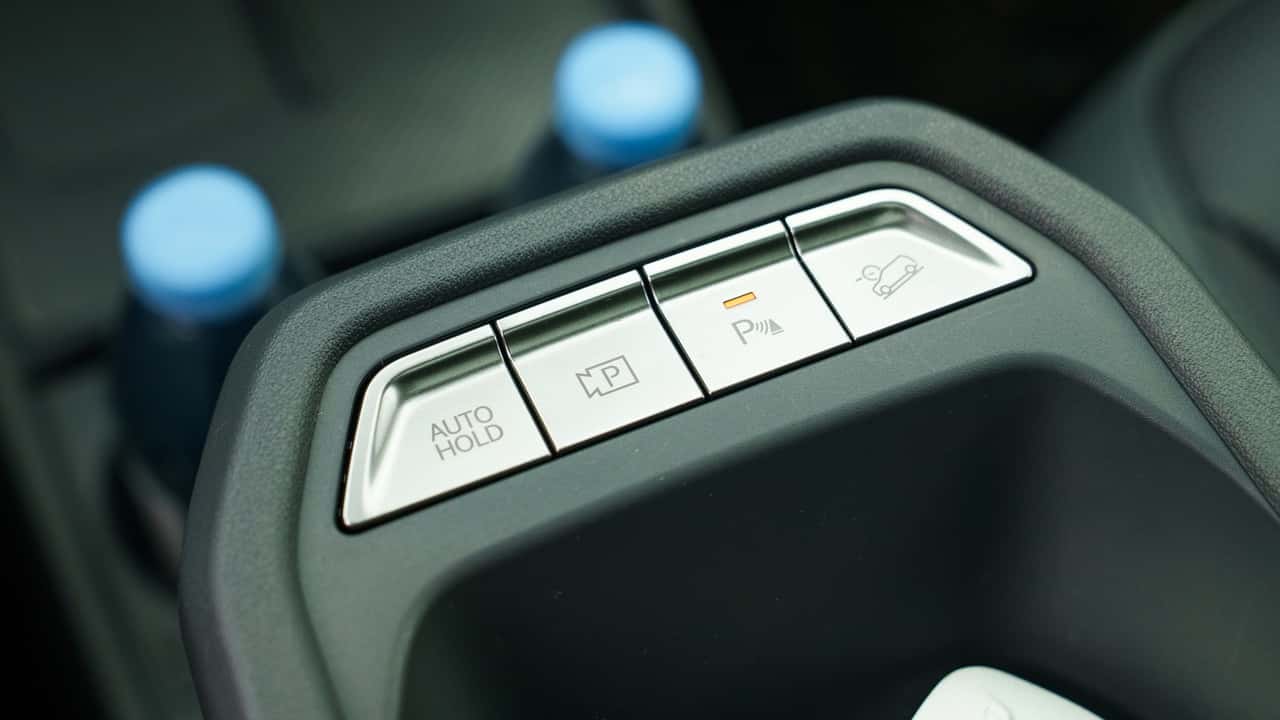 Photo by: Jeff Glucker | Motor1
Things are equally appealing in the cabin. The large display atop the dash delivers nearly 30 inches of screen space and comprises a pair of 12.3-inch displays housed in a single unit. Dual-zone climate control comes standard, as does wireless Apple CarPlay and Android Auto. There are five USB ports, a smart key, and more than 56 cubic feet of cargo space when you fold down the second-row seats.
Step up to the GT and GT-Line models, and you gain an eight-speaker Harman Kardon sound system, Digital Key 2.0, and the onboard power generator for vehicle-to-load capability.
Power, Range, And Charging
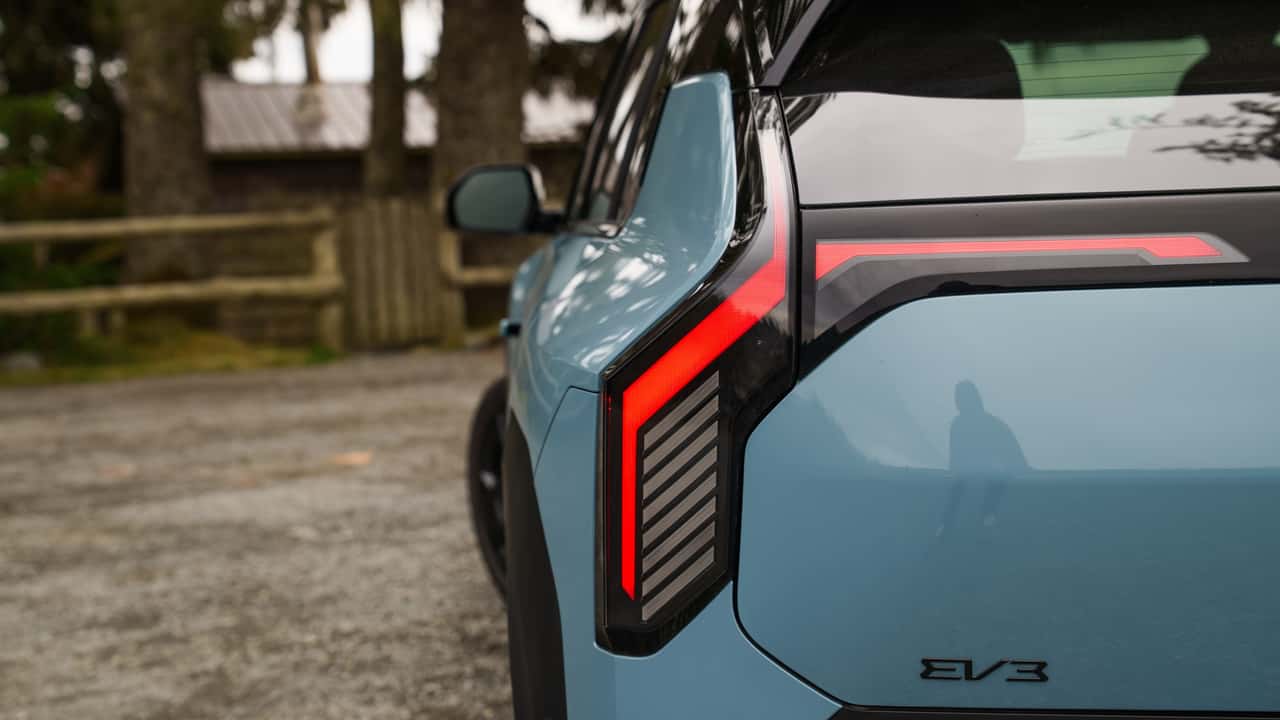 Photo by: Jeff Glucker | Motor1
The base EV3 Light model is the value play that allows Kia to advertise a sub-$30,000 starting price. The vehicle is well-equipped, but its 221-mile range from the 58.3-kilowatt-hour battery pack and FWD-only setup won’t appeal to everyone. Plus, that $30k figure doesn’t include the $1,495 charge for destination and handling.
The Wind, Land, and GT-Line trims are offered with FWD or AWD, and both feature the more enticing 81.4-kWh pack. The FWD version of each delivers 321 miles of range, 201 hp, and 209 lb-ft from a single motor, while AWD models jump to 261 hp and 284 lb-ft, with range dipping to 280 miles.
Step up to the GT and power climbs to 288 hp and 345 lb-ft of torque. Curiously, range remains at an EPA-estimated 280 miles. But I imagine if you put your boot into it a bunch, that number will dip a bit.
Since the EV3 rides on Kia’s 400-volt e-GMP, charging is merely adequate. The smaller pack on the Light takes 29 minutes to go from 10-80 percent on a DC Fast charger, while the rest of the family takes 31 minutes to do the same deed.
All models arrive with a native NACS charge port.
2027 Kia EV3 Verdict: A Simple EV With Mass Appeal
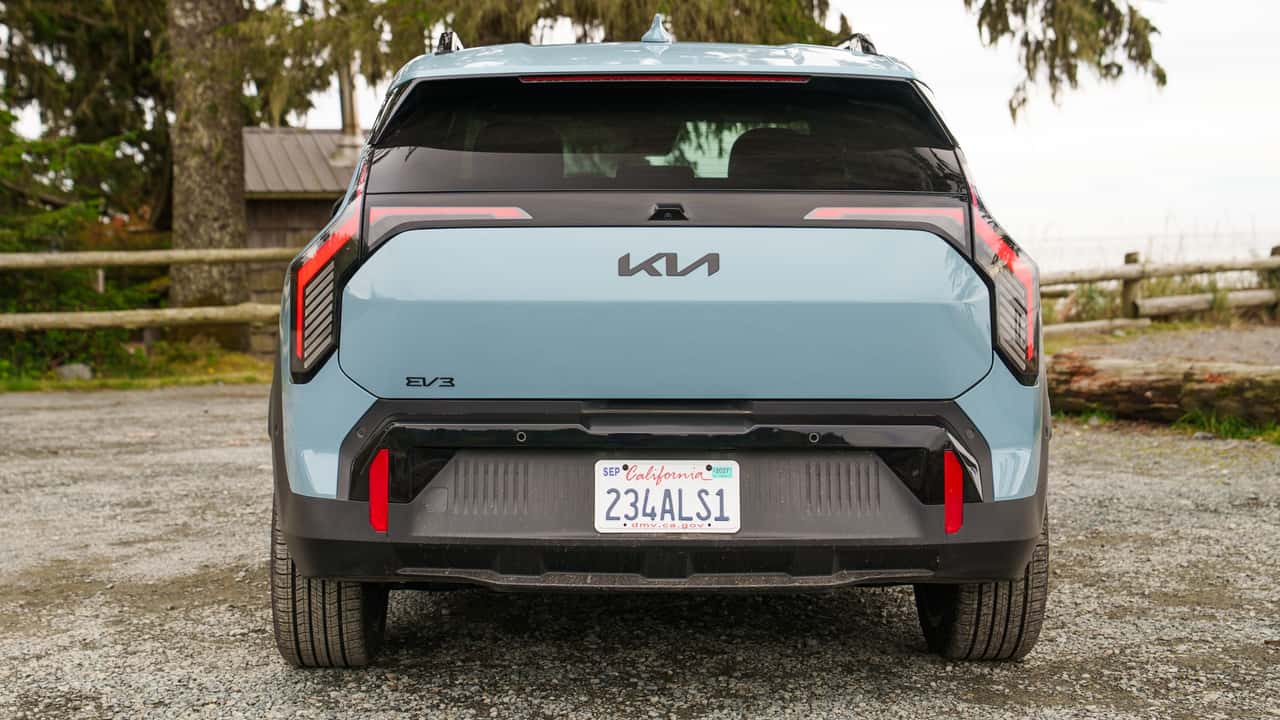 Photo by: Jeff Glucker | Motor1
The 2027 Kia EV3 checks a lot of boxes, especially at a time when consumer appeal for electric vehicles is on the rise again. While some automakers chase the up-and-down trends in what buyers say they want, Kia (along with Hyundai and Genesis) continues on a course it set years ago: affordable, well-built vehicles with an expanding range of electric offerings.
The EV3 now represents the entry point to that path, and it’s a whole lot of car for not a whole lot of money. I suspect I’ll see plenty of these on the road in short order… sailing past gas pumps with ever-higher per-gallon prices.
Kia EV3 Competitors
Chevrolet Bolt Mitsubishi Eclipse Sportback Nissan Leaf Chevrolet Bolt Pros And Cons: So Nice They Killed It Twice
The 2026 Nissan Leaf Redefines Basic Transportation: Review
2027 Kia EV3 MotorPermanent Magnet Synchronous Motor (FWD) / Permanent Magnet Synchronous Motor + Induction Motor (AWD) Output201 HP / 209 LB-FT (FWD) / 261 HP / 284 LB-FT (AWD) / 288 HP / 345 LB-FT (GT) Drive TypeFront-Wheel Drive / All-Wheel Drive Speed 0-60 MPH7.1 Seconds (FWD) / 6.3 Seconds (AWD) / 5.4 Seconds (GT) Maximum speed106 Miles Per Hour Weight3,836 Pounds (FWD) / 4,332 Pounds (AWD) EV Range221 Miles (Standard Range, FWD) / 321 Miles (Long Range, FWD) / 280 Miles (Long Range, AWD) Seating CapacityFive Cargo Volume56.5 Cubic-Feet, Second-Row Folded Down Base Price$31,385
]]> feedback@motor1.com (Jeff Glucker) https://www.motor1.com/reviews/810838/2027-kia-ev3-first-drive-review/ https://www.motor1.com/reviews/810074/used-audi-rs3-buying-guide/ Thu, 01 Oct 2026 14:00:00 +0000 A Used Audi RS3 Is A 400-HP Bargain. Here's Why You Should Buy One Around $35,000 buys you a 400-horsepower five-cylinder, Quattro all-wheel drive, and supercar-rivaling acceleration.
The Audi RS3 has always occupied a strange little corner of the performance-car world. It's essentially an A3 sedan stuffed with a ridiculous engine, big brakes, all-wheel drive, and enough performance hardware to embarrass significantly more expensive machinery.
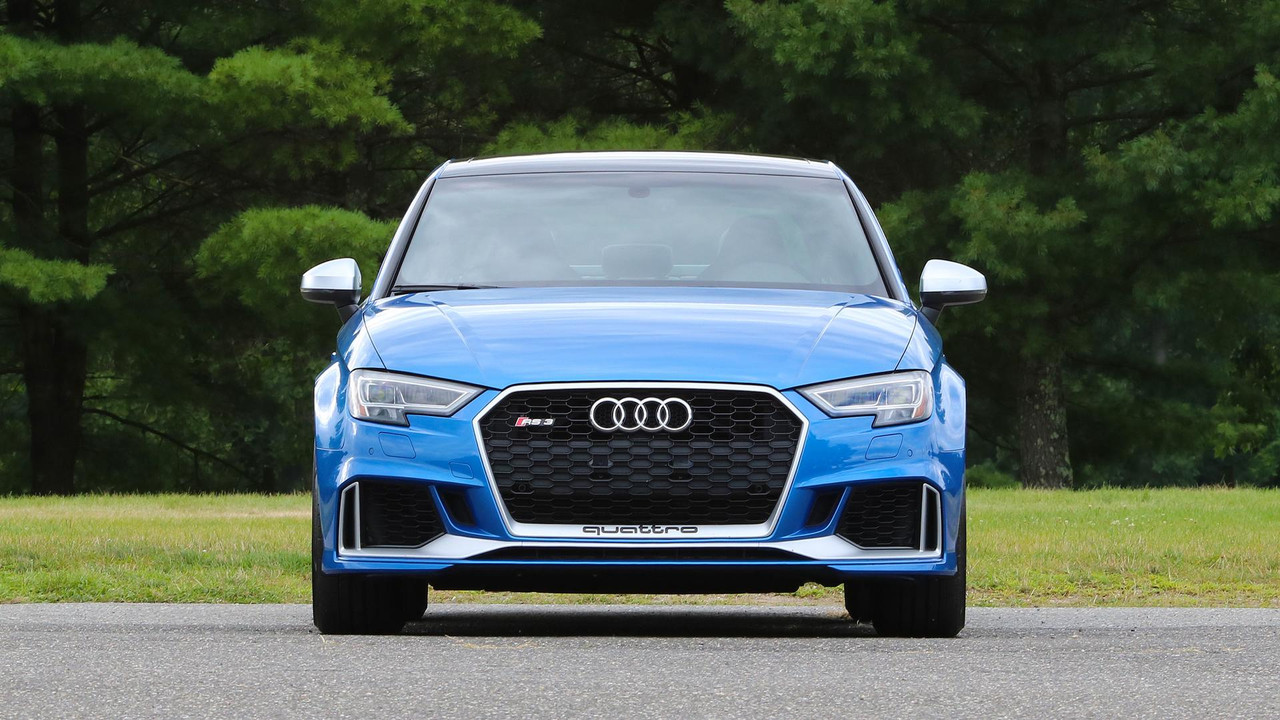
That ridiculous engine is a key part of the overall appeal, too. Under the hood is Audi's turbocharged 2.5-liter inline-five, producing 400 horsepower and 354 pound-feet of torque. It sends everything through a seven-speed dual-clutch transmission and Quattro all-wheel drive. Audi claims a 3.9-second sprint to 60 miles per hour, which was seriously quick when the car arrived—and still is today.
More importantly, the RS3 isn't just a fast A3. It has personality. The five-cylinder engine delivers a soundtrack unlike practically anything else in this price range, while the compact dimensions make the RS3 easy to live with every day.
Now that early examples have dropped into the low-to-mid-$30,000 range, the original RS3 sedan has become a particularly interesting used performance car.
Why Buy The Audi RS3?

Start with that engine.
The turbocharged five-cylinder is the defining feature of the RS3. It's an unusual configuration in a world dominated by turbocharged fours and sixes, and it gives the Audi a distinctive offbeat exhaust note to match its performance capability.
When we drove the first generation of RS3 to arrive in the US, we stated that the car is "as potent as performance compacts get."
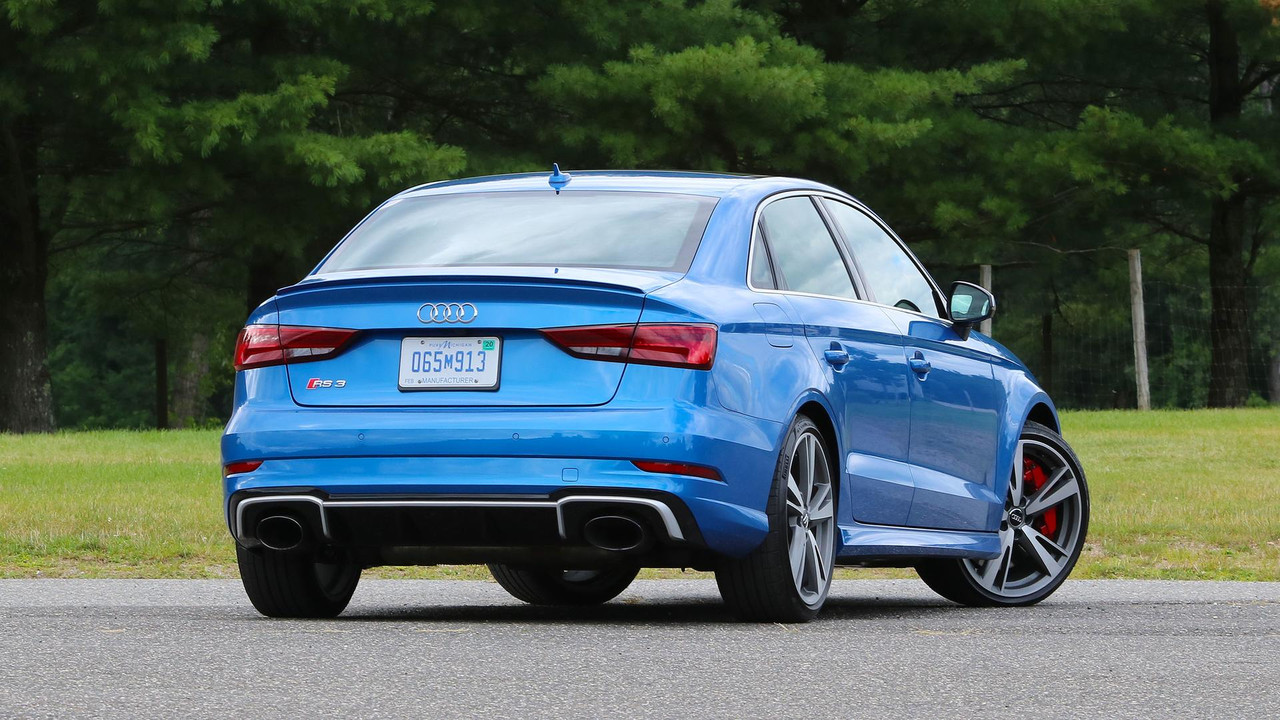
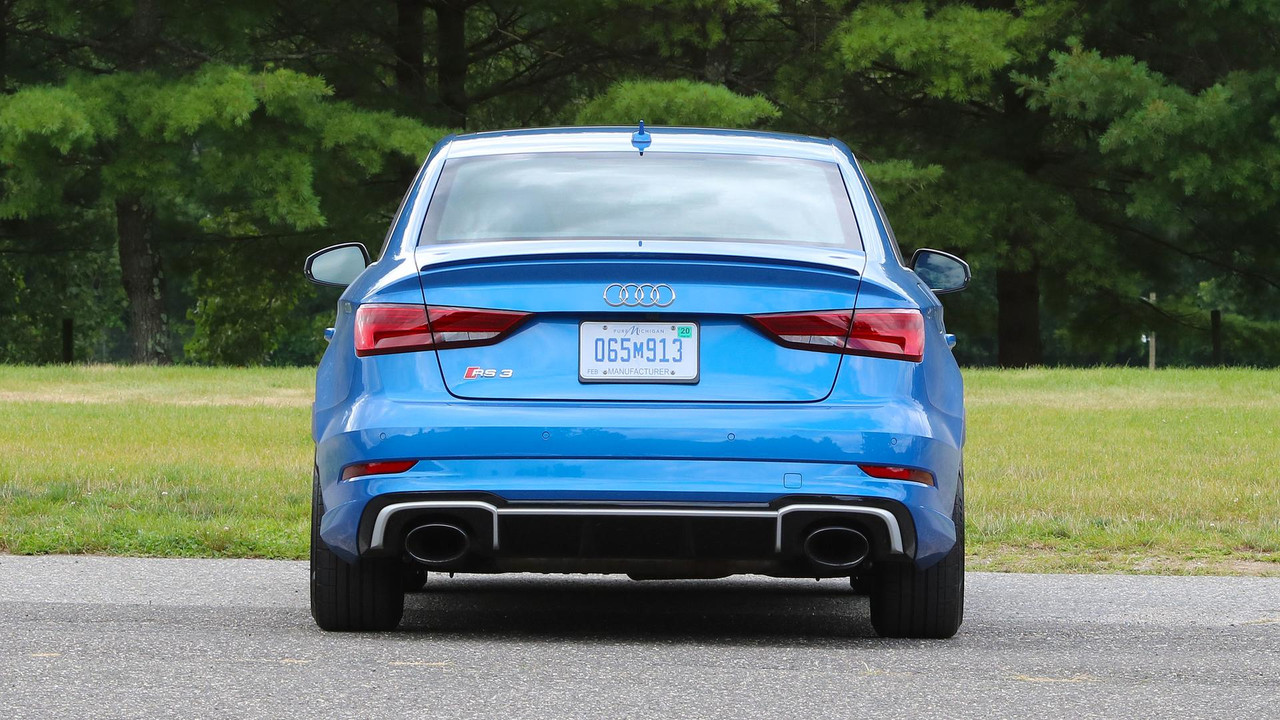
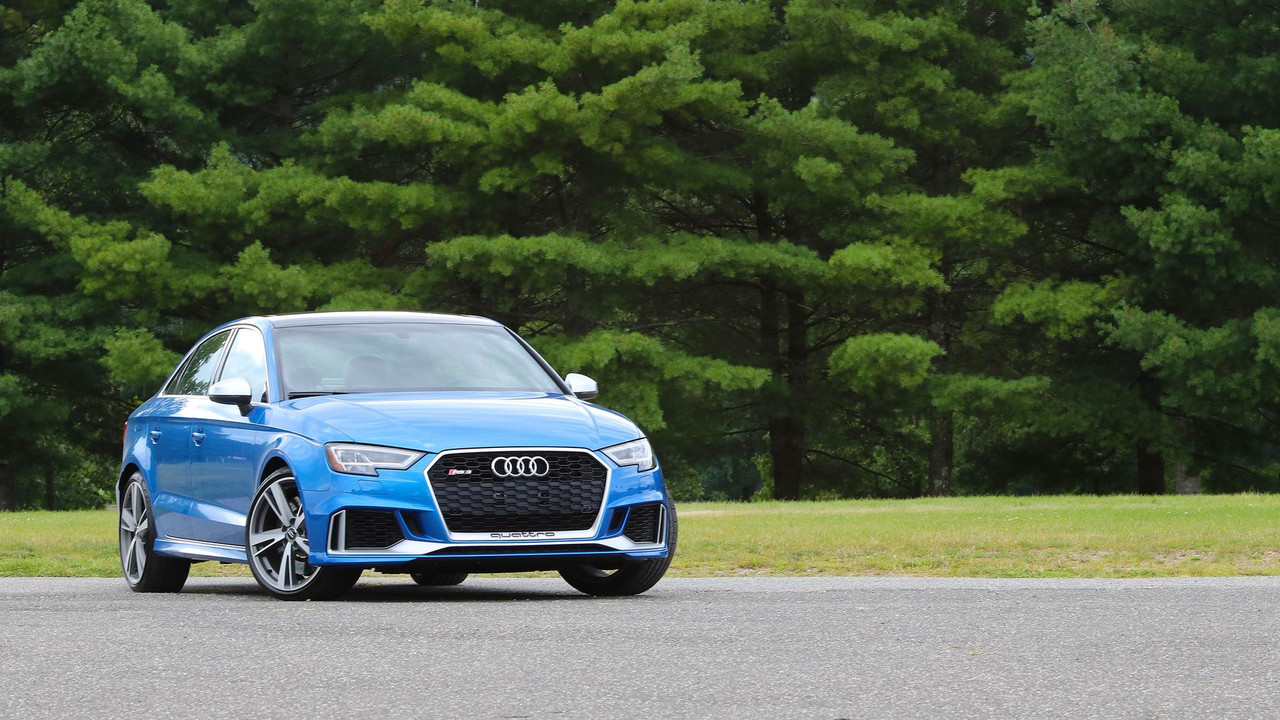
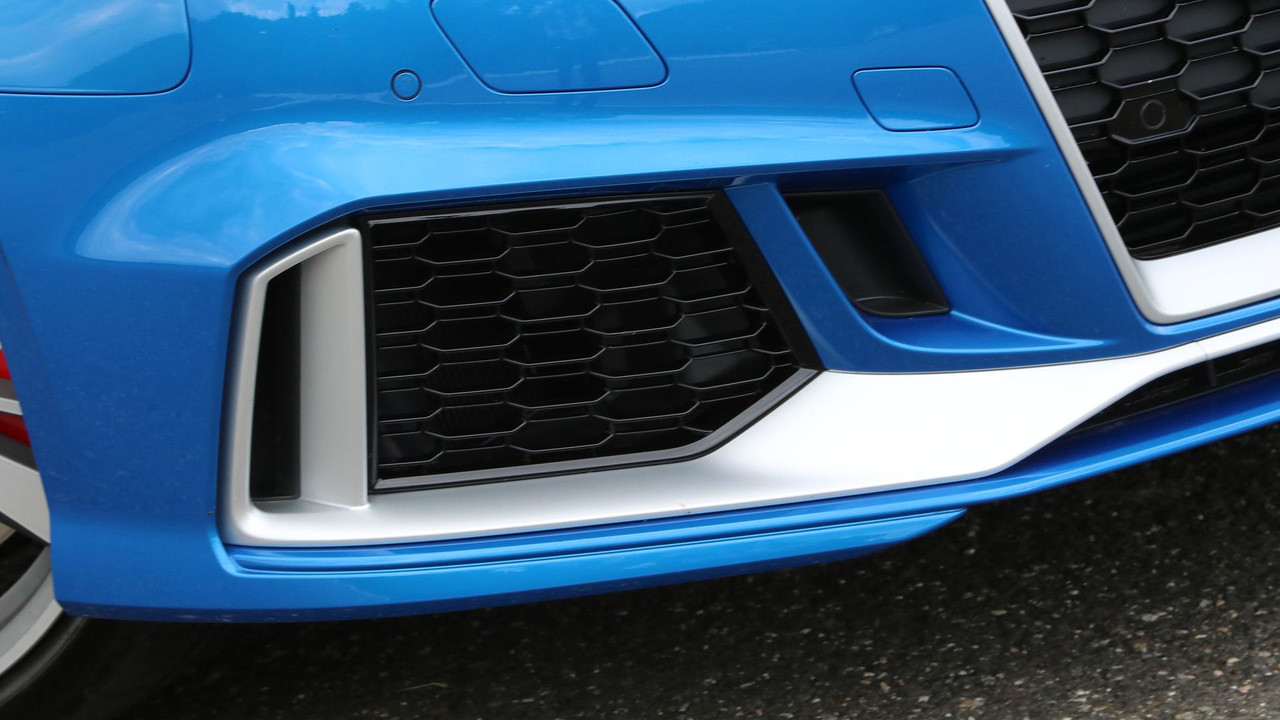
'Diving into turns is huge fun, thanks to the quick ramp-up in steering response off-center, as well as the poised suspension that keeps the car hunkered down to the pavement.' 'Compared to the standard car, the RS3 is widened by 20 millimeters (0.8 inch) in front, to fit the new wheels and stronger, wider front wheel hubs. Add to that standard LED taillights, a trunk spoiler, and new wheel designs, and it has a fair bit more visual punch than a regular S3.' 'That noise, by the way, is all natural from the intake and exhaust; there’s no artificial sound trickery in this car.'
You get four doors, seating for five, a decent trunk, Quattro all-wheel drive, and a cabin that doesn't constantly remind you that you bought the highest-performance version. The ride is relatively civilized, visibility is good, and its footprint isn't much larger than a typical compact sedan.
How Much Is A Used Audi RS3?

Kelley Blue Book currently puts Fair Purchase Prices for early RS3 sedans between roughly $33,000 and $40,000, depending on year. That's a fair bit below their original prices, which started in the mid-$50,000 range.
As of late September 2026, KBB lists the following national-average Fair Purchase Prices:
2017 RS3: $33,200 2018 RS3: $36,500 2019 RS3: $38,100 2020 RS3: $39,400 2020 Nardo Edition: $39,400
KBB's numbers represent typical dealer purchase prices and can vary considerably based on mileage, condition, options, and location. What's interesting is how little money separates the model years. Based on KBB's numbers, there's only about $6,000 between a 2017 RS3 and a 2020 example.
That means condition and service history should probably matter more than the number on the model-year badge.
Which Audi RS3 Should You Buy?

For most buyers, I'd look hardest at a 2019 or 2020 RS3 with the Dynamic and Technology packages.
The price difference compared with an earlier car isn't enormous, and you get a slightly newer example while retaining the same basic formula: turbocharged five-cylinder power, dual-clutch transmission, and Quattro all-wheel drive.
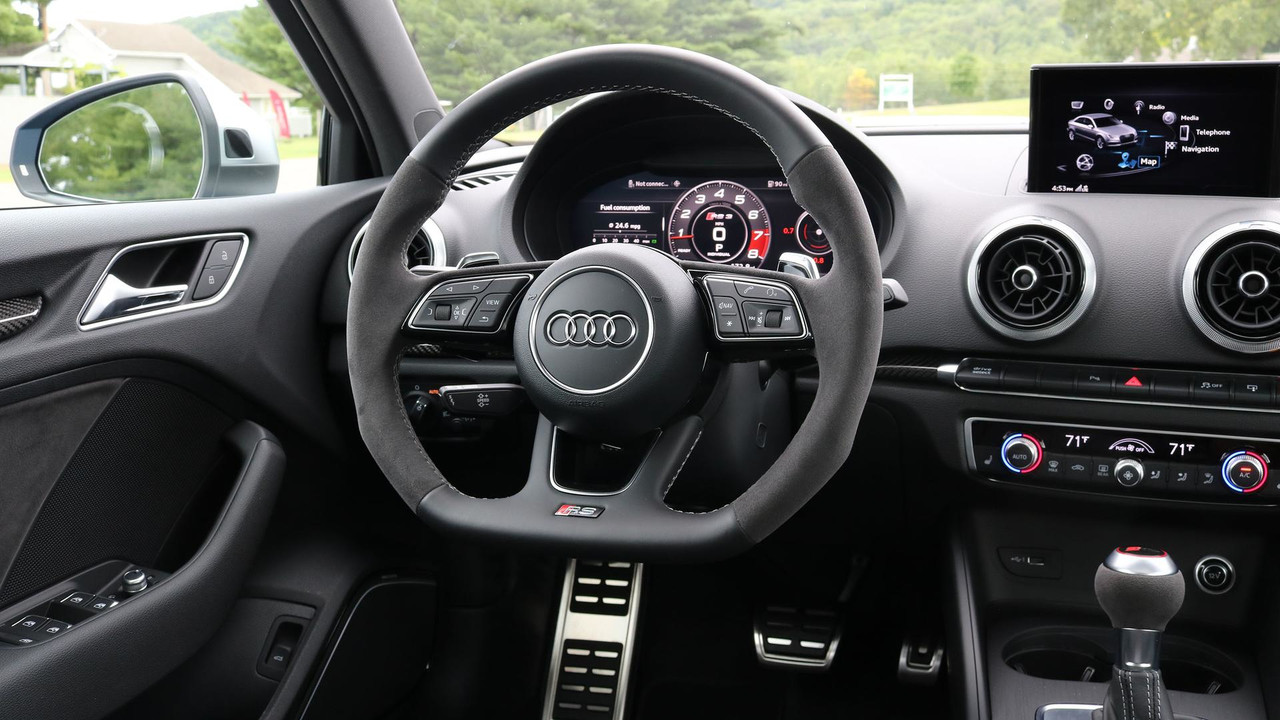
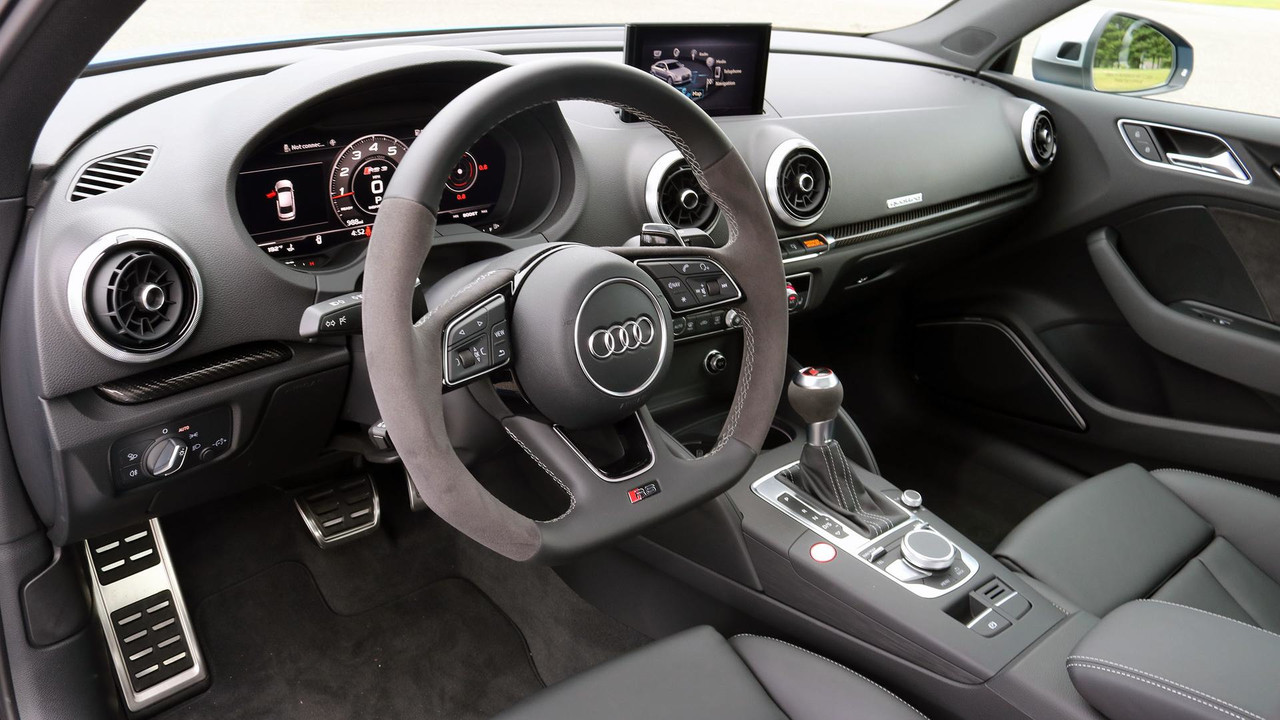
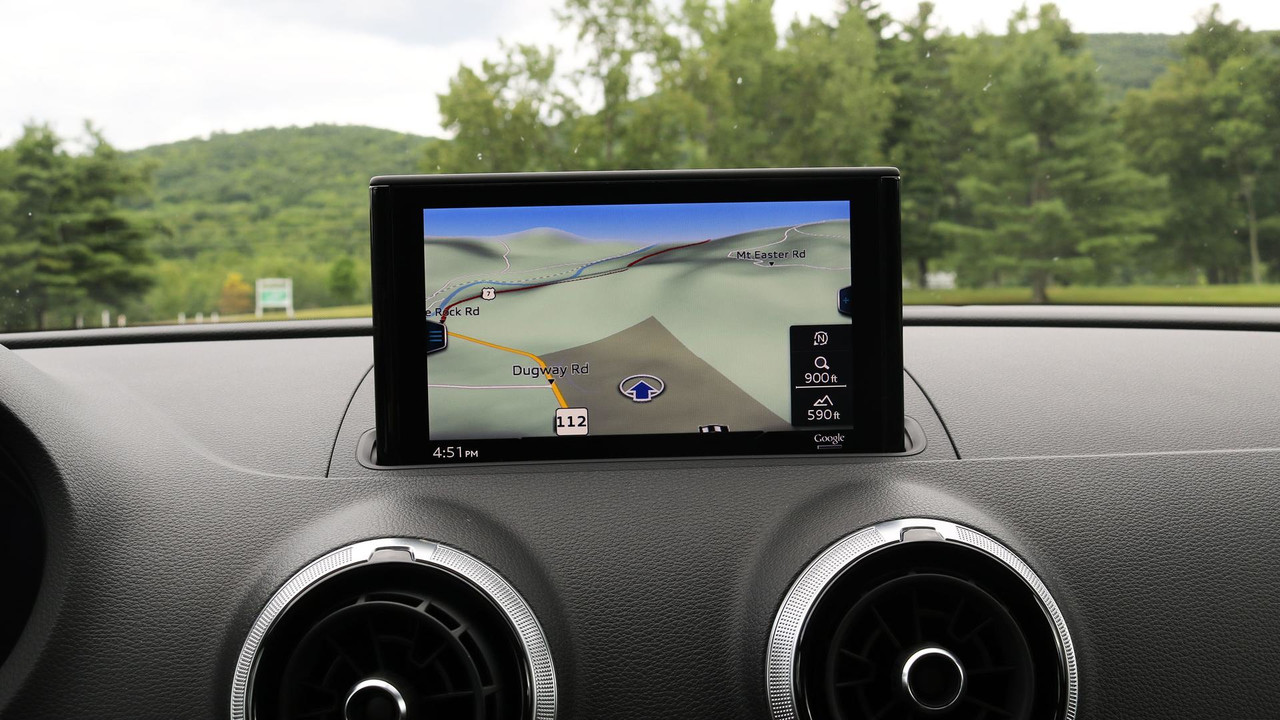
The Technology package is especially desirable because it adds Audi's Virtual Cockpit digital instrument cluster and upgraded infotainment features. The Dynamic package is another worthwhile find. It includes the sport exhaust and wider front tires designed to help counter the RS3's front-heavy layout.
There's one interesting exception. If you want the most hardcore version of the RS3, look for a 2018 with the Dynamic Plus package. This replaces the adaptive Magnetic Ride suspension with a fixed sport setup, adds carbon-ceramic front brakes, and increases the top-speed limiter to 174 mph. Audi discontinued the Dynamic Plus package for 2019.
Those cars are cool, but the ceramic brakes can make a used example significantly more expensive to maintain. Unless you're specifically hunting for a Dynamic Plus car, the standard steel brakes and Magnetic Ride suspension probably make more sense for daily use.
What Could Go Wrong?

The RS3's five-cylinder has proven capable of producing serious power, but you're still buying an aging German performance sedan. Maintenance history matters.
One of the first things to check is the cooling system. Audi issued a technical service bulletin covering coolant loss from the mechanical coolant pump on RS3s from this generation. If the coolant level is low, there's dried coolant around the engine, or the car has a history of coolant warnings, investigate before buying.
Magnetic Ride deserves attention as well on cars equipped with it. Inspect the dampers for leaks and pay attention to knocking, excessive bouncing, or unusual harshness during the test drive. Replacement electronic dampers aren't inexpensive.
Then check the maintenance records. Audi's 2018 factory schedule specifies an AWD clutch fluid change every three years, an S-tronic transmission fluid change every 40,000 miles, spark plugs every 30,000 miles or three years, and brake fluid every two years.
Those records are important because neglecting relatively inexpensive fluid services can turn into expensive drivetrain repairs later.
What Else Could You Buy?

The obvious alternative is the BMW M2. The first-generation M2 offers rear-wheel drive, an available manual transmission, and a more traditional sports-car feel. If driver involvement is your priority, the BMW makes a strong case.
The Mercedes-AMG CLA45 takes a different approach. It has turbo-four power, all-wheel drive, and similarly explosive acceleration in another four-door package, though the Audi's five-cylinder engine gives the RS3 considerably more character.
There's also Audi's own TT RS, which uses essentially the same five-cylinder formula in a smaller and sportier two-door body. It's arguably the more special driver's car, but you sacrifice the RS3's rear-seat access and practicality.
Audi S3 Audi TT RS BMW M2 Mercedes-AMG CLA45
Why The Audi RS3 Makes Sense
The RS3 occupies one of those rare spots in the used market where the practical choice and the ridiculous choice happen to be the same car. You can commute in it. You can put passengers in the back. You can drive it through bad weather.
And when the road opens up, you have a turbocharged five-cylinder producing roughly 400 horsepower and enough traction to hit 60 mph in less than four seconds. Nearly a decade later, there's an even stronger argument to buy one: You can find one for around $35,000.
Look for a clean example with complete maintenance records, preferably one that hasn't spent its entire life chasing more boost. The RS3 might be one of the most interesting performance-car bargains available today.
A Used Mercedes-AMG S65 Doesn't Make Sense. Here's Why You Should Buy One Anyway
A Used Lexus LS 500 Is A Luxury Bargain. Here's Why You Should Buy One
The Acura NSX Finally Makes Sense As A Used Supercar. Here's Why You Should Buy One
Why Buy A Jeep Grand Cherokee Trackhawk? It's A 707-HP Family SUV For Around $60,000
Audi EngineTurbocharged 2.5-liter Inline-Five Output400 Horsepower / 354 Pound-Feet TransmissionSeven-Speed Dual-Clutch Drive TypeAll-Wheel Drive Speed 0-60 MPH3.9 Seconds Maximum speed155 MPH / 174 MPH With Dynamic Plus Weight3,593 Pounds Efficiency19 City / 28 Highway / 22 Combined MPG Seating CapacityFive Base Price$55,875




]]> feedback@motor1.com (Jeff Glucker) https://www.motor1.com/reviews/810074/used-audi-rs3-buying-guide/ https://www.motor1.com/reviews/810357/ford-mustang-rtr-review/ Thu, 01 Oct 2026 10:00:00 +0000 The Mustang RTR Adds Some Attitude To Ford's Cheapest Pony Car: Driven Ford's new RTR series adds a much-needed shot of attitude to the lower end of the Mustang lineup.
Update: The original version of this story noted that RTR did not add any additional steering angle to the car. That was incorrect; Ford and the RTR team gave the car an additional 2 degrees of steering angle. The story has been updated to reflect that.
As far as marketing mashups go, Ford's long-running partnership with drifter Vaughn Gittin Jr. has won the brand two Formula Drift championships and plenty of street cred among certain subsets of automotive enthusiasts. Despite that, the Blue Oval hasn't really offered much from the factory for those who prefer their cars stanced and sliding sideways.
With the introduction of the new RTR package to the Mustang lineup, that honestly hasn't changed much. Though blessed by Gittin's Ready to Rock tuning company, the modifications and upgrades in the package are extremely light, to say the least. Parked next to one of Gittin's drift monsters, there's hardly any comparison.
That said, the base EcoBoost-powered Mustang has lately been languishing on the market as simply the cheapest option. The RTR treatment gives it a tiny but much-needed shot of adrenaline.
Pros
Attainable Starting Price Sharper Looks Slightly Edgier Handling
Cons
Automatic Only Low-Rent Interior No Manual
Entry-Level Hooligan
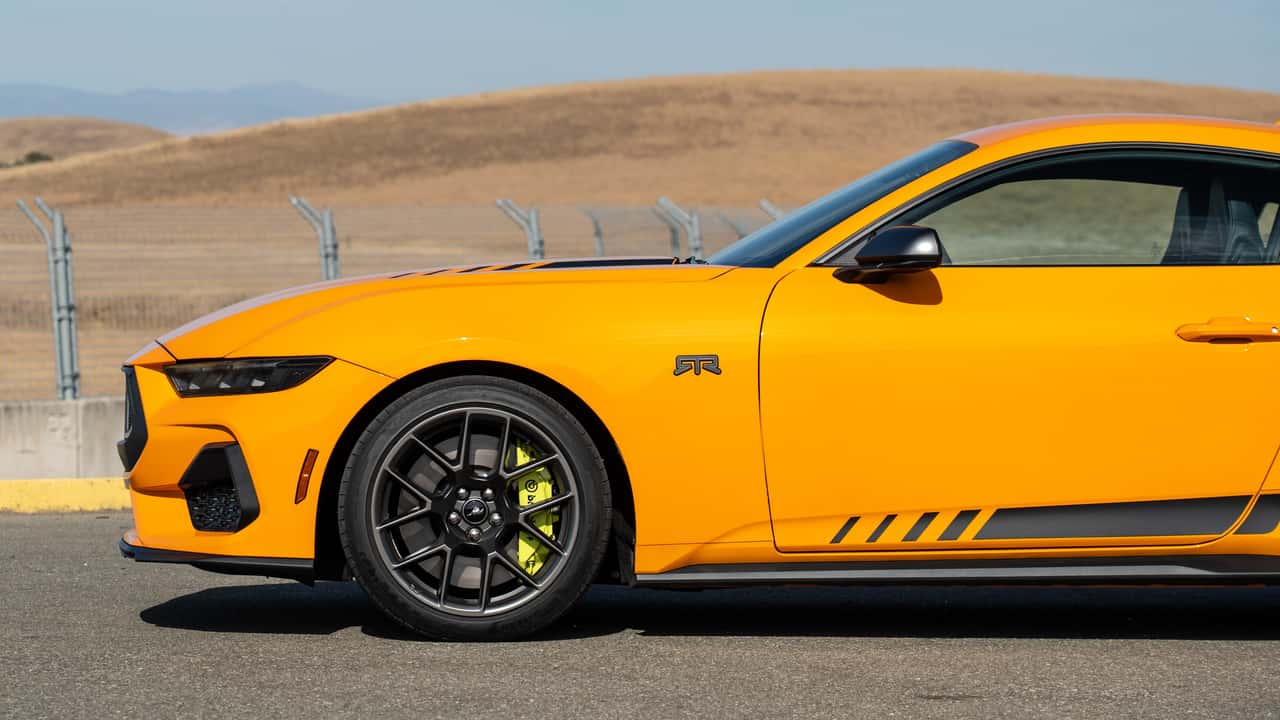 Photo by: Tim Stevens / Motor1
The seventh-generation S650 Mustang has been on the market long enough now that Ford is slinging out special editions left and right, with the $325,000 GTD sitting up top as the halo and trickling down through the new Dark Horse SC, the non-boosted Dark Horse, the 5.0-powered GT, and the base EcoBoost. Though some are more "special" than others.
The RTR is a new package that, in some ways, fills the void left by the previous generation EcoBoost's High Performance Package. A car Motor1 was quite fond of. But where that added a bit more power and was available with a manual, the new RTR package is auto-only and exclusively focused on handling and style.
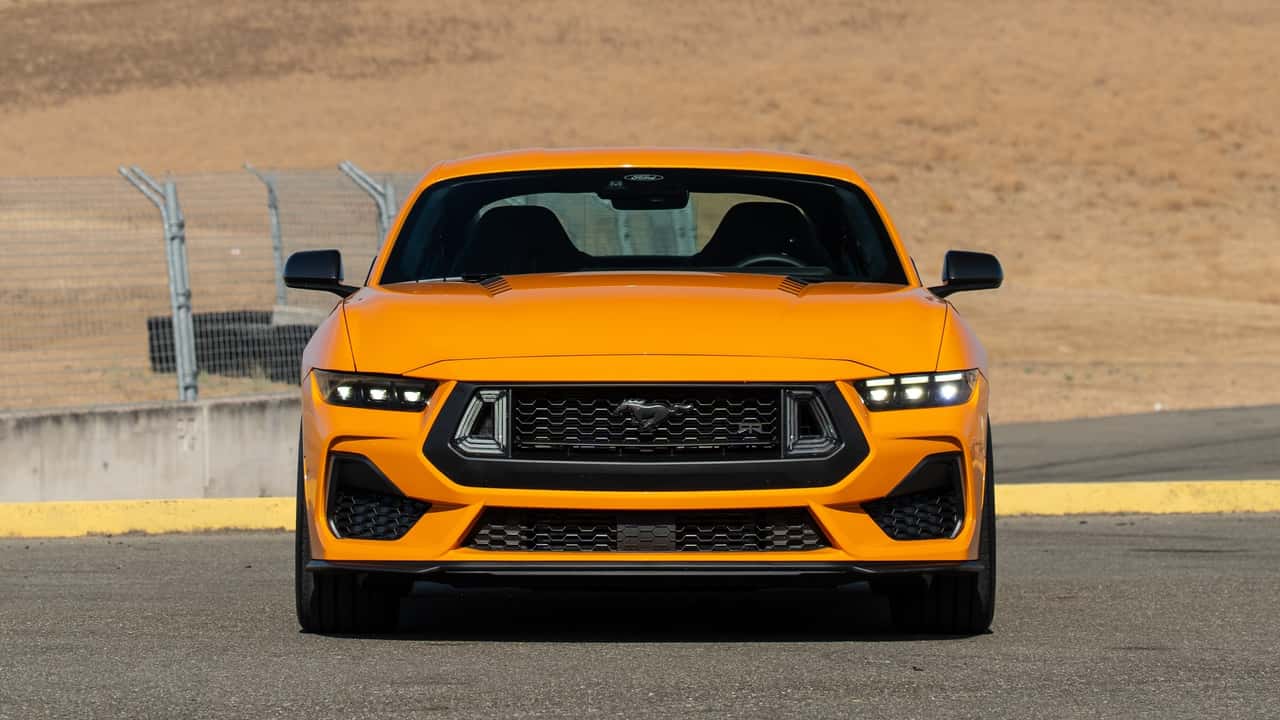 Photo by: Tim Stevens / Motor1
 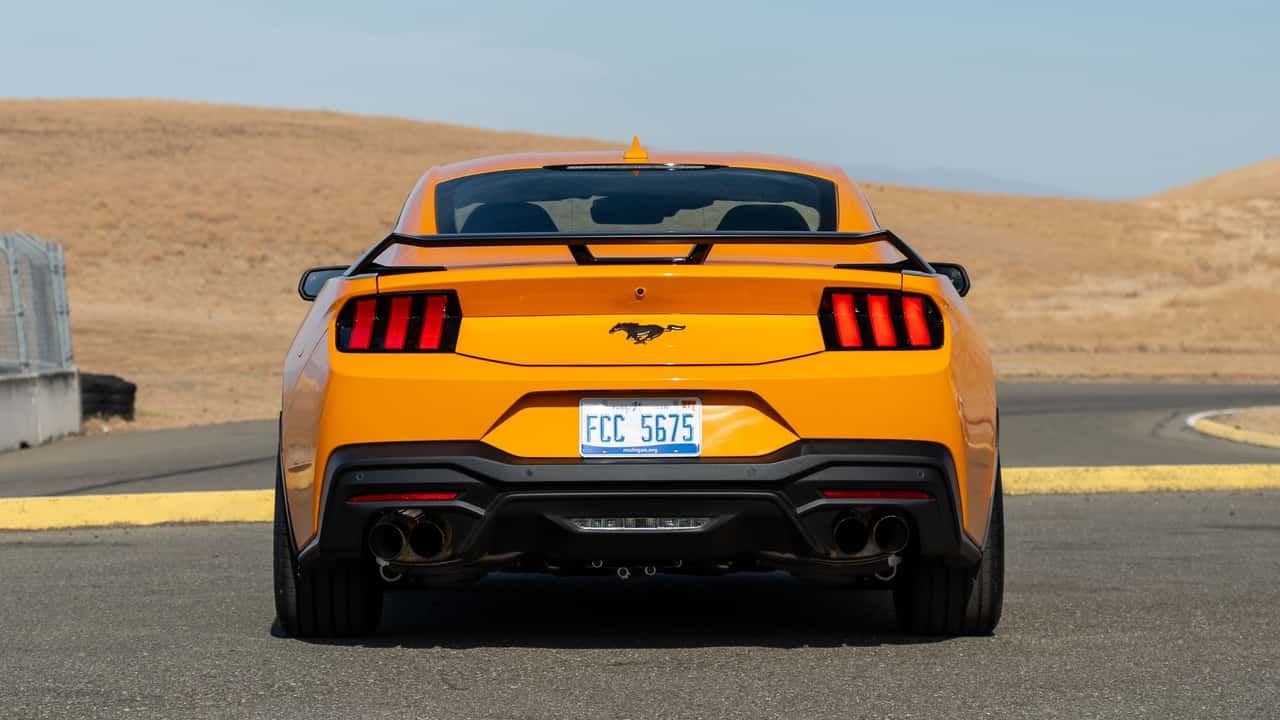 Photo by: Tim Stevens / Motor1 Photos by: Tim Stevens / Motor1
Bigger, 19 x 9.5-inch wheels are wrapped with 255/40 ZR 19 Goodyear Eagle F1 tires. A 3.55 Torsen limited-slip differential at the back keeps the back two tires spinning at roughly the same speed.
The Dark Horse's roll bars, adjustable camber plates, and subframe are added, and the car's stability and traction control systems are retuned for a bit more fun. You also get the requisite badges and some extra graphics, too.
That's hardly a reinvention, but at $6,5200 for the package, it also doesn't add much to the EcoBoost Mustang's base $36,245 (plus $1,995 destination) price. That said, you'll still need to pay another $1,995 if you want the racier Recaro seats, $1,750 for the adaptive MagneRide suspension, and $750 for colored calipers.
The car I drove had all those options, plus Orange Fury Metallic paint, leading to a total price of $55,850.
Drift-Capable, Track-Acceptable
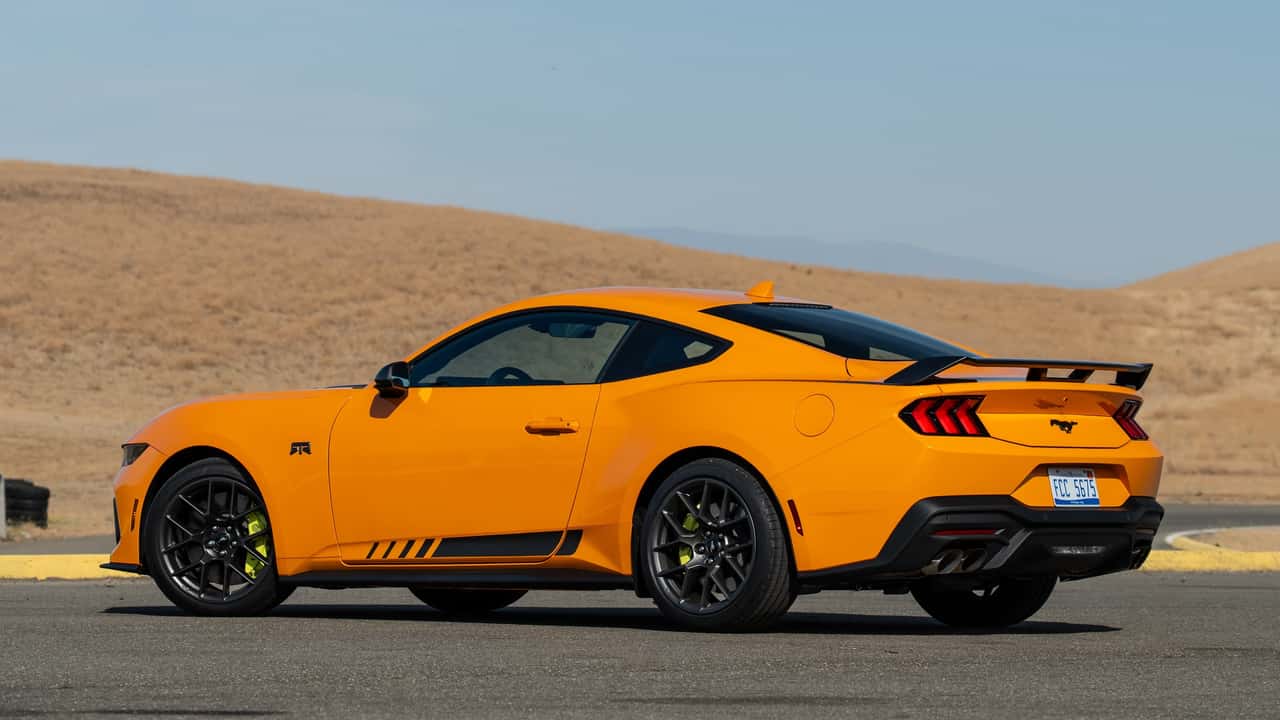 Photo by: Tim Stevens / Motor1
When Ford unveiled the seventh-generation Mustang in 2024, I was intrigued by the so-called Electronic Drift Brake. Though little more than a joystick, it was still an oddly fun thing to throw into the mix. Since then, it's increasingly felt like an afterthought, with the company never encouraging anyone to actually use it.
That definitely changes with the RTR. While Gittin Jr's crew didn't add anything like an extreme steering ratio or a hydraulic handbrake, they did eke out an extra two degrees of steering angle and got Ford to open up the envelope in the Mustang's stability control system.
Even with that system on, the RTR is eager to kill some tires. Pitch it into a turn, tug that handbrake, and the tail comes right around. And it'll keep going around if you're too slow with the steering or too quick with the throttle.
After a few tries to get the feel of the car, I was easily able to do a big, smoky slide around a central cone. It was easy, the stability control adding just a touch of brake here and there to keep me moving in the right direction.
While Gittin Jr's crew didn't add anything extreme like extra steering angle or a hydraulic handbrake, they did get Ford to open up the envelope in the Mustang's stability control system.
It proved quite good on more grip-focused antics, too. Ford rented out Thunderhill West, a tight, circuitous track that doesn't have much room for speed but puts a real focus on handling. Though nearly 200 pounds heavier than a base EcoBoost, the RTR-equipped machine still felt nimble and engaging through that track's faster, flowing turns.
And, when it came time to clear the hairpin toward the end of the lap, the RTR was more than happy to kick the tail out for an easily controlled slide, something the base machine might have been a little less happy about.
And then, on the long cruise back to the hotel from the wilds of Willows, California, the RTR was just as comfortable and practical as the base EcoBoost can be, delivering an easy 25 mpg and cruising quietly along.
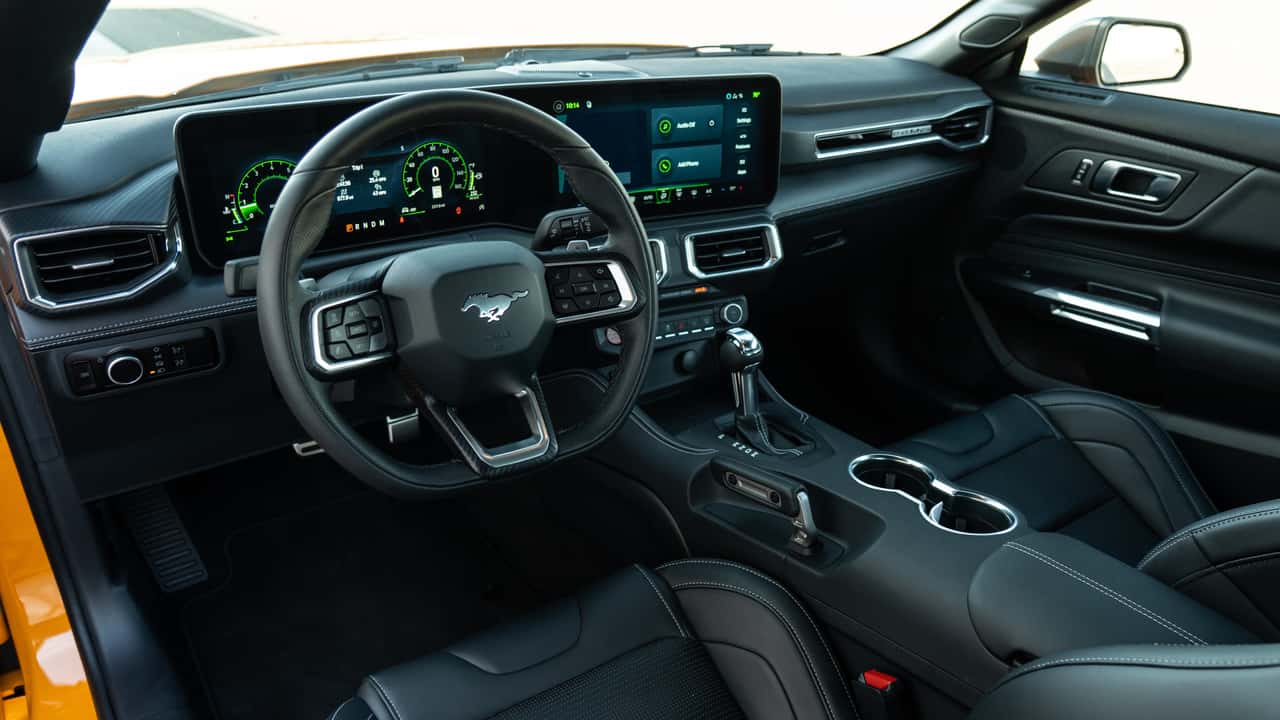 Photo by: Tim Stevens / Motor1
 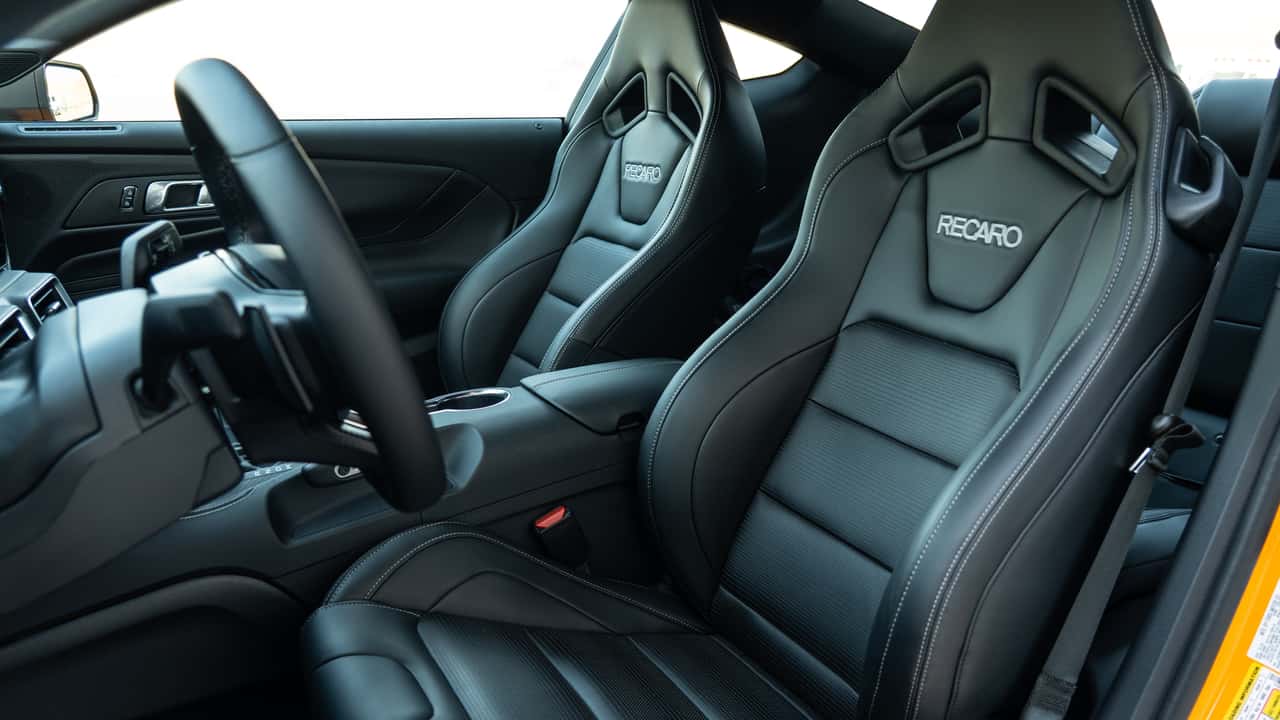 Photo by: Tim Stevens / Motor1 Photos by: Tim Stevens / Motor1
Ford Mustang RTR Verdict: Better Than Mid, Still Too Mild
Photo by: Tim Stevens / Motor1
So the RTR is genuinely fun on the track, decent on the skidpad, and doesn't give up much of anything on the road. If there's a disappointment here, it's that Ford didn't make it even edgier, not even living up to the performance of the former EcoBoost High Performance Package or including that car's manual transmission.
The graphics and extra visual tweaks help make it look more aggressive, but from behind the wheel, it's the same sea of cheap black plastic found in the lowest-rent Mustangs. Yes, there's a flashy new splash animation on the 13.2-inch touchscreen, and a tiny plaque on the dashboard, but nothing else. There isn't even a billet aluminum handle on the Mustang's handbrake lever, which seems like a huge miss given this thing's purported drift provenance.
So, the new RTR package is hardly a home run, but it does add a dollop of performance and a drip of street cred to a trim that desperately needed it.
Ford Mustang RTR Competitors
BMW M240i Nissan Z Subaru BRZ The Corvette E-Ray Deserved Better: Driven
Jeep's First Electric Off-Roader Is Fun, Capable, And Already Behind The Curve: Driven
The 2027 Ram Power Wagon Finally Adds A Diesel, But It Loses Other Things: Driven
The Dodge Charger Sixpack Has Muscle. But It's Missing Something: Driven
]]> feedback@motor1.com (Tim Stevens) https://www.motor1.com/reviews/810357/ford-mustang-rtr-review/ https://www.motor1.com/reviews/809896/used-mercedes-amg-s65-buying-guide/ Tue, 29 Sep 2026 13:00:00 +0000 A Used Mercedes-AMG S65 Doesn't Make Sense. Here's Why You Should Buy One Anyway The Mercedes-AMG S65 once cost over $200,000. Now, the 612-hp V12 super sedan is dangerously tempting.
Mercedes sold the W222 sixth-generation S65 sedan in the US beginning with the 2015 model year, and it was absurd from day one.
Under the hood sat a hand-built, twin-turbocharged 6.0-liter V12 making 621 horsepower and a staggering 738 pound-feet of torque. It sent all of that through a seven-speed automatic transmission exclusively to the rear wheels, with Mercedes quoting a 0-to-60-mph time of around 4.1 seconds.
Back then, with a starting price of around $222,000 for the sedan, it was well out of reach for most. These days, with depreciation making a serious dent in V12 sedan prices, you might be able to get one for much cheaper. Kelley Blue Book values it at less than $40,000 today.
That doesn't mean it'll be cheap to own. Far from it. But if you've always wanted a hand-built AMG V12 wrapped in one of the best luxury sedans Mercedes has ever made, the math is awfully difficult to ignore.
Why Buy The Mercedes-AMG S65?

Let's start with the obvious reason: that engine.
The M279 6.0-liter biturbo V12 makes 621 hp and 738 lb-ft of torque, with peak torque arriving at just 2,300 rpm. Mercedes paired it with the AMG Speedshift seven-speed automatic because the newer nine-speed transmission used elsewhere in the S-Class couldn't handle the V12's enormous torque.
This isn't an engine that needs to rev hard or make a bunch of noise to feel special. Put your foot down and nearly three-quarters of a thousand pound-feet simply pushes the S65 forward. There's very little drama considering the numbers involved.
When we reviewed the updated S65 in 2018, we called it "The Irrational Monster." A fitting description:
'At any speed in any gear, the engine pulls with reckless abandon; there’s enough grunt to pass anyone, at any time, in just seconds.' 'This is first and foremost a luxury vehicle, but the AMG team does a great job spicing up the S65’s interior for performance duty.' 'As the S65 is available only with rear-wheel drive, it’ll light up the 20-inch rubber on command.'
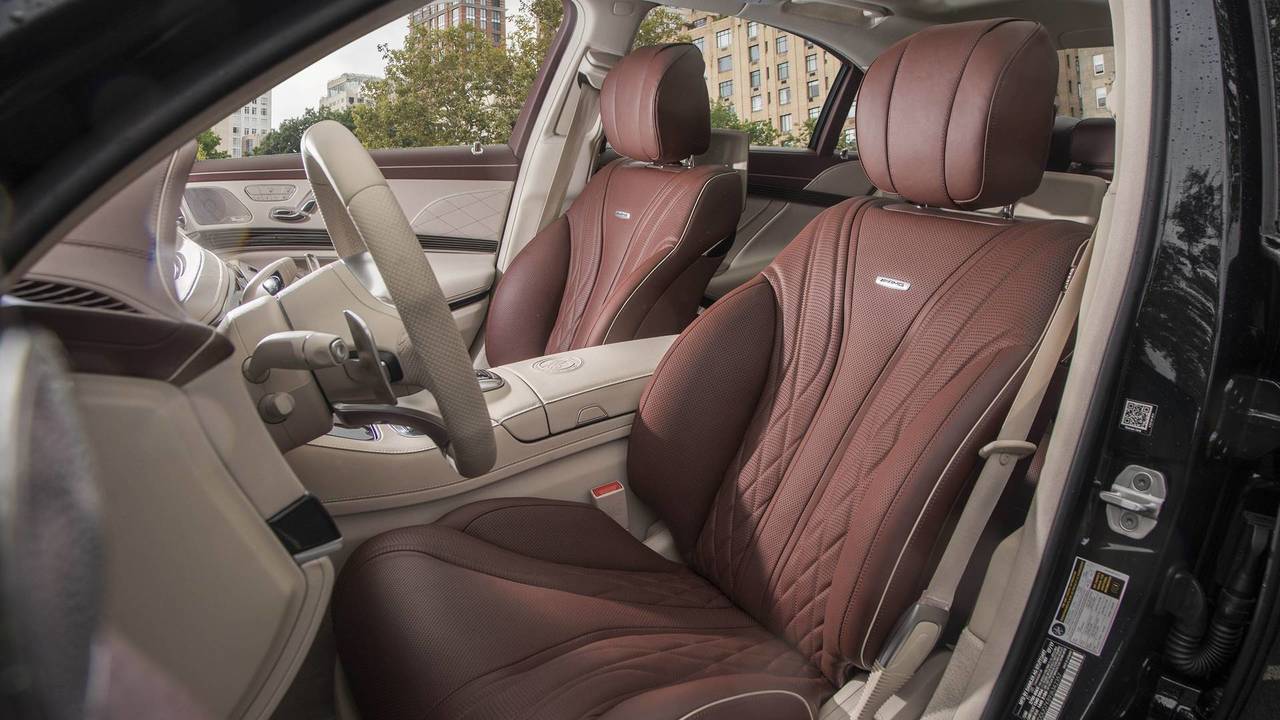
The S65 also gives you everything you'd expect from a flagship S-Class. There's Mercedes' excellent Magic Body Control suspension, a beautiful leather-lined cabin, massaging seats, twin dashboard displays on later models, Burmester audio, and enough powered accessories to keep an electrical engineer awake at night.
How Much Is A Used Mercedes-AMG S65?
Depreciation has done the S65 dirty. This is a car that featured a starting price well over $200,000 at a time when that figure still felt astonishing for any car. Now you can scoop one up for less than the price of a nicely equipped Kia Telluride.
According to Kelley Blue Book, the current fair purchase prices for used models with around 50,000 miles are:
2015 S65: $38,200 2016 S65: $46,000 2017 S65: $61,200 2018 S65: $63,000 2019 S65: $78,500 2020 S65: $102,000
That 2015 number is downright astonishing. Someone paid roughly $225,000 for the car when new. Today, KBB says you can theoretically snag one for $38,000. That's approximately $186,000 in depreciation, or about 83 percent of the car's original sticker price.
It's worth emphasizing that the cheapest S65 you can find isn't necessarily the S65 you want to buy. The difference between a properly maintained $45,000 example and a neglected $35,000 example could disappear with one repair bill.
Which Mercedes-AMG S65 Should You Buy?

If I were shopping for one, I'd start with the 2018 Mercedes-AMG S65.
Mercedes substantially updated the W222 S-Class for 2018 with new exterior styling, redesigned bumpers and lighting, an updated steering wheel, a newer generation of COMAND infotainment, and the twin 12.3-inch displays housed beneath a single piece of glass.
The S65 kept the same V12, seven-speed automatic, and rear-wheel-drive layout.
And according to KBB, the price premium over a 2017 is tiny. A 2017 currently carries a Fair Purchase Price of roughly $61,200. The facelifted 2018? About $63,000. That's less than $2,000 more for the newer-looking, updated car. That makes the 2018 the sweet spot.
A 2015 or 2016 is the choice if you want the lowest possible entry price. The underlying powertrain is still fundamentally the same, and paying somewhere in the $40,000 range for a 621-hp V12 S-Class is objectively hilarious.
Then there's the 2020. Mercedes closed the book on the S65 with the Final Edition, limited to just 130 cars worldwide. It received Obsidian Black paint, matte-bronze exterior accents, special forged wheels, black Nappa leather with copper-colored stitching, and unique interior trim.
That car belongs in a different conversation entirely.
What Could Go Wrong?

Here's the part where that $38,000 purchase price stops looking quite so comforting. You aren't maintaining a $38,000 Mercedes—you're maintaining a $225,000 Mercedes that's only cost you $38,000 (so far).
The V12 itself doesn't have one infamous catastrophic flaw that automatically makes every S65 a ticking time bomb. In fact, there are owners with very high-mileage W222 S65s who report remarkably solid engine durability. But everything on this car is expensive.
For starters, the M279 uses 24 spark plugs. That's not a typo. Twelve cylinders, two plugs per cylinder. Even buying the parts quickly reminds you that this isn't a C-Class.
Then there's Magic Body Control. Rather than conventional springs and dampers, the system uses hydraulics and cameras to actively control the body's movements and even prepare the suspension for road imperfections ahead. It's one of the features that makes the W222 S65 feel so special. It's also something you absolutely want inspected before purchase.
Mercedes specialists cite leaking Magic Body Control struts as one of the more significant W222 issues as these cars age. Owners have also reported failures of the hydraulic pulsation damper and wear in front control arms at higher mileage.
Don't automatically panic if the seven-speed transmission feels less polished than you expect, either. We noticed abrupt and clunky low-speed behavior when the S65 was new. But that's also no excuse to ignore harsh shifts, fluid leaks, delayed engagement, or a missing transmission-service history.

And then there are all the ordinary expensive S-Class things: power accessories, panoramic roof components, cameras, sensors, infotainment screens, soft-close doors, seat motors, HVAC equipment, huge brakes, and 20-inch tires. Individually, none of those things necessarily kills the ownership proposition. Several at the same time certainly could.
Get a pre-purchase inspection from an independent Mercedes specialist who knows the W222 and, ideally, the M279 V12 specifically. A generic used-car inspection isn't enough here.
What Else Could You Buy?

The biggest threat to the S65 might be sitting right beside it in the Mercedes lineup.
The S63 is objectively easier to justify. For 2018, the facelifted S63 switched to AMG's twin-turbo 4.0-liter V8 with 603 hp and 664 lb-ft, paired with a nine-speed transmission and 4Matic+ all-wheel drive. Mercedes quoted a 0-60 mph time of just 3.4 seconds, which is seven-tenths quicker than the S65.
And it's cheaper. KBB puts the 2018 S63 at around $51,700, versus roughly $63,000 for the S65. That's more than $11,000 in savings for a sedan that's actually quicker to 60. The S63 is the rational choice. Which is precisely why I'd want the S65.
Other alternatives include:
Alpina B7 Bentley Flying Spur BMW M760i Porsche Panamera Turbo
But the S65 offers something increasingly rare among all of them: an AMG-built 6.0-liter V12, rear-wheel drive, and absolutely no attempt at efficiency or restraint.
Why The Mercedes-AMG S65 Makes Sense
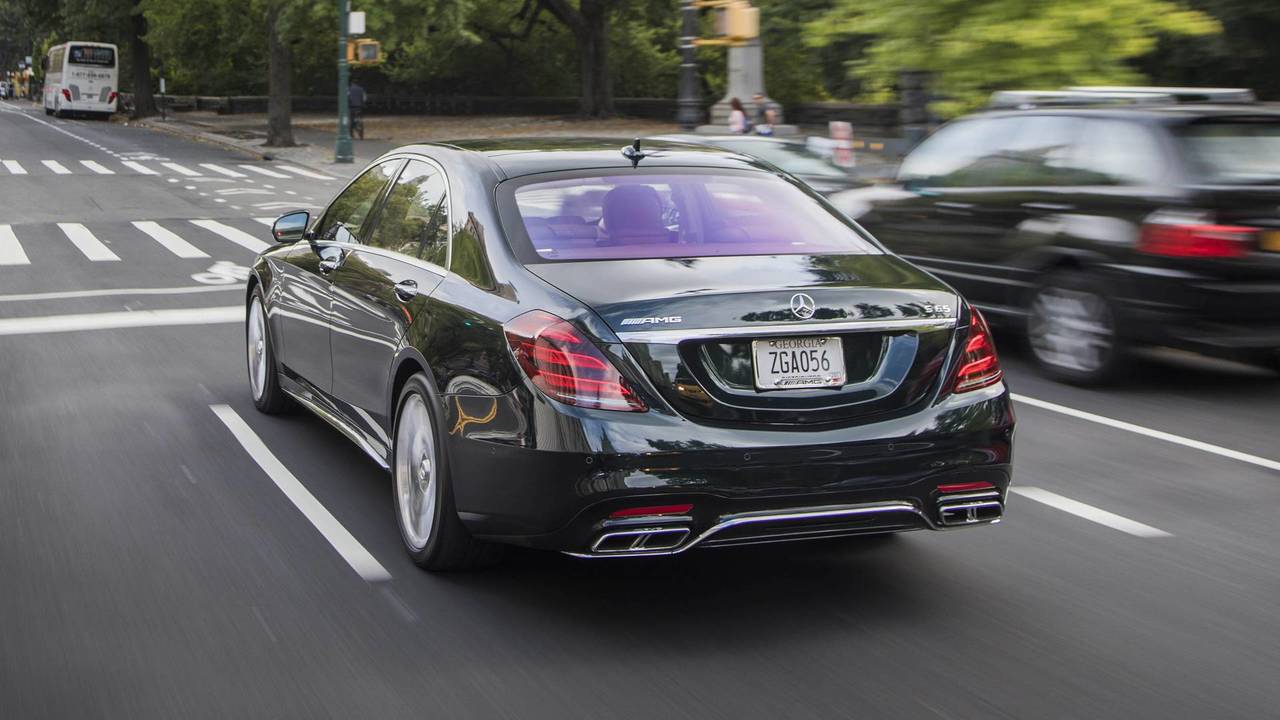
Let's be clear: It doesn't, and that's sort of the point.
There are much faster sedans. There are cheaper sedans to maintain. There are newer luxury cars with better infotainment, smarter driver-assistance systems, and significantly better fuel economy.
Even when the S65 was new, the S63 made more sense. But Mercedes doesn't build anything like this anymore. When you buy an S65, you get 621 hp, 738 lb-ft of torque, rear-wheel drive, Magic Body Control, one of the finest luxury interiors of its era, and a hand-built twin-turbo V12. Just don't spend your entire budget buying the car.
Find one with extensive service records. Have a Mercedes specialist inspect it. Keep several thousand dollars in reserve for the inevitable moment when some beautifully engineered German component decides it has had enough.
A cheap S65 isn't actually cheap, but it might be worth it.
A Used Lexus LS 500 Is A Luxury Bargain. Here's Why You Should Buy One
The Acura NSX Finally Makes Sense As A Used Supercar. Here's Why You Should Buy One
Chrysler EngineTwin-Turbocharged 6.0-Liter V12 Output621 Horsepower / 738 Pound-Feet TransmissionSeven-Speed Automatic Drive TypeRear-Wheel Drive Speed 0-60 MPH4.1 Seconds Maximum speed186 Miles Per Hour Weight4,960 Pounds Base Price$230,495 (2018)
]]> feedback@motor1.com (Jeff Glucker) https://www.motor1.com/reviews/809896/used-mercedes-amg-s65-buying-guide/ https://www.motor1.com/reviews/809912/ford-mustang-dark-horse-sc-review/ Tue, 29 Sep 2026 10:00:00 +0000 I Drove The Mustang Dark Horse SC. It's The Everyday GTD: Driven More than a GT500 successor, this supercharged pony brings nearly enough upgrades to justify its six-figure starting price.
The Mustang lineup has never been short of variants and special editions, but never before has it featured so many models with six-figure price tags. Sure, everything is getting more expensive, but Ford, and more specifically Ford Racing, clearly have something to prove with the performance of this seventh-generation 'Stang.
The insane GTD and its 6:40 Nürburgring lap time showed what could be done with the platform, but only if you were willing to cut the middle out, shove the engine back, weld in a transaxle, and then affix a trick hydraulic suspension that can drop on command. It's easy to say that's hardly a Mustang at all.
This, though, certainly is. It's the new Dark Horse SC, and it offers similar power to the GTD and plenty of other track-ready tricks, but in a package that's far less compromised for daily use and at a rather more attainable, if still eye-watering, price. You can get one for about a third the cost of a GTD, but that still makes it twice that of a GT. Worth the premium?
Pros
Weapons-Grade Power With Sound To Match Genuinely Good On-Track Dynamics Excellent Daily Driver
Cons
Low-Grade Interior Stratospheric Price The Best Goodies Cost Even More
Best of the Breed
2026 Ford Mustang Dark Horse SC First Drive Review
Photo by: Tim Stevens / Motor1
It's worth taking a moment to lay out the current Mustang lineup, because it's getting quite expansive. You can get yourself a 2.3-liter four-cylinder EcoBoost Mustang with 315 horsepower for right around $35,000, or that fantastic, Coyote-powered GT with 480 hp at about $50,000, a price that is about to feel like a real bargain.
Next up is the naturally aspirated Dark Horse, which takes the GT's 5.0-liter V8 and adds a plethora of suspension and chassis upgrades to make it track-ready for about $66,000.
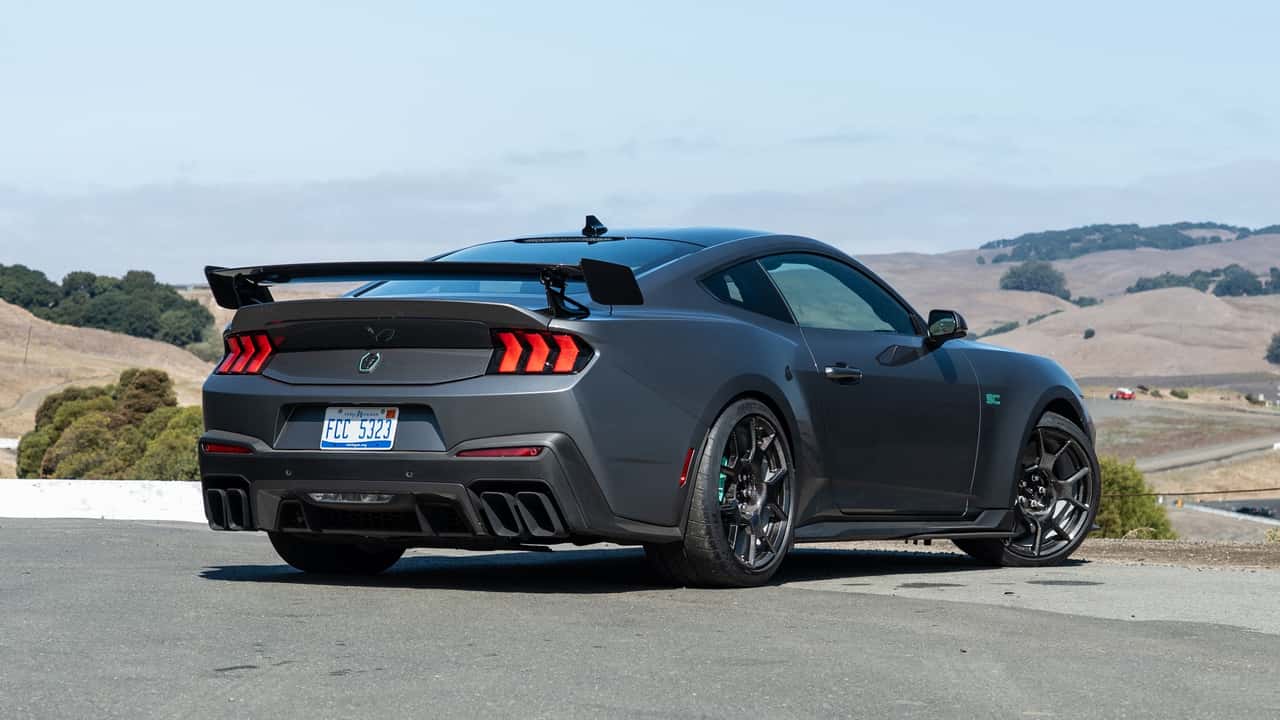
Then you get to the new, 795 hp, 660-pound-foot Dark Horse SC. That extra two-letter designation is a not-so-subtle nod to the blower lingering under the hood. This setup makes it something of a spiritual successor to last-generation's Shelby GT500. But where that supercharged and snakebitten stallion had some track-ready upgrades, it was certainly happiest on the quarter-mile.
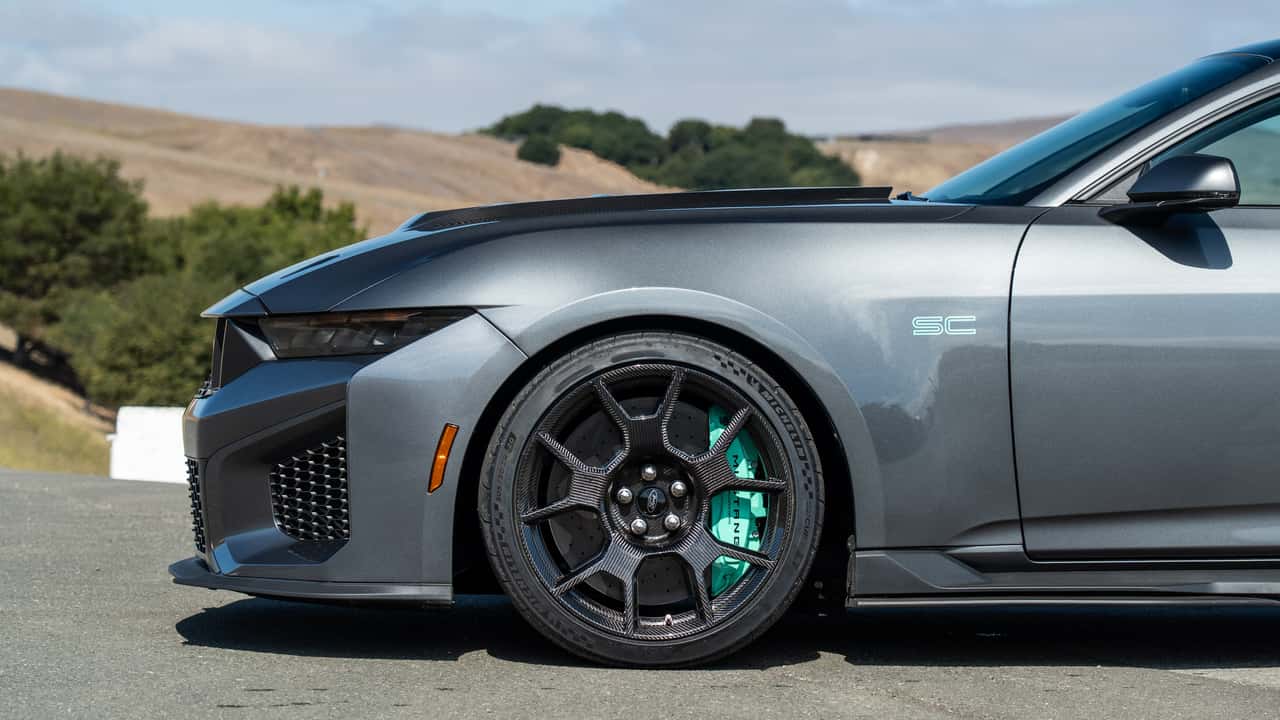 Photo by: Tim Stevens / Motor1
 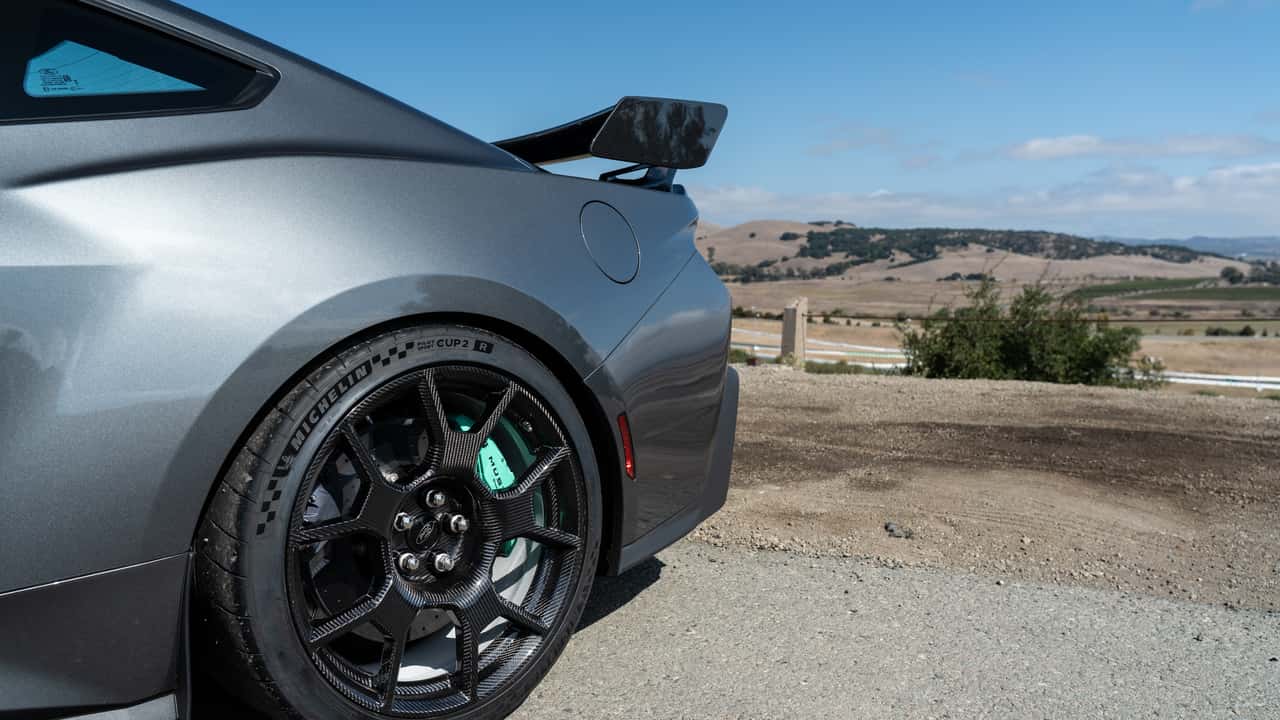 Photo by: Tim Stevens / Motor1 Photos by: Tim Stevens / Motor1
The new SC can hold its own there, but most of the upgrades help it go fast while turning.
Every Dark Horse SC connects its 5.2-liter V8 to a seven-speed dual-clutch Tremec TR-9070 transmission, which twists a carbon-fiber driveshaft. That leads to a Torsen limited-slip rear differential at the back with a 3.73 gear ratio, splitting power between the rear wheels. If you opt for the Track Pack (another $36,500), those wheels are likewise made of carbon fiber and wrapped in Michelin Pilot Sport Cup 2 R tires. They're 315/30 ZR20 at the rear and 305/30 ZR20 at the front.
You also get carbon ceramic brakes, which, combined with the wheels and deleted rear seat, save 150 pounds compared to the base car. The base SC has a big wing, but the Track Pack edition's is substantially larger and adjustable. That's paired with an aggressive front splitter and ventilated hood, generating 620 pounds of downforce at speed.
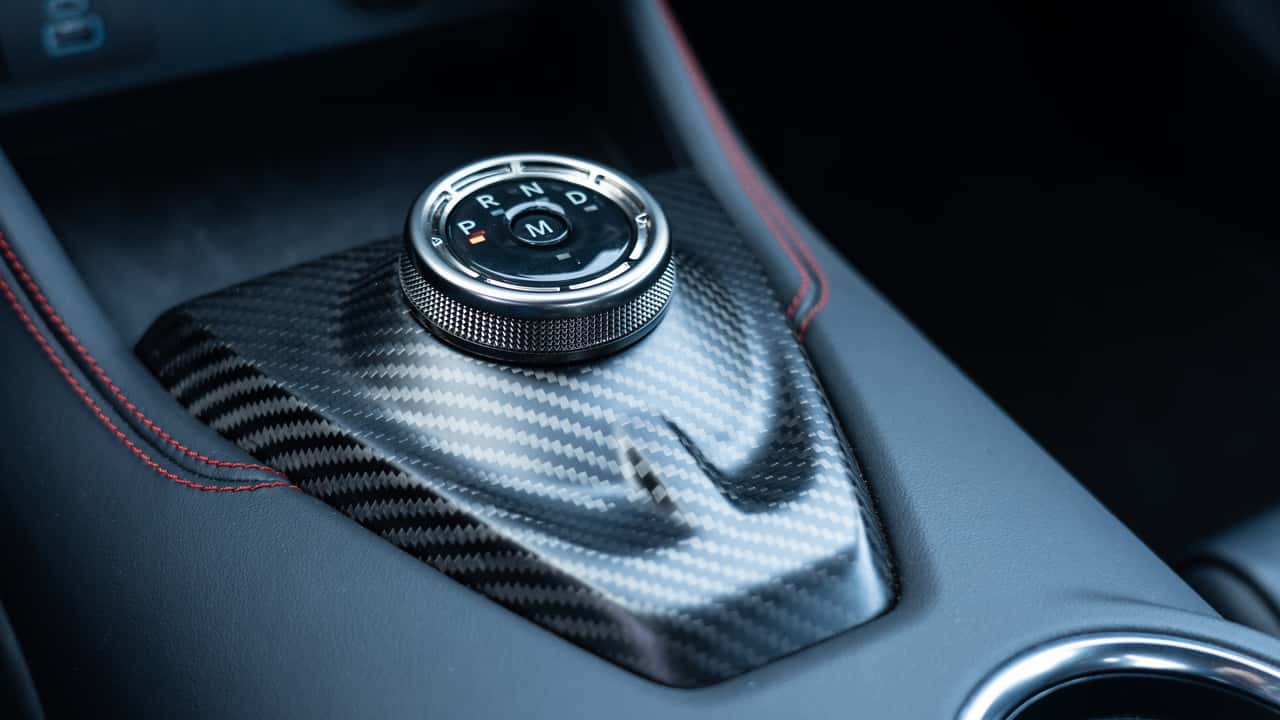 Photo by: Tim Stevens / Motor1
 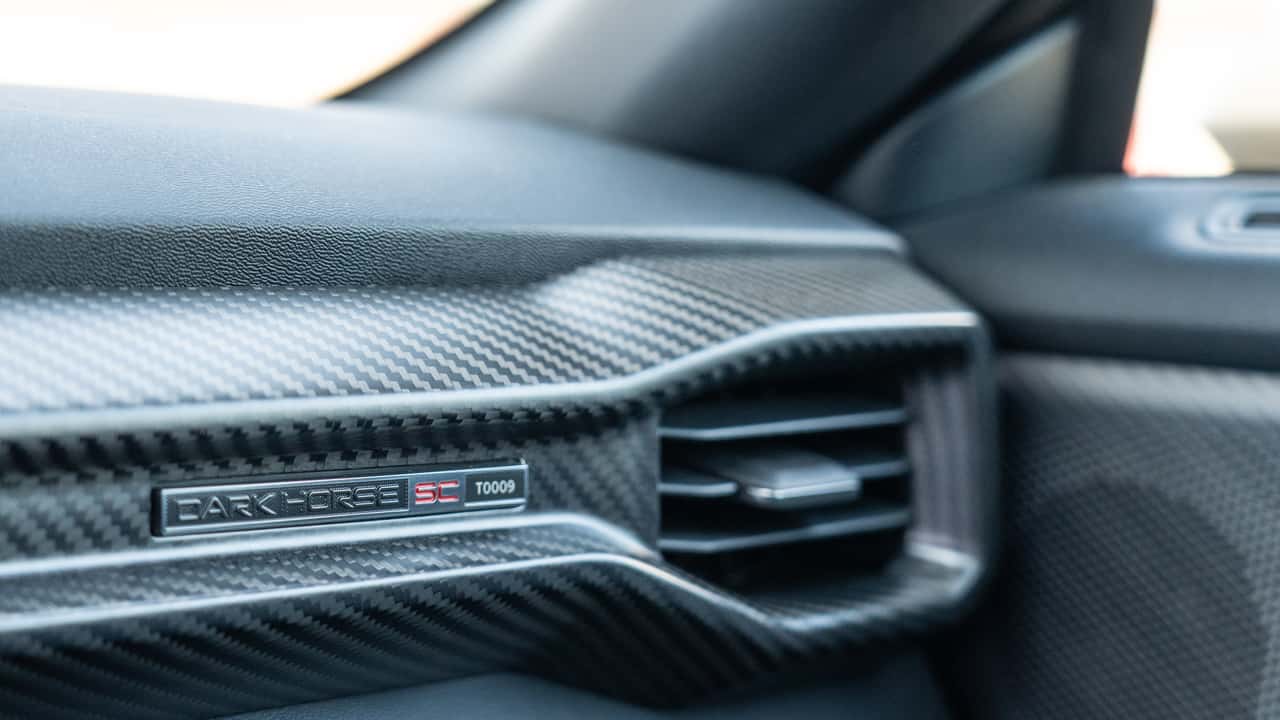 Photo by: Tim Stevens / Motor1 Photos by: Tim Stevens / Motor1
Ford's adjustable MagneRide suspension can't raise or lower the car like on the GTD, but it does instantly adapt for compression as you cycle through the car's drive modes from Comfort all the way up to Track. Spring rates, anti-roll bars, front control arms, and even the half-shafts have all been upgraded to match the extra grip, power, and weight over the base Dark Horse.
What hasn't been upgraded is much of the interior. Yes, there are a few bits of carbon fiber here and there, and you can get some lurid colored seatbelts if you like, but otherwise you're still dealing with the same too-dark design and low-grade interior materials as found on a base 'Stang.
That's a shame considering the $100,000 premium here on a Track Package-equipped machine.
Road To Track
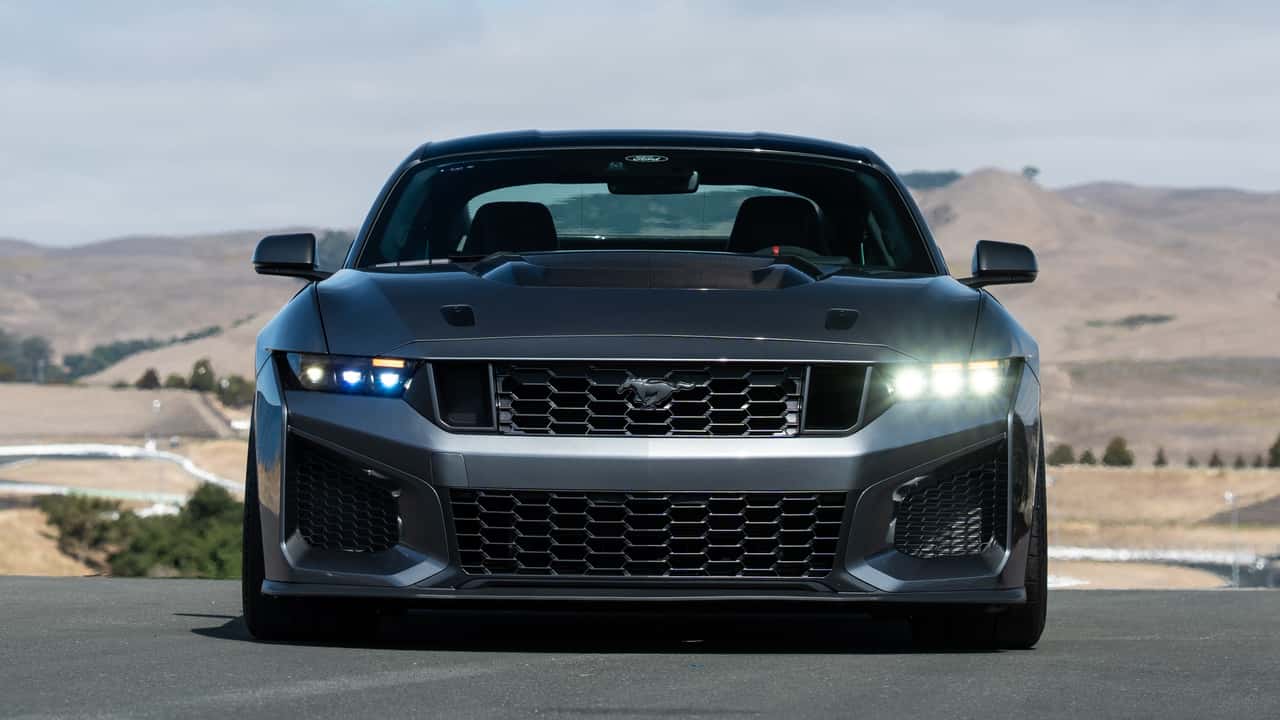 Photo by: Tim Stevens / Motor1
You can tell a lot about a company's confidence in its car by the smoothness of the roads chosen for this press drive. For the 2026 Mustang Dark Horse SC, Ford pointed us to some of the tightest, twistiest, and bumpiest roads in northern California. These are the sorts of roads that would see the GTD bottoming out and scraping itself along while its suspension slowly rattled every filling in your head loose.
The Dark Horse SC, though, covered it all with remarkable poise. It never felt flustered, even on big mid-corner bumps in Sport mode, and in Comfort was genuinely nice to idle through town. The Tremec DCT isn't the most buttery-smooth at low-speed and part-throttle, but I've driven worse autos, and thanks to the valved exhaust it won't even annoy you or anyone else on the highway.
Hit the throttle and open things up, though, and the SC launches forward while unleashing an unholy cacophony from the quad pipes out the back. It barks and cracks and makes all sorts of noises you'd hope a machine with nearly 800 hp would, turning from civilized to certifiable in an instant.
Hit the throttle and open things up, though, and the SC launches forward while unleashing an unholy cacophony from the quad pipes out the back.
Making that kind of noise is best on the track, of course, especially the quarter mile, where I blasted to a 10.927 on my first run. I got that down to a 10.790 at 133 miles per hour on my third attempt on a chilly strip, a world-class number that required very little effort.
Sonoma's twisty, challenging road course was definitely more challenging, but also more rewarding.
The SC in Track mode offers five levels of traction control, plus totally off. I worked my way down the list, and at its most conservative, the SC is brutally quick in a fast line but keeps its cool through the corners, making it easy for rookie drivers.
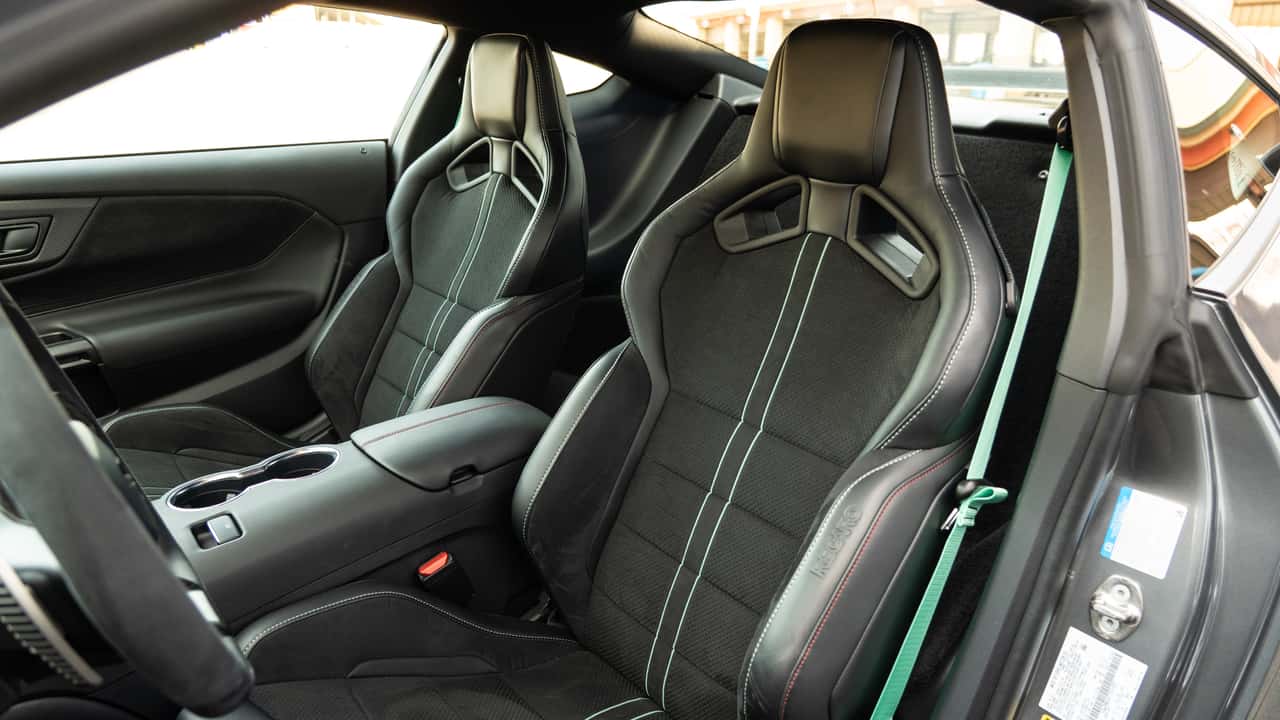 Photo by: Tim Stevens / Motor1
As I tapped through the five levels, the indicator cycled from green to yellow to red. With each notch, the car dialed up the exuberance, going from restrained to refined to frisky and then to wild.
There's a lot of weight over the front axle, and it'll happily push those front Cup 2 R tires, but it's mighty easy to bring the rear around as well. Amazingly, though, it never felt nervous. There was plenty of feedback coming through the steering to know I was asking too much long before I got myself in trouble.
Verdict: The Everyday GTD
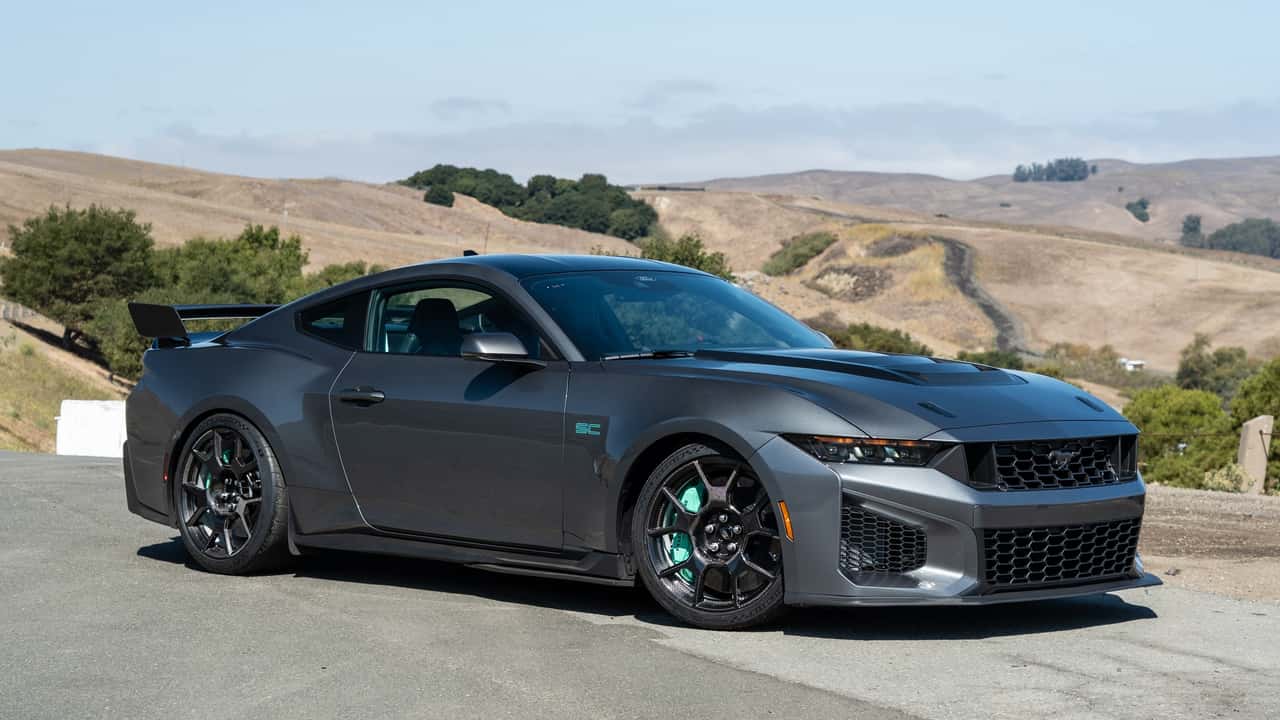 Photo by: Tim Stevens / Motor1
The harder I pushed the Dark Horse SC, the more endearing it became. On the road it made all the right noises and had all the speed and grip you could ever want, yet is infinitely more comfortable and livable for daily use than that mega-Mustang, the GTD.
But on the circuit, just like on the road, the Dark Horse SC felt powerful but poised and predictable. No, it's not as good on a closed course as the GTD, but still a stellar companion for a day at the track. At least, that is, so long as you don't have to pay for tires.
If there's a flaw, it's that it doesn't quite feel special the way a car costing well over $100,000 should. A little plaque on the dashboard just isn't enough to make you feel like you're driving something more substantial than a GT. If you can get over that, and if you can afford the cost of entry, you're getting what is perhaps the ultimate all-round pony in the stable.
Ford Mustang Dark Horse SC Competitors
Chevrolet Corvette Z06 BMW M4 Competition Porsche 911 Carrera T The Ford Mustang Dark Horse Can Out-Brake Supercars. Here's How
The Ford Mustang Mach-E Rally Actually Rocks: Review
2026 Ford Mustang Dark Horse SC EngineSupercharged 5.2-Liter V8 Output795 Horsepower / 660 Pound-Feet TransmissionSeven-Speed Dual Clutch Drive TypeRear-Wheel Drive Speed 0-60 MPH3.0 Seconds (est) Efficiency12 City / 18 Highway / 14 Combined Weight4,263 Pounds (Base) / 4,110 Pounds (Track Pack) Seating Capacity4 (Base) / 2 (Track Pack) Cargo Volume13.3 Cubic Feet Base Price$103,490 + $1,995 Destination Trim Base Price$139,990 + $1,995 Destination (with Track Pack) As-Tested Price$109,720 (base model) / $158,330 (with Track Pack)
]]> feedback@motor1.com (Tim Stevens) https://www.motor1.com/reviews/809912/ford-mustang-dark-horse-sc-review/ https://www.motor1.com/reviews/809018/used-lexus-ls-500-buying-guide/ Fri, 25 Sep 2026 20:00:00 +0000 A Used Lexus LS 500 Is A Luxury Bargain. Here's Why You Should Buy One The Lexus LS 500 was expensive when new. Nearly a decade later, massive depreciation makes it a much more interesting luxury sedan.
Buying a big luxury sedan new has never been a particularly sound financial decision. Buying one after somebody else has already absorbed the depreciation, well, that's different.
Take the Lexus LS 500, for example. When the fifth-generation LS arrived for 2018, the base model started at just over $76,000. Start checking option boxes, and it wasn't difficult to push one toward—or even beyond—six figures.
Today, an early LS 500 can be had for less than half that. And this luxury barge still looks and feels like a proper flagship because the fifth-generation LS is the *current-*gen model, and the last of its kind here in North America. For now, at least.
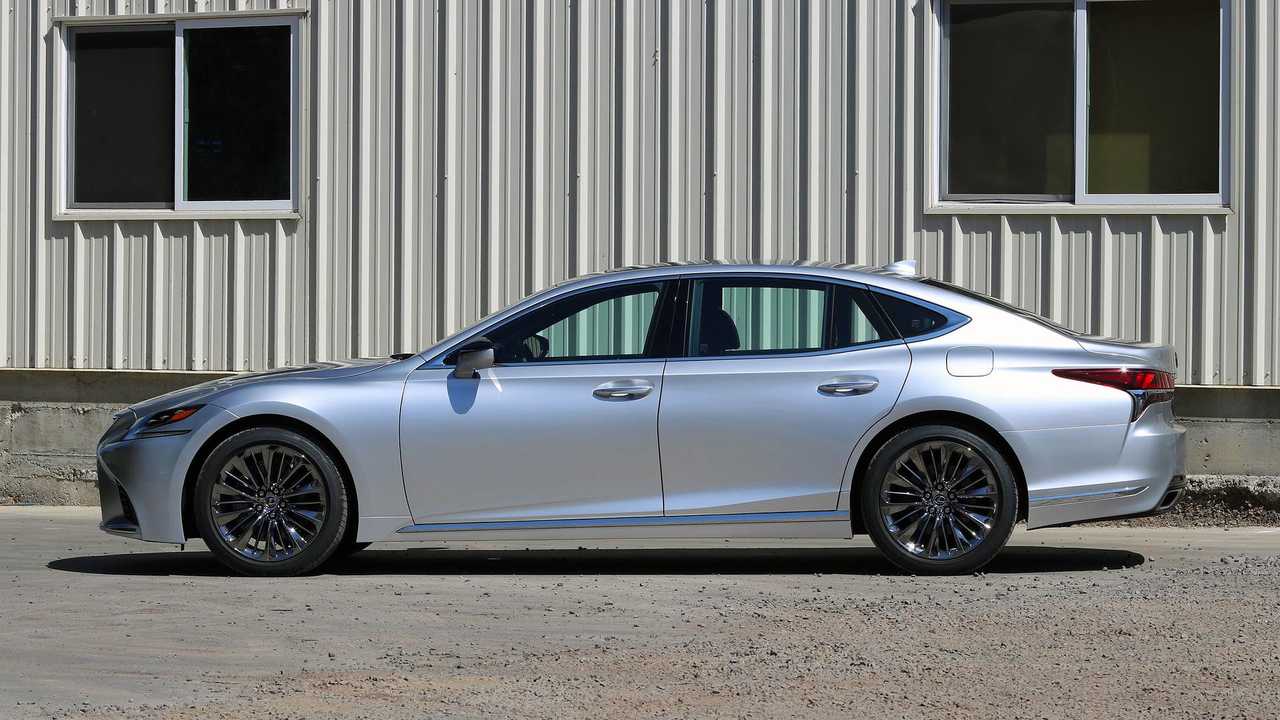
Why Buy The Lexus LS 500?
Comfort. That is the number one reason to buy a Lexus LS 500.
The fifth-generation LS ditched the naturally aspirated V8 of its predecessor (sadly), replacing it with a twin-turbocharged 3.5-liter V6 producing 416 horsepower and 442 pound-feet of torque. A 10-speed automatic sends that power to either the rear wheels or all four.
Despite weighing well over 4,500 pounds, Lexus claimed the rear-drive LS 500 could hit 60 mph in about 4.6 seconds. That's legitimately quick, but performance isn't the reason you scoop one of these up.
When we first drove the 2018 LS 500, we described its behavior as "unerringly pleasant."
'As well as spacious, the cabin is a sight to behold. On high-trim models, Lexus points to laser-cut wood trim, hand-folded fabric door-card inserts, Kiriko Cut glass trim, and ambient lights inspired by Japanese “Andon” illumination.' 'The electric power steering has just the right amount of assist, while the suspension is plush in every drive mode.' 'Whether you’re behind the wheel or just along for the ride, you’ll find the new car provides effortless, easy transportation with a high level of comfort and style.'
The available Executive Package could even give the right-rear passenger a reclining seat with an ottoman and massage functionality. And unlike some used luxury sedans, the LS 500 doesn't immediately scream "old car" when you see one pull up; the styling was controversial when new, but it has aged better than expected.
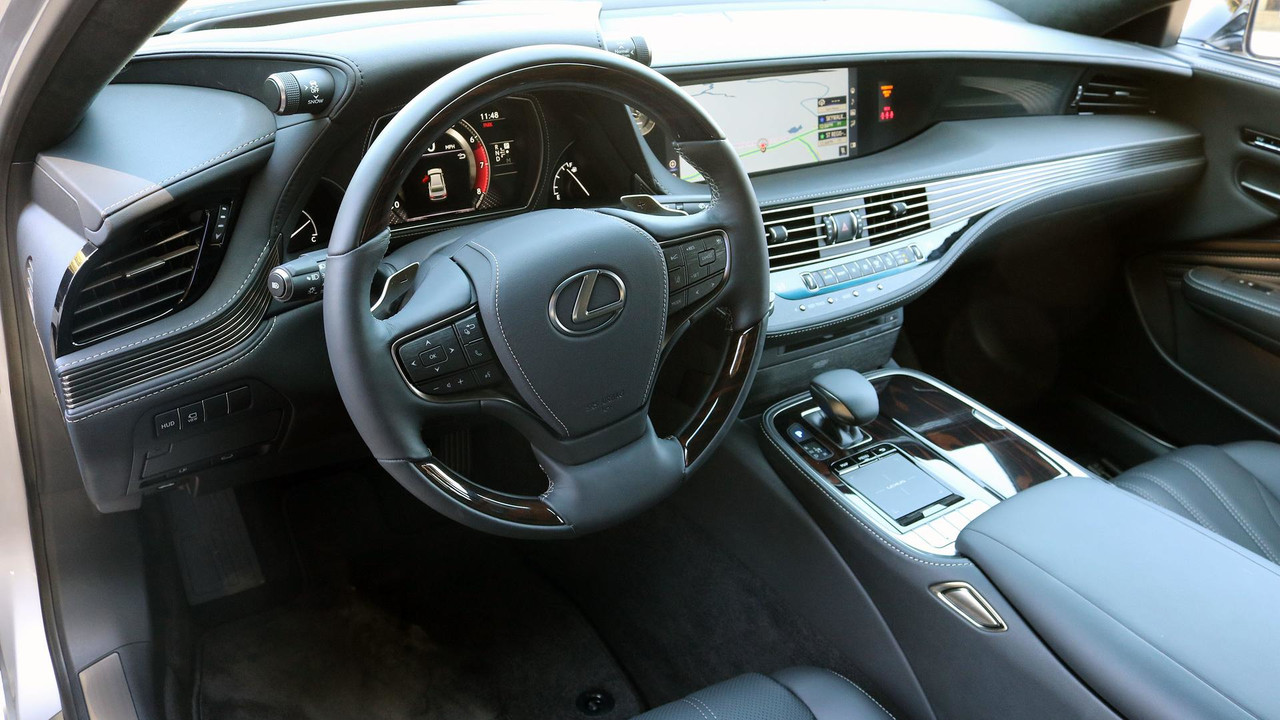
How Much Is A Used Lexus LS 500?
What was once fairly expensive has fallen well within the realm of affordability. The LS 500 has taken a serious depreciation hit since it was new. Kelley Blue Book's current Fair Purchase Price estimates for early examples are:
2018 Lexus LS 500: $33,500 2019 Lexus LS 500: $37,400 2020 Lexus LS 500: $41,900 2021 Lexus LS 500: $44,600
Actual asking prices will vary considerably depending on mileage, condition, drivetrain, equipment, and whether you're looking at a standard LS 500, LS 500h hybrid, or the F Sport.
But compare those figures with the original prices, and you're left with a tremendous amount of car for the money. A 2018 LS 500 started at $76,025, while the F Sport started at $82,025. That's around $40,000 worth of depreciation on some models.
Check out used Lexus LS listings

Which Lexus LS 500 Should You Buy?
I'd go straight to the 2021 Lexus LS 500. This is the facelifted model. Lexus gave the LS a meaningful update that year. One change in particular makes the newer car much easier to live with: a 12.3-inch touchscreen.
The original LS relied heavily on Lexus's Remote Touch interface. If you've never used it, imagine trying to operate your laptop's trackpad while driving over railroad tracks. Not great. The 2021 update finally allowed you to simply reach out and touch the screen. Lexus also made Apple CarPlay and Android Auto standard through the 12.3-inch display.
If you're trying to spend less, though, a clean 2018 or 2019 can be an excellent value. And I wouldn't necessarily prioritize an F Sport. Yes, it looks cooler. You get more aggressive bodywork, upgraded brakes, sport seats, and different suspension tuning. But a proper sports sedan this thing is not.
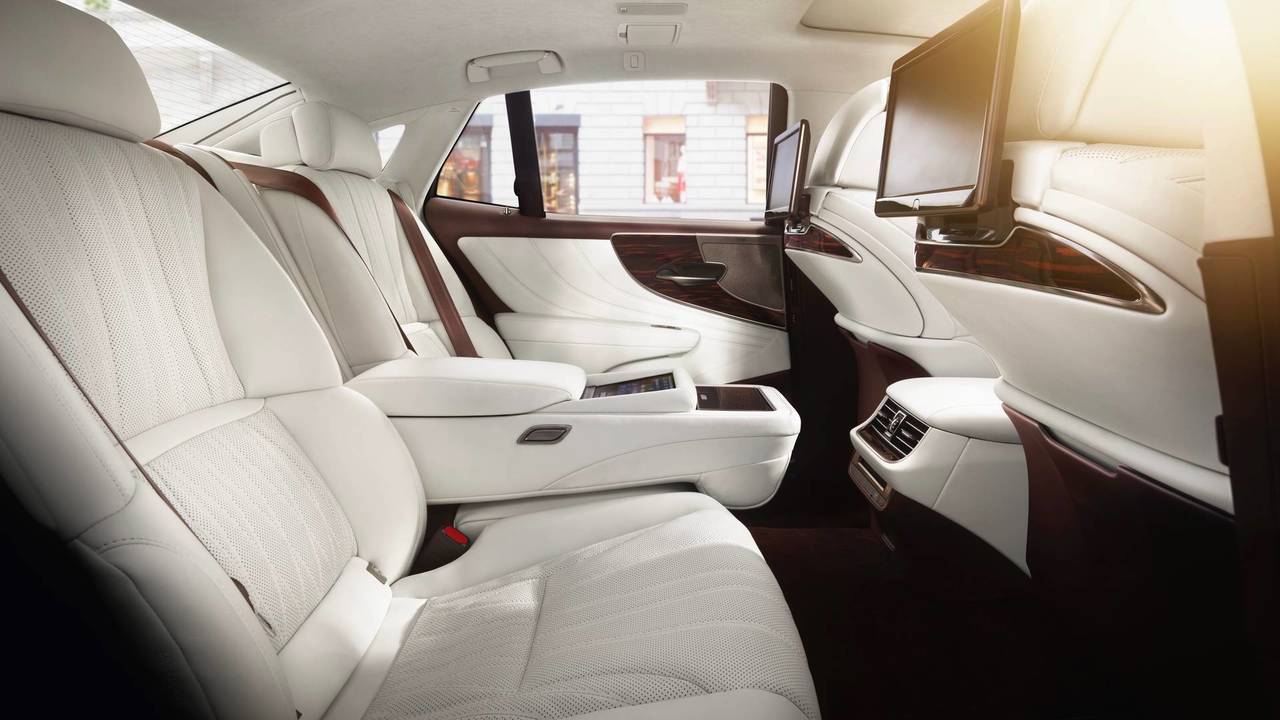
What Could Go Wrong?
The good news is that you're buying a Lexus. The bad news is that you're buying a flagship Lexus that originally cost nearly $100,000 when properly equipped. And there are a few issues worth knowing about.
Lexus issued a technical service bulletin covering transmission drivability problems on some 2018 through 2020 LS 500s. Symptoms included delayed engagement when shifting from Reverse to Drive while cold, a bump when coming to a stop, and harsh Reverse-to-Drive engagement.
Lexus revised the engine-control software to address the behavior.
Another Lexus bulletin covered a knocking sound from the braking system on some 2018 through 2020 LS 500 and LS 500h models. For affected cars, the repair procedure called for replacement of the brake actuator/master cylinder assembly.
Certain 2018 and 2019 LS 500s were also included in Toyota and Lexus's large low-pressure fuel-pump recall. The affected pump could stop operating, potentially causing the engine to stall, so run the VIN through the NHTSA recall database and make sure the repair has been completed.
Then there are all the normal used-flagship things. Check absolutely everything. Get a pre-purchase inspection from a Lexus specialist, even if you're buying a car with an excellent service history.
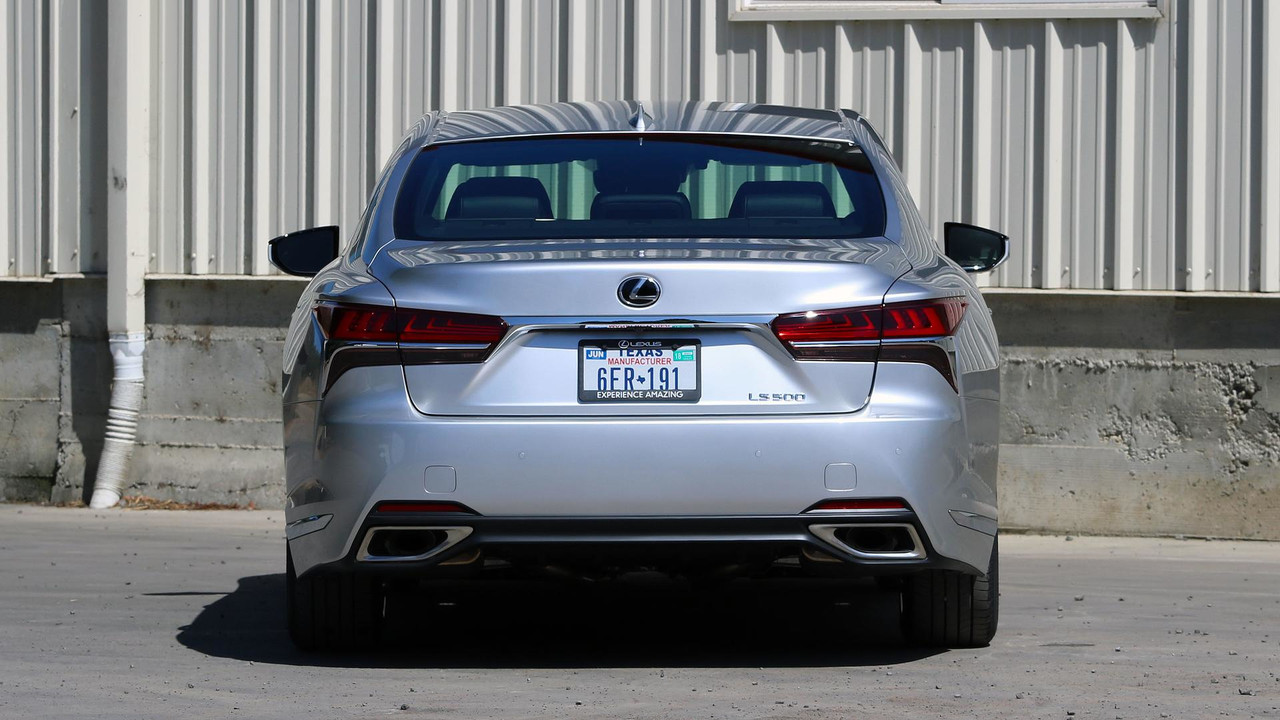
What Are The Alternatives?
There are a few obvious alternatives here:
Audi A8 BMW 7 Series Genesis G90 Mercedes-Benz S-Class
The closest alternative is the Mercedes-Benz S-Class. An S450 or S560 from the same era offers an even more impressive suite of technologies and arguably greater badge prestige. But you're also buying an enormously complicated German flagship once the warranty has expired.
The BMW 7 Series is the choice if you want your enormous luxury sedan to feel slightly smaller from the driver's seat. There's also the Audi A8, which takes a more understated approach. It's beautifully made, wonderfully quiet, and substantially less visually aggressive than the Lexus.
And don't ignore the Genesis G90. Earlier cars paired old-school luxury-car comfort with either a twin-turbo V6 or naturally aspirated V8, and used prices can be remarkably reasonable.
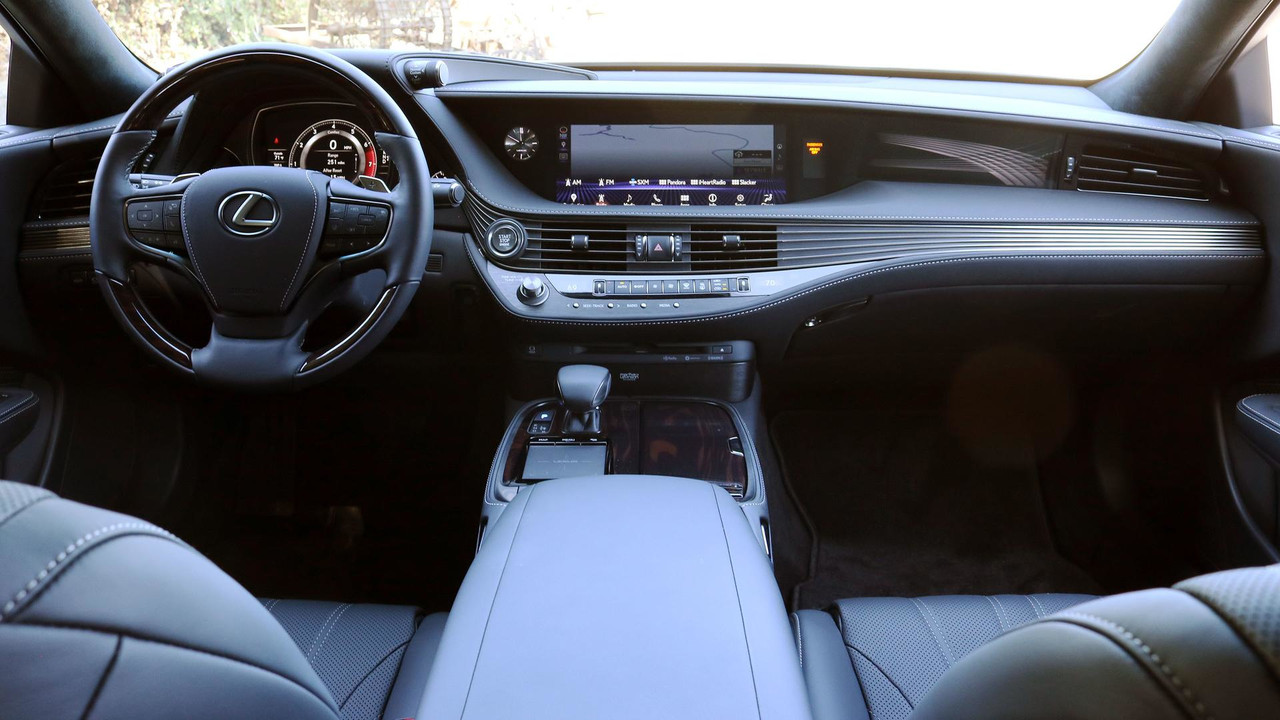
Why The Lexus LS 500 Makes Sense
At $76,000, the LS 500 had a problem. Once you're spending that much money on a luxury sedan, it's hard not to walk across the street and look at an S-Class, 7 Series, or A8. The Lexus might have been beautifully built and extremely comfortable, but that badge comparison inevitably entered the conversation.
At $35,000, now you're talking about buying a 416-horsepower flagship luxury sedan for the price of a nicely equipped mainstream car. You get a beautifully finished interior, an enormous back seat, excellent ride quality, plenty of power, and some genuinely special options.
Find one with a complete service history. Make sure its recalls and applicable service campaigns have been addressed. Get it inspected. Then enjoy the fact that someone else paid roughly $40,000 for the privilege of maintaining your glorious luxury sedan before the keys reached you.
Why Buy A Used Chevy SS? Two Words: V8. Manual.
Why Buy A Used Ford Focus RS? Because It's Still Special
Why Buy A Used Lexus GS F? Because A High-Revving V8 Sedan Is Worth Saving
Why Buy A Used Jaguar F-Type? Because It Still Feels Special
2021 LS Lexus LS EngineTwin-Turbocharged 3.5-liter V6 Output416 Horsepower / 442 Pound-Feet TransmissionTen-Speed Automatic Drive TypeRear- or All-Wheel Drive Speed 0-60 MPH4.6 Seconds Seating CapacityFive Base Price$76,025 (2018)

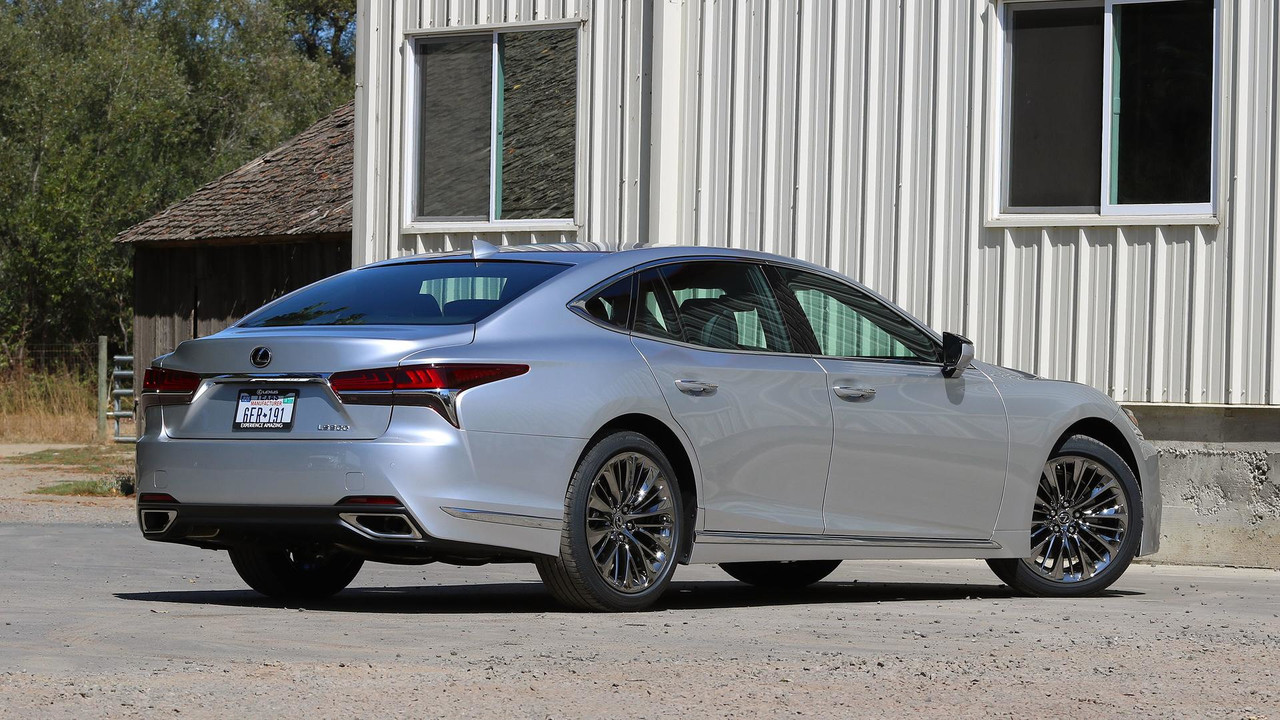
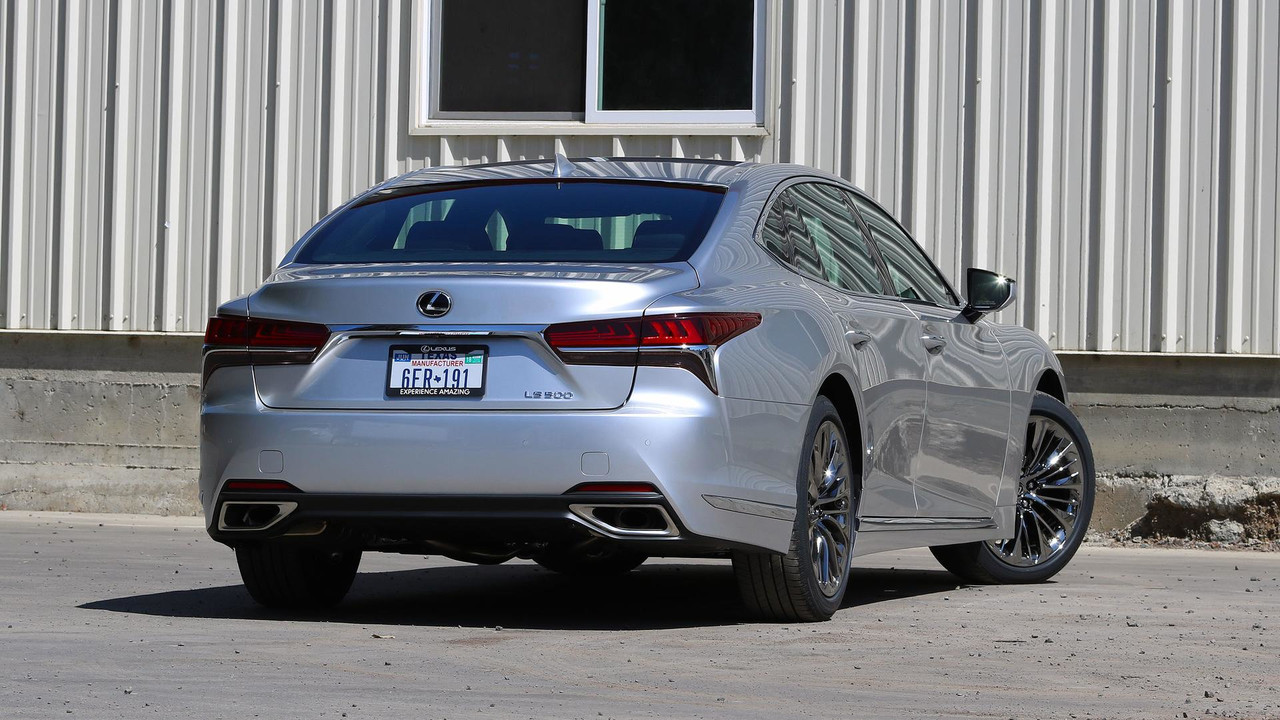
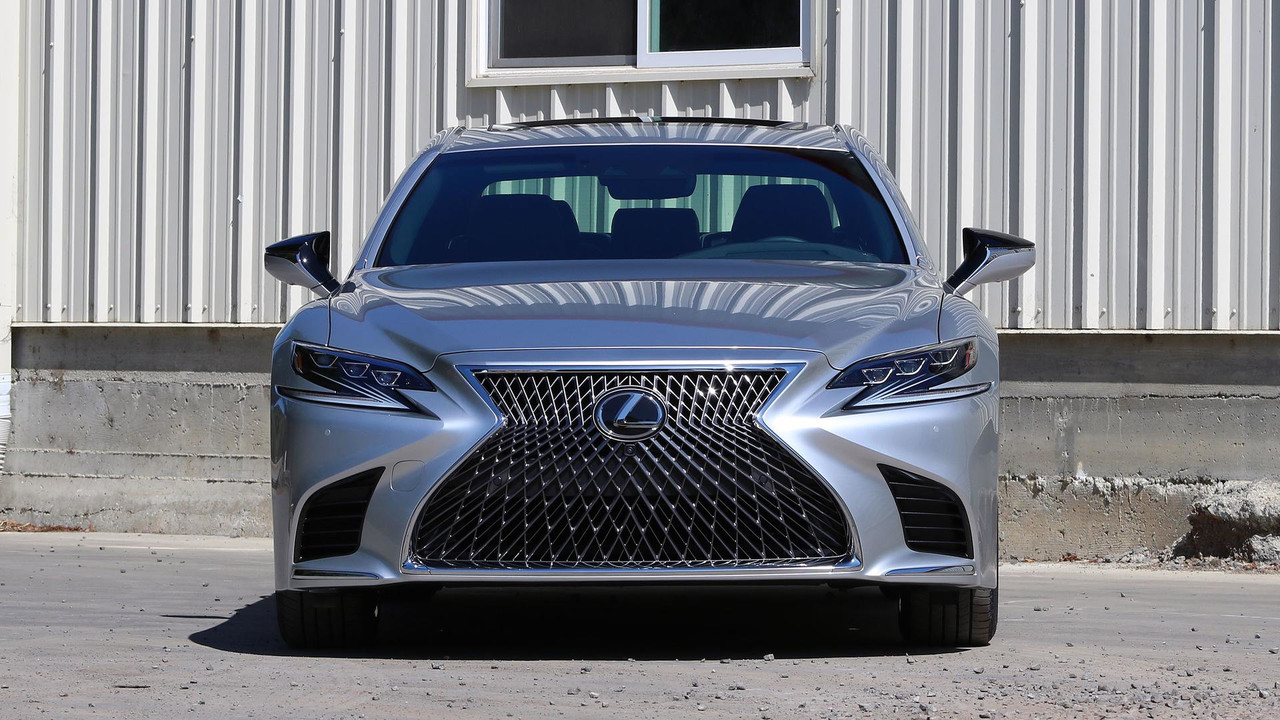
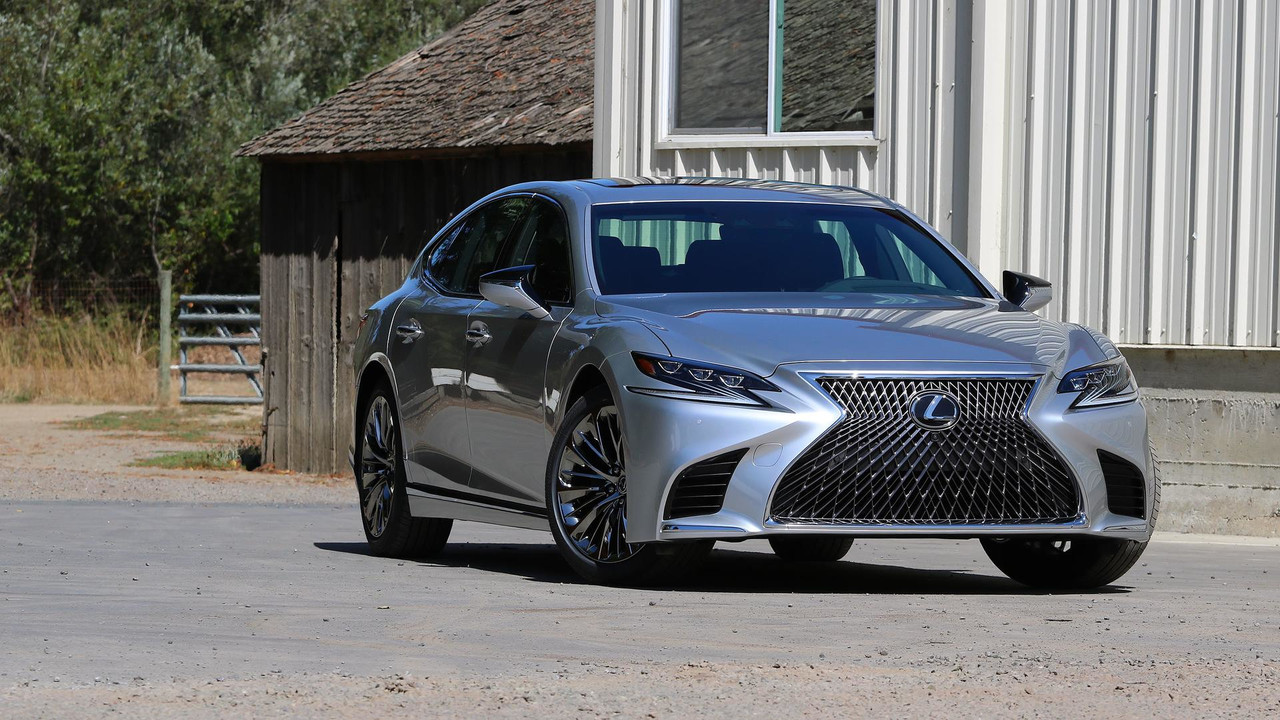
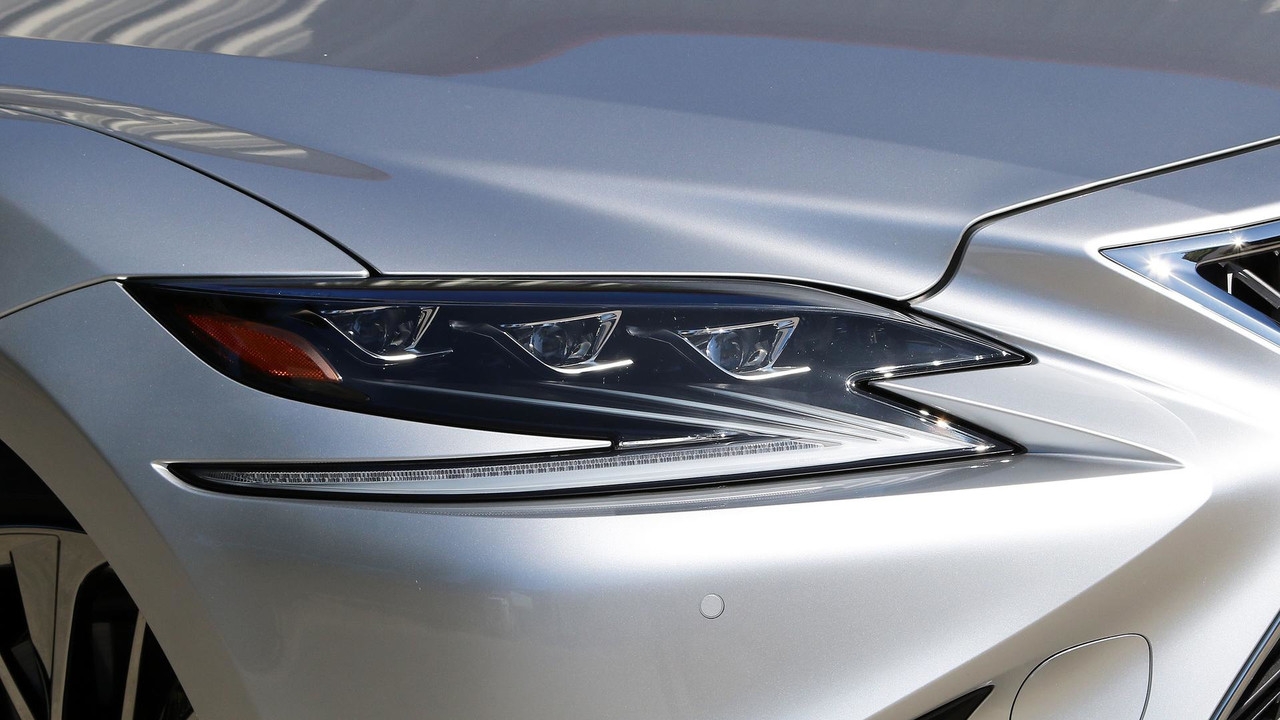
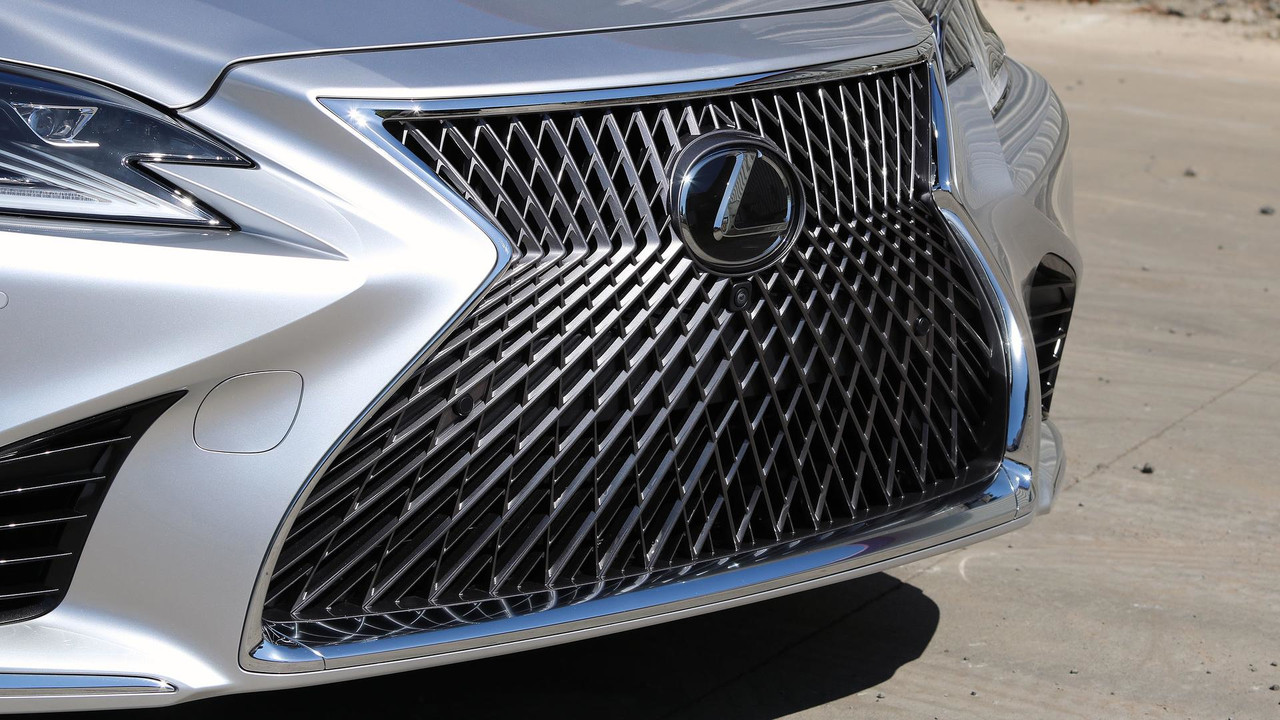
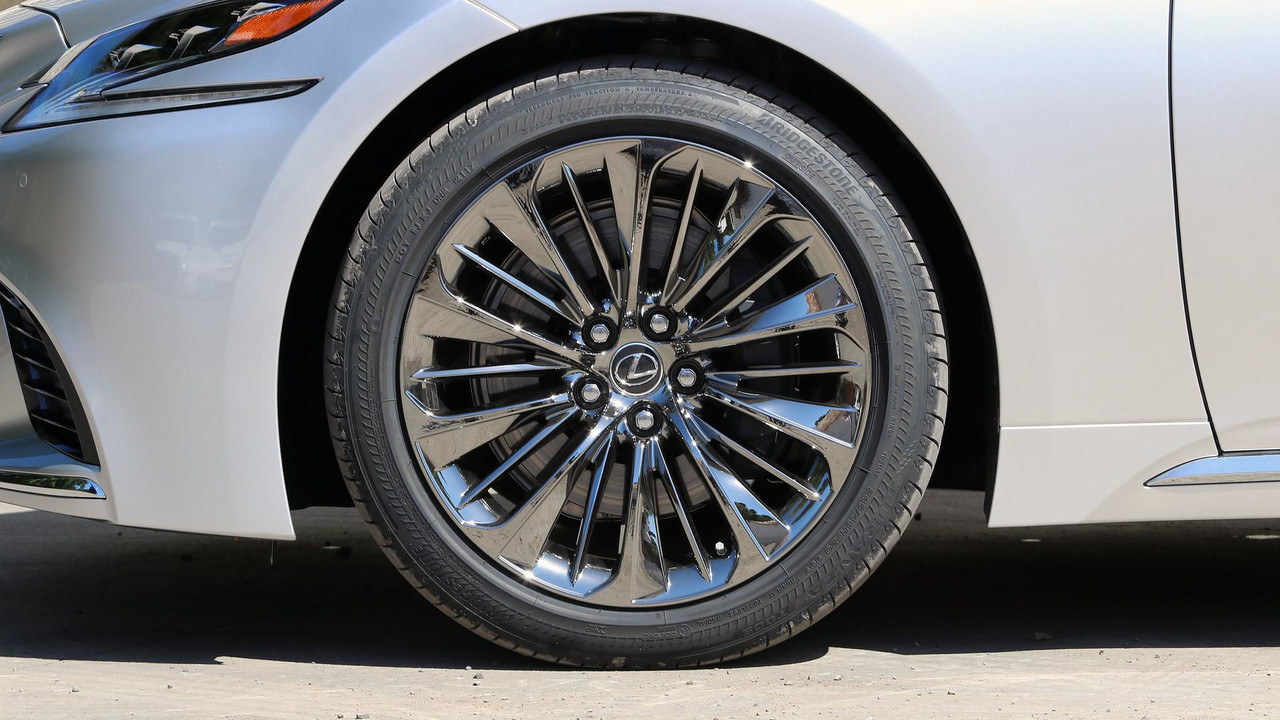
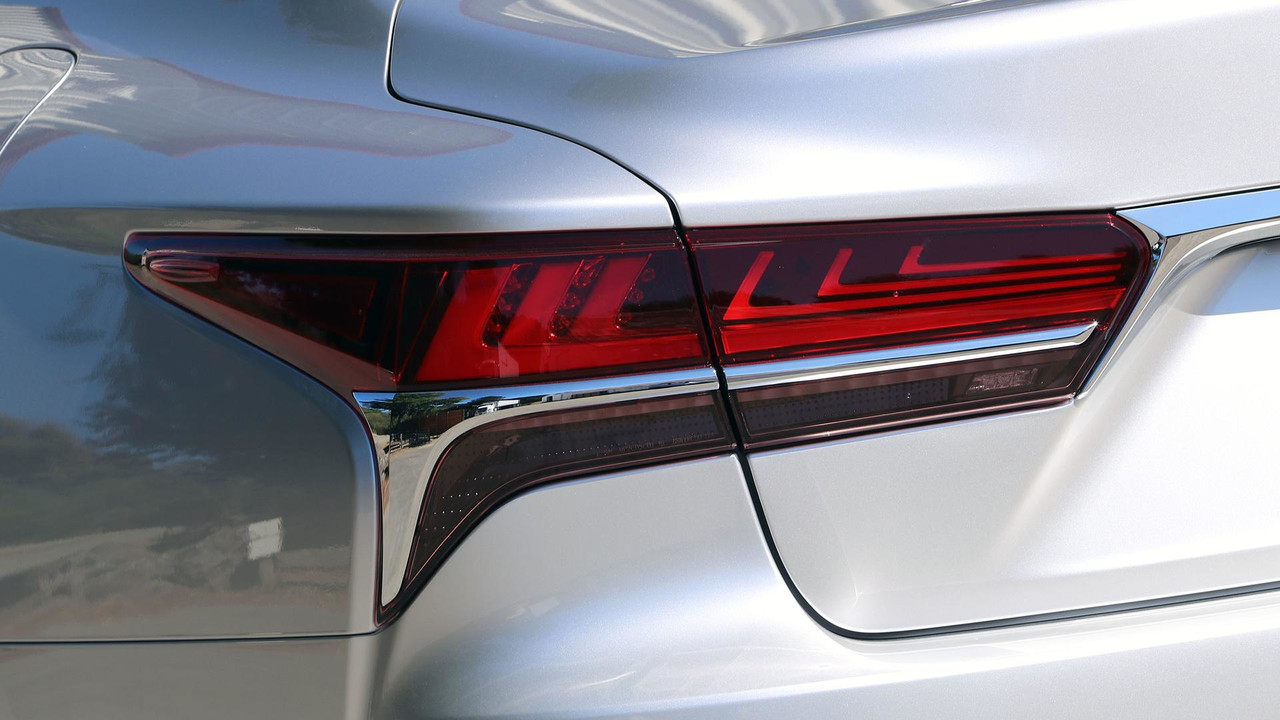
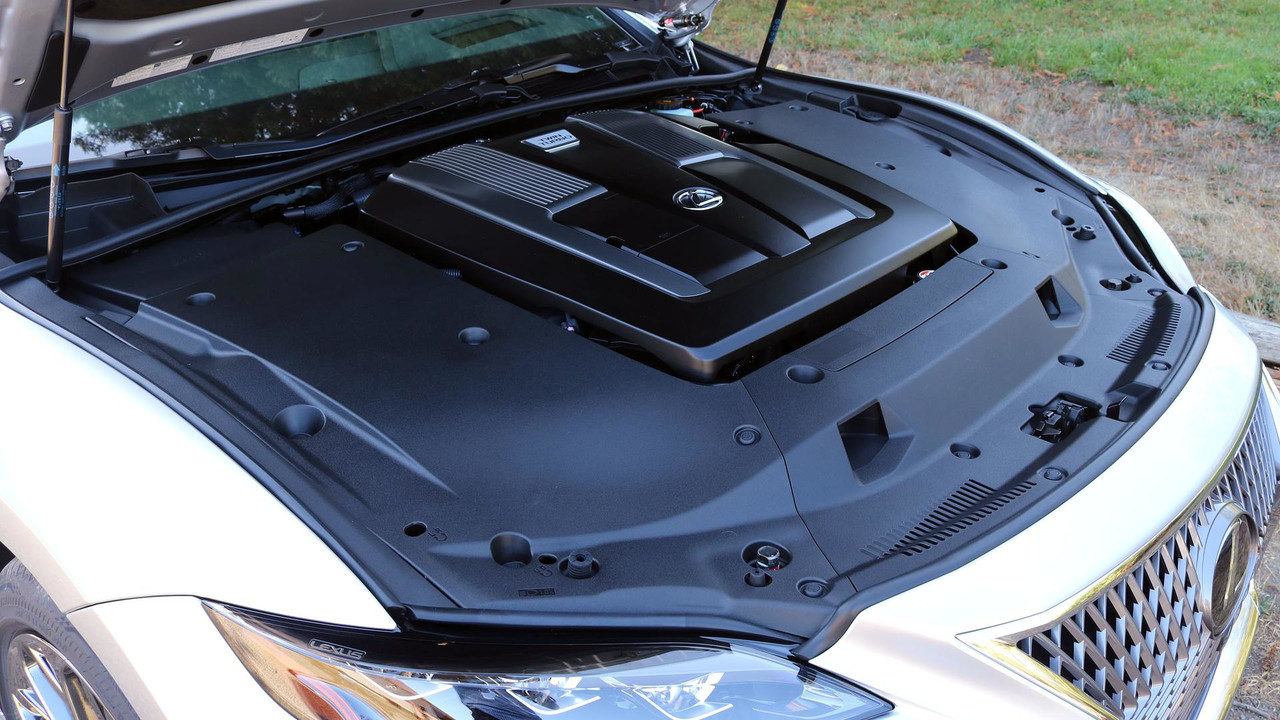
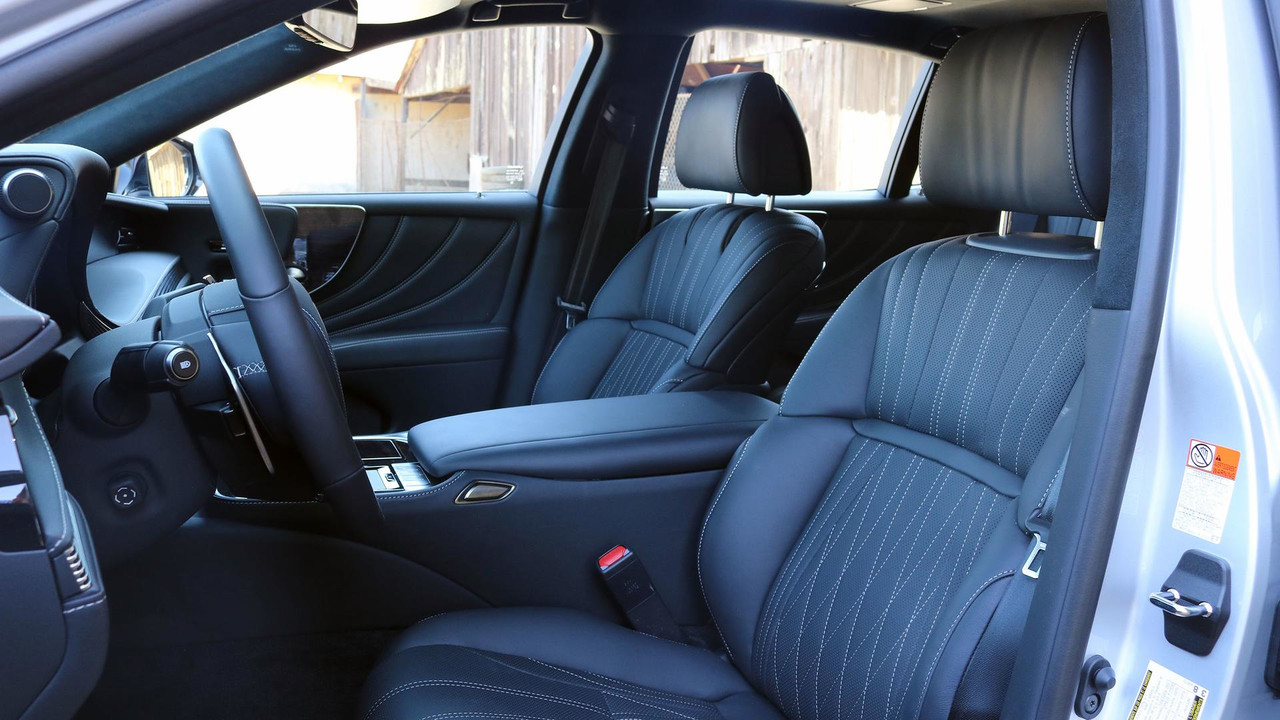
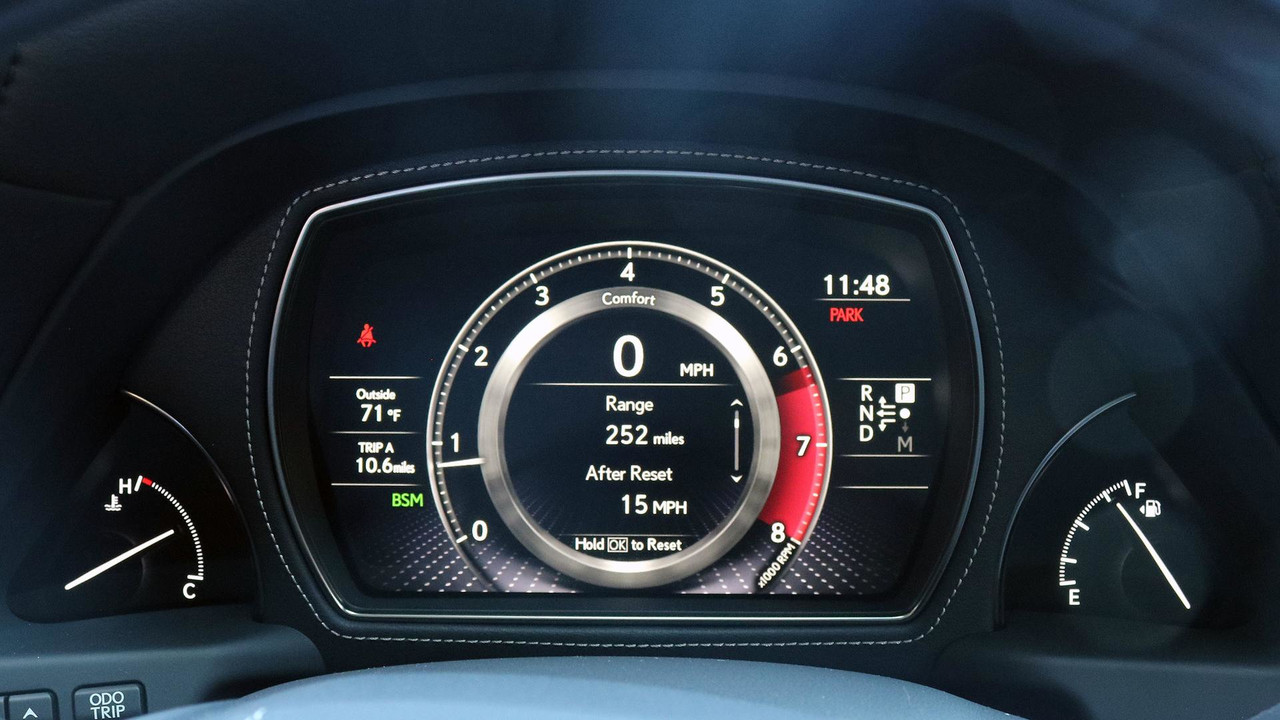
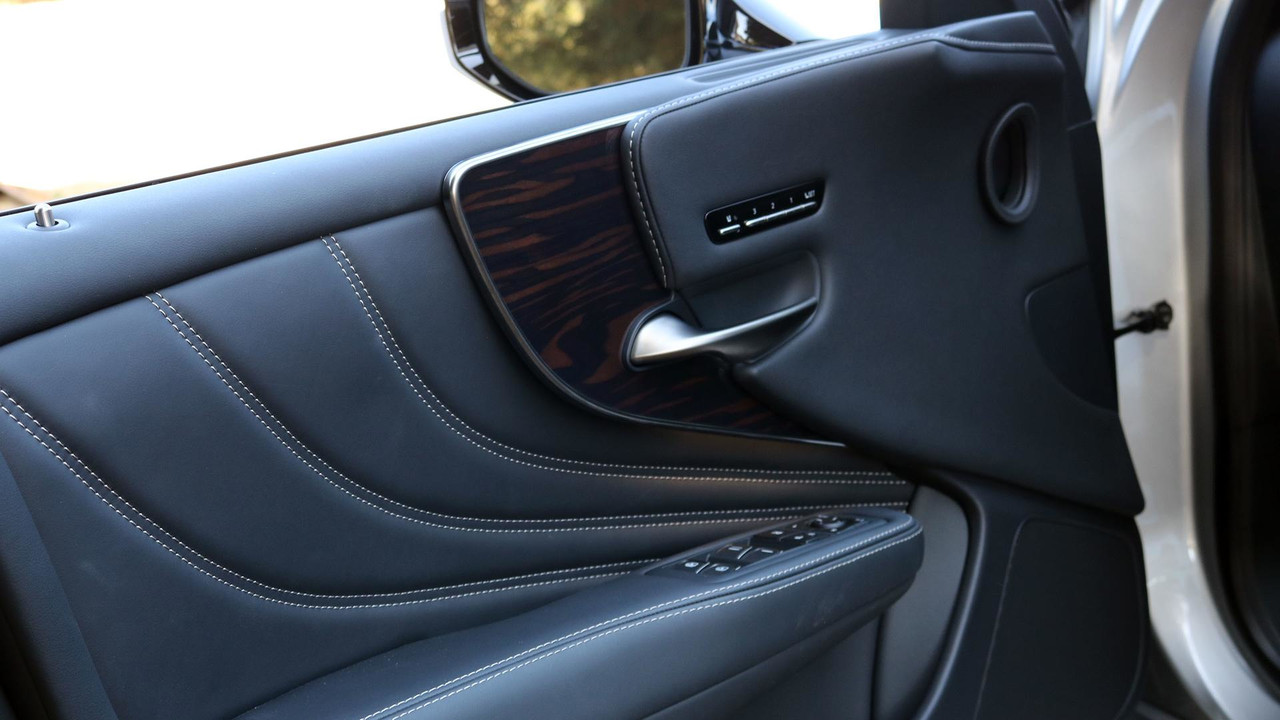
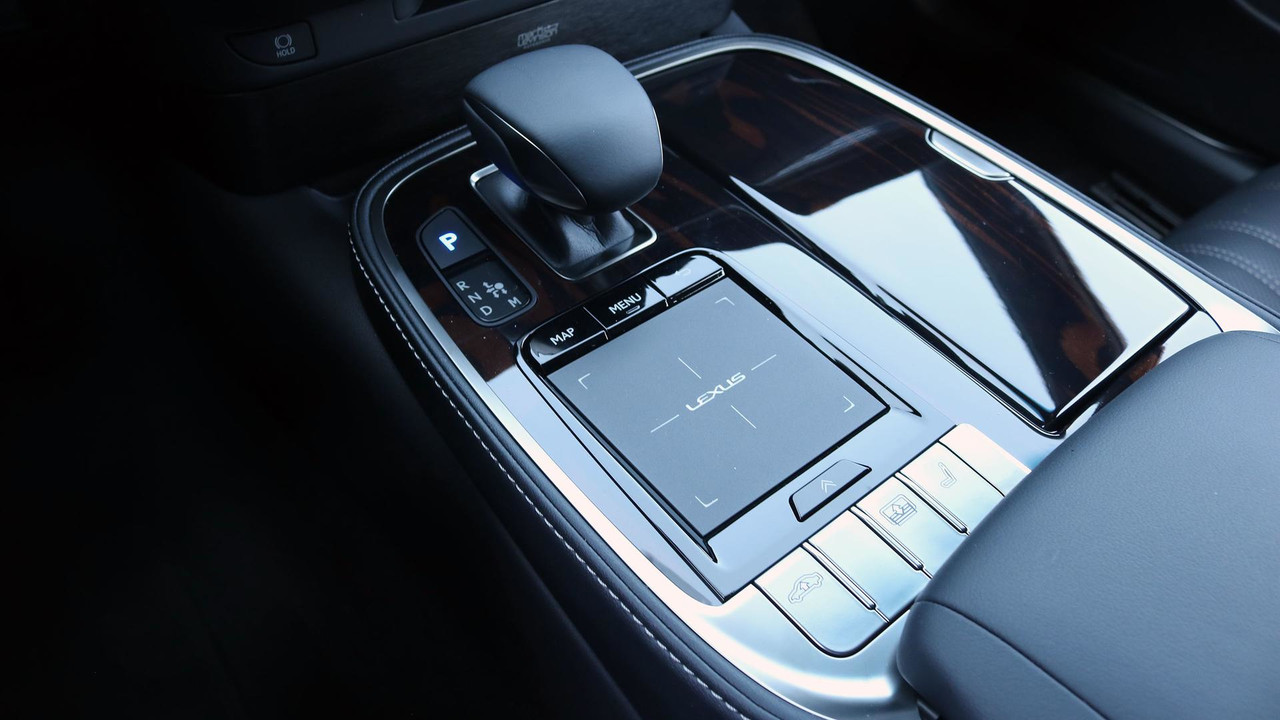
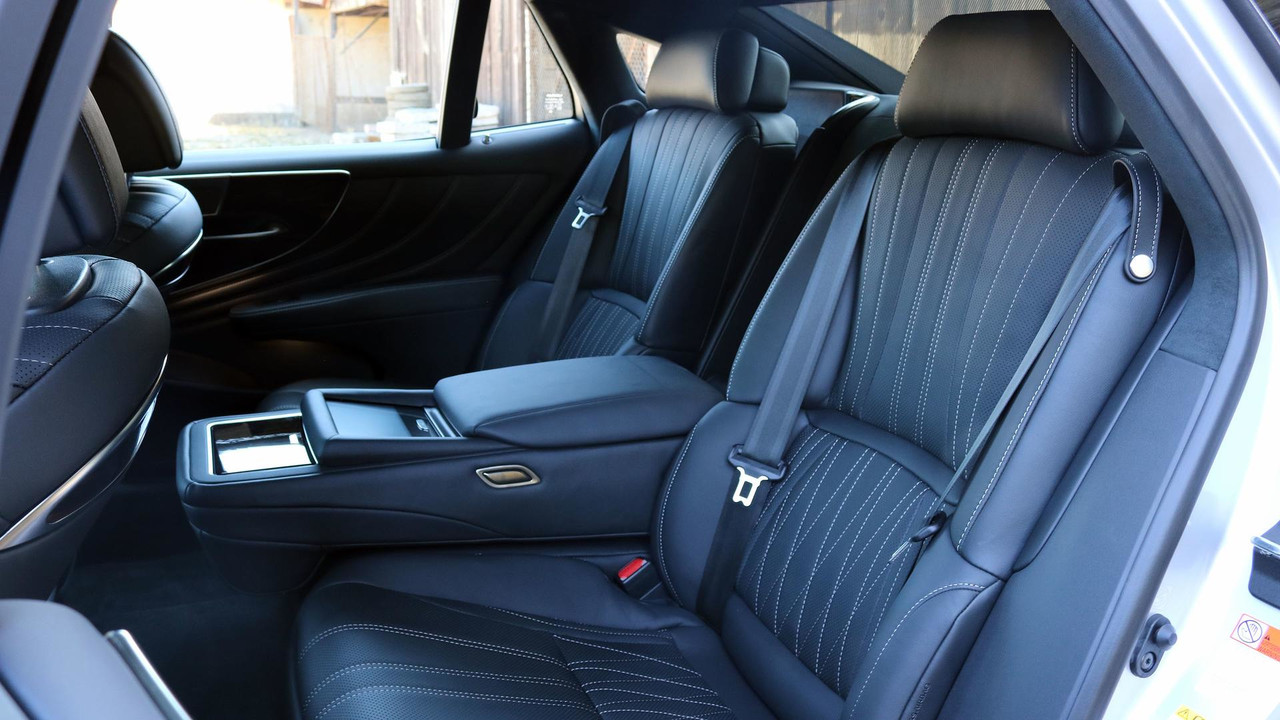
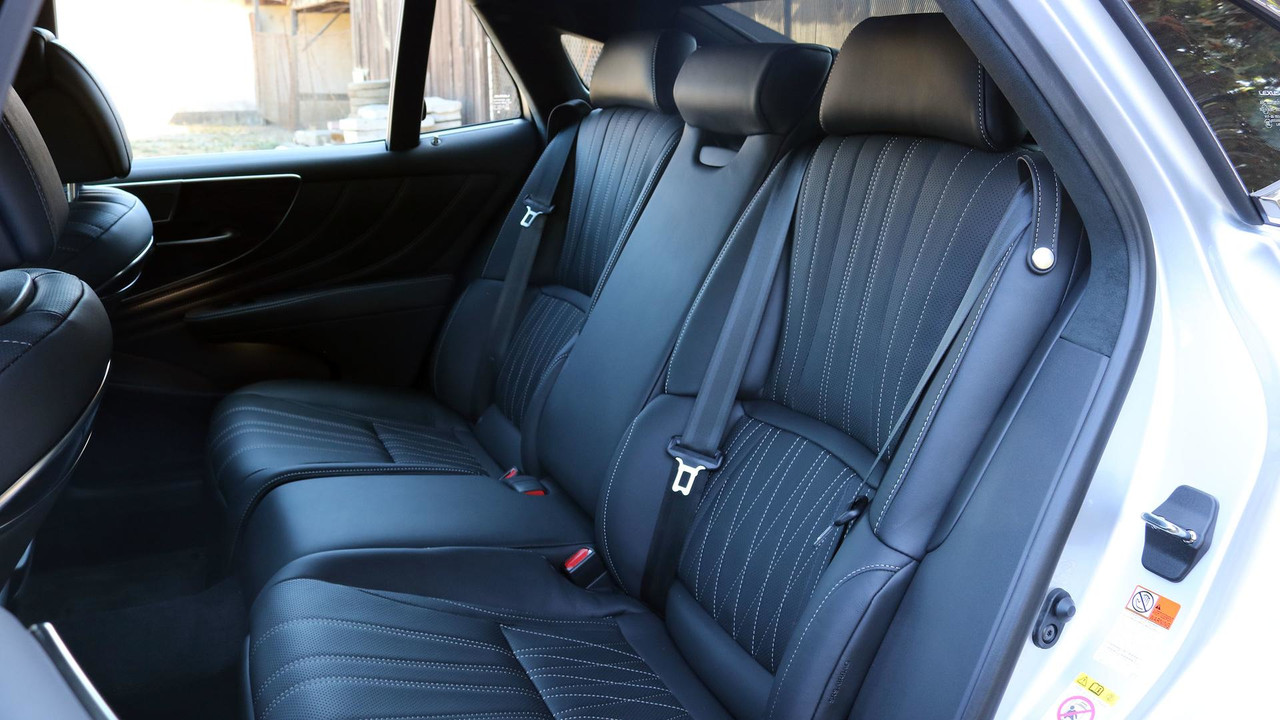
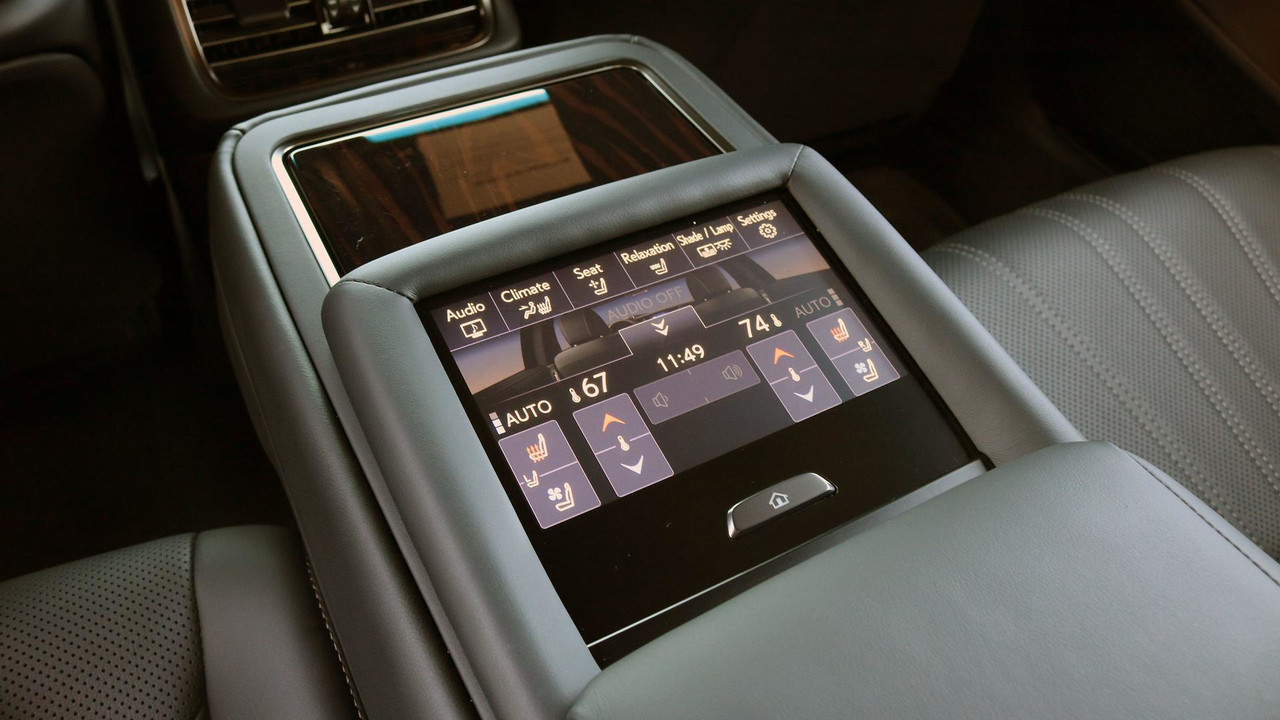
]]> feedback@motor1.com (Jeff Glucker) https://www.motor1.com/reviews/809018/used-lexus-ls-500-buying-guide/ https://www.motor1.com/reviews/809001/used-acura-nsx-buying-guide/ Tue, 22 Sep 2026 13:00:00 +0000 The Acura NSX Finally Makes Sense As A Used Supercar. Here's Why You Should Buy One Once criticized for its complexity and price, the 573-hp NSX has become a compelling used supercar as values have fallen.
When Acura finally resurrected the NSX for 2017, some enthusiasts proclaimed that it arrived too late and had changed too much from the original prototype. The original concept of a mid-engined V10 supercar was now a V6 hybrid production car. Not exactly what everyone was hoping for.
Unlike the original NSX, which packed a naturally aspirated V6 sending power to the rear wheels via a manual transmission, the second-gen NSX went in a completely different direction. It had two turbochargers, three electric motors, all-wheel drive, and a nine-speed dual-clutch transmission.
It was complicated. It was heavy. And with a starting price of roughly $156,000, it was relatively expensive at the time. But it was also incredibly quick.
Today, the technology that seemed excessive in 2017 suddenly seems remarkably forward-thinking. Hybrid supercars are everywhere, and depreciation means you no longer need nearly $200,000 to put an NSX in your garage. Maybe the second-generation NSX was simply ahead of its time.

Why Buy The Second-Generation Acura NSX?
Because it's a genuinely exotic car that you can actually use.
That's basically the same formula that made the original NSX famous, even if the second-generation car arrives at that conclusion in a completely different way. The centerpiece is that hybrid drivetrain. A 500-hp twin-turbocharged 3.5-liter V6 sits behind the driver, paired with an electric motor and nine-speed dual-clutch transmission. Two more motors are on the front axle and add oomph while improving handling.
And it works brilliantly. The electric motors fill in the gaps while the turbos build boost, which makes the power delivery feel almost naturally aspirated. Nail the throttle and the NSX simply goes.
When Motor1 reviewed the NSX in 2017, we wrote:
'Turn the drive mode dial over to Sport and the NSX wakes up, the brute force of its turbo 3.5-liter V6 and three electric motors delivering all 573 horsepower with immediacy.' 'Nothing grabs the attention of onlookers quite like the NSX, even here in glitzy SoCal.' 'The harder you drive this car, the more it rewards you.'
Then there's the way it looks. Nearly a decade after its debut, the NSX still appears properly exotic. It's low, wide, and dramatic without appearing dated. And because Acura didn't sell many of them, seeing one on the street remains an event.
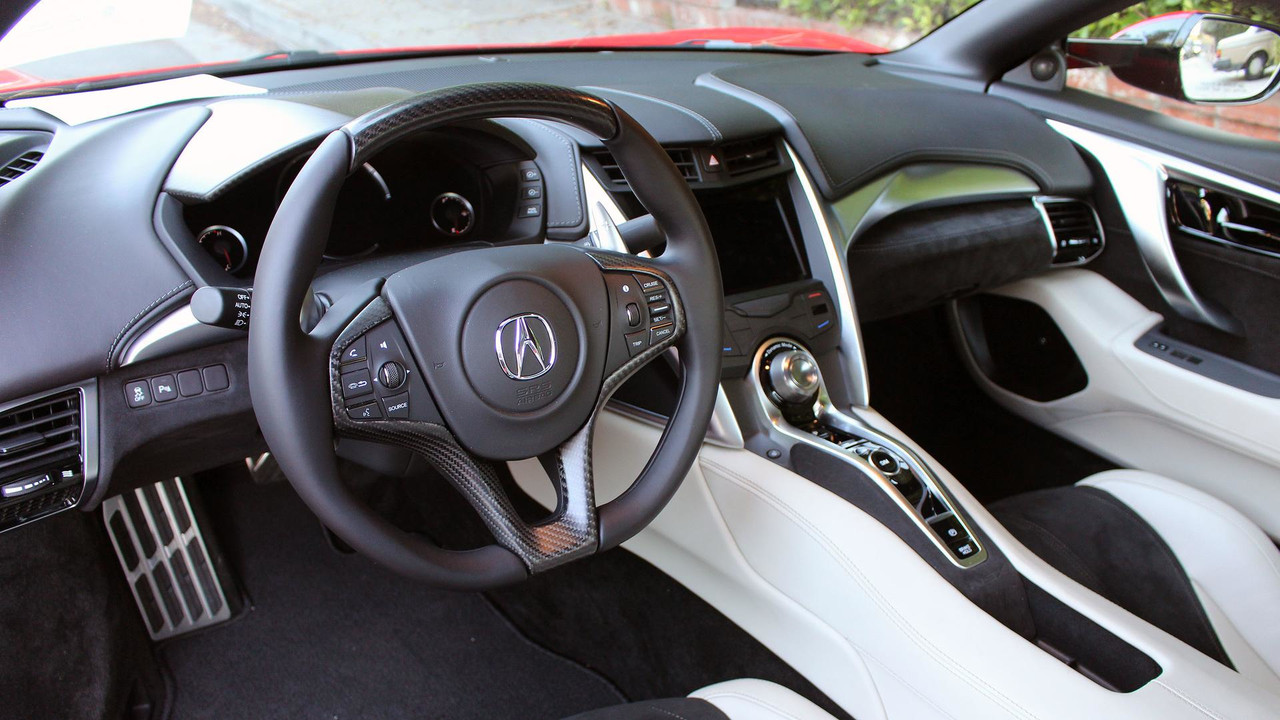
How Much Is A Used Acura NSX?
The second-generation NSX originally started at around $156,000 for 2017, and options could easily send the price toward—or beyond—$200,000. Today, standard second-generation NSX examples generally fall into a much more approachable segment of the exotic-car market, according to Kelley Blue Book Values.
2017 Acura NSX: $125,000 2018 Acura NSX: $119,000 2019 Acura NSX: $121,000 2020 Acura NSX: $125,000 2021 Acura NSX: $131,000
Actual transaction prices vary considerably depending on year, mileage, options, and condition. A 2017 example recently sold for just $80,500 on Bring a Trailer. That doesn't mean you're finding perfect NSXs for $80,000 everywhere. Clean, low-mileage cars can still command significantly more than $120,000.
The exception is the 2022 NSX Type S.
Acura built just 350 Type S models worldwide, with 300 allocated to the US. Power increased to 600 hp and 492 lb-ft, thanks partly to larger turbochargers borrowed from the NSX GT3 Evo race car. Acura also revised the transmission, suspension, aerodynamics, tires, and hybrid system. Those cars haven't depreciated much at all.
Classic.com currently puts the Type S market benchmark at around $236,000, while one sold for $278,000 in February 2026. So if you're searching for value, the standard NSX remains the one to hunt down.
Which Acura NSX Should You Buy?
I'd look for a 2019-2021 NSX. The basic drivetrain remained unchanged at 573 hp, but Acura made a surprisingly meaningful round of updates for 2019.
Engineers installed larger front and rear stabilizer bars, stiffer rear toe-link bushings, revised rear hubs, and recalibrated the SH-AWD system, adaptive dampers, electric steering, and stability control. Acura also developed a new Continental SportContact 6 tire specifically for the car.
According to Acura, those changes helped the updated NSX lap Suzuka nearly two seconds quicker than the previous version. And according to, well, me and anyone else who's driven it, the tire upgrade was a game changer for the NSX.
That's not a tiny mid-cycle update. The 2019-and-newer cars retain everything that's appealing about the original 2017 NSX while gaining better chassis tuning and slightly sharper responses.
A 2017 or 2018 shouldn't scare you away, though. In fact, an early car could be the value play if you find one with the right service history at the right price. Mechanically, you're still getting the same 573-hp hybrid drivetrain, nine-speed DCT, and torque-vectoring all-wheel-drive system.
What Could Go Wrong?
The good news is that the second-generation NSX hasn't developed the sort of horror-story reputation you might expect from a supercar containing a twin-turbo engine, three electric motors, a lithium-ion battery, and a dual-clutch transmission. But there's no getting around the complexity.
That makes a proper pre-purchase inspection absolutely mandatory.
I'd want an Acura dealer or independent shop familiar with the NSX to check the hybrid system, battery health, cooling system, transmission, suspension, and electronic systems. A complete service history is worth paying extra for. Early cars also had a few recalls.
Certain 2017 and 2018 NSXs were recalled because the crossover pipe couplers connecting the car's two fuel tanks could leak. Acura's repair involved replacing both fuel tanks. Certain 2017 cars were also recalled for a center high-mount brake light issue that could cause the brake light fuse to blow.
Some NSXs were also included in Honda's later fuel-pump recalls, so checking the VIN for completed recall work should be part of any purchase.
Then there are your typical exotic-car expenses.
The NSX uses 19-inch front and 20-inch rear wheels wrapped in wide performance tires. Cars equipped with optional carbon-ceramic brakes can face significant replacement costs when those components eventually wear out.
And remember where the engine sits. There isn't much luggage space. We measure just 4.4 cubic feet behind the engine. There isn't a front trunk because the NSX uses that space for hybrid hardware. So pack light.
What Are Some NSX Alternatives?
There's no shortage of interesting performance cars priced between $100,000 and $150,000. A used Audi R8 gets you a naturally aspirated V10 while a Porsche 911 Turbo offers staggering performance with even more everyday usability.
You could also shop for a McLaren, AMG GT, Nissan GT-R, or a C8 Corvette Z06, depending on your budget. Most of them are more conventional than the NSX. But that's exactly why the Acura is interesting.
Ten years ago, all of the technology in the NSX made it seem unnecessarily complicated. Today, it makes the car fascinating.
Audi R8 Chevrolet Corvette Z06 Mercedes-AMG GT Nissan GT-R Porsche 911 Turbo 
Why The Second-Generation Acura NSX Makes Sense
The second-generation NSX had a difficult job from the beginning. It's the follow-up to one of the most beloved Japanese sports cars ever built, yet it abandons almost everything enthusiasts loved about that car.
No manual transmission. No naturally aspirated engine. No rear-wheel drive. And instead of simplicity, Acura threw basically every piece of performance technology it had at the thing. That wasn't necessarily what NSX fans wanted in 2017.
But judged on its own merits—and at today's prices—the equation changes.
For around $125,000, you can get a mid-engine supercar with 573 hp, three electric motors, all-wheel drive, a nine-speed DCT, a roughly three-second 0-60 time, and styling that still looks exotic nearly a decade later. Better yet, you can actually drive it to work without hating your life.
Find a clean 2019-2021 car. Get a thorough inspection. Make sure the recalls and maintenance are up to date. And don't obsess over finding the absolute cheapest example.
The second-generation NSX may not have made perfect sense when it was new. As a used supercar, it finally does.
Why Buy A Used Kia Stinger? It's One Of The Best Performance Sedans For The Money
Why Buy A Used Jaguar F-Type? Because It Still Feels Special
Why Buy A Used Lexus GS F? Because A High-Revving V8 Sedan Is Worth Saving
Why Buy A Used Ford Focus RS? Because It's Still Special
Acura EngineTwin-Turbocharged 3.5-Liter V6 & Three Electric Motors Output573 Horsepower / 476 Pound-Feet TransmissionNine-Speed Dual-Clutch Drive TypeAll-Wheel Drive Speed 0-60 MPH3.0 Seconds Maximum speed191 Miles Per Hour Efficiency21 City / 22 Highway / 21 Combined Seating CapacityTwo Cargo Volume4.4 Cubic Feet Base Price$156,000 (2017)

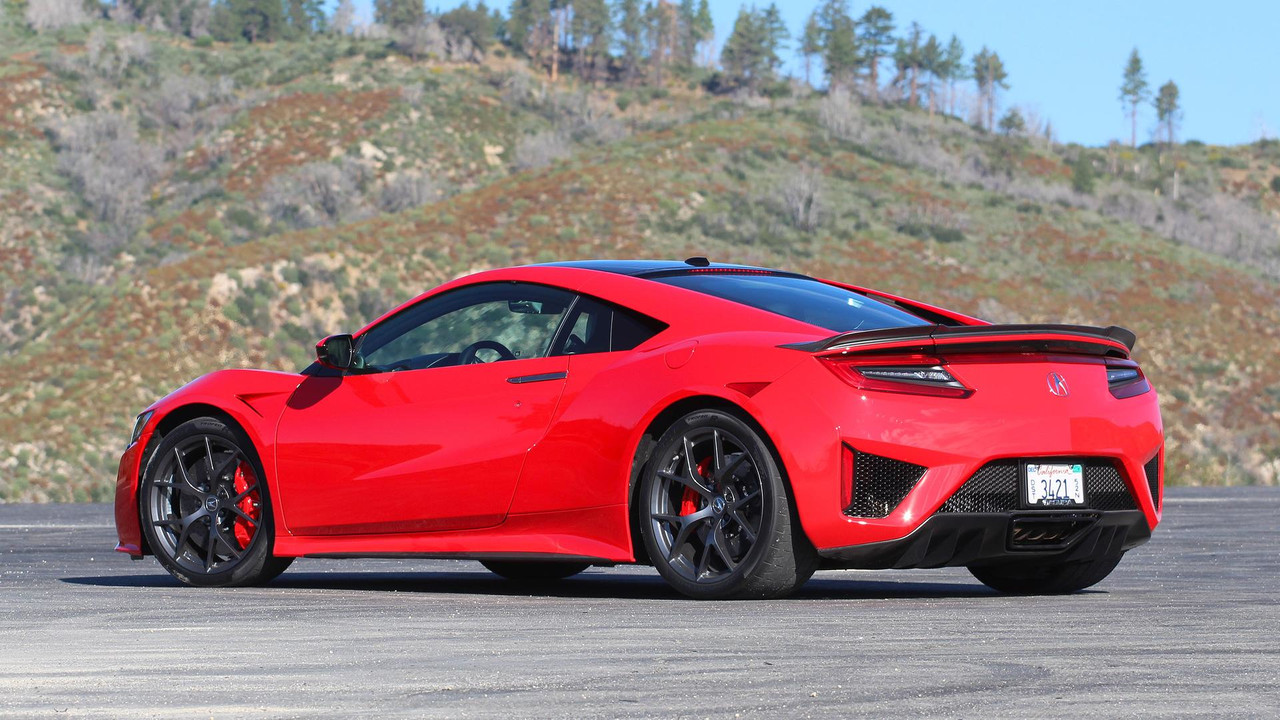

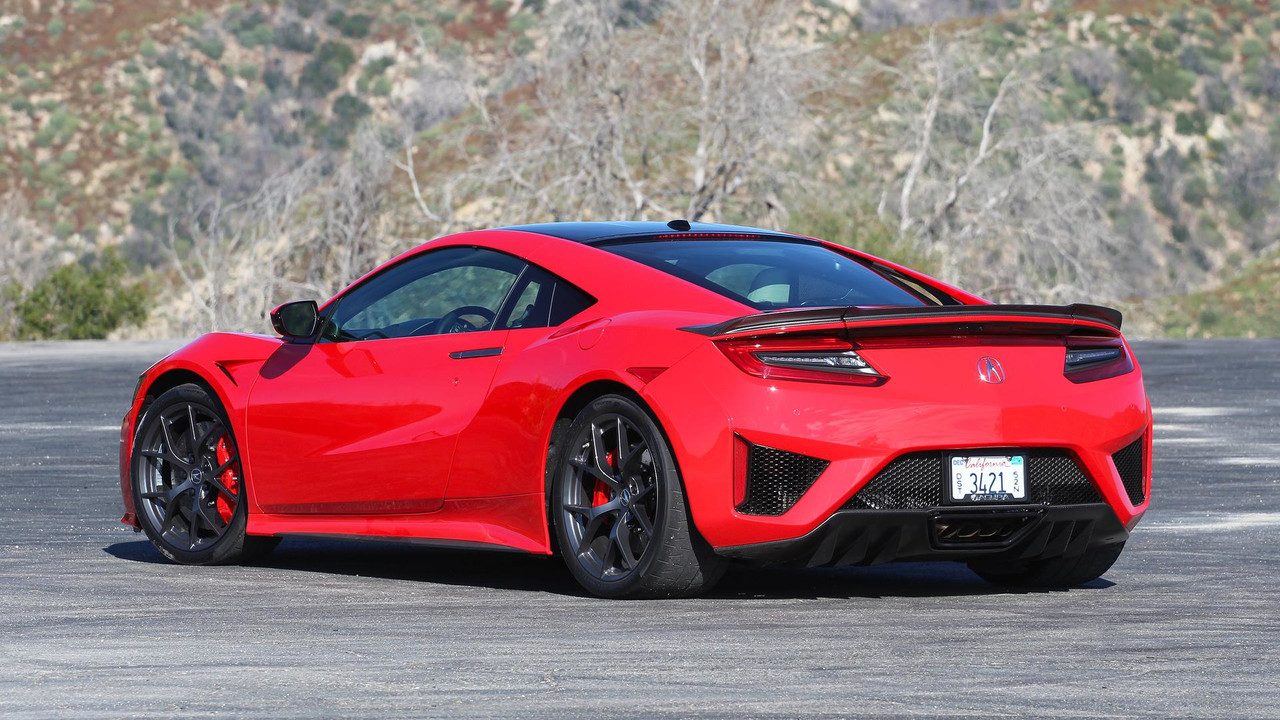
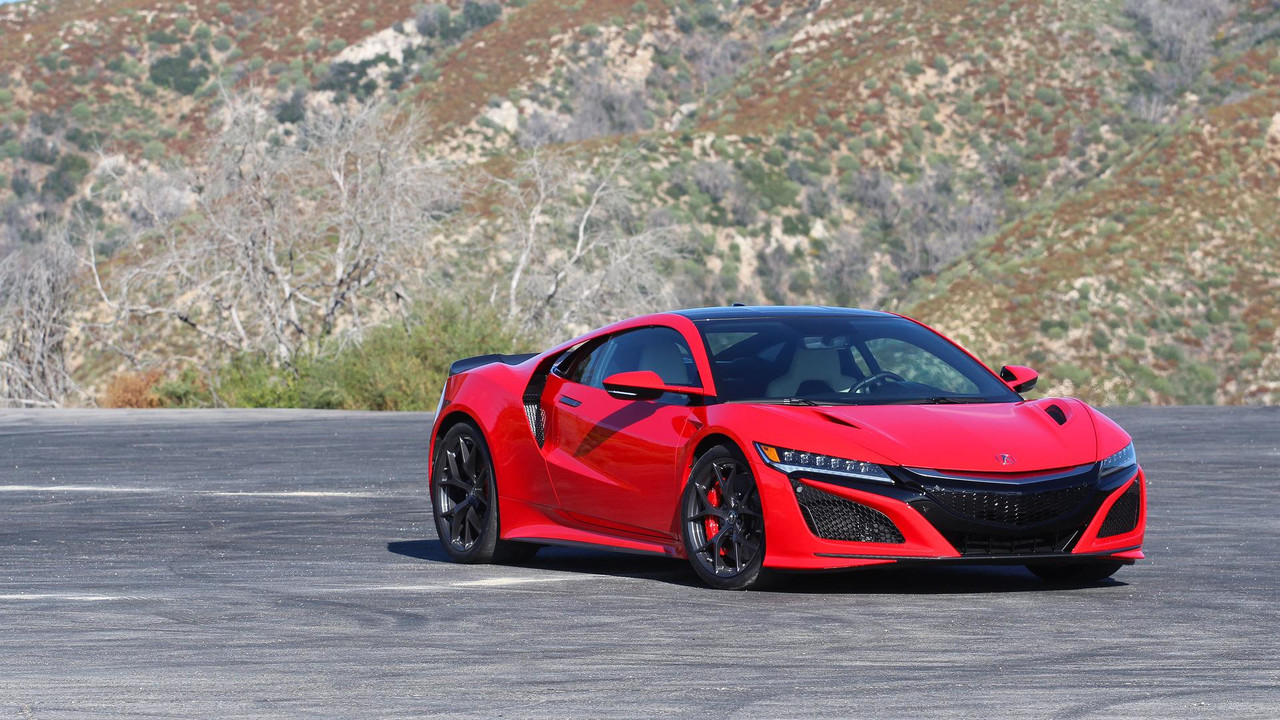
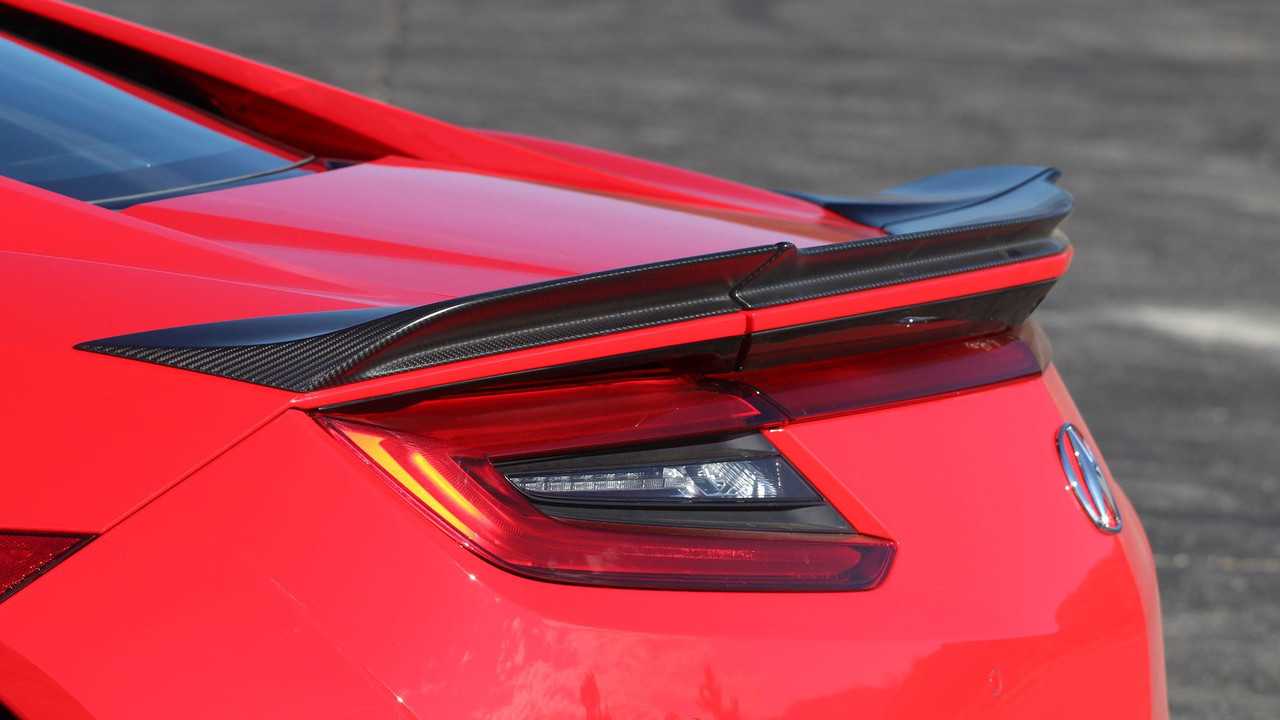
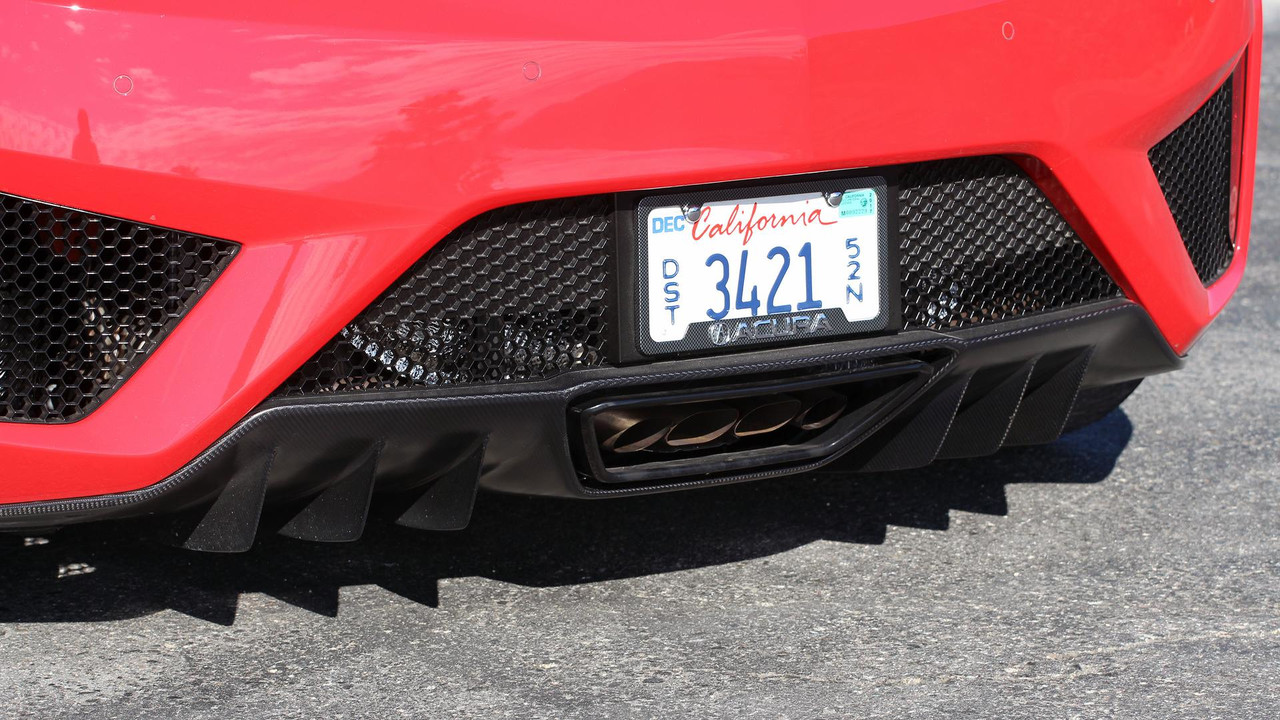
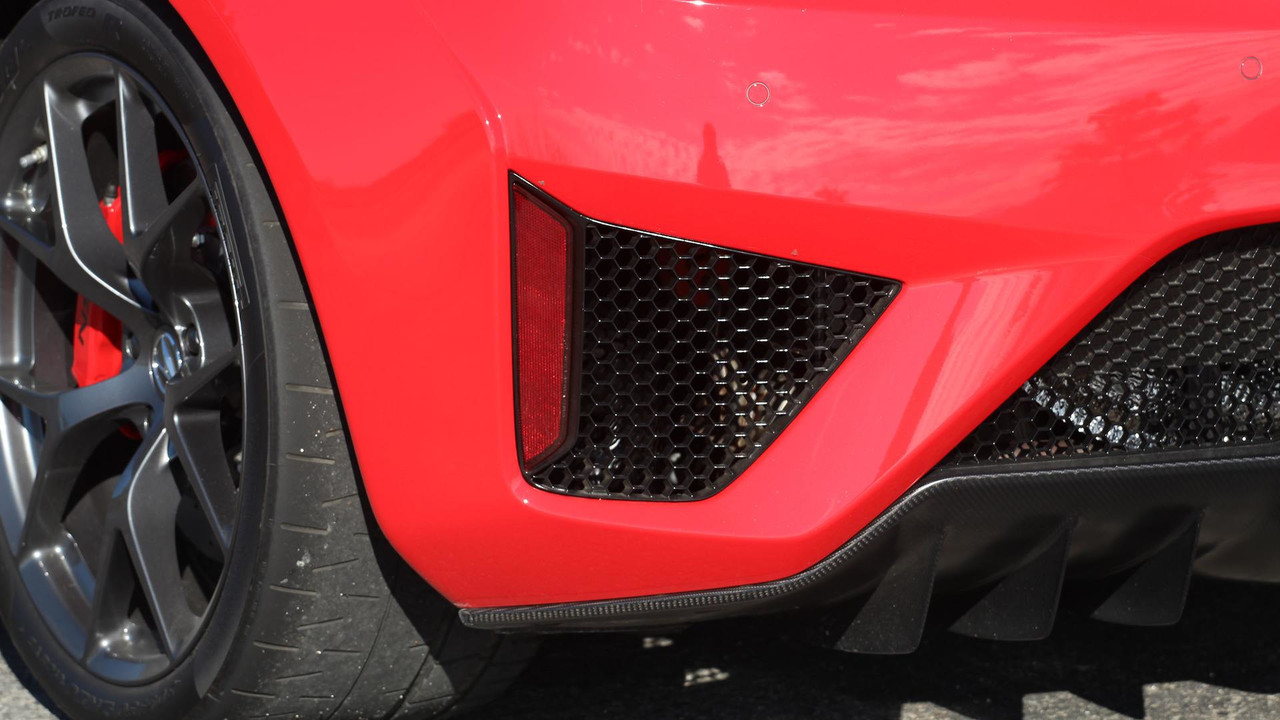
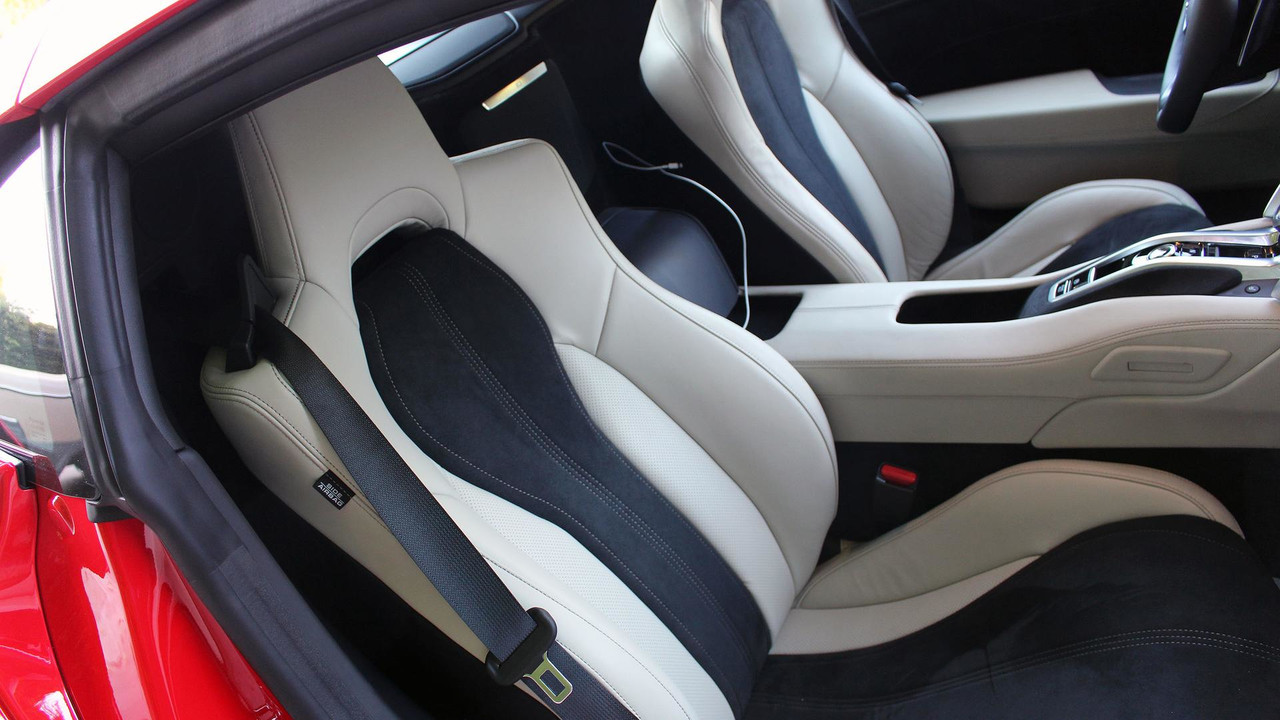
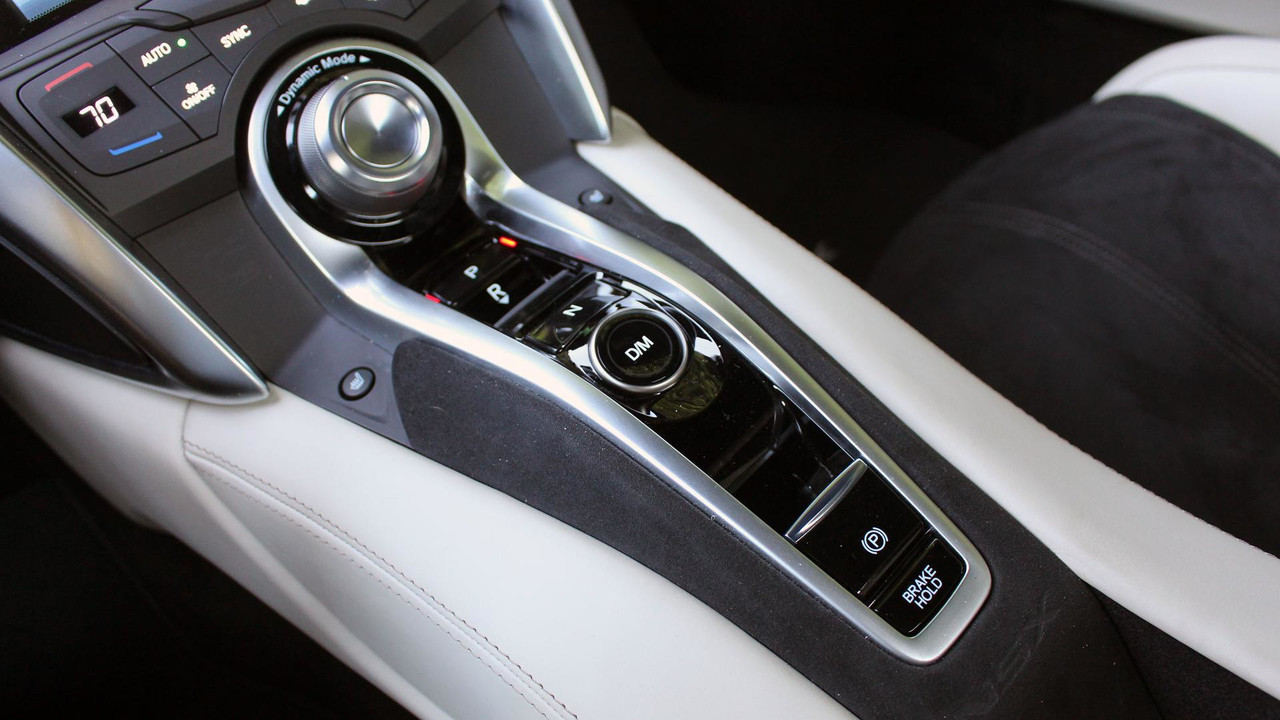
]]> feedback@motor1.com (Jeff Glucker) https://www.motor1.com/reviews/809001/used-acura-nsx-buying-guide/ https://www.motor1.com/reviews/808233/used-jeep-grand-cherokee-trackhawk-buying-guide/ Thu, 17 Sep 2026 16:00:00 +0000 Why Buy A Jeep Grand Cherokee Trackhawk? It's A 707-HP Family SUV For Around $60,000 The 707-horsepower Trackhawk was ridiculous when it was new. Nearly a decade later, it might make even more sense used.
In 2018, someone at Jeep decided that the perfectly reasonable 475-horsepower Grand Cherokee SRT simply wasn’t ridiculous enough. So engineers stuffed the supercharged 6.2-liter V8 from the Dodge Challenger and Charger Hellcat into the Grand Cherokee, strengthened the drivetrain, and sent 707 horsepower to all four wheels.
That's how the Grand Cherokee Trackhawk was born, more or less.
The 5,300-pound family SUV was now capable of hitting 60 miles per hour in 3.5 seconds and reaching a top speed of 180. In 2018. Jeep sold the Trackhawk through 2021, with prices eventually climbing past $90,000 before production ended with the outgoing WK2-generation Grand Cherokee.
Today, depreciation has made the Trackhawk significantly more attainable—but calling one "cheap" would still be a stretch. Early examples now hover around the mid-$50,000 to low-$60,000 range, while later Trackhawks can easily cost $70,000 or more.
Still, there aren’t many SUVs that deliver this much insanity for the money.

Why Buy The Jeep Grand Cherokee Trackhawk?
Two words: Hellcat. Jeep. It's really that simple.
The Trackhawk uses a supercharged 6.2-liter Hemi V8 producing 707 horsepower and 645 pound-feet of torque. An eight-speed automatic sends that power through a specially reinforced all-wheel-drive system, giving the Jeep enough traction to rocket from 0-60 mph in just 3.5 seconds. Jeep quoted an 11.6-second quarter-mile and a top speed of 180 mph.
And unlike the Challenger and Charger Hellcat, the Trackhawk actually uses most of that power without immediately turning the rear tires into smoke. Launch control, adaptive Bilstein dampers, huge Brembo brakes, and an adjustable all-wheel-drive system help make the Jeep far more serious than simply a Grand Cherokee with a giant engine.
When Motor1 first drove the Trackhawk, we summed it up pretty succinctly:
'You guys, this is an eleven-second Jeep. Just think about that for a moment.' 'The Trackhawk’s inherent lunacy is obvious from the moment you hit the throttle.' 'This is a 5,300-pound, all-wheel-drive SUV that will do 0-60 in 3.5 seconds and generate 1.4 gs of acceleration force while doing so. It’ll run a quarter mile in 11.6 seconds.'
More importantly, the Trackhawk remains a genuinely useful SUV. It seats five, offers 36.3 cubic feet of cargo space behind the rear seats, and can tow up to 7,200 pounds when properly equipped. Put it in Auto mode, and it drives surprisingly normally, too.
Well, until you put your foot down.
How Much Is A Used Jeep Grand Cherokee Trackhawk?
The Trackhawk has depreciated, but not nearly as dramatically as most other luxury performance SUVs. This is still an enthusiast vehicle, after all. According to current Kelley Blue Book values, here's roughly what buyers can expect to pay:
2018 Jeep Grand Cherokee Trackhawk: $51,760 2019 Jeep Grand Cherokee Trackhawk: $54,000 2020 Jeep Grand Cherokee Trackhawk: $58,900 2021 Jeep Grand Cherokee Trackhawk: $65,310
Actual prices vary considerably based on mileage, modifications, accident history, and condition. Low-mileage, collector-quality examples can command significantly more. Recent auction results have ranged from $40,000 for a higher-mileage 2018 all the way to six figures for exceptionally low-mileage examples.
But you're also getting a 707-hp, all-wheel-drive SUV that originally started at $85,900 for 2018 and climbed to $91,665 by 2021. And there really isn't anything else quite like it.
Check Used Jeep Grand Cherokee Trackhawk Listings
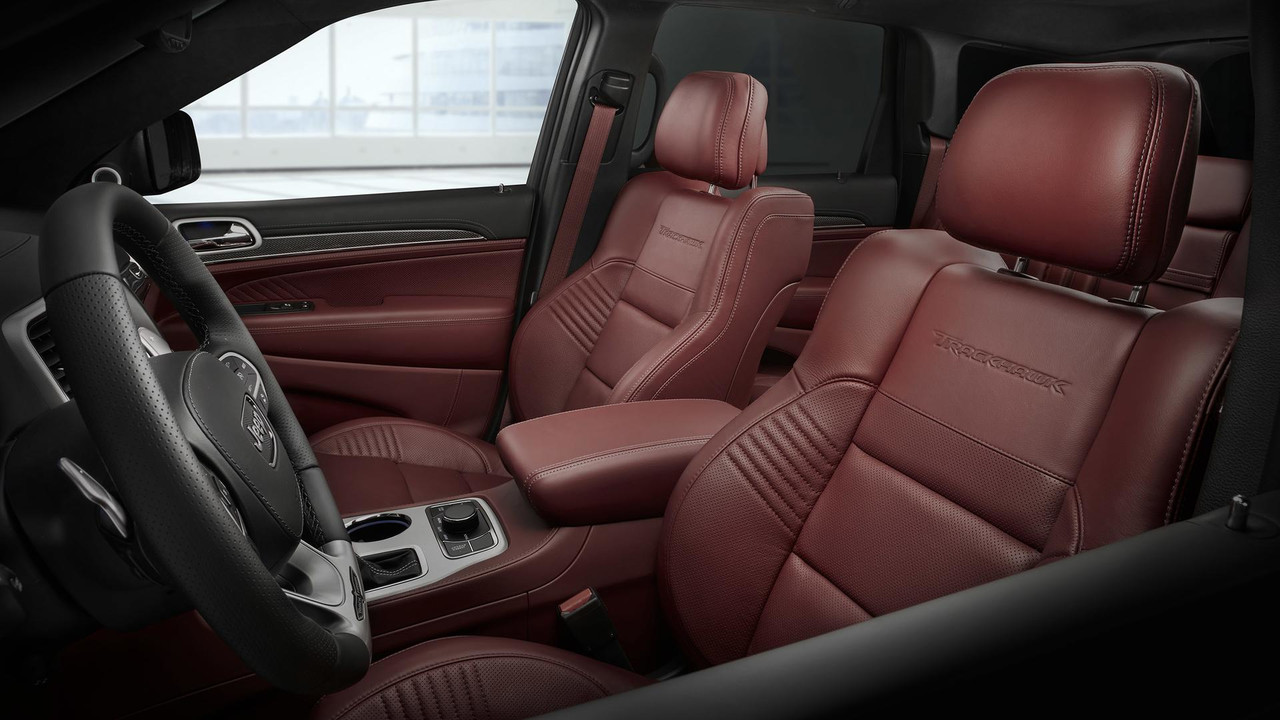
Which Jeep Grand Cherokee Trackhawk Should You Buy?
Here's the nice thing: Mechanically, they're basically all the same.
Every Trackhawk sold from 2018 through 2021 has the same 707-hp supercharged 6.2-liter V8, eight-speed automatic, all-wheel drive, adaptive suspension, and massive Brembo brakes. So instead of obsessing over model year, focus on condition and history.
Personally, I'd target a clean 2019 or 2020 Trackhawk.
The 2019 model was essentially unchanged from 2018, while the 2020 received a few minor upgrades, including a standard single-pane sunroof, new wheel options, and additional interior choices. Neither year carries quite the same final-year premium as a comparable 2021.
A 2018 can also make sense if the price is right. Just make sure any applicable recalls have been completed. A small number of early 2018 Trackhawks were recalled due to a fuel supply line that could separate, potentially causing an engine stall or fire.
And if you're thinking about long-term collectibility, the final-year 2021 probably makes the most sense. Just expect to pay for it.
What Could Go Wrong?
The biggest concern with any used Trackhawk isn't necessarily the Trackhawk itself. It's the previous owner.
Remember what you're buying: A 707-hp SUV with launch control and one of the biggest performance aftermarket communities imaginable. Plenty of Trackhawks have been tuned, pulley-swapped, drag raced, launched repeatedly, or otherwise driven exactly how you'd expect someone to drive a 707-hp Jeep.
Modifications aren't automatically bad, but an unknown tune or undocumented engine work should make you cautious.
Try to find the most original Trackhawk possible with a complete service history. Get a pre-purchase inspection from someone familiar with Hellcat-powered vehicles, and pay especially close attention to the drivetrain, differential, transmission, supercharger, cooling system, tires, and brakes.
Specialist buying guides also point to potential issues with the intercooler circulation pump and wear within the supercharger drive system, so those are worth checking during an inspection.
Consumables aren't cheap, either. The Trackhawk rides on enormous 295-width tires and uses six-piston Brembo front brakes with 15.75-inch rotors. Replacing four tires or doing a complete brake job can quickly remind you that this was originally a six-figure SUV, once you added a few options.
Then there's fuel economy.
The EPA rated the Trackhawk at 11 mpg city, 17 highway, and 13 combined. Premium fuel is required. If you're concerned about gas mileage, though, you've made it remarkably far into the wrong article.
Insurance is also worth checking before you buy. High-performance SUVs can be expensive to cover, and a Trackhawk isn't exactly invisible to thieves.

What Are The Alternatives?
If you want the same basic idea with three rows, there's the Dodge Durango SRT Hellcat. It uses essentially the same formula with 710 horsepower, all-wheel drive, and room for more passengers.
A regular Grand Cherokee SRT is probably the smarter buy. Its naturally aspirated 6.4-liter V-8 makes 475 hp, which is still plenty, and used examples cost considerably less. You lose the supercharger whine and face-melting acceleration, but ownership should be slightly less terrifying financially.
German alternatives include used versions of the BMW X5 M, Mercedes-AMG GLE63, and Porsche Cayenne Turbo. They're generally more sophisticated and luxurious than the Jeep.
But none of them quite have the Trackhawk's personality, and that's the whole point.
BMW X5M Dodge Durango SRT Jeep Grand Cherokee SRT Mercedes-AMG GLE63 Porsche Cayenne Turbo
Why The Jeep Grand Cherokee Trackhawk Makes Sense
"Sensible" probably isn't the right word for a vehicle that gets 13 mpg and can run an 11-second quarter-mile. But used Trackhawks make a compelling argument. They're a vehicular siren song for anyone who wants to pair insane capability with actual usability.
For roughly $50,000 to $70,000, you can get an SUV with 707 hp, all-wheel drive, launch control, massive Brembo brakes, adaptive suspension, room for five, and enough towing capacity to pull a decent-sized trailer.
So go out and find an unmodified Trackhawk. Get it inspected. Budget for tires, brakes, fuel, and speeding tickets. Then enjoy one of the dumbest—and greatest—performance SUVs ever built.
Why Buy A Used Jaguar F-Type? Because It Still Feels Special
Why Buy A Used Lexus GS F? Because A High-Revving V8 Sedan Is Worth Saving
Why Buy A Used Ford Focus RS? Because It's Still Special
Why Buy A Used Chevy SS? Two Words: V8. Manual.
Jeep EngineSupercharged 6.2-Liter V8 Output707 Horsepower / 645 Pound-Feet TransmissionEight-Speed Automatic Speed 0-60 MPH3.5 Seconds Maximum speed180 Miles Per Hour Efficiency11 City / 17 Highway / 13 Combined Drive TypeAll-Wheel Drive Seating CapacityFive Weight5,363 Pounds Towing7,200 Pounds Base Price$85,900 (2018)
]]> feedback@motor1.com (Jeff Glucker) https://www.motor1.com/reviews/808233/used-jeep-grand-cherokee-trackhawk-buying-guide/ https://www.motor1.com/reviews/808350/mercedes-c111-concept-sports-car-test-drive/ Wed, 16 Sep 2026 18:00:00 +0000 I Drove The Mercedes C 111, The Legendary Sports Car It Never Actually Built Mercedes built the C 111 as a rolling laboratory, but more than five decades later, I finally got behind the wheel of its most famous experiment.
Few Mercedes models have a reputation as legendary as the C 111. The remarkable part is that not a single customer was ever able to buy one, no matter how badly they wanted to.
While the 300 SL, and later the CLK GTR, at least made it into limited production, the C 111 remained exactly what it was intended to be: a pure experimental vehicle that would never see series production.
Even so, every sports car fan knows what it is: a low, wedge-shaped body, distinctive gullwing doors, and vivid orange paintwork—or, as Mercedes would insist, "Weissherbst." That design made it an icon, even though very few people have ever seen one in person.
For many, it remains the sports car Mercedes never actually built, and if you couldn’t put one in your garage, at least you could put a scale model on your shelf.
This story originally appeared on Motor1 Germany
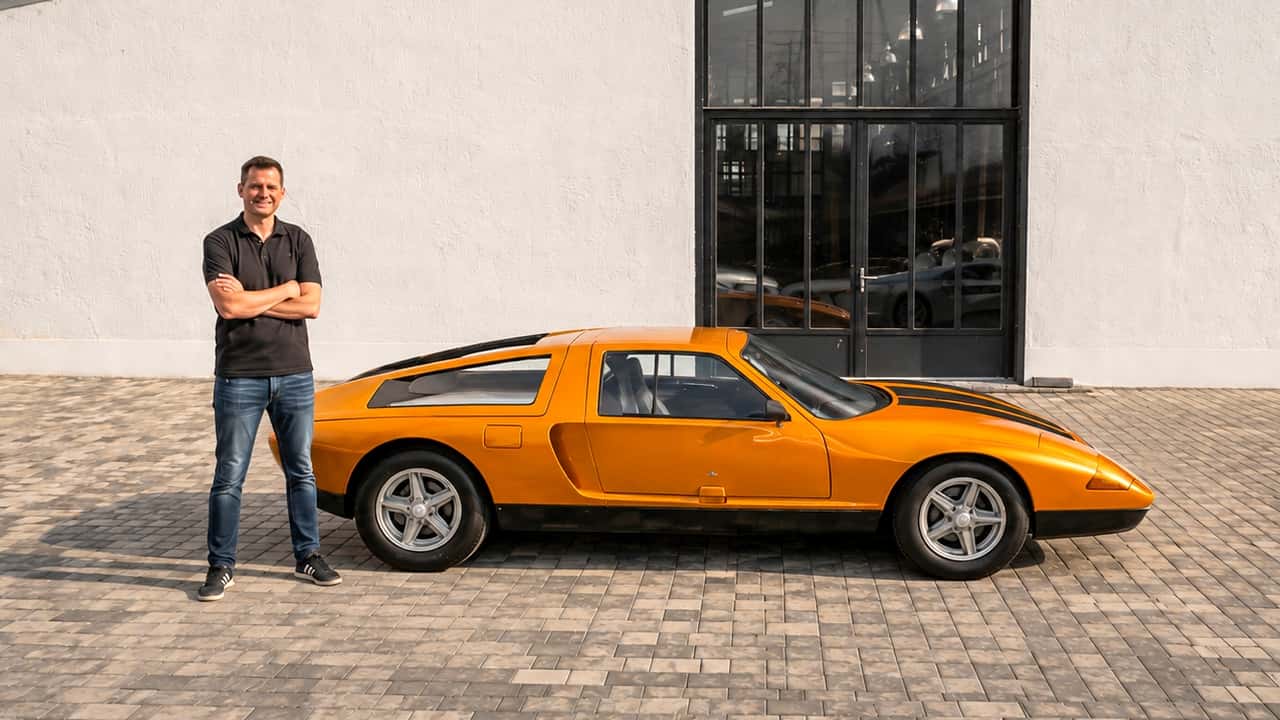 Photo by: Motor1.com Deutschland
A Rolling Laboratory
Mercedes had a very different goal from the beginning. When the C 111 made its debut at the Frankfurt Motor Show in September 1969, engineers weren’t thinking about sales figures or a successor to the 300 SL. Instead, the car served as a rolling test lab for new powertrain concepts, particularly the rotary engine, as well as chassis technology, aerodynamics, and the then-exotic use of a fiberglass-reinforced plastic body.
Showgoers saw things a bit differently.
Crowds gathered around the Mercedes stand, assumed the futuristic gullwing coupe was the brand’s next great sports car, and immediately wanted to order one, whatever the cost. After the further-developed C 111-II was shown in Geneva, legend has it that would-be buyers even sent blank checks to Stuttgart, apparently convinced that enough money could soften any refusal.
Mercedes still said no. The C 111 remained what it had always been intended to be: a research project.
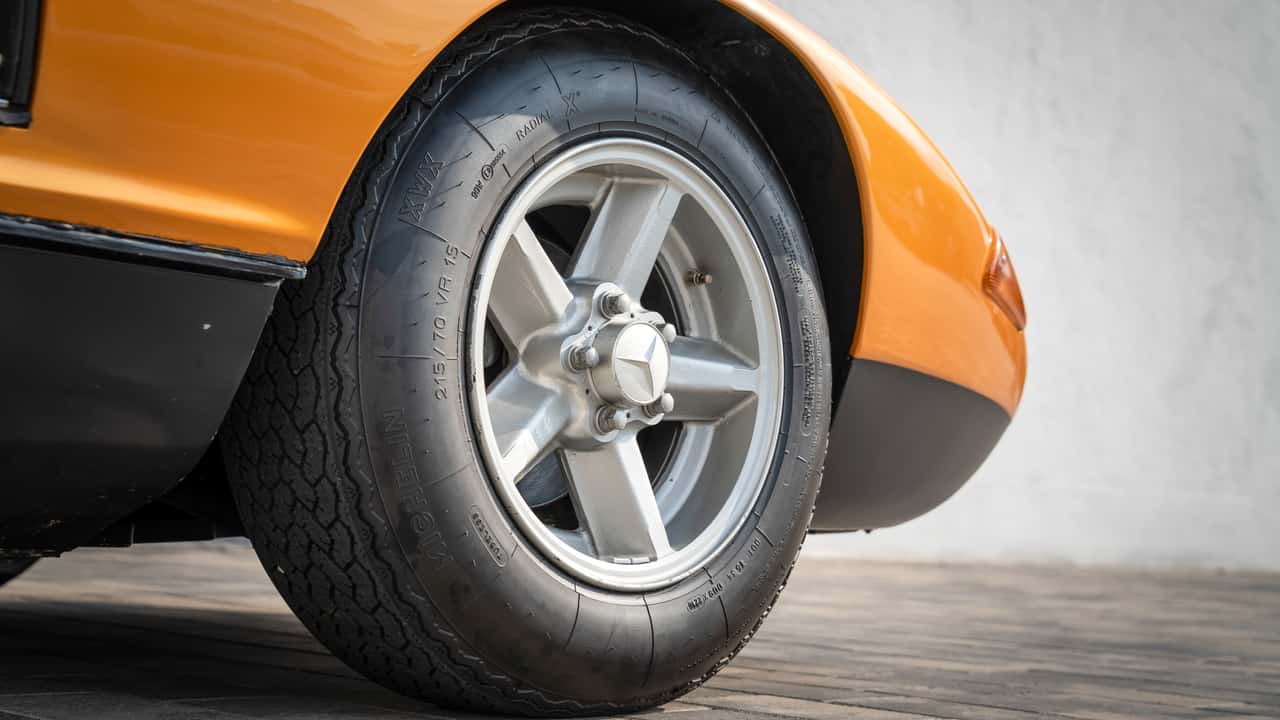 Photo by: Motor1.com Deutschland
  Photo by: Motor1.com Deutschland Photos by: Motor1.com Deutschland
Keys In Hand
More than 50 years later, I’m standing in front of one of these legends myself, and the experience is almost surreal. After all, the C 111 is one of those cars you know from books, posters, and museums—not from a test drive. Fortunately, Mercedes-Benz Classic actually handed me the keys, as if this were another normal review.
The briefing is correspondingly short. The cars are fully insured, which is reassuring only at first glance. In a worst-case scenario, a modern AMG could be repaired. With the C 111, that would be considerably more difficult. This is a prototype, and there’s no parts shelf to pull from. Anything damaged would have to be fabricated by hand.
No pressure.
 Photo by: Motor1.com Deutschland
Almost Production-Ready
The first surprise comes as soon as the gullwing door opens. Because the cabin is astonishingly close to production-ready, there are large round gauges, logically arranged switches, and a seating position that immediately feels right. It feels more like an early-1970s Mercedes production car than an experimental vehicle. Of course, a few quirks remain.
The radio, for example, is mounted vertically in the center console because there simply wasn’t enough room to install it horizontally. Occasionally, a wire peeks out somewhere, almost as if to remind you of the car’s origins in the experimental workshop.
Still, it all feels remarkably complete overall—and that was the goal.
 Photo by: Motor1.com Deutschland
  Photo by: Motor1.com Deutschland
  Photo by: Motor1.com Deutschland Photos by: Motor1.com Deutschland
Mercedes didn’t want to build an uncomfortable experimental car. Instead, it wanted its test vehicles to deliver the kind of comfort expected from any other sports car wearing the three-pointed star. Read the period test reports, and this comes up again and again.
Racing driver and journalist Paul Frère described the C 111 in early 1970 as a car with an "unmatched combination of comfort and handling," while colleagues at Road & Track and Auto Motor und Sport also praised its exceptional smoothness and impressive refinement for the era.
Once you’ve clumsily hauled yourself over the wide sill, you settle into the low-mounted seats surprisingly well. Even at 6 feet 2 inches, there’s enough room, though you probably wouldn’t want to be much taller. Otherwise, closing the gullwing door could result in a painful knock to the head.
V8 Instead Of Wankel
Anyone expecting the famous four-rotor Wankel engine, however, is in for a disappointing surprise. For our drive, Mercedes-Benz Classic provided one of the far less frequently discussed V8 comparison cars.
The company does still have a running Wankel-powered C 111, but beneath this car’s low rear deck sits a 3.5-liter V8 producing around 197 horsepower. It was built at the time so engineers could compare the rotary engine with a conventional piston engine.
From the outside, the two cars are barely distinguishable. Technically, however, they tell two very different stories—as different as a marathon runner and a sprinter who just happen to be wearing the same jersey.
A Tricky Clutch, Friendly Road Manners
The V8 fires immediately and sounds exactly as you’d imagine a Mercedes engine of this era should: refined, restrained, and not remotely interested in shouting. That impression is confirmed when pulling away... except for the clutch, which clearly has plans of its own.
It bites almost immediately, within the first millimeter of pedal travel, and initially causes a few unintentional stalls. It’s embarrassing, but not necessarily a sign of poor driving. The Mercedes-Benz Classic staff simply nod knowingly. The clutch has long been considered one of this prototype’s quirks, and with no replacement parts available, it can’t simply be swapped for a new one.
The V8 fires immediately and sounds exactly as you’d imagine a Mercedes engine of this era should: refined, restrained, and not remotely interested in shouting.
Once the C 111 is moving, the biggest surprise of the day may be just how normal it feels to drive. Its age is certainly noticeable, particularly in the steering, which is far more indirect than that of a modern sports car. Combined with the large steering wheel, it requires some fairly broad arm movements.
The suspension is firm and somewhat dry without ever becoming unpleasant, and the C 111 never feels like a fragile museum piece. Quite the opposite. After just a few miles, the initial reverence begins to fade, and you simply start driving the car as if it were something quite ordinary—albeit something extraordinarily beautiful.
 Photo by: Motor1.com Deutschland
A Grand Tourer, Not A Race Car
That’s the last thing I expected. The C 111 doesn’t feel like an exotic Italian-style supercar. It drives more like a very quick grand tourer.
The engine moves the just-over-2,200-pound car along briskly, yet it always remains pleasantly civilized. Aggression is completely foreign to this car, which makes surprisingly good sense given its actual purpose. The C 111 was never meant to be a race car. It was a development vehicle.
The C 111 doesn’t feel like an exotic Italian-style supercar. It drives more like a very quick grand tourer.
That it still moves with such harmony is surprising, especially because its prototype status is barely apparent from behind the wheel. Yes, you notice small peculiarities here and there, but overall, the car feels astonishingly well developed.
You begin to understand why so many visitors to the 1969 Frankfurt Motor Show were convinced Mercedes would surely put it into production.
 Photo by: Motor1.com Deutschland
Timeless Design
The design plays a major role in that impression. More than five decades after its debut, the C 111 still looks strikingly modern. With a few subtle updates to the lighting and wheels, it could easily pass for a contemporary concept car.
That helps explain why it still draws so much attention today. People stop, pull out their phones, or give an approving thumbs-up. Around Stuttgart, people also know exactly what’s coming toward them.
During a short break, conversations start quickly, and more and more enthusiastic onlookers gather around the car. Older spectators, in particular, usually have a story to tell, while younger ones simply enjoy the spectacular design.
Positive vibes, as they say.
 Photo by: Motor1.com Deutschland
From Wankel Dream To Record Car
The C 111’s real career, however, began only after the dream of the Wankel engine had already started to fade. Fuel consumption and emissions dealt the concept a serious blow, particularly as the oil crisis approached, while the reliability of the rotary engine left too many questions unanswered.
Mercedes wound down Wankel development by 1976 but continued to use the C 111 as a test vehicle. First came the diesel-powered C 111-IID, which set 16 world records over 60 hours at Nardò in 1976.
It was followed by the aerodynamically optimized C 111-III and, finally, the C 111-IV, which set a new closed-course record in 1979 at nearly 251 mph.
The former Wankel sports car had definitively become a record machine.
More Than A Museum Piece
When I park the C 111 back in front of the Classic Center, one thought lingers above all: this car is far more than a beautiful exhibit.
It represents the courage with which Mercedes pursued new ideas at the end of the 1960s, even if not every one of them ultimately prevailed. The Wankel engine disappeared, many technical solutions evolved or were simply discarded, but the C 111 itself remained.
Perhaps that’s where its true significance lies. New manufacturers can develop good cars within a few years, but what can’t be built in a few years is history.
The C 111 is a reminder that this history can be at least as valuable to a brand as its newest models. Mercedes has recognized that, which is why the company keeps some of its most significant vehicles not just in a museum, but in running condition.
Thankfully.
Because some cars can only truly be understood when you experience them yourself. And for that reason, our thanks and respect go especially to the people at the Classic Center, who not only preserve these automotive treasures but are also brave enough to let people like me drive them.
This Baja Bug Restomod Is the Most Fun We've Ever Had at 40 MPH
This Mercedes 300SL Was Pulled Out of a Junkyard. I Drove It On the Track
Driving the Mercedes SLR McLaren Stirling Moss Is Special
Driving The Worst Car In America
]]> feedback@motor1.com (Jeff Perez) https://www.motor1.com/reviews/808350/mercedes-c111-concept-sports-car-test-drive/ https://www.motor1.com/reviews/808251/kia-stinger-buying-guide/ Tue, 15 Sep 2026 13:00:00 +0000 Why Buy A Used Kia Stinger? It's One Of The Best Performance Sedans For The Money The Stinger blends twin-turbo V6 power and rear-drive dynamics for a fraction of its original price.
Before the Stinger arrived in 2018, Kia wasn't exactly the first name that came to mind when you thought of rear-wheel-drive performance sedans. Then the company hired former BMW M engineering boss Albert Biermann, and suddenly, Kia had a legitimate alternative to BMW, Audi, and Mercedes-Benz.
Sadly, the Stinger was never a big seller, but that's part of what makes it so appealing today. Production ended after the 2023 model year with a limited Tribute Edition, and Kia never built a direct replacement. Just 1,000 Tribute Editions were produced globally, including 440 for the US.
Now depreciation has done what it does best. Early Stinger GTs can be found in the low-$20,000 range, while even late-model GT2s cost far less than they did new. And unlike plenty of affordable used performance cars, the Stinger pairs serious speed with four doors, a big cargo area, and enough comfort to make it a genuinely useful daily driver.
That makes the used Stinger one of the more interesting performance bargains on the market.
Why Buy The Kia Stinger?
Because you probably won't believe how much car you can get for the money.
The Stinger offered several different engines over its six-year run, but the one you want is the 3.3-liter twin-turbocharged V6. When new, GT models produced 365 horsepower and 376 pound-feet of torque, routed through an eight-speed automatic transmission. Kia said that combination would hit 60 mph in just 4.7 seconds.
For 2022, Kia gave the Stinger a significant update. The V6 received a new variable exhaust system and a slight bump to 368 hp, while torque remained at 376 lb-ft. Kia also added fresh exterior lighting, revised wheels, a standard 10.3-inch touchscreen, improved interior materials, and more standard driver-assistance technology.
Rear-wheel-drive GT models get a limited-slip differential, while all-wheel-drive versions use a rear-biased torque-vectoring system. GT models also came with Brembo brakes and launch control, while upper trims added electronically controlled suspension.
And unlike something like a BMW M3, there's a surprising amount of practicality baked into the package. The Stinger is technically a fastback, with a huge rear hatch instead of a conventional sedan trunk. The final model offered 23.3 cubic feet of cargo room behind the rear seats, which makes it genuinely useful for road trips, luggage, dogs, or whatever else you'd normally need an SUV for.
When we reviewed the Stinger for the first time back in 2018, we called it a "seriously satisfying performance bargain":
'It’s more than just a pretty face, though that’s a wonderful place to start.' 'On a familiar set of canyon roads northeast of Los Angeles, the Stinger shines. The rear-wheel-drive GT dives into a corner with only the slightest hint of understeer.' 'This car is so nicely set up right when you start the engine – Sport mode’s unique throttle mapping, transmission shift points, and steering weight don’t enhance the experience in any meaningful way.'
How Much Is A Used Kia Stinger?
You can score a whole lot of car for not a whole lot of money.
According to current Kelley Blue Book Fair Purchase Price estimates, a base model 2018 Stinger is worth about $14,000, but spend a bit more for the top-spec GT2 and you're only at $20,600. And that's a lot more car for the cash.
Move forward a couple of years, and prices are still pretty reasonable:
2018 Kia Stinger GT2: $20,600 2019 Kia Stinger GT2: $24,100 2020 Kia Stinger GT2: $26,400 2021 Kia Stinger GT2: $29,500 2022 Kia Stinger GT2: $32,000 2023 Kia Stinger GT2: $35,400
Those are general national estimates, of course. Mileage, condition, drivetrain, options, and location can move the numbers considerably. Still, think about what you're getting.
A 2023 Stinger GT2 originally started at $51,890 with rear-wheel drive or $54,090 with all-wheel drive, before options. Today, comparable used examples can cost roughly $20,000 less.
Go older, and the earlier cars offer even more performance per dollar.

Which Kia Stinger Should You Buy?
I'd buy a 2022 Stinger GT2. That's the sweet spot.
The 2022 refresh brought the newer styling, 10.3-inch infotainment system, improved driver-assistance tech, and the updated 368-hp V6 with its variable exhaust. The GT2 also offers the equipment you'd want in a long-term keeper, including electronically controlled suspension, ventilated front seats, heated rear seats, and the Harman Kardon audio system.
At roughly $32,000 today, a 2022 GT2 isn't exactly cheap—but it's a fantastic amount of car for the money.
If your budget is closer to $20,000, look at a clean 2018 or 2019 GT, GT1, or GT2. Mechanically, you're still getting the 365-hp twin-turbo V6, an eight-speed automatic, available AWD, Brembo brakes, and launch control.
There's also one particularly interesting oddball: the 2019 Stinger GTS.
Kia built just 800 of them. The GTS added bright Federation Orange paint, carbon-fiber exterior pieces, and—on AWD models—a special D-AWD system with a mechanical limited-slip rear differential and a Drift mode capable of sending up to 100 percent of the power rearward.
It's probably the enthusiast's Stinger to own for those in places with real seasons. Just expect to hunt for one. Otherwise, a RWD model offers the most thrills.
What Could Go Wrong?
The good news is that the Stinger doesn't have the intimidating maintenance reputation of some similarly powerful European sedans. But there are still a few things you absolutely need to check.
The biggest current concern involves a safety recall covering roughly 35,455 Stingers equipped with the 3.3-liter twin-turbo V6, primarily from the 2018 through 2022 model years.
The left-side turbocharger oil feed pipe and hose can deteriorate from exhaust heat and potentially leak oil onto hot components, creating a fire risk. Kia's fix replaces the assembly with an improved part. Before buying any V-6 Stinger, run the VIN through NHTSA's recall database and verify that this work has been completed.
A much smaller recall involved certain 2020 and 2021 Stingers. A manufacturing defect in the fuel pump's jet nozzle housing could restrict fuel flow and potentially cause the engine to lose power. Only 635 vehicles were affected, but it's another reason to check the VIN before handing over any money.
Then there are the normal used-performance-car concerns. Look closely at the tires and Brembo brakes. Check that the car tracks straight and doesn't vibrate during braking. Inspect for mismatched tires or cheap replacements, which can be a clue that a previous owner wasn't particularly interested in spending money on proper maintenance.
Modification history matters, too. The Stinger's twin-turbo V6 responds well to tuning, so there are plenty of modified examples floating around with intakes, exhausts, ECU tunes, and other upgrades. None of that automatically makes a car bad, but a stock example with documented maintenance is generally the safer bet.
What Are The Alternatives?
There are a few obvious alternatives to the Kia Stinger:
BMW M340i Genesis G70 3.3T Mercedes-AMG C43
The G70 might be the most obvious. It shares much of its underlying hardware with the Stinger and was available with the same basic twin-turbo 3.3-liter V6. The Genesis has a nicer interior and a more premium badge, but it sacrifices the Stinger's enormous hatchback cargo area.
Then there are the Germans.
A used BMW 340i or M340i serves up performance via its excellent inline-six and arguably sharper driving dynamics. The Audi S4 offers standard all-wheel drive and a delightful interior. A Mercedes-AMG C43 gives you similar compact luxury-sedan performance with considerably more badge prestige.
Why The Kia Stinger Makes Sense
The Stinger was always a strange proposition as a new car.
Kia was asking buyers to spend $50,000 or more on a badge they weren't necessarily accustomed to seeing next to BMW and Audi. The car itself was good enough to compete, but convincing traditional luxury-car buyers was another matter.
As a used car, you're no longer comparing a $52,000 Kia against a brand-new BMW. You're looking at a 365- or 368-hp rear-wheel-drive sport sedan with Brembo brakes, an available limited-slip differential, a massive hatchback cargo area, and a twin-turbo V6 for somewhere between $20,000 and $35,000.
And that is a much easier argument to make.
Why Buy A Used Jaguar F-Type? Because It Still Feels Special
Why Buy A Used Lexus GS F? Because A High-Revving V8 Sedan Is Worth Saving
Why Buy A Used Ford Focus RS? Because It's Still Special
Why Buy A Used Chevy SS? Two Words: V8. Manual.
]]> feedback@motor1.com (Jeff Glucker) https://www.motor1.com/reviews/808251/kia-stinger-buying-guide/ https://www.motor1.com/reviews/807735/chevy-corvette-eray-review/ Thu, 10 Sep 2026 16:00:00 +0000 The Corvette E-Ray Deserved Better: Driven The Corvette E-Ray may be gone, but its influence lives on in the electrified performance cars that followed.
"Corvette" and "electrification" aren’t two words that typically go hand in hand. Up until a few years ago, the idea of a battery-powered Corvette (even partially) would be enough to send every New Balance-wearing, Hawaiian-shirt-owning enthusiast up in arms.
Now electrification is simply another option on the C8; red paint or blue paint? Stripes or no stripes? Electrified or non-electrified? You can even get battery power in two of the newest Corvette variants: the Grand Sport and the ZR1, both rockets in their own right.
But after just three years, the E-Ray name is already on its way out, replaced by the Grand Sport mentioned above. For a car that so controversially thrust itself into the limelight and announced, "Electrification is here!" that feels a little unfair. None of this would have been possible without the E-Ray.
Pros
Stupid Quick Still Handles Like A C8 Smooth Hybrid Handoff
Cons
Confusing Drive Modes Loud On The Highway Pricey
A Little Electricity Goes A Long Way
 Photo by: Jeff Perez / Motor1
The recipe is relatively simple: Take Chevy’s iconic 6.2-liter V8, slap on some of Edison’s best, and voila. The electricity in question comes from a 1.9-kilowatt-hour battery and a single electric motor on the front axle, sending an extra 160 horsepower and 125 pound-feet of torque to the wheels.
The E-Ray’s total output with the V8 is 655 hp and 595 lb-ft—well more than the standard 490 hp offered in the base C8. That’s enough to send the E-Ray to 60 miles per hour in a supercar-rivaling 2.5 seconds, and on to a quarter-mile time of 10.5 seconds. Not even the Z06 is that quick.
And holy hell is this car quick.
 Photo by: Jeff Perez / Motor1
  Photo by: Jeff Perez / Motor1 Photos by: Jeff Perez / Motor1
Tick over to Sport or Track mode to engage launch control, press a few buttons, mash the throttle, and hold on for dear life. The E-Ray has enough straight-line speed to make most supercars and performance EVs blush, with a whopping 1,020 lb-ft of torque traveling straight to the front wheels (courtesy of an integrated 8.16:1 gear reduction ratio).
The immediate torque from the front-mounted electric motor yanks you off the line, while the unrelenting power from the V8 keeps you going well past illegal speeds. If you find somewhere safe to hit 150 miles per hour, the battery disengages entirely and it’s just the V8 from there. And best of all, the handoff between gas and electric is almost entirely seamless.
The E-Ray also corners like a proper Corvette should—now with a bit of extra pizzazz. It comes standard with Magnetic Ride Control 4.0, which means body movements are well controlled (even with a battery underneath), the steering is precise, and the all-wheel-drive system with brake-based torque vectoring keeps things nice and tidy, even in inclement weather. The battery/motor also gives the E-Ray a nice jolt of additional torque when exiting a corner.
The E-Ray Can Still Dance
 Photo by: Jeff Perez / Motor1
Chevy advertised the E-Ray as the "Grand Touring" Corvette when it debuted; now that honor goes to the Grand Sport. But it’s easy to see what Chevy was aiming for here.
The E-Ray’s ride is pretty smooth, and the cabin is mostly comfortable. It’s just a few ticks away from touring greatness. The Napa leather GT2 buckets, while great for the track, can be swapped with softer thrones if touring really is a priority. And some extra sound deadening would have certainly gone a long way.
The interior is nice otherwise, especially once Chevy ditched the bank of buttons for 2026. It gets a new 12.7-inch central touchscreen with a 14.0-inch digital instrument cluster, and both of them look lovely and are easy to use. There’s some clunkiness on the cluster when you dig into drive mode settings, but it’s mostly forgivable.
Chevy advertised the E-Ray as the "Grand Touring" Corvette when it debuted... It’s easy to see what Chevy was aiming for here.
When you’re not hammering it in Sport or Track mode, the E-Ray’s Tour mode keeps the car more composed, damping the ride quality and slowing up the throttle response. There’s even a Stealth mode that allows for EV-only driving for up to 3 miles at up to 45 miles per hour.
That said, Stealth is only accessible before you set off. Before even starting the car, you have to cycle through drive modes and select Stealth, and then set off. That also means you can’t activate it while driving, which is a minor annoyance.
The good news is that, yes, with the added electrons, the E-Ray is more efficient than your average C8. It returns 16 miles per gallon city, 24 highway, and 19 combined. Not exactly a Prius, but it’s better than nothing.
Verdict: An Electrified Pioneer
 Photo by: Jeff Perez / Motor1
The Corvette E-Ray is gone, which mostly makes this review null and void (unless you’re reading it five years from now shopping for a used one, in which case, hello). But its importance can’t be forgotten.
Without the E-Ray, there would be no C8 Grand Sport. No ZR1X. Hybridization may have been a dirty word to Corvette faithful just a few years ago; now it’s just another way to eke even more performance out of America’s sports car.
At $121,545 with destination, the E-Ray isn't cheap. And this one comes in at $149,105 as-tested with the full 3LZ package and a whole bunch of carbon added on. Not exactly a bargain when you can step up to a Z06 for just a few thousand dollars more.
But what really is the cost of progress?
Competitors
Mercedes-AMG GT 63 S E Performance Porsche 911 Carrera GTS
2026 Chevrolet Corvette E-Ray Specs Engine6.2-Liter V8 Hybrid Battery1.9 Kilowatt-Hour Lithium-Ion Output655 Horsepower / 595 Pound-Feet TransmissionEight-Speed Dual-Clutch Drive TypeAll-Wheel Drive Speed 0-60 MPH2.5 Seconds Maximum speed180 MPH (est.) Efficiency16 City / 24 Highway / 19 Combined EV Range3 Miles Weight3,774 Pounds Seating Capacity2 Cargo Volume12.6 Cubic Feet Base Price$121,545 As-Tested Price$149,105
]]> feedback@motor1.com (Jeff Perez) https://www.motor1.com/reviews/807735/chevy-corvette-eray-review/ https://www.motor1.com/reviews/807724/used-jaguar-f-type-buying-guide/ Thu, 10 Sep 2026 13:00:00 +0000 Why Buy A Used Jaguar F-Type? Because It Still Feels Special The Jaguar F-Type is beautiful, fast, and surprisingly affordable used—but maintenance history matters.
There aren't many modern sports cars that look and sound quite like the Jaguar F-Type.
Jaguar introduced the F-Type as a convertible in 2013, with the coupe following shortly thereafter. It was the company's first proper two-seat sports car in decades, and it stuck around through 2024. By the time production ended, Jaguar had built over 87,000 examples.
Over the course of that run, Jaguar offered the F-Type with four-, six-, and eight-cylinder power, as well as rear- and all-wheel-drive configurations. And while most examples you'll find will feature an automatic gearbox, there are also manual F-Types if you know where to look.
Best of all, depreciation has made some versions shockingly affordable. Early examples now cost about as much as a nicely equipped new compact car. Of course, this is still a used Jaguar. So tread carefully.
Why Buy The Jaguar F-Type?

Let's start with the obvious: Look at it. And then listen to it.
More than a decade after the original F-Type arrived, the design still looks fantastic. The long hood, short rear deck, and wide rear haunches give it classic sports-car proportions without making it look like a retro pastiche.
But the biggest reason to buy an F-Type is under the hood.
Early cars came standard with a supercharged 3.0-liter V6 producing 335 horsepower, while the F-Type S bumped that number to 375 hp. The original V8 S convertible made 488 hp, and later F-Type R models increased output to 542 hp. Eventually, the SVR and facelifted F-Type R reached 567 hp.
And all the engines sound tremendous, except for the short-lived turbo four-cylinder. The V8, however, sounds remarkable. The F-Type made overrun pops cool long before BMW fanboys ruined the fun.
In 2018, we noted that the F-Type is "Vivacious and strong, the supercharged V6 is all the engine you need to have a blast."
'Sure, the V8-powered R and SVR versions are quicker, but this six-cylinder F-Type still leaps like a pouncing, uh, jaguar.' ' Taut suspension, a firm brake pedal, and talkative steering all make the F-Type as much fun to hustle around curves as it is to accelerate in a straight line.' 'The sports exhaust screams and shouts wonderful noises, letting the V6 snarl and punctuating your drive with crackles and snaps. You’re going to want to find some tunnels.'
The F-Type might not have the surgical precision of a Porsche 911, but that's sort of the point. There's something slightly unruly about the Jag. The steering is quick, the nose feels eager, and rear-wheel-drive V8s are more than happy to overwhelm the rear tires if you're aggressive with the throttle.
Jaguar added all-wheel drive for 2016, which made the faster versions considerably easier to deploy. Albeit a bit less fun.
That same year, Jag also introduced one of the F-Type's most interesting options: A six-speed manual transmission for rear-wheel-drive V6 models. The manual survived through the 2019 model year.
Those cars aren't particularly common, and they're likely to become some of the most desirable F-Types as the years go on.
The turbocharged 2.0-liter four-cylinder that arrived later is fine. But if you're buying an F-Type because you've always wanted an F-Type, the V6 or V8 is where the personality lives.
How Much Is A Used Jaguar F-Type?
The F-Type was never cheap. A base 2014 convertible had an original sticker price of more than $70,000, while the V8 S started at more than $93,000. Today, Kelley Blue Book pricing has the F-Type well within attainable territory:
2014 Jaguar F-Type (Base): $17,570 2014 Jaguar F-Type V8 S: $19,380
That is a heck of a lot of car for less than $20,000.
Newer models obviously command more money. A later-model with the 340-hp V6 likely lands around $30,000, and a 380-hp model pushes up over $33,000. Step up to the V8, and you're looking at approximately $43,200 for an F-Type R or $53,000 for an SVR.
Even the final-year cars have taken a hit, however. A 2024 P450 coupe that started at $77,900 now has a KBB Fair Purchase Price of roughly $55,400, while the 575-hp R75 coupe sits closer to $77,700.
Those values will vary considerably based on mileage, condition, options, and service history, but the broader point stands: Used F-Types are significantly cheaper than they were new. Just don't mistake a cheap purchase price for cheap ownership.
Which Jaguar F-Type Should You Buy?
There are a few answers.
For most buyers, you'll find the best value in a later supercharged V6. The 380-hp V6 S and R-Dynamic cars hit a particularly nice middle ground. They're plenty quick, still make decent noise, and they generally cost substantially less than an R or SVR.
If you want a manual, your decision gets even easier. Jaguar only offered the six-speed stick with rear-wheel-drive V6 models, beginning in 2016 and ending after 2019.
But let's be serious: The V8 is the one you really want.
An F-Type R combines supercar noise and tremendously entertaining performance with one of the prettiest shapes of the last 20 years. The later SVR and 567-hp R are faster, but the 542-hp R already provides more performance than you'll realistically need on the street.
And if you're shopping purely with your heart, I'd favor a coupe. The convertible is excellent, but that sweeping roofline is arguably the F-Type design at its best.
What Could Go Wrong?

The supercharged V6 and V8 engines have a well-documented weak point in their cooling systems. Owners frequently report leaks from the plastic coolant crossover and Y-pipes buried beneath the supercharger, as well as water pump failures. Earlier seamed coolant pipes appear to be especially vulnerable; Jaguar enthusiast documentation points to revised components being phased in around the 2017-2018 period.
The problem isn't necessarily the price of the pipe itself. It's getting to it. Replacing some of those components requires removing the supercharger, so labor can turn what looks like a simple coolant leak into a surprisingly expensive repair.
When inspecting a car, pay close attention to the coolant level. Look for dried residue around the engine, smell for coolant after a test drive, and don't assume that a lack of puddles means everything is fine. The F-Type's undertray can hide small leaks.
Service history is critical, too. A heavily modified or poorly maintained F-Type is probably not the bargain you think it is. These cars can chew through expensive tires and brakes, and suspension, electronic, roof, or infotainment repairs can quickly erase whatever you saved on the purchase price.
Manual cars deserve extra attention. Make sure the clutch engages smoothly and that the transmission shifts cleanly, particularly from first to second.
I'd strongly recommend having any F-Type inspected by a Jaguar specialist before handing over money. Spending a few hundred dollars before buying could save you thousands afterward.
Also, I've heard mention that parts are becoming harder to come by.
What Else Could You Buy?
The easy answer would be a Porsche Cayman or Boxster, if you have the cash. Those are both brilliant machines that deliver a more precise experience compared to the F-Type. But neither one holds a candle to the Jag in the noise department.
Plus, I feel like I see a ton more Porsches on the road compared to F-Types. Why settle for the norm when you can stand out?
Chevrolet Corvette Lexus LC500 Mercedes-AMG GT Porsche Cayman / Boxster
Should You Buy A Used Jaguar F-Type?
Yes—but with one important caveat: Buy the best one you can afford, not the cheapest one you can find.
The F-Type occupies a pretty unusual place in today's used-car market. For around $25,000, you can get a genuinely beautiful two-seat sports car with a supercharged engine, rear-wheel drive, and enough personality to make most new cars feel sterile by comparison.
Spend more, and you can get one of the best-sounding V8 sports cars of the modern era.
Is a used Porsche Cayman probably the more sensible choice? Absolutely. Is a Corvette likely to be cheaper to maintain? Almost certainly. But neither one of those is an F-Type.
And with Jaguar's final F-Type already built, there won't be another gasoline-powered Jaguar sports car like it. Ever.
Why Buy A Used Lexus GS F? Because A High-Revving V8 Sedan Is Worth Saving
Why Buy A Used Ford Focus RS? Because It's Still Special
Why Buy A Used Chevy SS? Two Words: V8. Manual.
We Drove (Nearly) Every 2026 Toyota RAV4 Trim. Here's Which One to Buy
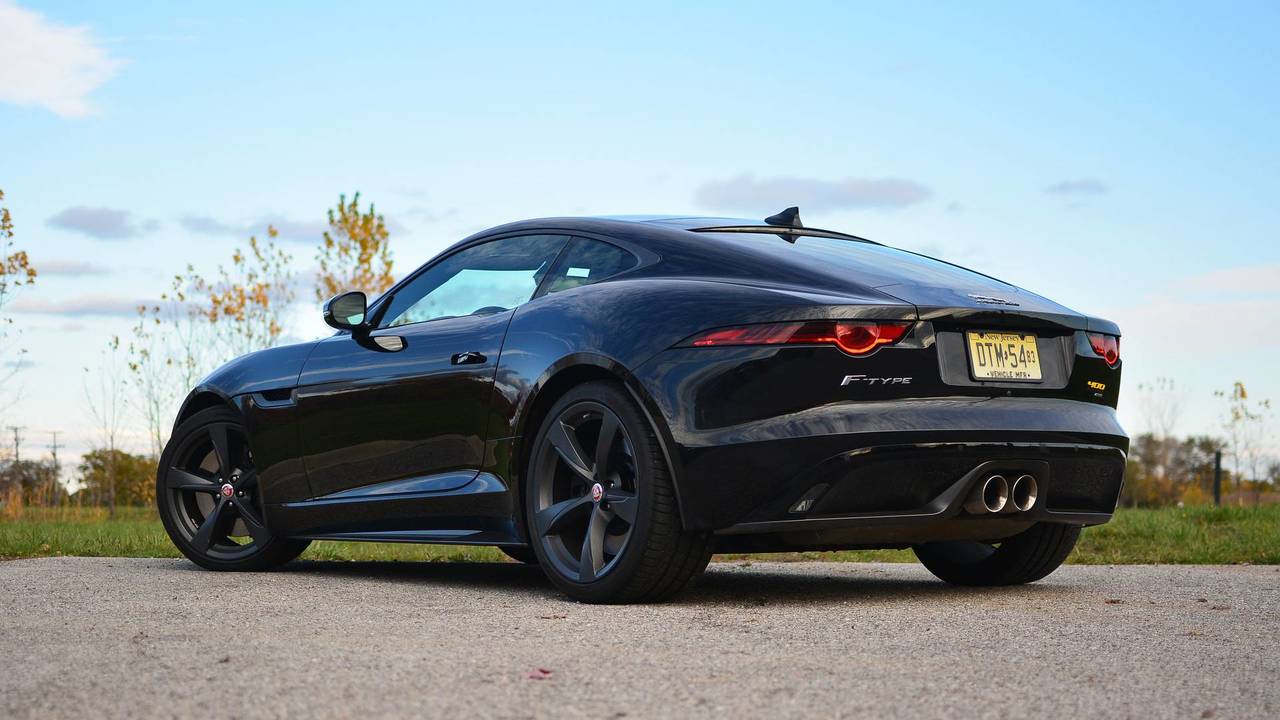
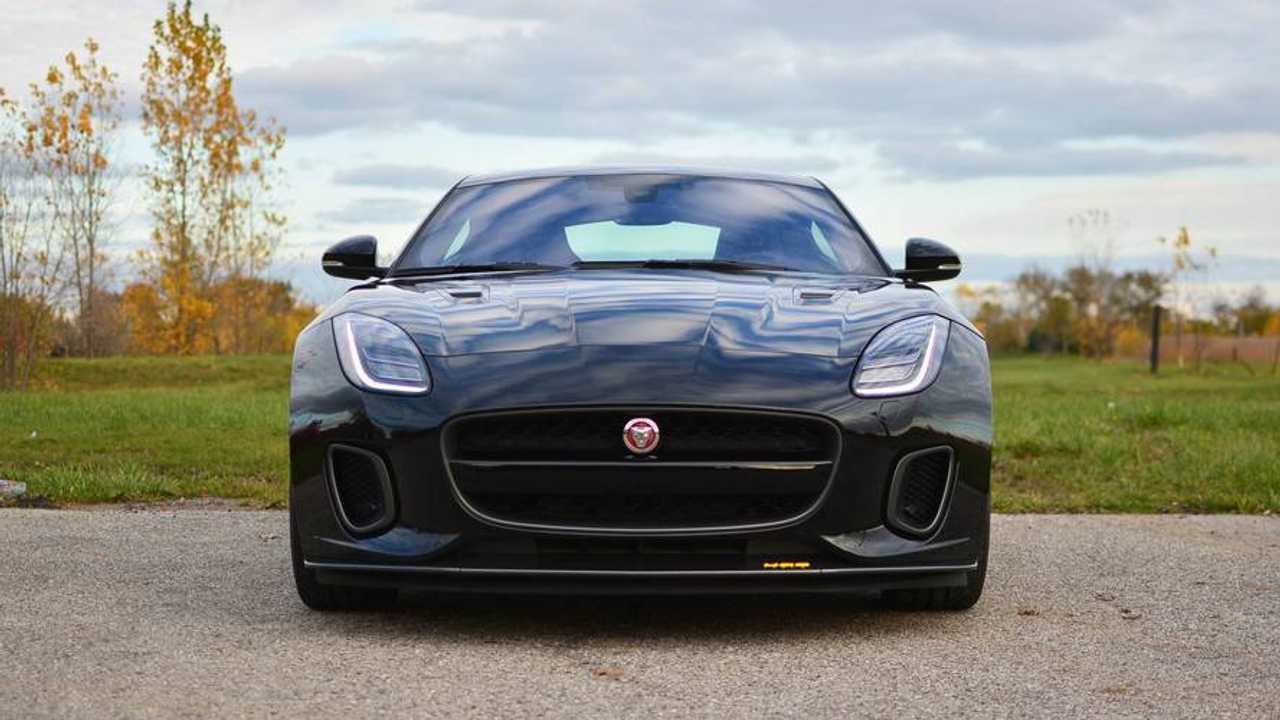
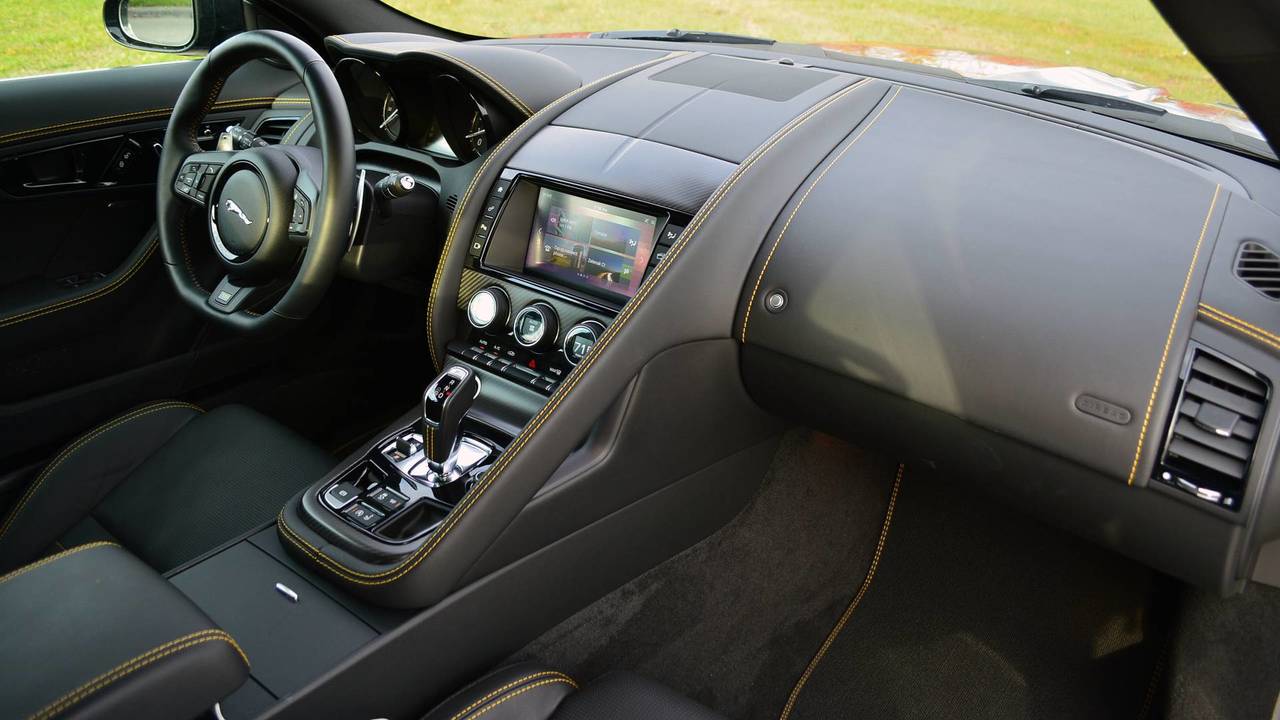
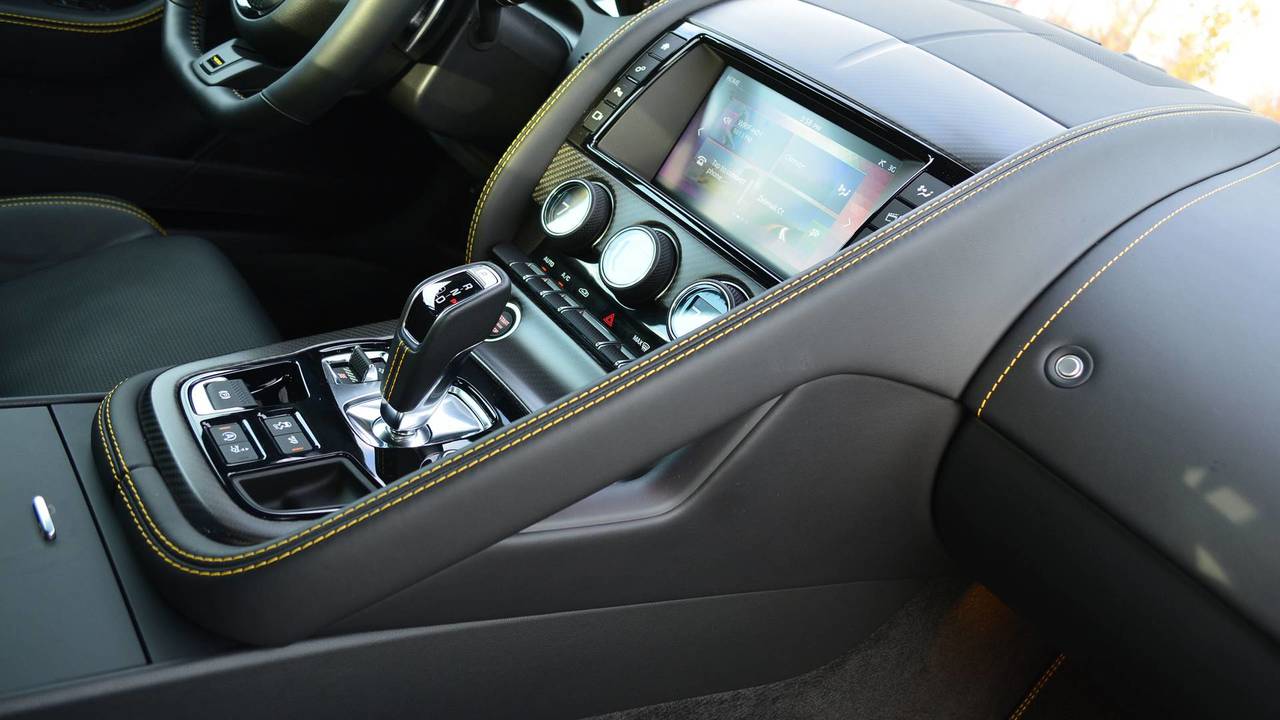
]]> feedback@motor1.com (Jeff Glucker) https://www.motor1.com/reviews/807724/used-jaguar-f-type-buying-guide/ https://www.motor1.com/reviews/807225/used-lexus-gs-f-buying-guide/ Wed, 09 Sep 2026 13:00:00 +0000 Why Buy A Used Lexus GS F? Because A High-Revving V8 Sedan Is Worth Saving The Lexus GS F wasn't the fastest super sedan of its era. But it might be one of the best used ones to own.
The Lexus GS F was a bit of an oddball when it arrived in 2016. BMW had the turbocharged M5. Mercedes-AMG had the increasingly ridiculous E63. Cadillac had the supercharged CTS-V. Lexus showed up with a comparatively modest 467 horsepower and no forced induction whatsoever.
Given that it didn't dominate the spec sheet, and that Lexus didn't sell a ton of them, the GS F lasted just five model years. It disappeared along with the rest of the GS lineup after 2020.
But nearly a decade later, those things work in its favor. The GS F is rare, wonderfully old-school, and powered by one of the best naturally aspirated V8s of the modern era. Better still, you can get one for roughly half of what it cost new.
Why Buy The Lexus GS F?
The engine. Obviously.
Every GS F has the Lexus naturally aspirated 5.0-liter V8, making 467 horsepower and 389 pound-feet of torque. It's paired exclusively with an eight-speed automatic and sends all of that oomph out to the rear wheels. Lexus also fitted a standard torque-vectoring rear differential with varying drive modes.
No, there's no manual. And the GS F isn't brutally quick by modern standards. Lexus quoted serious performance from the beginning, and contemporary testing put the sedan around the mid-four-second range to 60 mph. But outright speed isn't really the point.
The 5.0-liter V8 loves revs. Peak horsepower doesn't arrive until 7,100 rpm, and unlike the turbocharged engines in most of its contemporaries, the Lexus makes you work your way up the tachometer to find the good stuff.
It's also a proper performance sedan rather than a GS 350 with a large engine stuffed under the hood. The GS F has Brembo brakes, forged 19-inch wheels, substantial chassis bracing, dedicated suspension tuning, and that clever torque-vectoring differential. Lexus even developed portions of the car at the Nürburgring.
Yet it's still a Lexus. The cabin is quiet, the seats are comfortable, there's room for five, and you could easily commute in one every day.
When we drove the GS F back in 2016, we found it comfortable, balanced, and a great alternative to the tough German competition in the segment.
'This is honestly one of the most comfortable cars I’ve ever driven.' 'The adjustable suspension delivers a perfect balance of comfort and communication.' 'I would happily drive the GS F across the country and back in one sitting. I wouldn’t as willingly perform the same task in a BMW M5.' 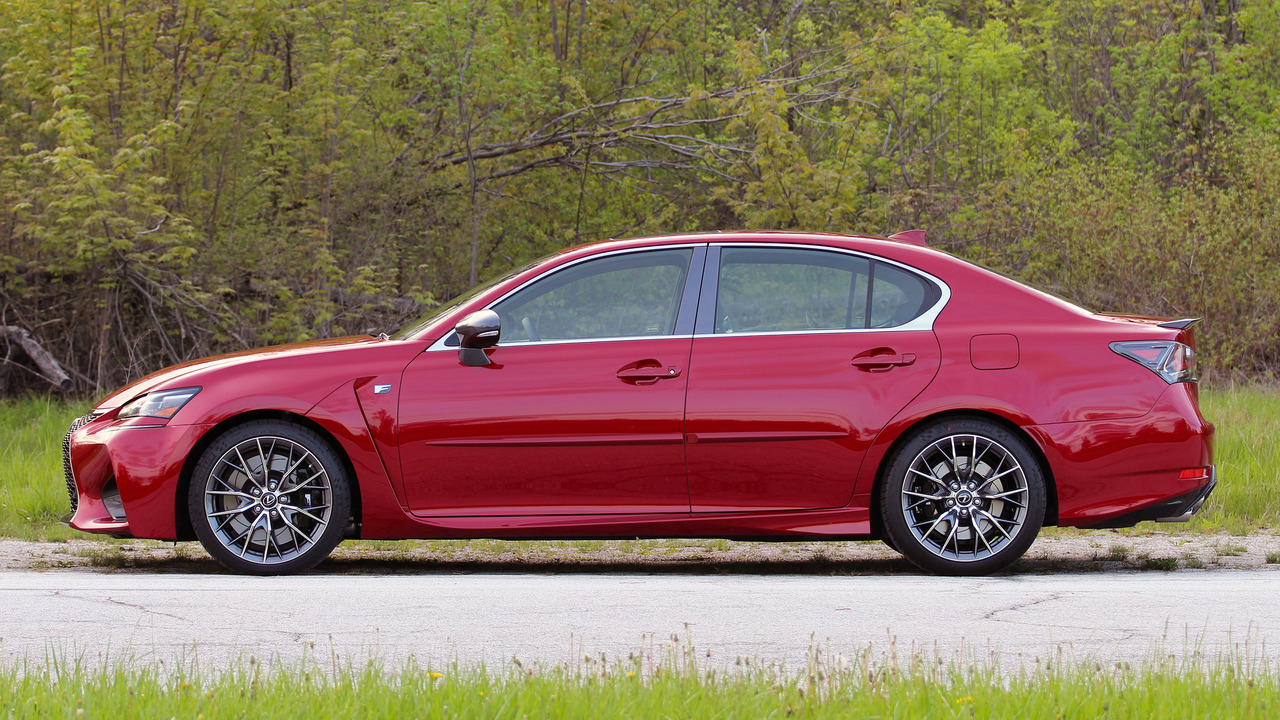
How Much Is A Used Lexus GS F?
The GS F wasn't cheap when new. A 2016 model stickered for around $85,000, and by 2020, the starting price had climbed past $86,000. Depreciation has helped considerably.
According to Kelley Blue Book's current national Fair Purchase Price figures, here's the market range:
2016 Lexus GS F: $37,580 2017 Lexus GS F: $33,280 2018 Lexus GS F: $42,640 2019 Lexus GS F: $46,500 2020 Lexus GS F: $47,100
Actual asking prices can vary wildly based on mileage, color, options, and condition—especially because the GS F is relatively scarce. Low-mileage cars can command substantially more than those averages. And some sellers are already pulling the "I know what I've got!" pricing method for these.
But if you shop smartly, there are deals to be found. And $40,000-ish for a naturally aspirated V8 sports sedan that originally cost more than twice that isn't a terrible proposition.
Especially when you look at what $40,000 buys new today.
Which Lexus GS F Should You Buy?
There really isn't a bad year.
The same 467-hp V8 and eight-speed automatic lasted through the entire production run, so you're not missing out on horsepower by buying an earlier car.
That said, we'd probably start with 2017 or newer.
For 2017, Lexus added Linear Adaptive Variable Suspension, which improved both ride quality and body control. The 2018 model brought All-Speed Dynamic Radar Cruise Control and Lane Keep Assist, making it slightly nicer if you plan to use the car as a daily driver.
The 2019 model is interesting because Lexus offered a special 10th Anniversary Edition, with just 100 examples produced for the US. Those cars got Nebula Gray paint, gloss-black BBS wheels, and a distinctive blue interior treatment.
And naturally, 2020 cars will command a premium because they're the final model year. Changes were mostly cosmetic—matte-black wheels, black mirror caps and B-pillars, and optional blue brake calipers—so don't feel compelled to pay thousands more purely to get the newest one.
For the money, a clean 2017 or 2018 GS F feels like the sweet spot.
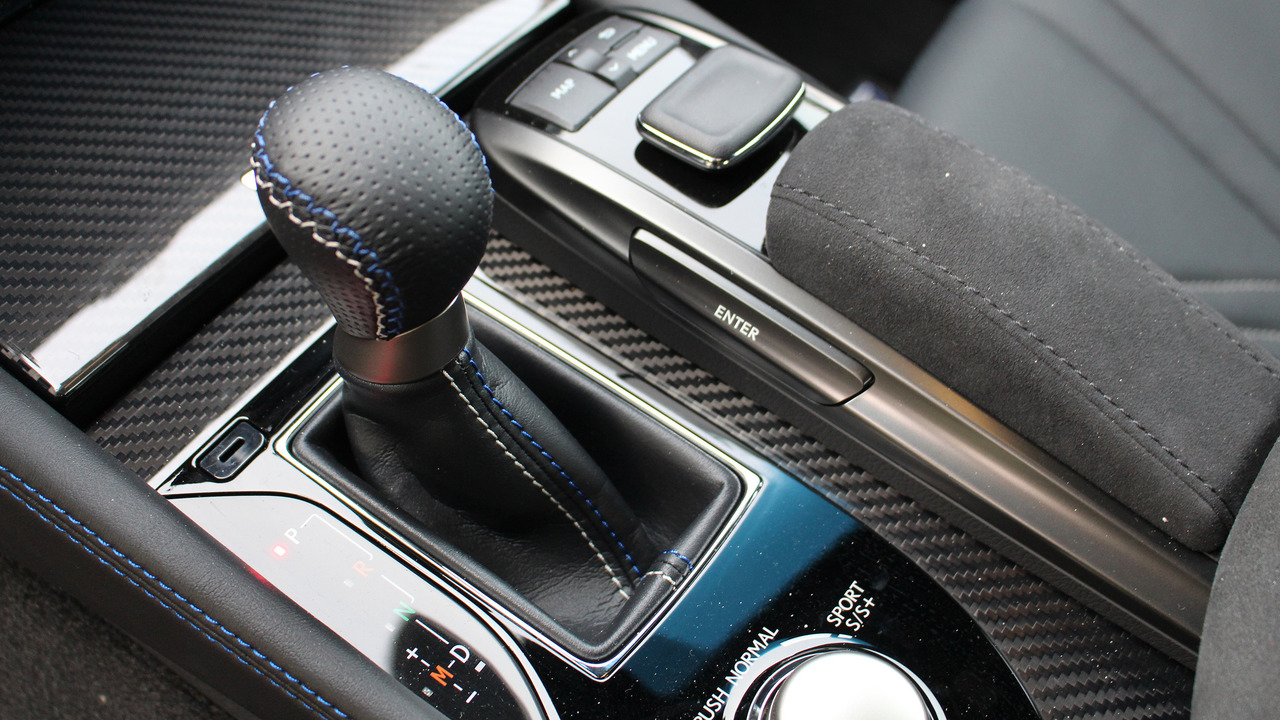
What Could Go Wrong?
This is where the GS F starts looking particularly attractive compared to some of its German contemporaries.
The 5.0-liter 2UR-GSE V8 has developed a strong reputation, and there isn't a laundry list of catastrophic engine or transmission problems associated with the GS F. Owner discussions tend to focus more on minor electronic and cosmetic issues than on blown engines or failed gearboxes.
But there are a few things worth checking.
The most visible is the carbon-fiber interior trim. GS F owners have reported delamination, bubbling, and peeling of the clear finish. Lexus eventually introduced a customer-support program addressing affected trim, but given the age of these cars, you'll want to inspect every carbon-fiber panel carefully and verify whether any remaining coverage applies to the specific VIN.
Then there's the torque-vectoring differential. Failures don't appear to be widespread, but the TVD and its electronics are specialized, expensive components. Owner reports indicate that repairs can become painfully expensive very quickly, so any warning message related to the differential warrants investigation before money changes hands.
Brakes aren't cheap, either. Those big Brembos work well, but pads and rotors are performance-car consumables. Check their condition before buying, especially if the car has spent time on track.
Finally, check the VIN for completed recall work. Certain 2016-2018 GS F models were recalled over high-pressure fuel pumps that could crack and leak fuel; the repair involved replacing the affected pumps at no charge.
None of these issues would scare us away. But this is still an $85,000 performance car, even if you're buying it for $40,000. Parts prices haven't depreciated along with the car.
Get a pre-purchase inspection.
What Else Could You Buy?
The GS F's original rivals are the obvious alternatives:
BMW M5 Cadillac CTS-V Chevrolet SS Dodge Charger SRT Mercedes-AMG E63
The Germans are generally faster. A third-generation Cadillac CTS-V absolutely destroys the Lexus in a straight line. And the Chevy SS offers something the GS F never did: a manual transmission. But the GS F has a different appeal.
It's less about winning a stoplight race and more about having an engine you actively want to rev out. There's no turbo lag, no synthetic attempt to disguise a downsized powertrain, and no complicated all-wheel-drive system.
Just a big naturally aspirated V8, an automatic gearbox, and two driven wheels. And unlike the Chevy SS, the GS F actually feels like an $80,000 luxury car inside.
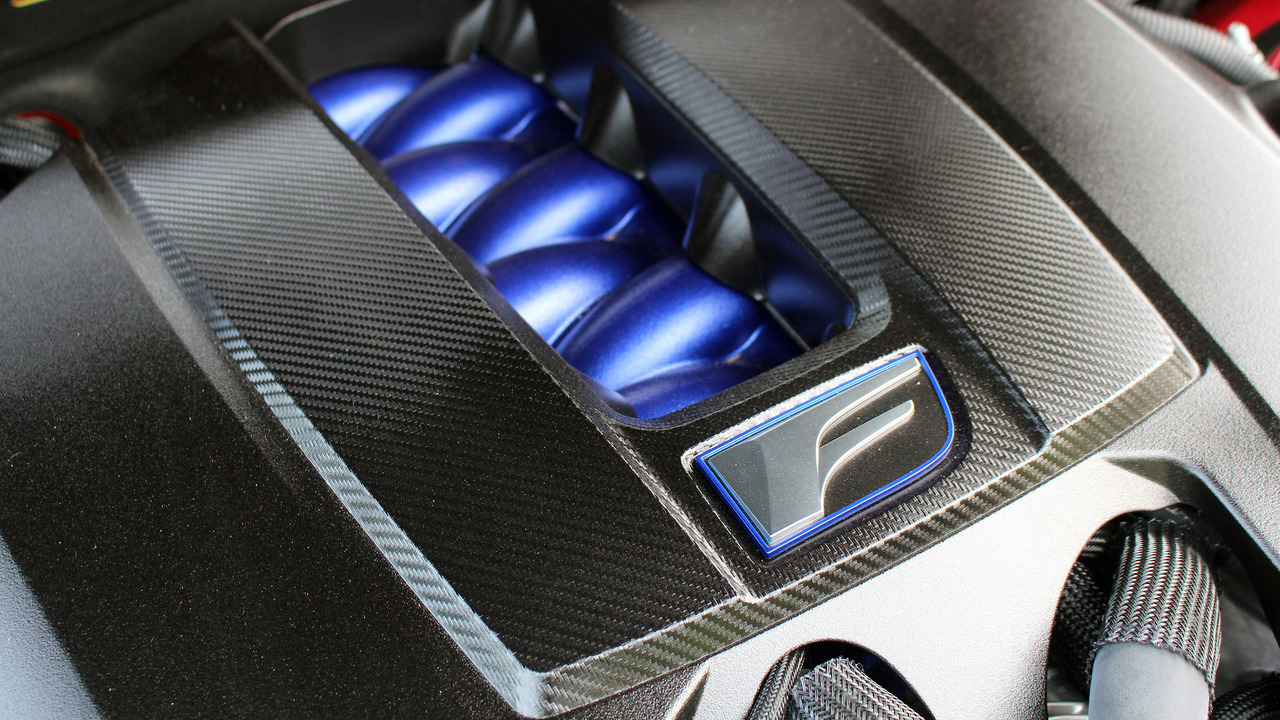
2016 Lexus GS F
Why The Lexus GS F Makes Sense
The GS F makes more sense today than it did when it was new. Back then, buyers could reasonably look at an M5, E63, or CTS-V and wonder why Lexus wanted similar money for a slower car.
For roughly $40,000 to $50,000, you're getting a high-revving naturally aspirated V8, rear-wheel drive, a torque-vectoring differential, Brembo brakes, adaptive suspension on later cars, and an interior that still feels appropriately expensive.
You're also getting something genuinely rare. Lexus sold the GS F in America for only five model years, and nothing has directly replaced it.
The newer IS 500 carries on the naturally aspirated V8 formula, but it isn't a full F model. The GS F remains the bigger, more serious four-door.
Is it the fastest used sports sedan for the money? Absolutely not. But it might be one of the easiest to justify owning. Find the cleanest 2017 or 2018 you can. Make sure the carbon fiber looks good. Check the TVD, brakes, and service history.
Then go find a tunnel and run that V8 to 7,000 rpm.
The Mazda CX-90 PHEV Gets Electrification Just Right: Driven
The Aston Martin Vanquish Is Everything A V12 Should Be: Driven
The BMW XM's Biggest Flaw Isn't The Way It Looks: Driven
The 2027 Ram Power Wagon Finally Adds A Diesel, But It Loses Other Things: Driven
Lexus Engine5.0-Liter Naturally Aspirated V8 TransmissionEight-Speed Automatic Output467 Horsepower / 389 Pound-Feet Drive TypeRear-Wheel Drive Efficiency16 City / 24 Highway / 19 Combined Weight4,034 Pounds Seating CapacityFive Base Price$86,035
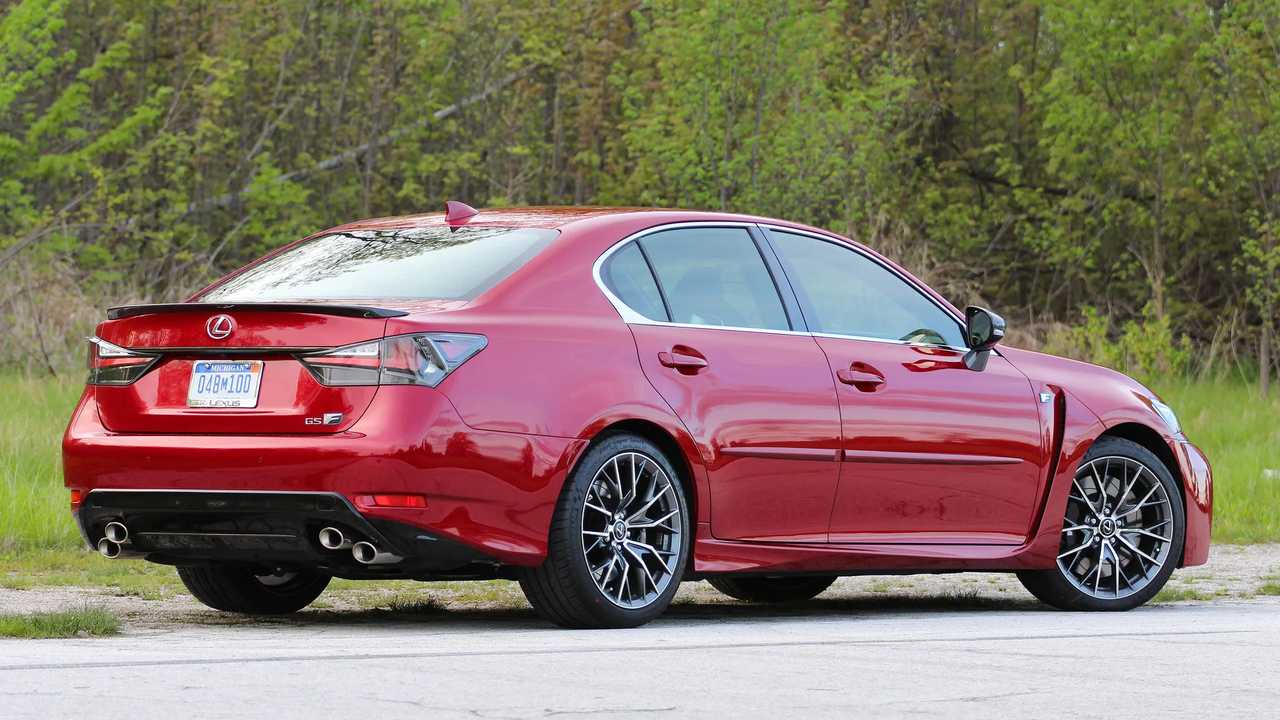


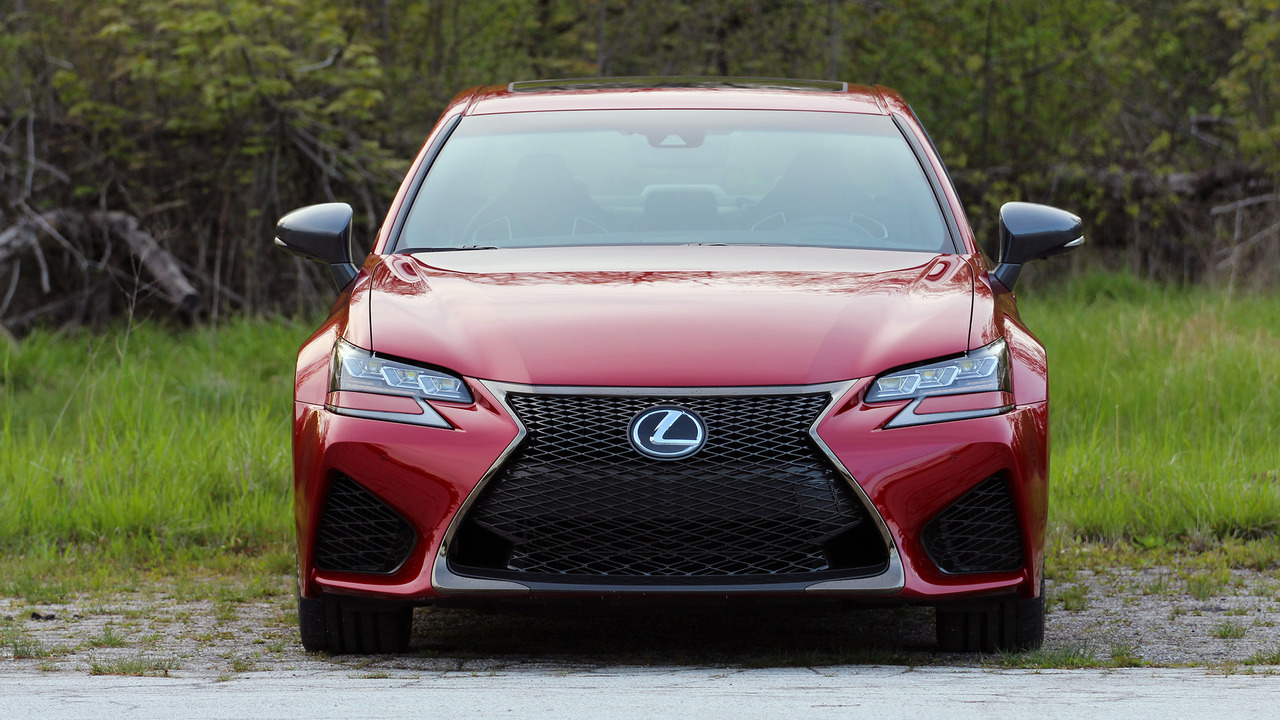
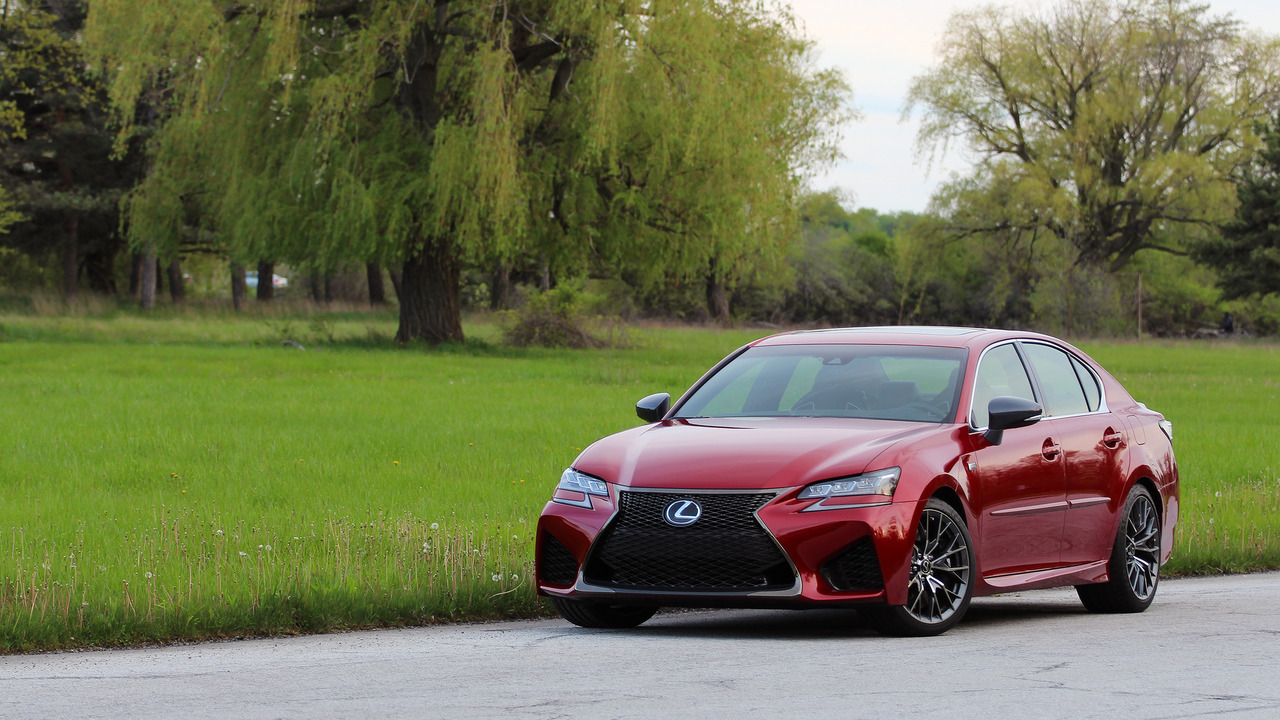
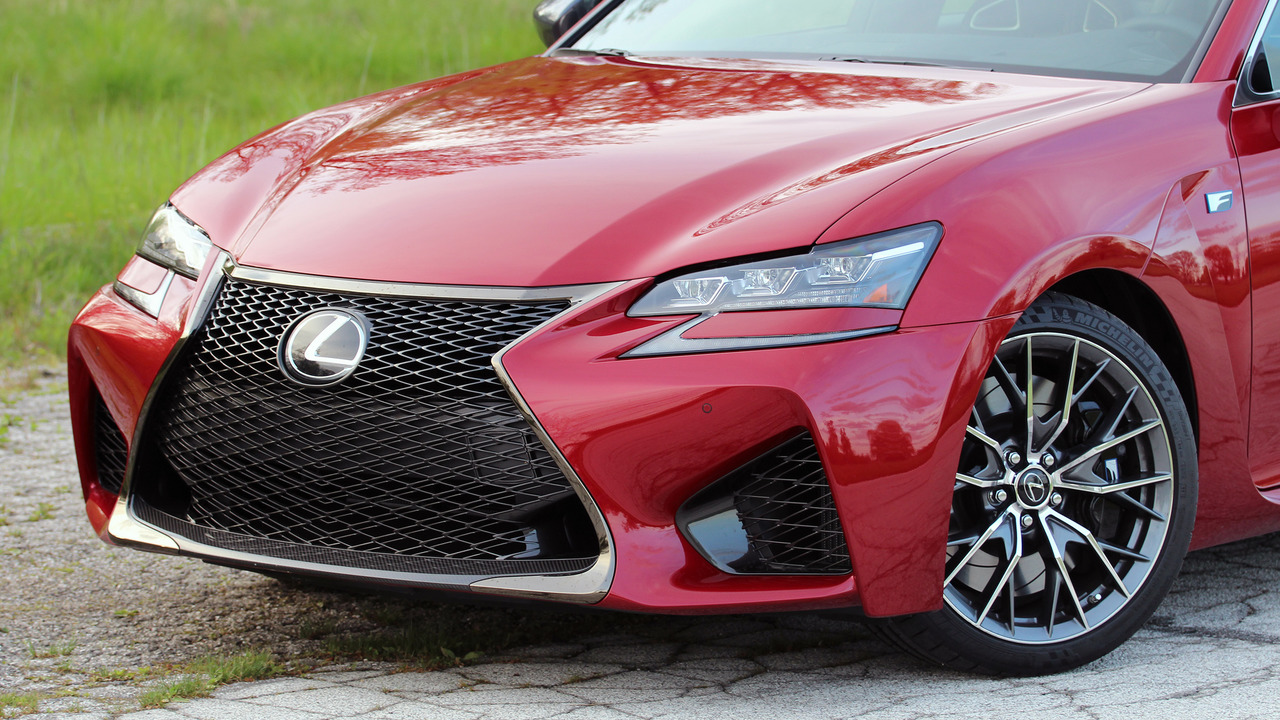
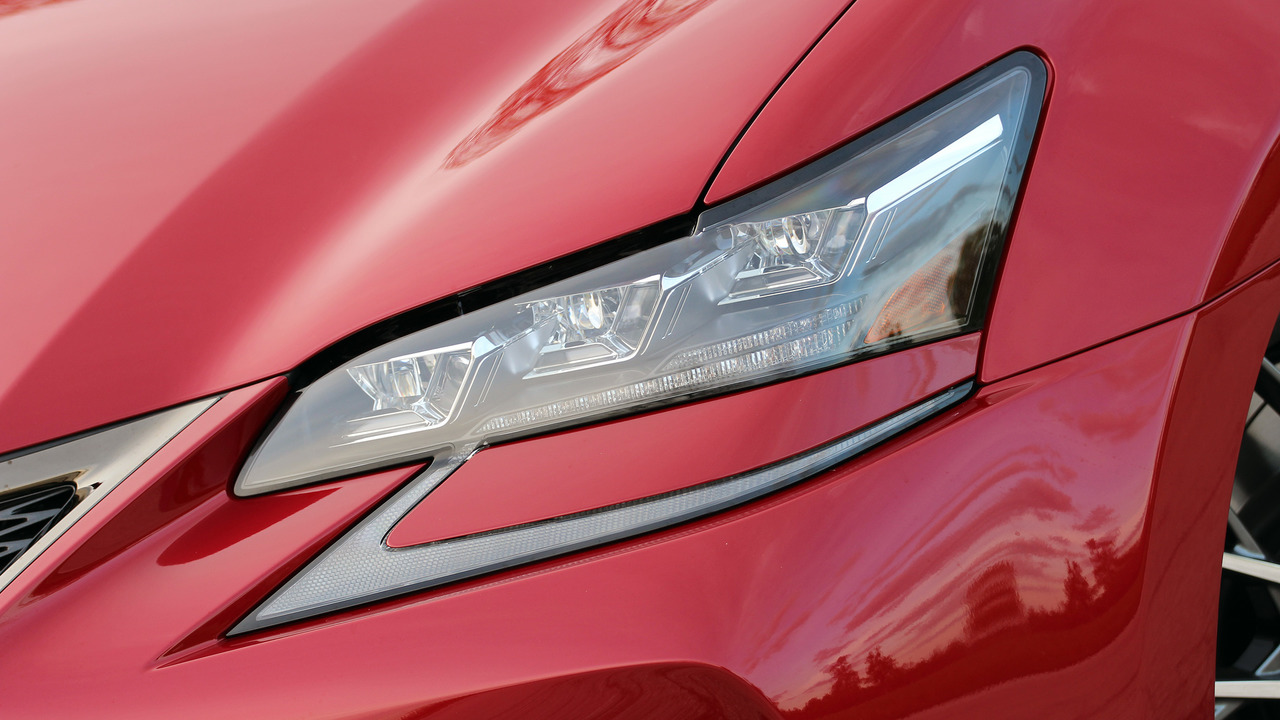

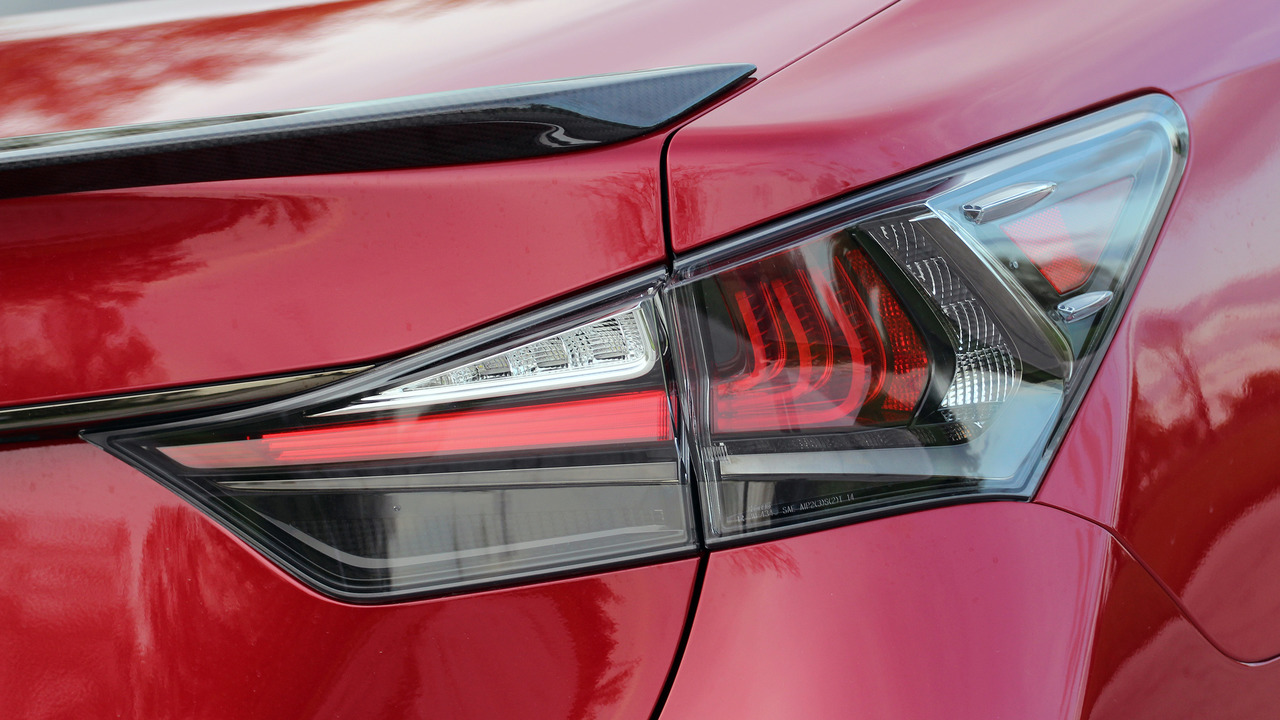
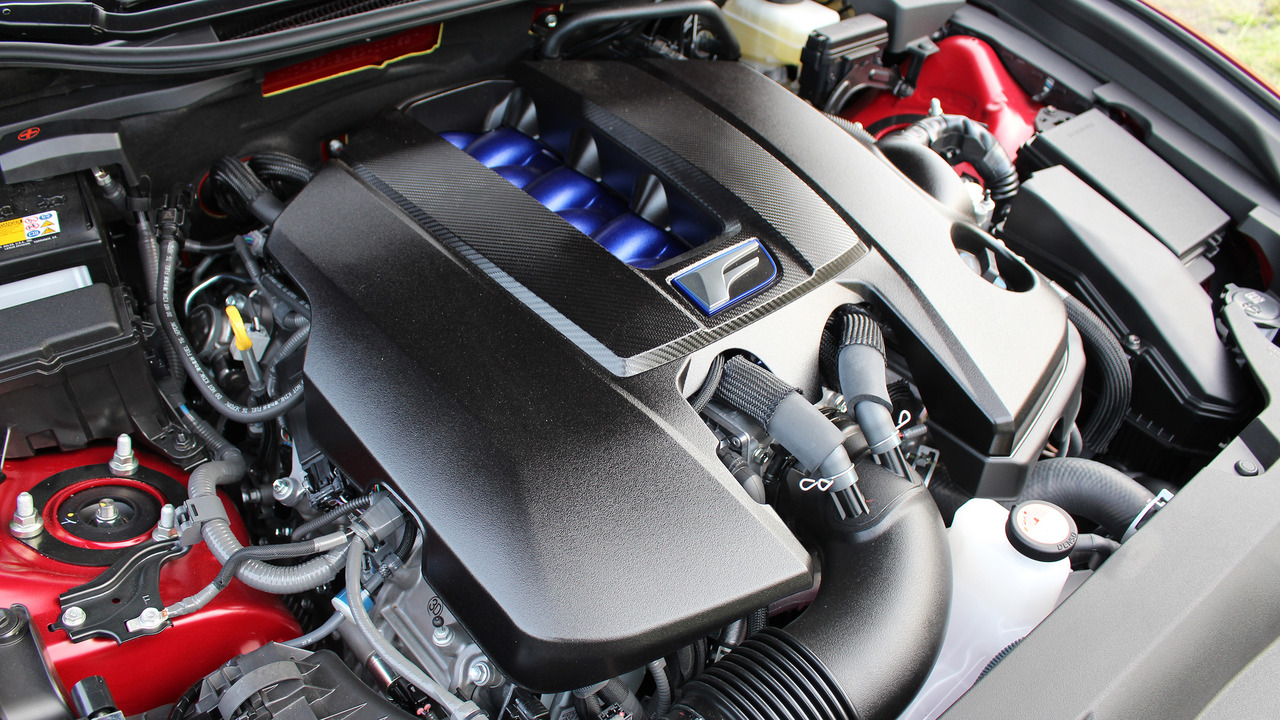
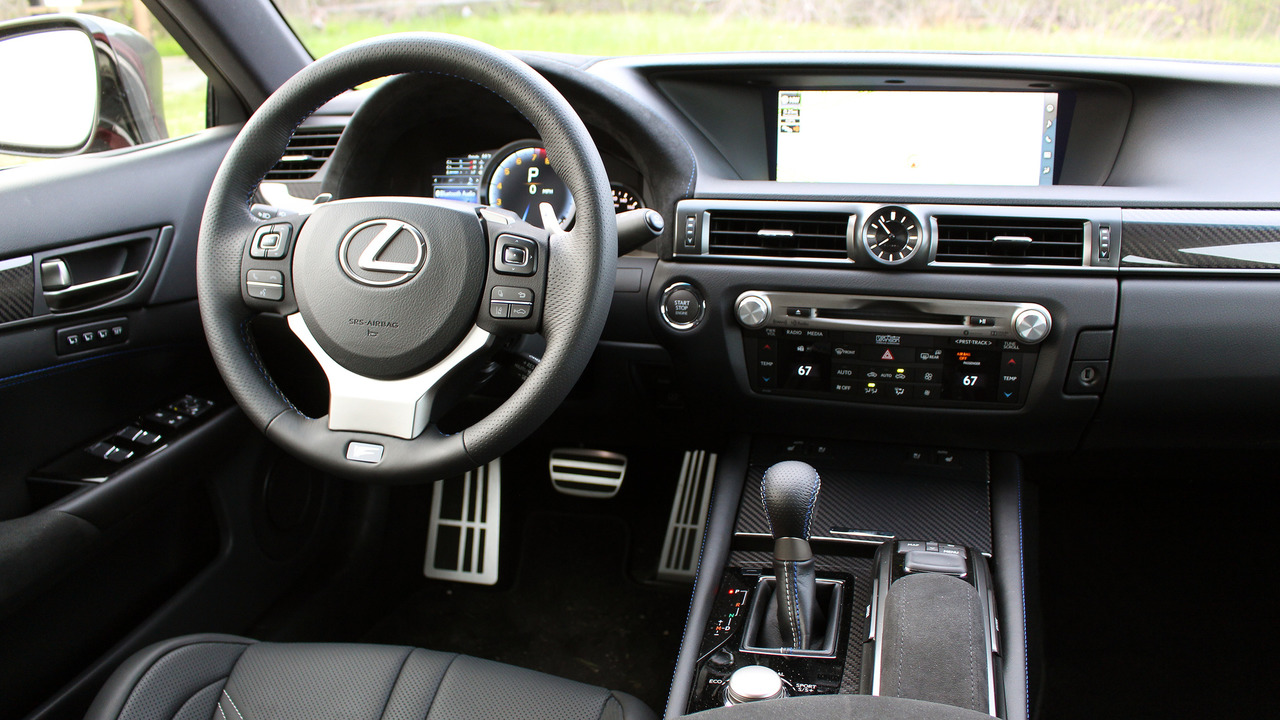
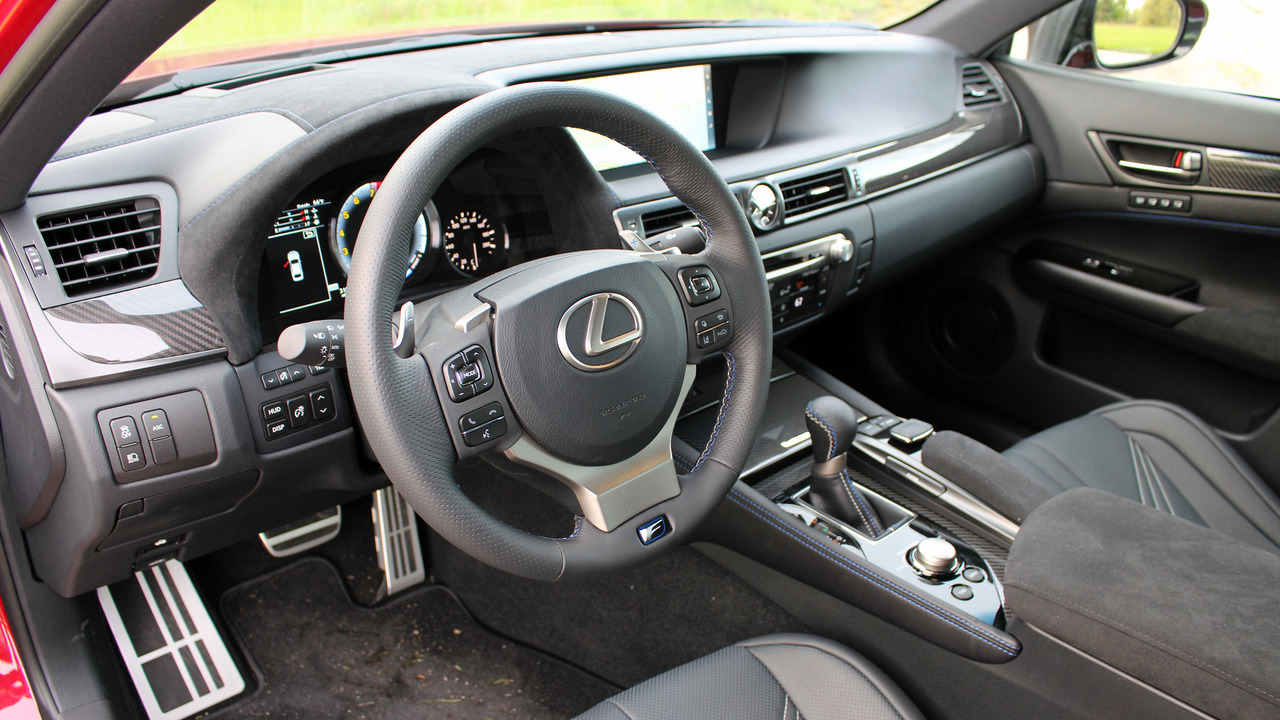
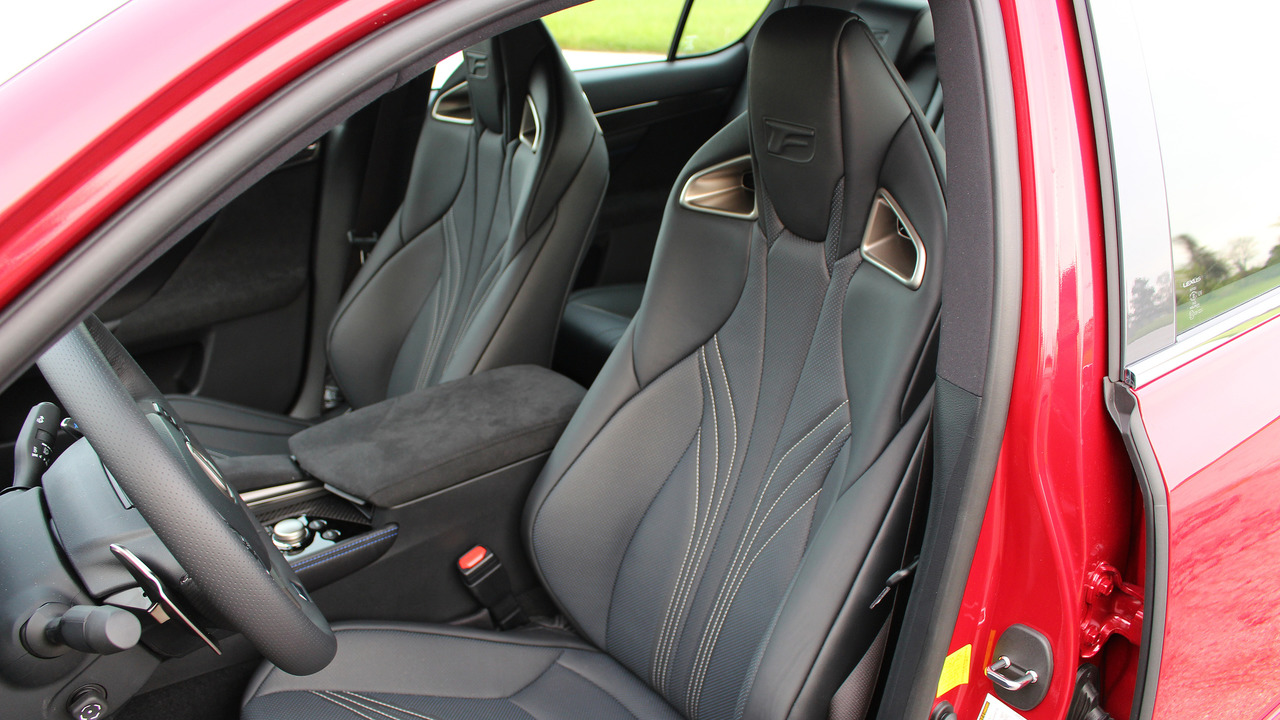
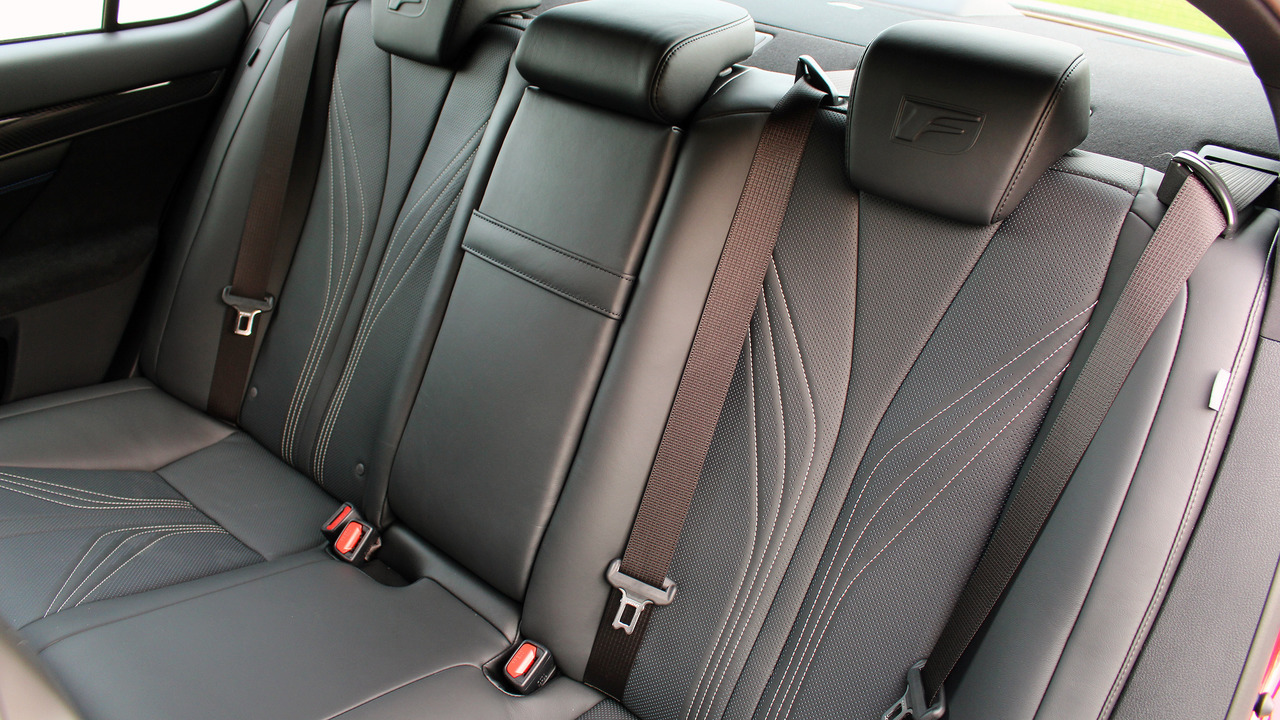
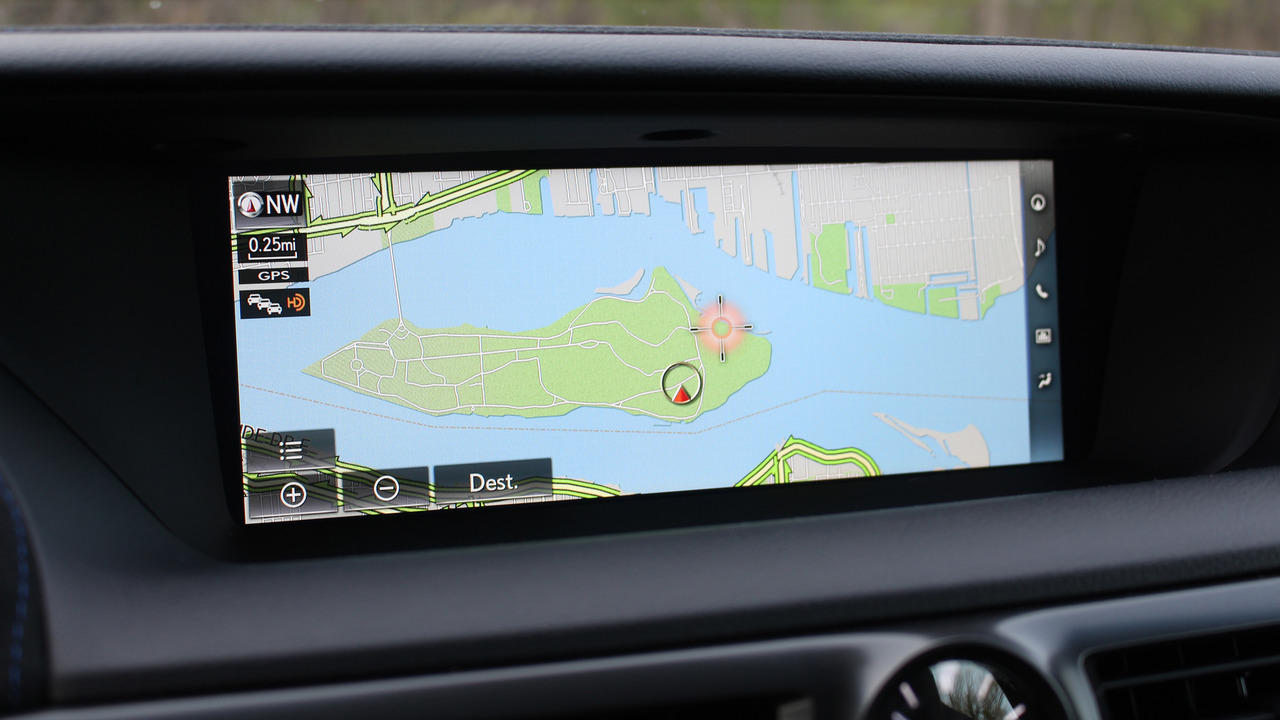
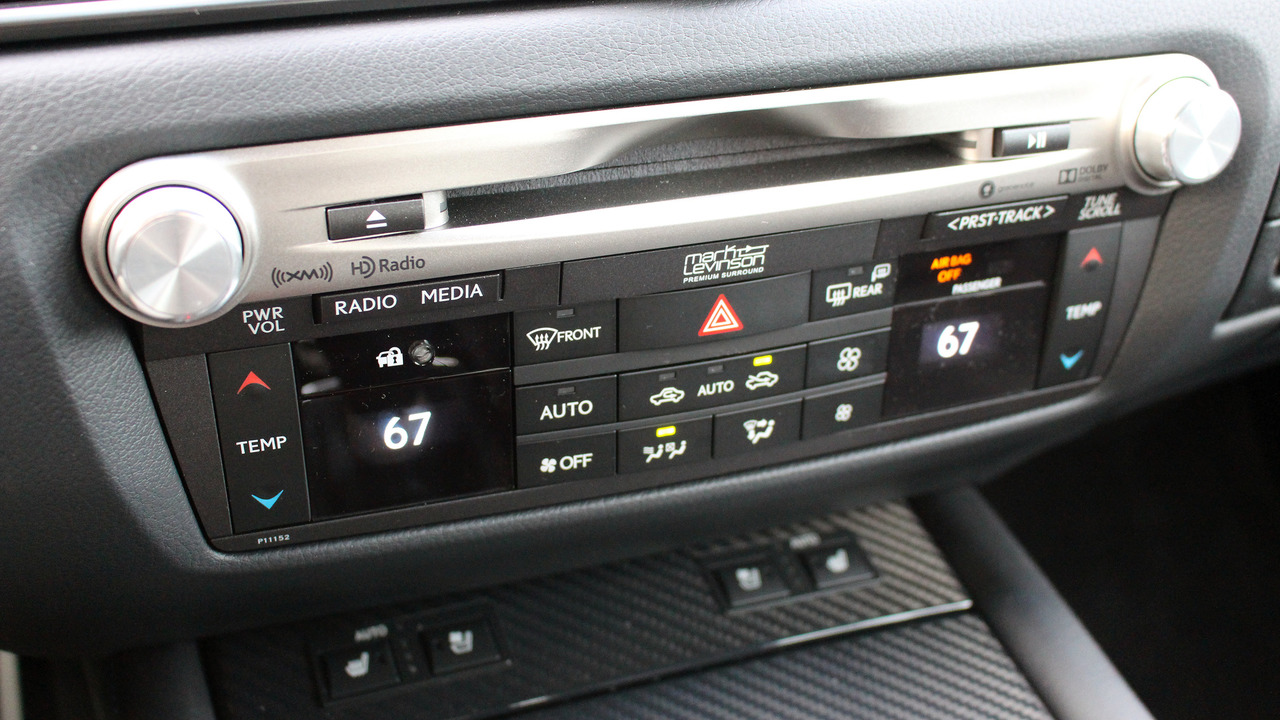
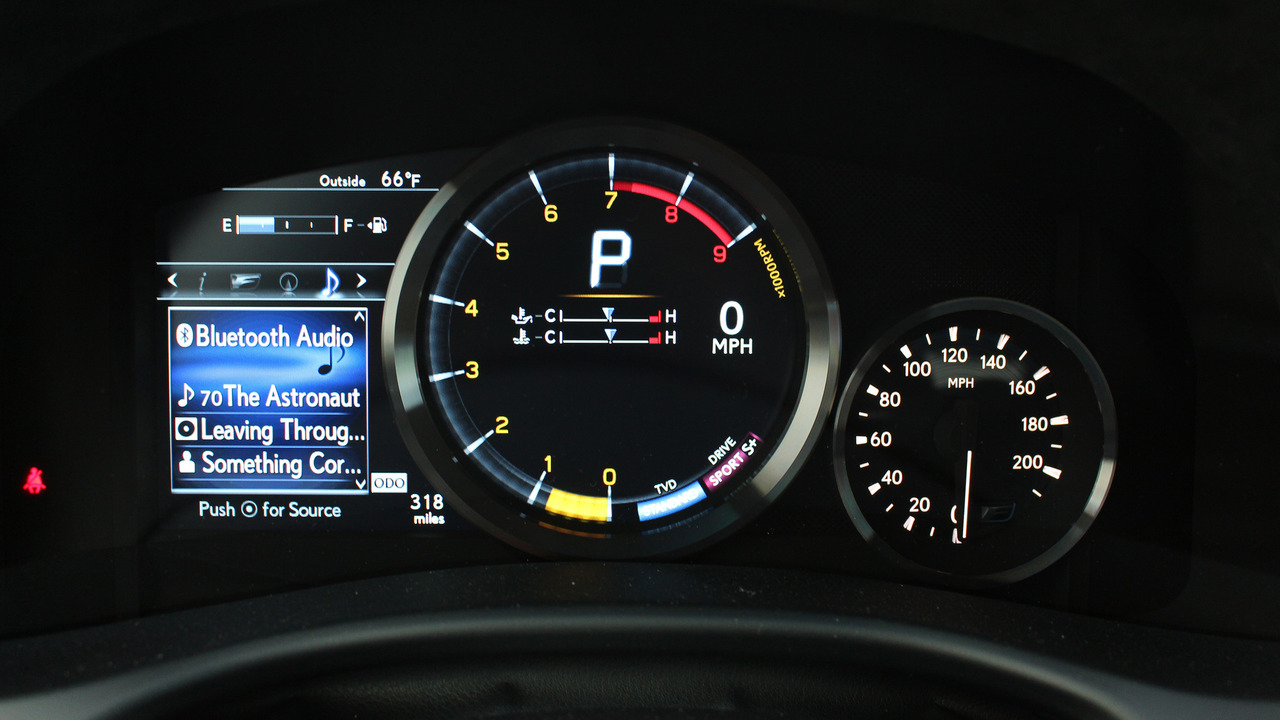
]]> feedback@motor1.com (Jeff Glucker) https://www.motor1.com/reviews/807225/used-lexus-gs-f-buying-guide/ https://www.motor1.com/reviews/807570/2026-jeep-recon-first-drive/ Wed, 09 Sep 2026 04:01:00 +0000 Jeep's First Electric Off-Roader Is Fun, Capable, And Already Behind The Curve: Driven The Jeep Recon gets the off-road formula right, but 222 miles of range and $66,695 to start are tough to overlook.
If you truly enjoy off-roading, you should find the appeal of piloting an electric vehicle in beautiful, serene environments. Away from the noise of the daily grind, the silence of an EV allows you to more deeply soak in the world around you. That’s what Jeep hopes you’re daydreaming about when you picture its new Recon and the places it can take you.
And the good news is that the Recon can take you well off the beaten path. Heck, you can get there with the doors off and windows out, just like a Wrangler. But you’re going to be eyeing that remaining range indicator for a fair portion of your adventure.
The 2026 Recon arrives with strong styling and a healthy dose of Jeep heritage intact. But the 222-mile driving range, 400-volt EV tech, and $66,695 starting price might leave potential buyers seeking other options.
Pros
Heritage-Inspired Styling Works Well The Doors Come Off! Tremendous Power On Tap
Cons
Wonky Suspension Tuning Relatively Low Driving Range Overpriced By $10K
Inspired By XJ
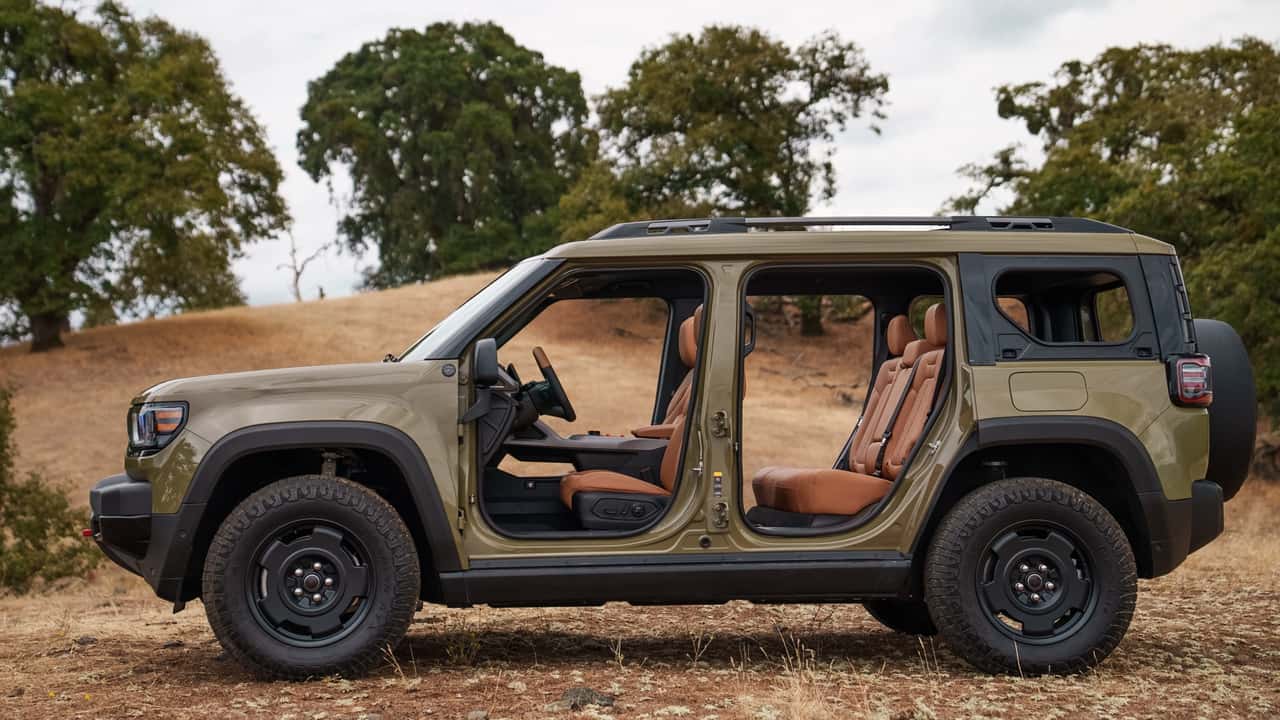
2026 Jeep Recon Moab
Photo by: Jeff Glucker | Motor1
When you cook up a design for any new Jeep product, there are a few "must-include" items. You need a seven-slot grille on the nose, you need to attempt to highlight potential off-road capability, and if you can include a few nods to the past even if we’re looking at the future, all the better.
Per Jeep, the Recon styling inspiration arrives courtesy of the XJ Cherokee. That beautiful box on wheels helped usher in an era of right-sized vehicles built for family-friendly off-roading. Jeep pushes the Recon to market with a similar idea, and the styling works.
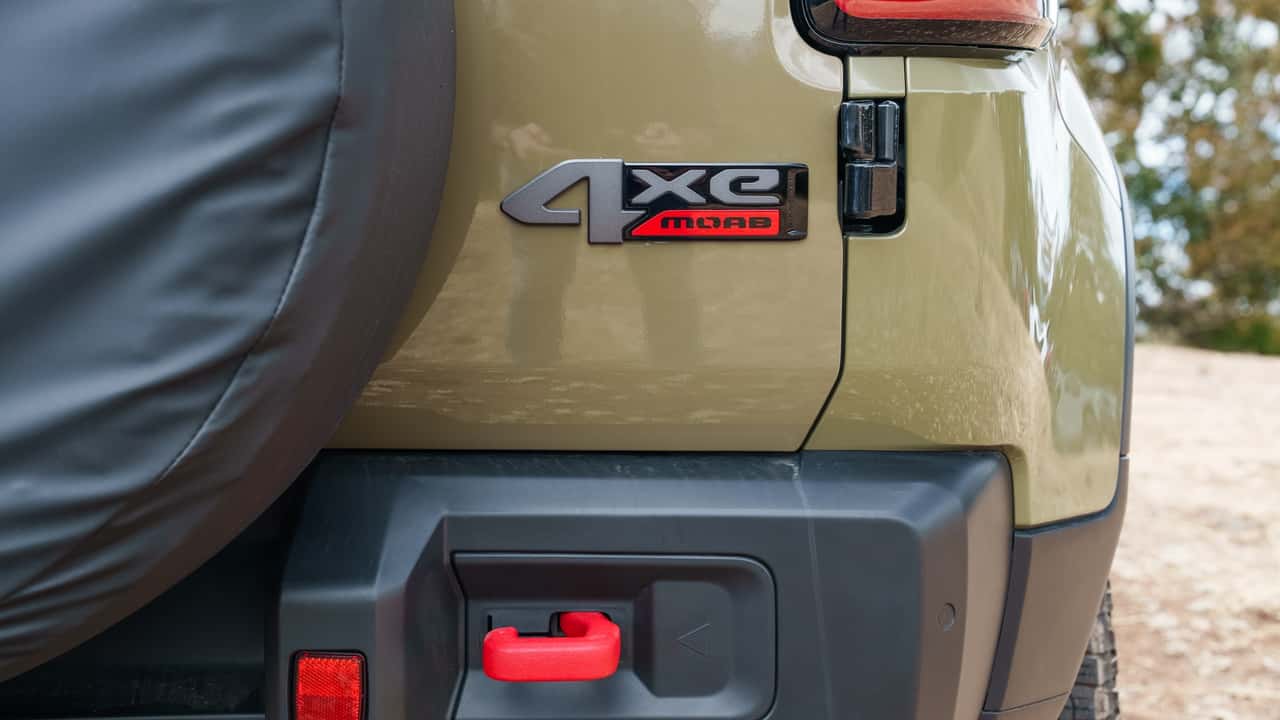 Photo by: Jeff Glucker | Motor1
 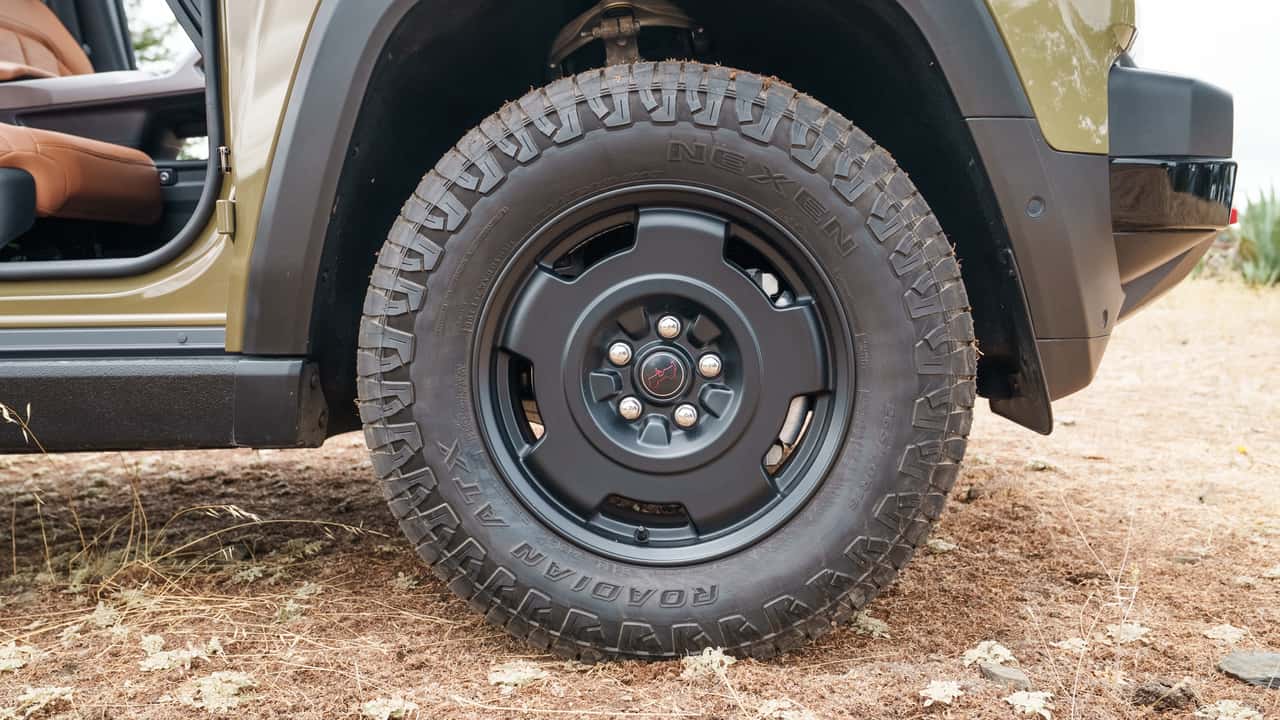 Photo by: Jeff Glucker | Motor1 Photos by: Jeff Glucker | Motor1
The brow sits prominently over the squared-off circular lights and aforementioned grille. There’s great fender work at all four corners. And the wheel-and-tire package suits the Recon well. The standard 18-inch wheels look just fine, but the optional upgrade 18-inch rollers look even better.
Since we’re only dealing with one trim at the moment, all of the off-road goodies on the Recon Moab are what you’ll find at your local dealer lot as well. That means 33-inch all-terrain tires, front and rear tow hooks, skidplate protection underneath, and a one-touch power roof overhead.
Take The Doors Off
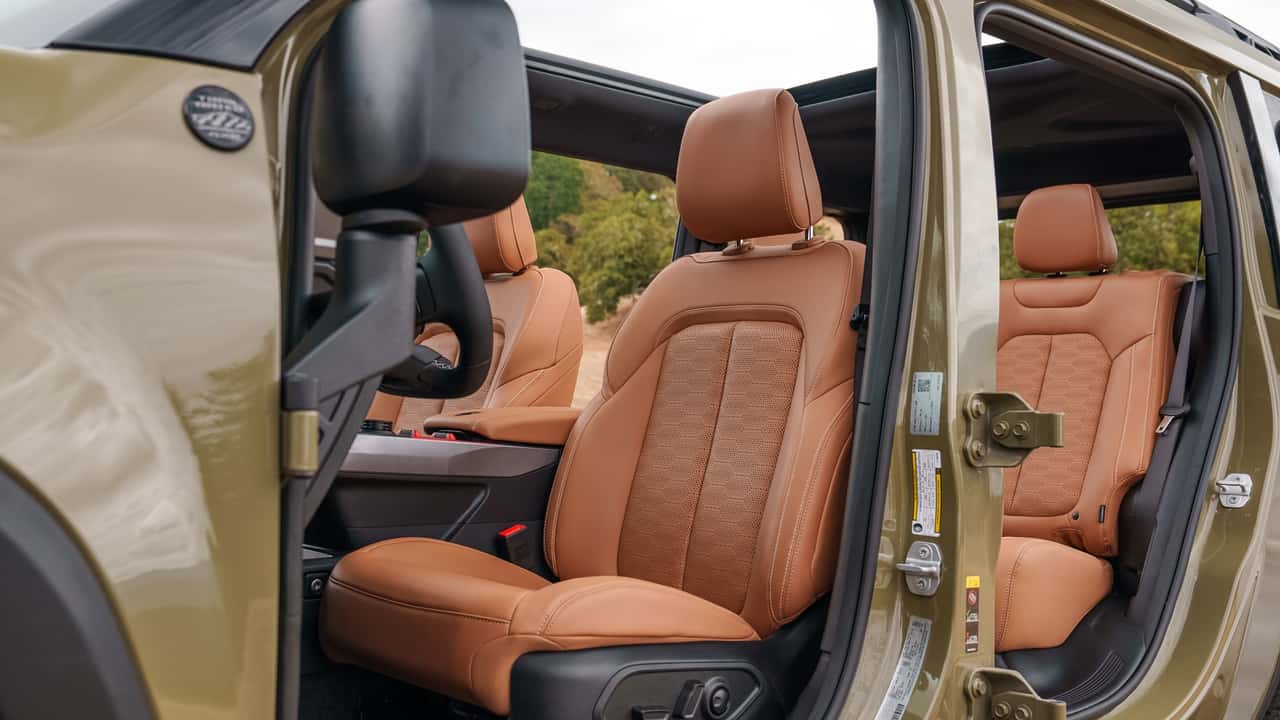 Photo by: Jeff Glucker | Motor1
For the true Jeep experience, however, the most ardent fans should be excited by the doors and windows. You can remove all four doors; it’s quite easy. There are no tools required, in fact. Simply pull back the interior cover that hides the wiring connector, disconnect the connector, flip out the check-arm pin, and pull the door up and off its hinges.
The front doors weigh 70 pounds each, while the rear doors weigh 60 pounds each. So taking them off sheds an extra 130 pounds, and turns you from Recon into Recon Superleggera. Keep going, though, by also removing the rear glass.
Doing that is even easier, as each piece of glass features two twist knobs that unlock the glass. Simply pull the glass out, and store it in the included storage bag. Now you have full open-air Jeep motoring.
You can remove all four doors; it’s quite easy. There are no tools required, in fact.
You’ll have no issues reading the screens, either. Jeep made sure the 12.3-inch digital cluster and 14.5-inch center screens are completely visible sans glass. Thankfully, the HVAC controls are always visible on that center screen, which is the largest single display ever fitted to a Jeep vehicle.
Oh, and if you have the doors off and want to listen to your tunes, don’t worry. Jeep removed the speakers from the doors and moved them inward under the center console. So you can let the sounds of nature in, or blast your music out. And to keep prying hands out when your doors are off, that center console is lockable.
Jeep offers two interior color options: black with a dash of white or a lovely tan. Both versions are comfortable, offer tons of storage options, and feature trim that looks and feels just as good clean as it will once you get it dirty.
True Trail-Rated Capability
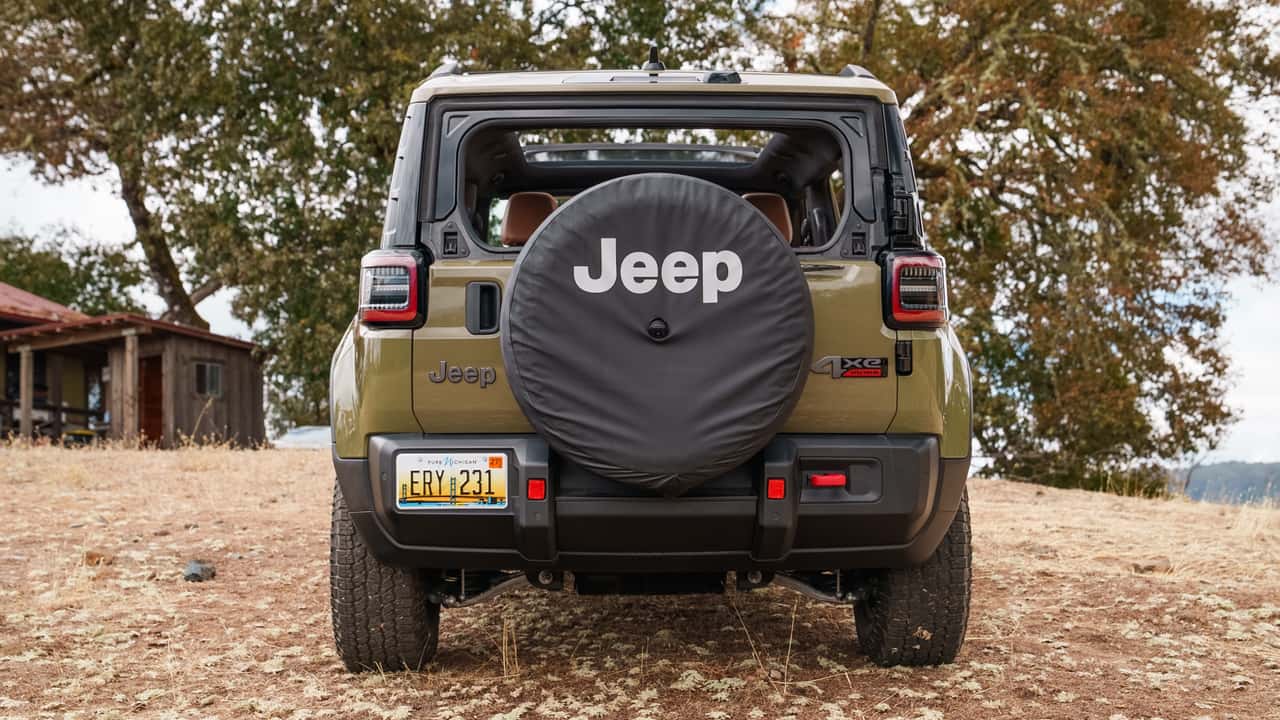 Photo by: Jeff Glucker | Motor1
Jeep won’t slap a Trail-Rated badge on a vehicle unless it earns it, and the Recon has done just that. There were over 1.2 million miles of testing conducted in locations across the country, including some of the more celebrated and difficult trails on the Rubicon.
Those efforts give the Recon solid off-road cred. There’s 9.1 inches of ground clearance, a 33.8-degree approach angle, 33.1-degree departure angle, and 23.3-degree breakover angle. A forward-facing camera helps you view any trail obstacles, while optional steel rock rails help slide over such obstacles.
Helping you over the obstacles are a pair of 250-kW electric drive modules: one up front and one in the rear. Together, they deliver 670 horsepower and 620 pound-feet of torque. That’s a downright delightful amount of shove, and it’s immediately noticeable behind the wheel.
Jeep quotes a 0-60 mph time of just 3.6 seconds. I asked if that was on the same all-terrain tires as the Recon Moab, and the answer was an emphatic yes. That leads me to believe that you could go even quicker without the doors and glass.
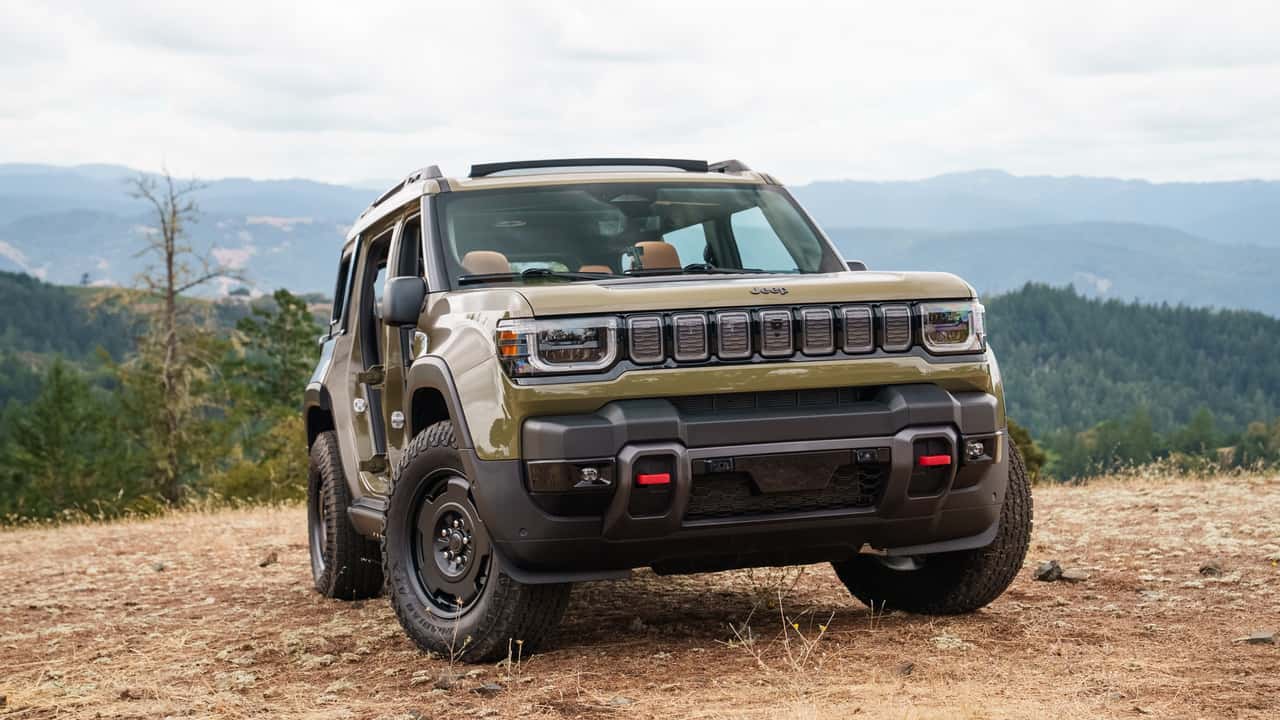 Photo by: Jeff Glucker | Motor1
Not that you need to go more quickly. The Recon does drive rather wonderfully on 75 percent of your on-road commute. Once the road gets curvy or bumpy, however, things start to fall apart. To balance on- and off-road capability, the suspension must allow a certain amount of travel and movement. As a result, there’s a lot of secondary and even tertiary movement during spirited on-road driving.
That’s, of course, not the mission of the Recon, but Jeep does tout it as sporty. I found the suspension damping better suited to off-road shenanigans than to on-road use. That said, the actual steering feel was great. You’re not babysitting a Wrangler, and it’s a recirculating ball setup here. Instead, the Recon delivers confident on-center feel and proper steering weight.
Once your journey requires more juice, you can stop at any station since the Recon features a CCS native port, but can charge on a NACS system with an adapter. Jeep says you’ll need 28 minutes to go from 5 percent to 80 percent on a DC Fast Charger. If you’ve got a Level 2 setup at home, that same run takes 6.8 hours.
Still, there are no solid axles that some Jeep fans might find more familiar. Instead, the Recon utilizes a double-whisbone setup. In order to put the setup to the test, Jeep built a unique off-road course deep in Northern California ranchland.
The Recon does drive rather wonderfully on 75 percent of your on-road commute. Once the road gets curvy or bumpy, however, things start to fall apart.
Rain had fallen earlier in the day, but by the time I arrived at the course, the only water splashing about was courtesy of a makeshift river crossing. In the Recon, this is a simple affair as the Jeep features a fording depth of up to two feet. Point the nose into the drink, let the front settle, and then keep moving forward at a steady pace.
More challenges await on this course, as Jeep was keen to show off the Recon’s articulation, rock crawling, and overall trail driving ability. Maneuvering across the rock garden was simple enough, given that the SelecTerrain system features a Rock mode. Yet the throttle proved a bit touchy in spots, which could lead to some lurching and jumping. It was harder to be as precise as you could in a Wrangler Rubicon, for example.
Out on the rest of the trail, however, the Recon was rather delightful. Open the top, let the sun shine in, and actually hear the noise of the wilderness around you. That double-wishbone setup helped smooth out any bumps on the trail. Just be mindful of any steep descents. That’s where you’ll most certainly notice the overall heft of the Recon when you go to hit the brakes.
After all, this electric box clocks in at 6,112 pounds. Don’t go loading it up too heavily either, as the gross vehicle weight rating sits at just 7,000 pounds. That means you’re working with a payload of 850 pounds. Add a driver, some passengers, and a bit of gear, and you’re there in an instant.
And you’ll definitely notice when you glance at the indicated range remaining.
Needs More Range, Lower Price
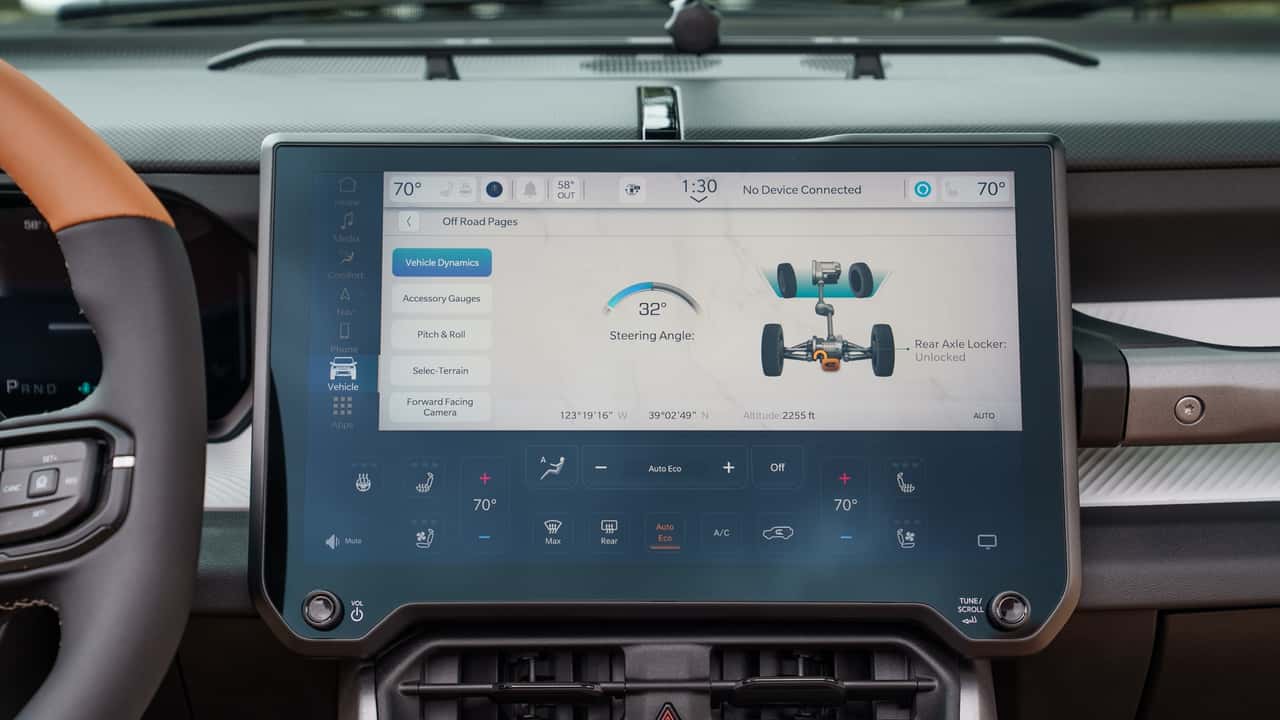 Photo by: Jeff Glucker | Motor1
There’s no getting around it: the Recon needs more range. This Moab trim, which remains the only one on sale at the moment until the Overland arrives next year, delivers 222 miles. Jeep says the Overland will jump to 240 miles. That’s slightly more acceptable, but the magic number for the average consumer feels like something closer to, or at least 300 miles.
Yes, I’m fully aware that the average commuter would be more than okay with 222 miles of range. Especially if they’re charging up at home each night. But an electric vehicle that wants you to take it on adventures should have enough juice for you to get to and from the adventure—or at least something more reasonably in line with that idea.
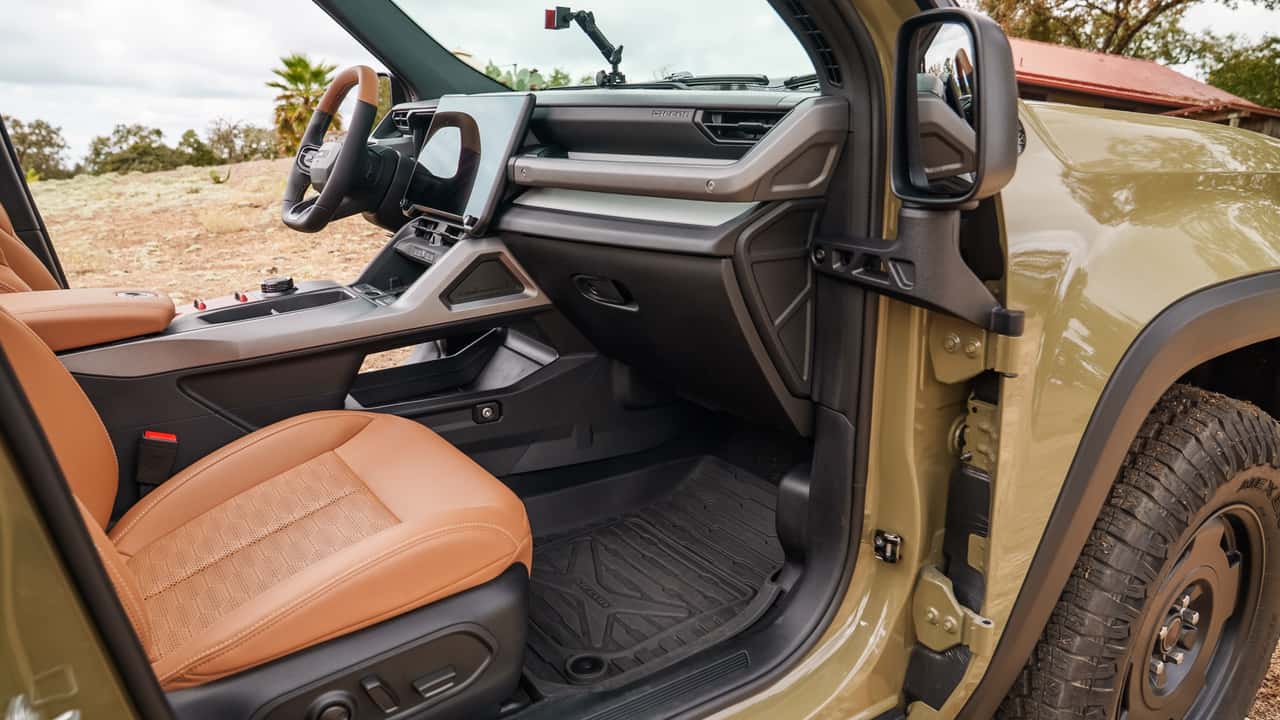 Photo by: Jeff Glucker | Motor1
  Photo by: Jeff Glucker | Motor1
Take, for example, the Rivian R2. While not as capable off-road as the Recon, the R2 offers more than enough off-road can-do for the average buyer. On the low end, the R2 offers 275 miles of driving range, but higher-end models offer 330 miles or more.
The real kick there is that the R2 also starts nearly $10k under the price of the Recon. Jeep can hand-wave that away by pointing to the off-road features, and it has a point. But buyers of an electric vehicle, off-road ready or not, will lock in on two things: range and price.
Verdict: Great Idea, Room For Improvement
The 2026 Jeep Recon Moab starts at $66,695. Add a few options, and you’ll arrive at $75,000 with little effort. That’s a large ask for a vehicle with relatively low range, already outdated electric tech, and extremely niche marketability.
Still, Jeep has made sure the Recon is a real Jeep. You can go play in the dirt, ramble across a river, or scramble over a rock garden, and you can do it all with the doors off.
The Recon looks great, has decent on-road manners, and offers plenty of room inside for people and things. But I fear the market may already be moving on from this one before it’s even given a chance to evolve and improve.
Word is, however, that a gas- or hybrid-powered Recon is already in the works. And if you want to tell me something is inspired by Jeep heritage, then a straight-six would look damn good in the nose of this thing.
Competitors
Rivian R2 Subaru Trailseeker I Drove The Rivian R2, The Model Y's First Real Threat
The Subaru Trailseeker Is An Electric Adventure Wagon: Review
2026 Jeep Recon Specs MotorDual 250-Kilowatt Electric Drive Modules Output670 Horsepower / 620 Pound-Feet Drive TypeAll-Wheel Drive Speed 0-60 MPH3.6 Seconds Maximum speed112 Miles Per Hour Weight6,112 Pounds EV Range222 Miles Seating CapacityFive Cargo Volume65.9 Cubic Feet (Behind Front Seats) Base Price$66,695
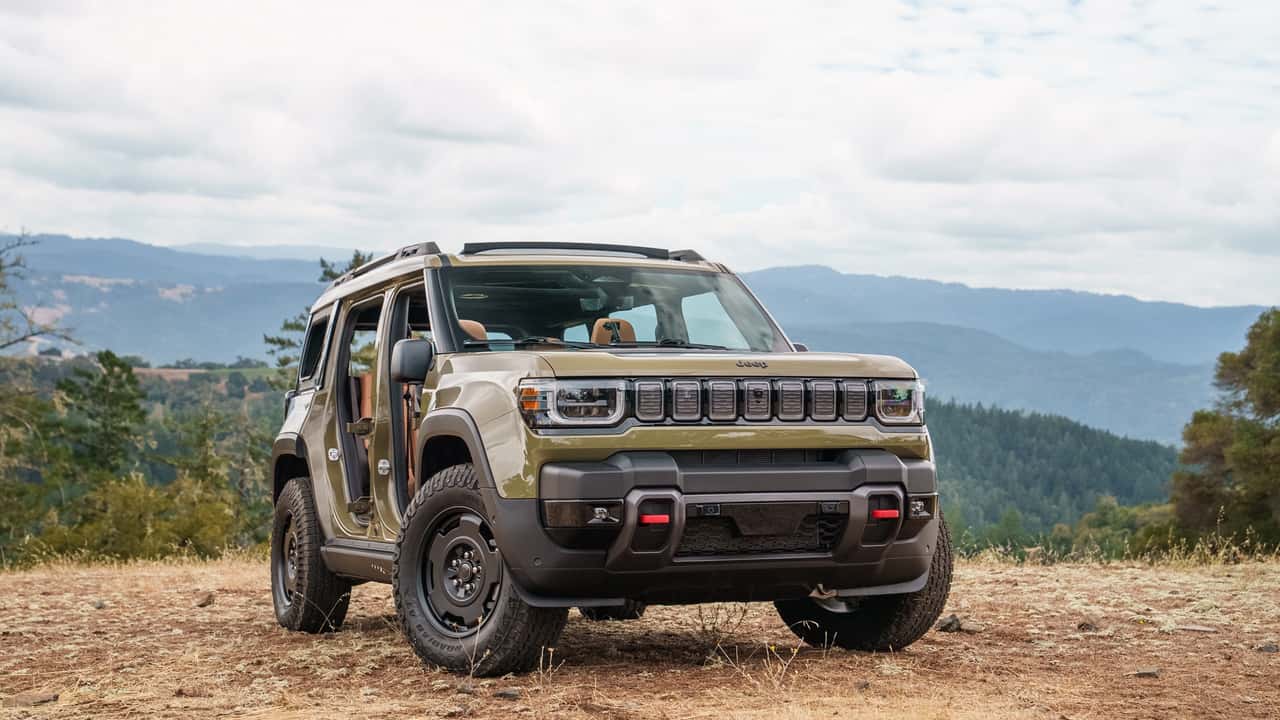
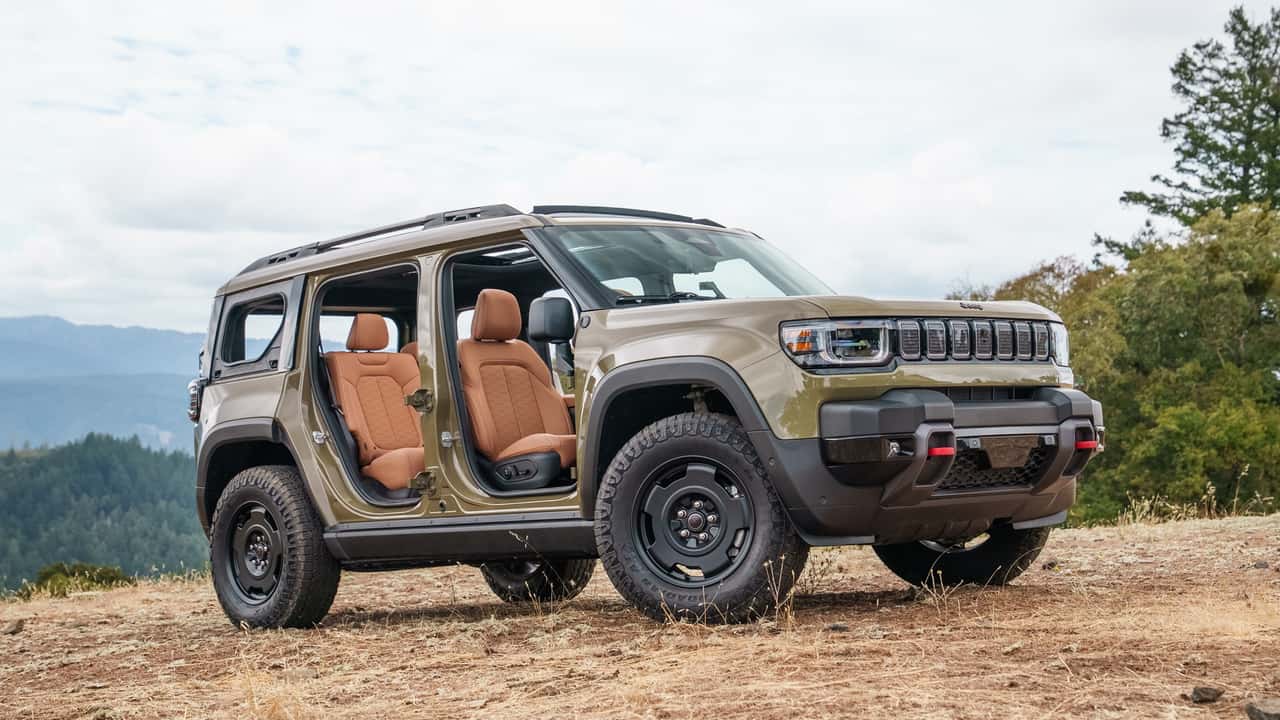
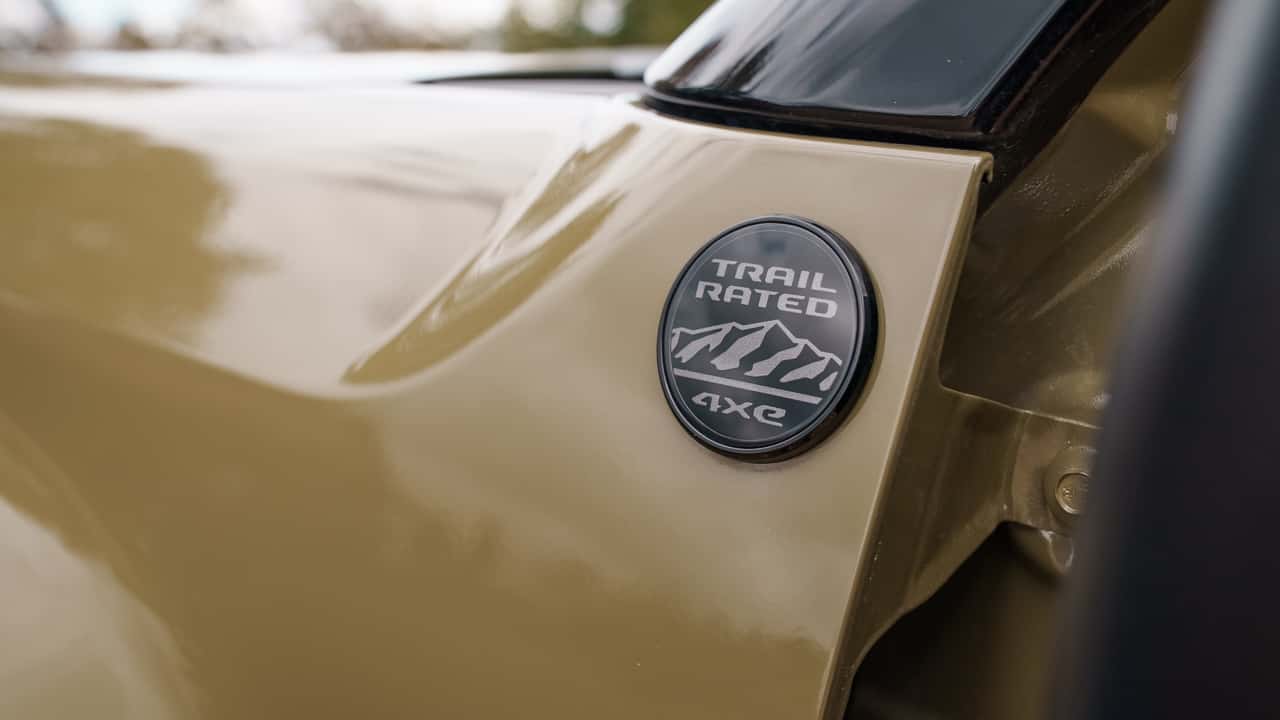
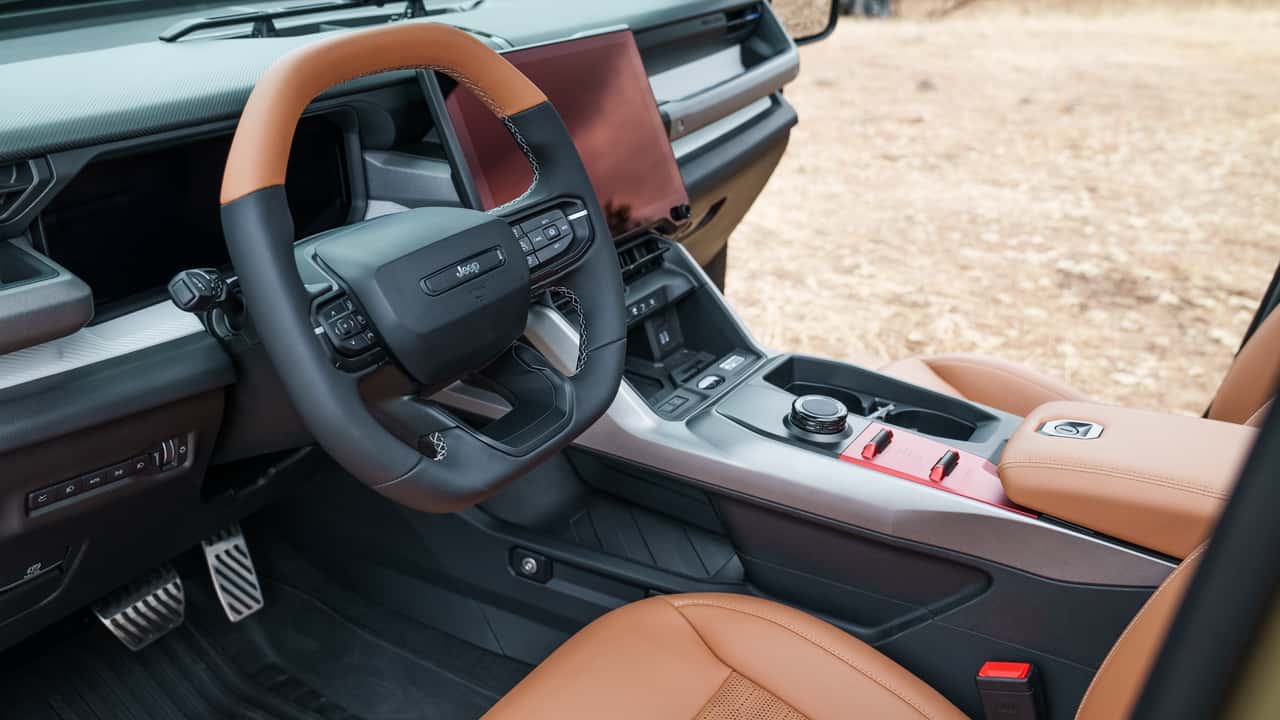
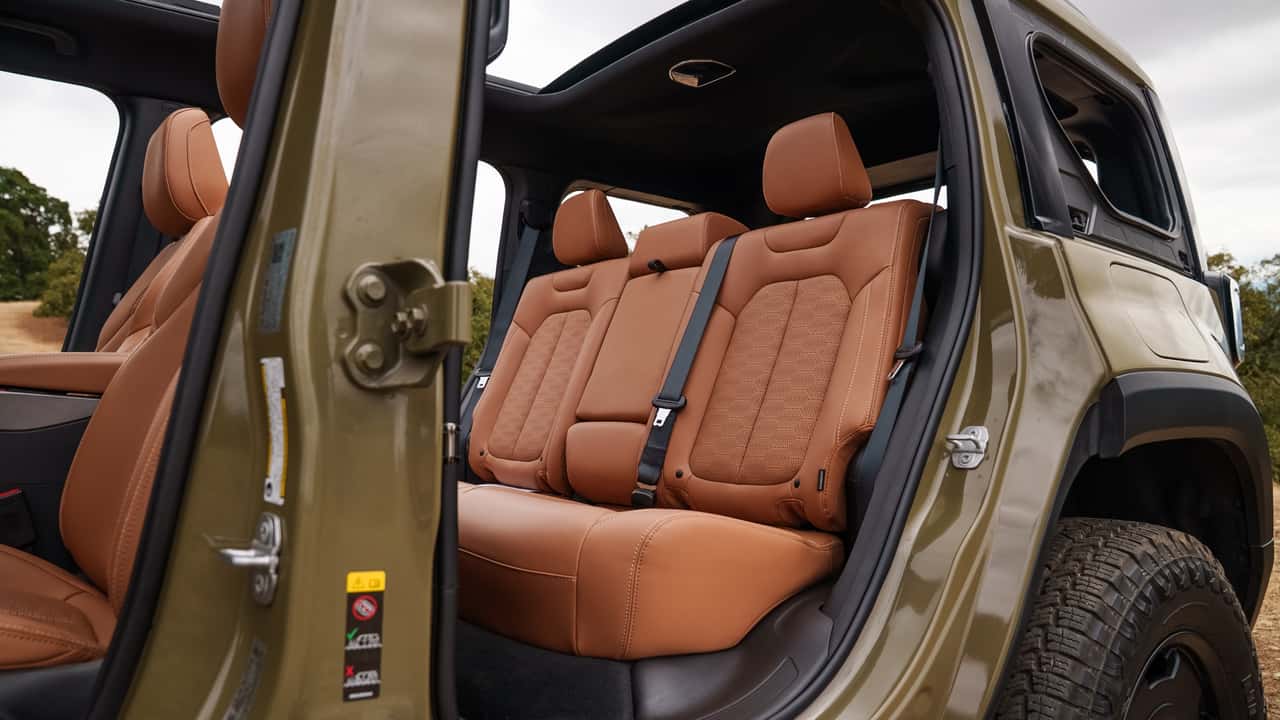
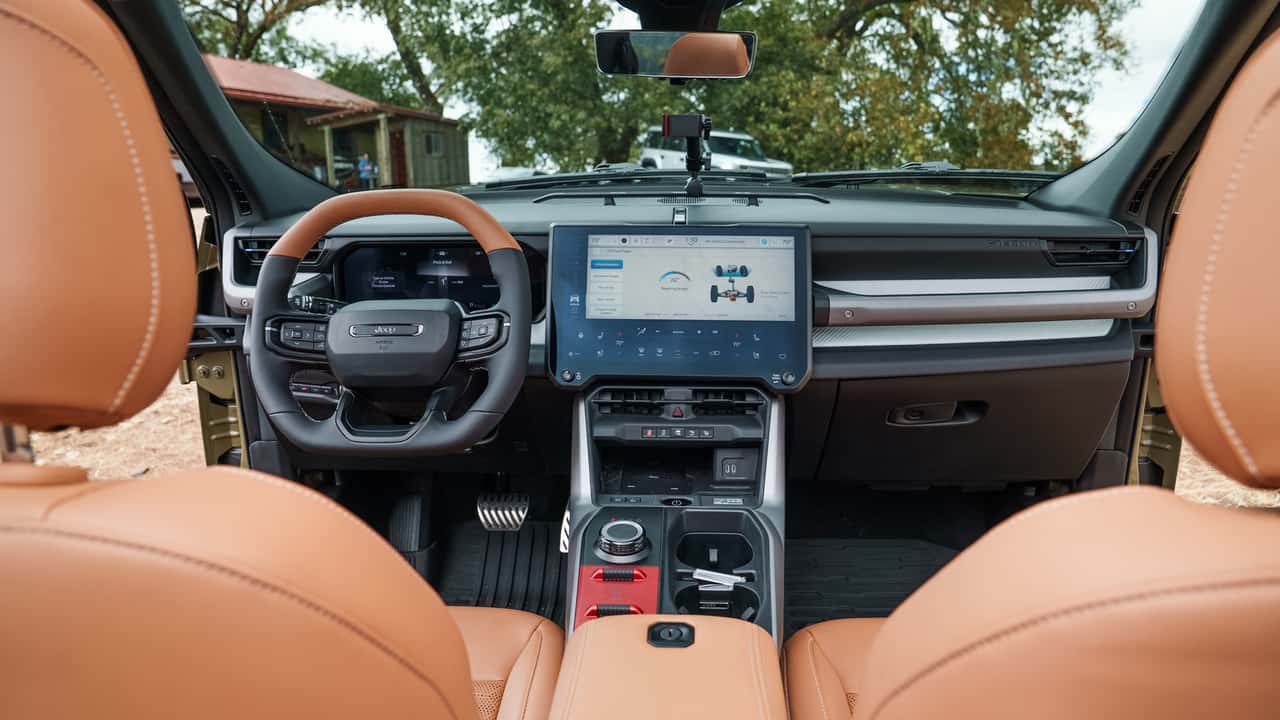
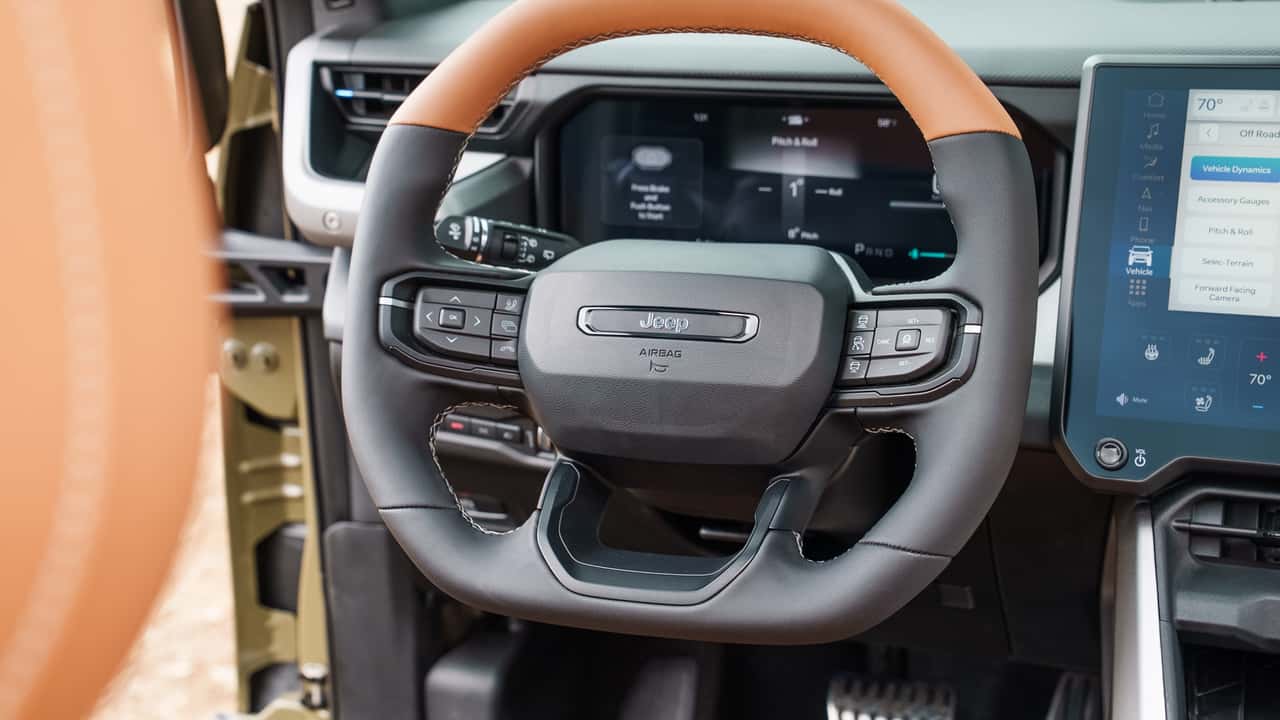
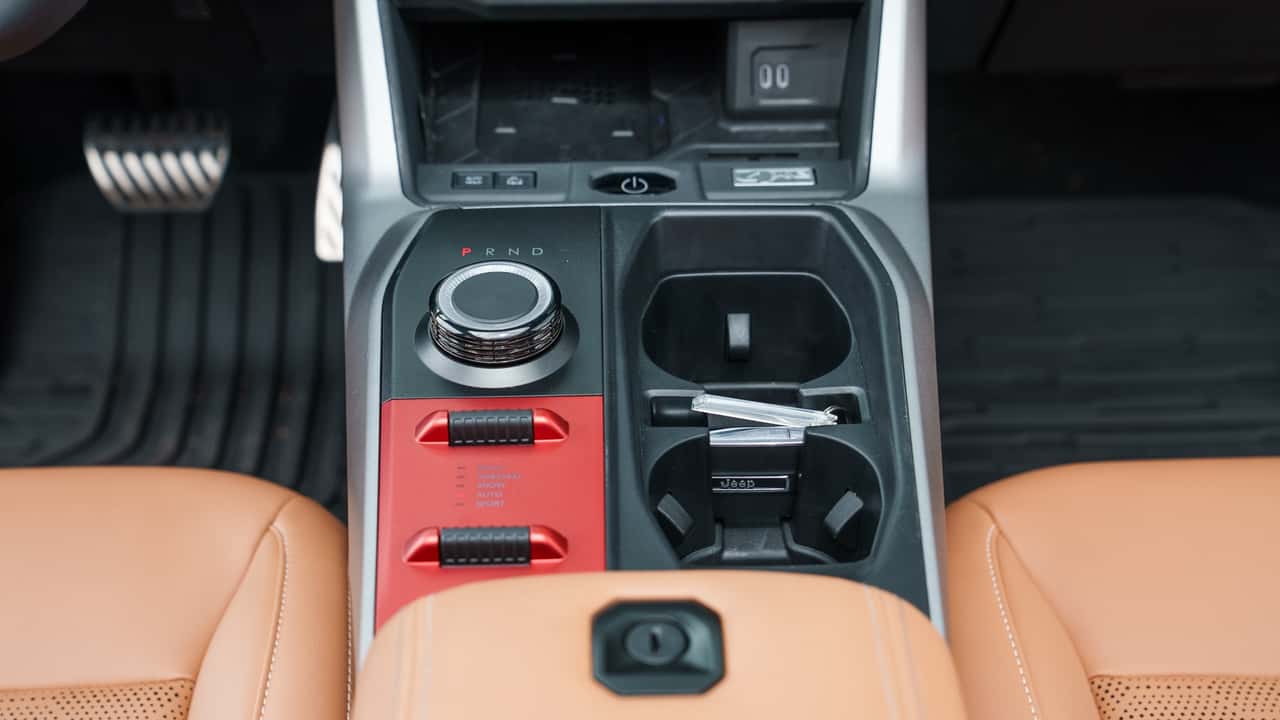
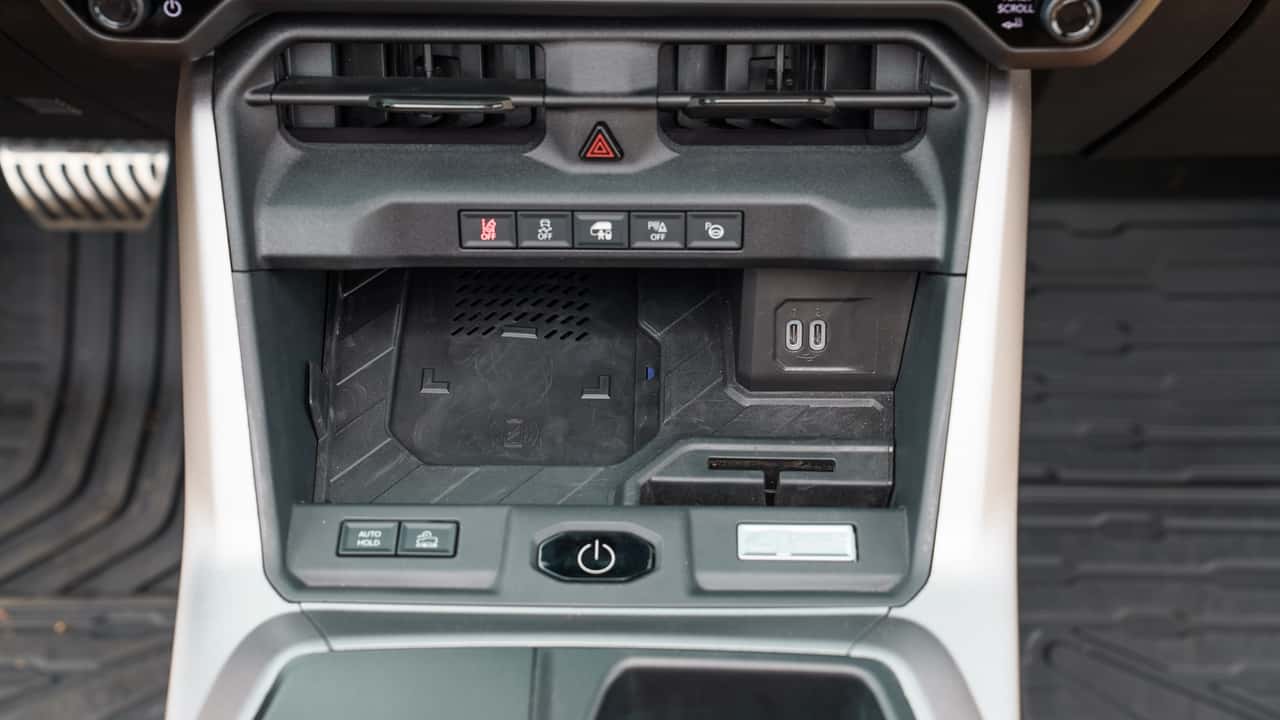
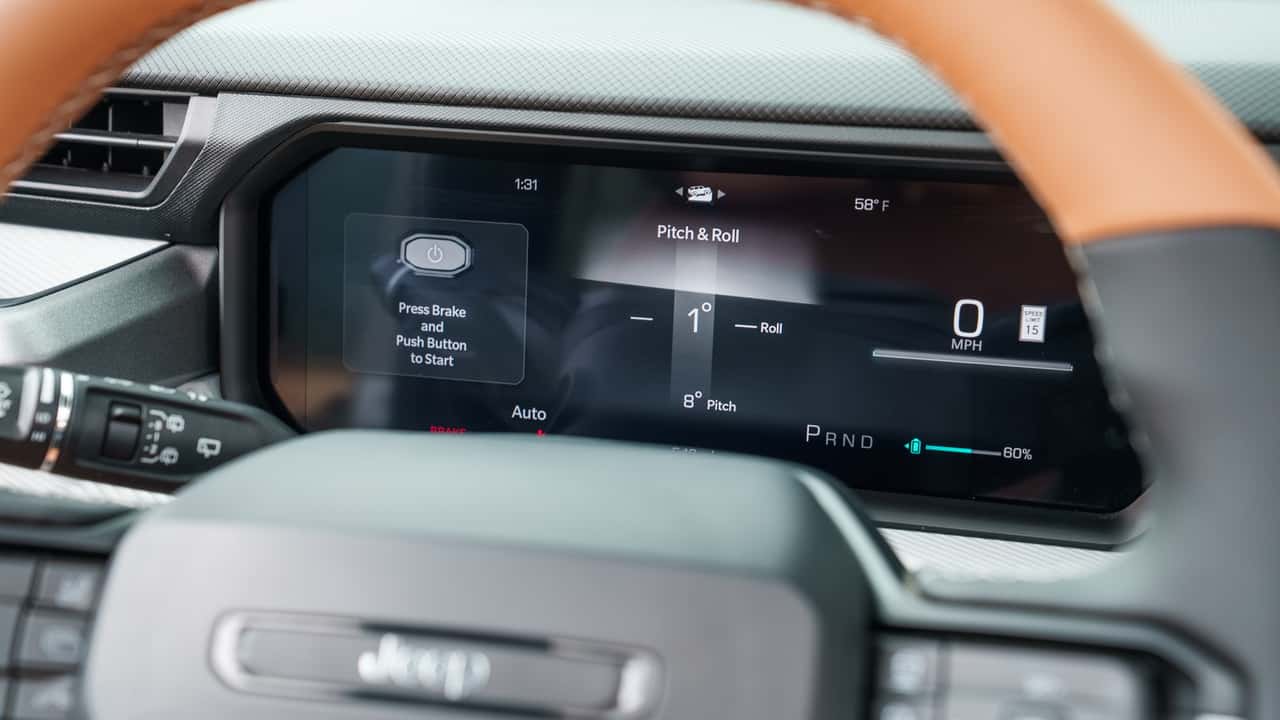
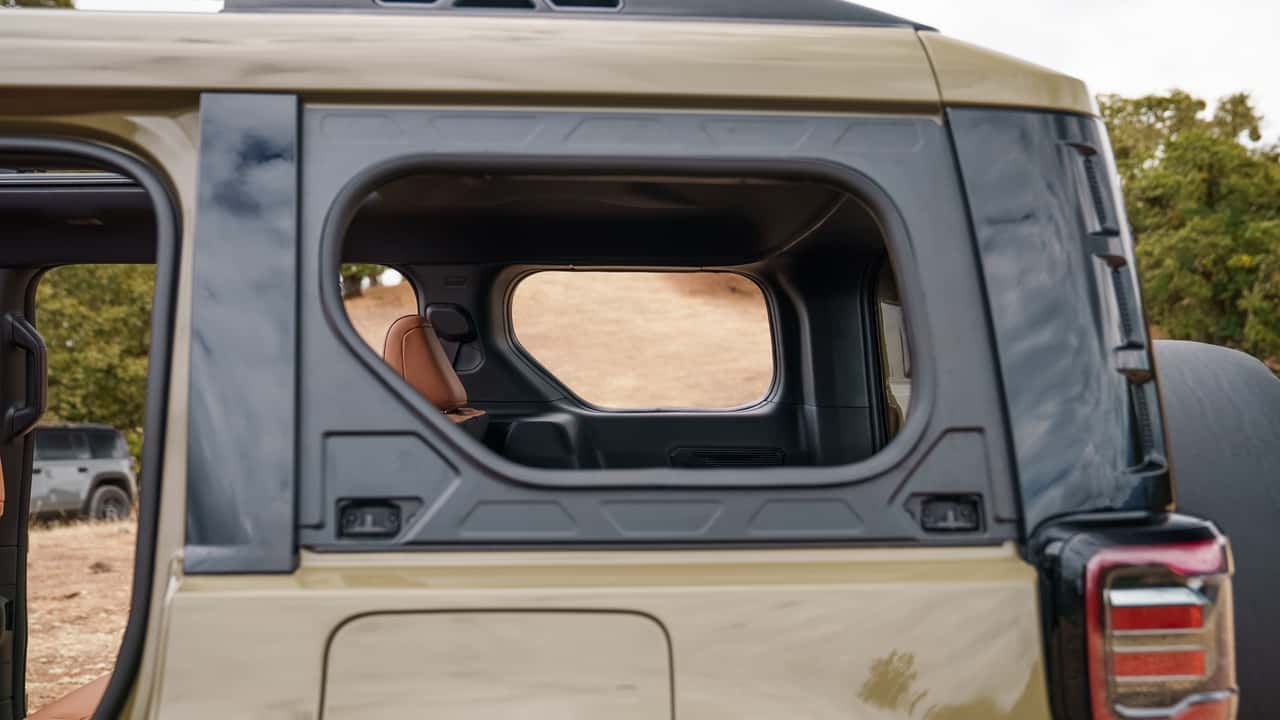
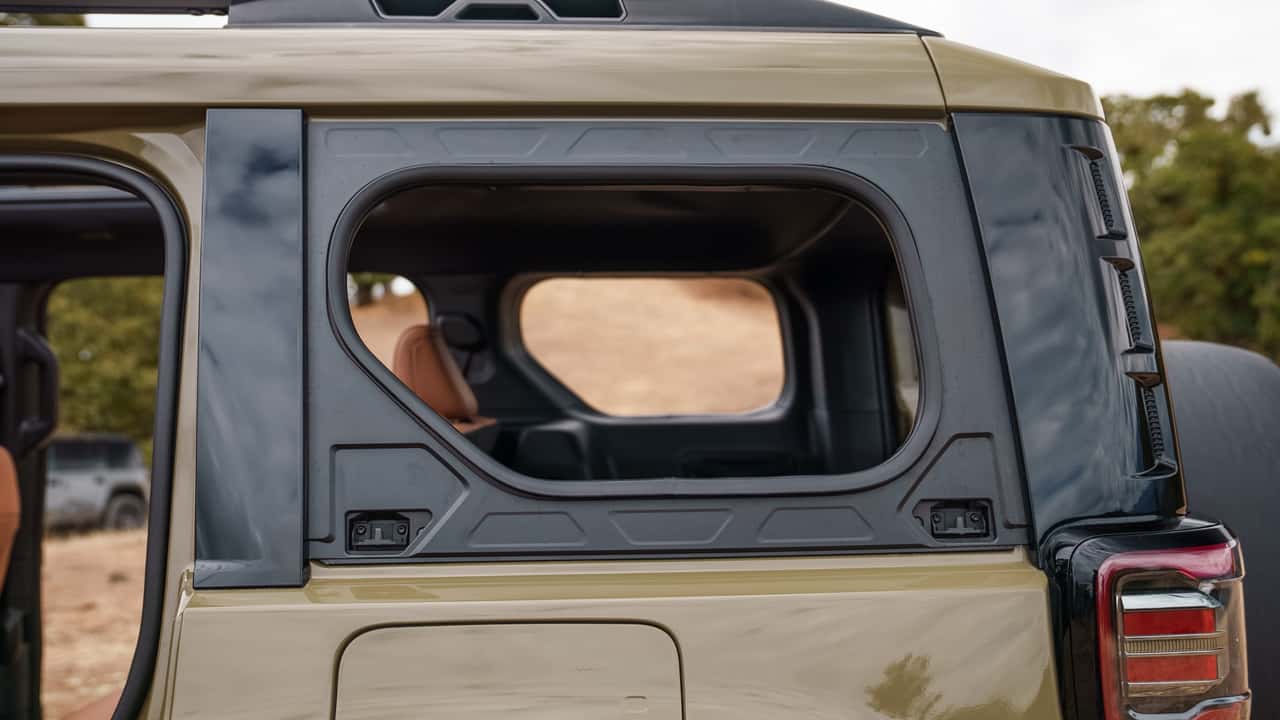
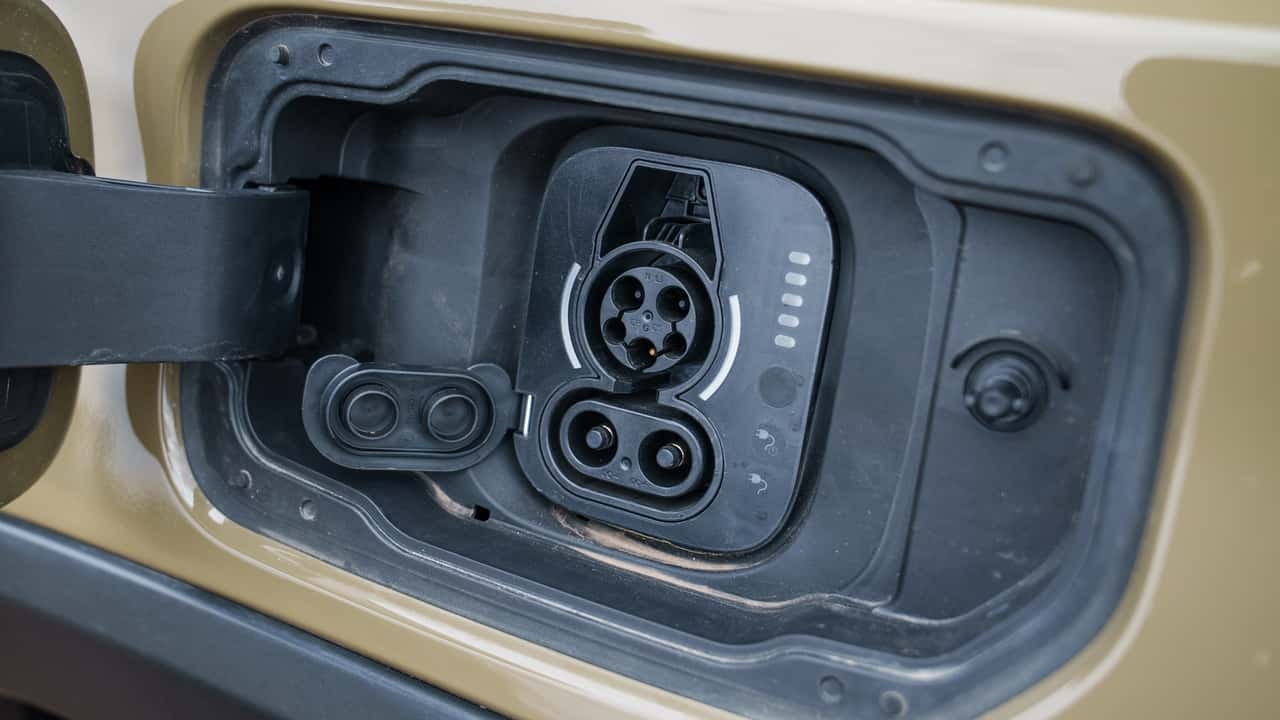
]]> feedback@motor1.com (Jeff Glucker) https://www.motor1.com/reviews/807570/2026-jeep-recon-first-drive/ https://www.motor1.com/reviews/807185/used-ford-focus-rs/ Fri, 04 Sep 2026 16:00:00 +0000 Why Buy A Used Ford Focus RS? Because It's Still Special The Focus RS combines all-wheel drive and rally-inspired performance in a (relatively) attainable package.
At one point in time, the Ford Focus RS was the hottest hot hatch you could buy in America. It packed 350 horsepower, all-wheel-drive, a six-speed manual transmission, and, notoriously, a little button that let you send the rear end sideways.
Ford only sold the Focus RS in the US for three model years, from 2016 through 2018. Then it disappeared, along with the rest of the Focus lineup and all of Ford’s passenger cars. Today, that short production run makes the RS an increasingly rare find.
Despite that rarity, though, depreciation has finally brought some examples into attainable territory. Current used listings put the average Focus RS in the mid- to high-$20,000 range, with some cars available for less depending on mileage and condition.
At any price, you’ll be hard-pressed to find another hot hatch like the Focus RS.
2016 Ford Focus RS
Why Buy The Ford Focus RS?
There are a few reasons, but the biggest one is what Ford put under the hood.
The Focus RS uses a turbocharged 2.3-liter EcoBoost four-cylinder producing 350 hp and 350 pound-feet of torque. Power goes through a six-speed manual transmission to an all-wheel-drive system capable of distributing torque evenly between the rear wheels.
And then there's Drift Mode. Unlike a conventional all-wheel-drive system that puts traction first, the RS was engineered to have some fun with the rear axle; simply press a button and send the car sideways (within legal limits, of course).
The RS also has the hardware to back up the performance. It came with aggressive suspension tuning, large brakes, performance tires, a variable exhaust system, and optional Recaro sport seats. The steering is excellent, too.
When we drove it back in 2016, we had plenty to say positively about the car’s dynamics:
'The way the Focus RS rotates flatly and confidently, you’d think the world was a carousel, and you’re just riding on it.' 'The Focus RS is so talented on the track that you could almost gloss over its party trick: Drift Mode…' 'Unabashedly positive kudos are reserved for exceptional vehicles, and this is one of them.'
How Much Is A Used Ford Focus RS?
The Focus RS isn't exactly a $20,000 bargain anymore. But prices have come down considerably from where they were when the car was new. According to Kelley Blue Book's current values for examples with around 50,000 miles in good condition, here's roughly what you can expect to pay:
2016 Ford Focus RS — $20,980 2018 Ford Focus RS — $25,910
The 2016 Focus RS started at around $36,000 when it was new, while a 2017 model carried a $36,995 base MSRP. Today, a fair purchase price for a 2016 Focus RS is about $20,980 and a 2018 is $25,910. Of course, prices vary by condition and mileage.
Real-world listings can be significantly higher—especially for an enthusiast car such as this. Cars.com currently shows an average used Focus RS price around $28,000, while Edmunds has listings ranging from the mid-$20,000s into the $40,000s for particularly clean examples.
In other words, $25,000 to $30,000 is a reasonable target for a nice used RS, while exceptionally clean, low-mileage cars can command substantially more.
Check Used Ford Focus RS Listings

Which Ford Focus RS Should You Buy?
There isn't a huge amount of variation between model years. Every US-market Focus RS uses the same basic 2.3-liter turbocharged engine, six-speed manual transmission, and all-wheel-drive system.
Still, we'd lean toward a 2017 or 2018 if the price difference isn't that significant, largely due to age. The 2018 is especially appealing because it's the final model year. Ford also offered a limited-edition RS that year with upgrades including a mechanical limited-slip differential, black wheels, and other unique equipment.
What Could Go Wrong?
Here's the big one: The Focus RS has a head-gasket history that you absolutely should not ignore.
Ford issued Customer Satisfaction Program 17B32 for certain 2016 and 2017 Focus RS models after identifying a potential cylinder head gasket issue. According to Ford's documentation, affected vehicles could develop coolant leaks into the combustion chamber, potentially producing white smoke or low coolant levels without an obvious external leak.
The affected production range covered Focus RS cars built from August 3, 2015, through July 6, 2017. Ford's repair procedure called for pressure-testing the cooling system and replacing the head gasket, with some cars requiring a replacement cylinder head.
So if you're shopping for an early RS, make sure that the repair was completed and check the vehicle's service history.
Also look for the usual problems associated with enthusiast cars; check the tires, brakes, suspension, wheels, clutch, and bodywork. Look underneath for signs of abuse or track use. And pay particularly close attention to modifications.

What Else Could You Buy?
The obvious alternatives are the other cars that defined the modern hot-hatch segment:
Honda Civic Type R Subaru WRX Volkswagen Golf R
There's the Golf R has similar all-weather performance, but with a more premium feel. There's the Honda Civic Type R, which is front-wheel drive but arguably even more focused. And then there's the Subaru WRX, which offers a similar rally-inspired formula and plenty of aftermarket support.
Why The Ford Focus RS Makes Sense
The Focus RS is one of those cars that probably couldn't exist in the US today: a relatively small hatchback with 350 hp, all-wheel drive, a six-speed manual, and a playful chassis.
Unlike some enthusiast cars from the same era, the Focus RS isn't prohibitively expensive on the used market. Depending on mileage and condition, you can get into one for roughly $20,000 to $30,000.
Just make sure to verify the head-gasket work. Look for a clean maintenance history. Avoid questionable modifications. And get a pre-purchase inspection from someone who knows these cars.
Do that, and the Focus RS could be the next standout at your local cars and coffee.
Why Buy A Used Chevy SS? Two Words: V8. Manual.
We Drove (Nearly) Every 2026 Toyota RAV4 Trim. Here's Which One to Buy



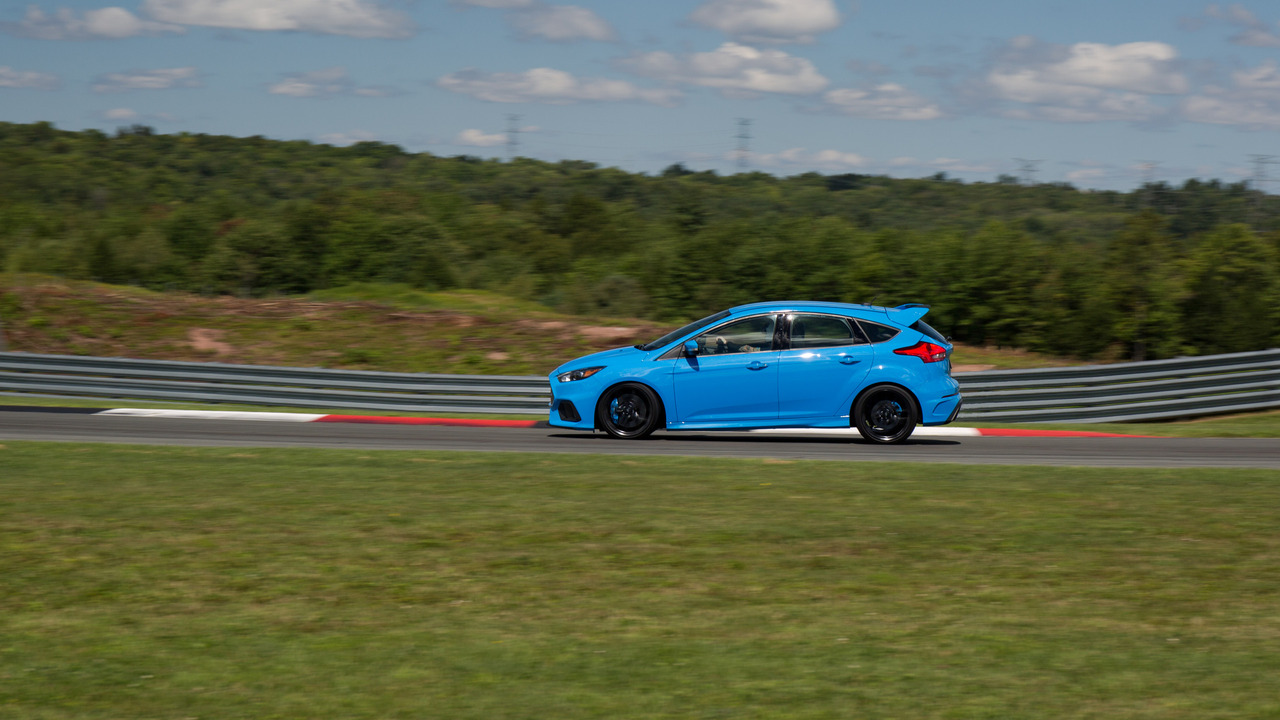
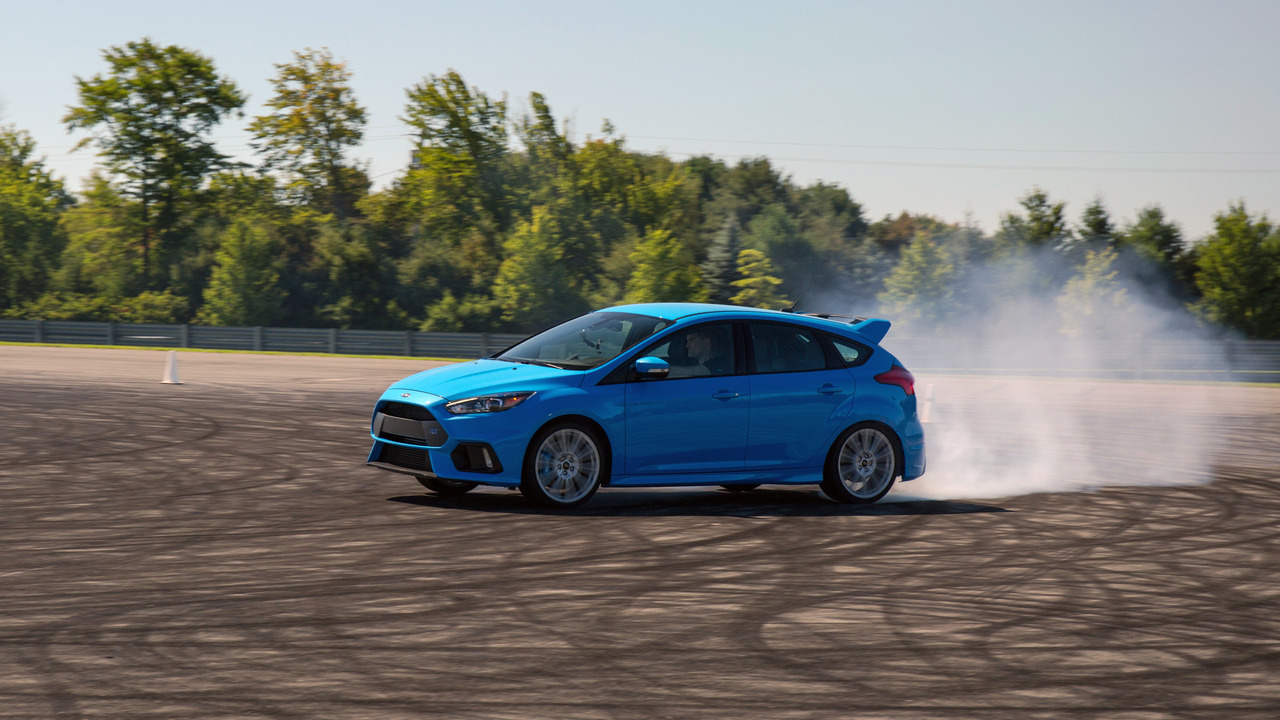


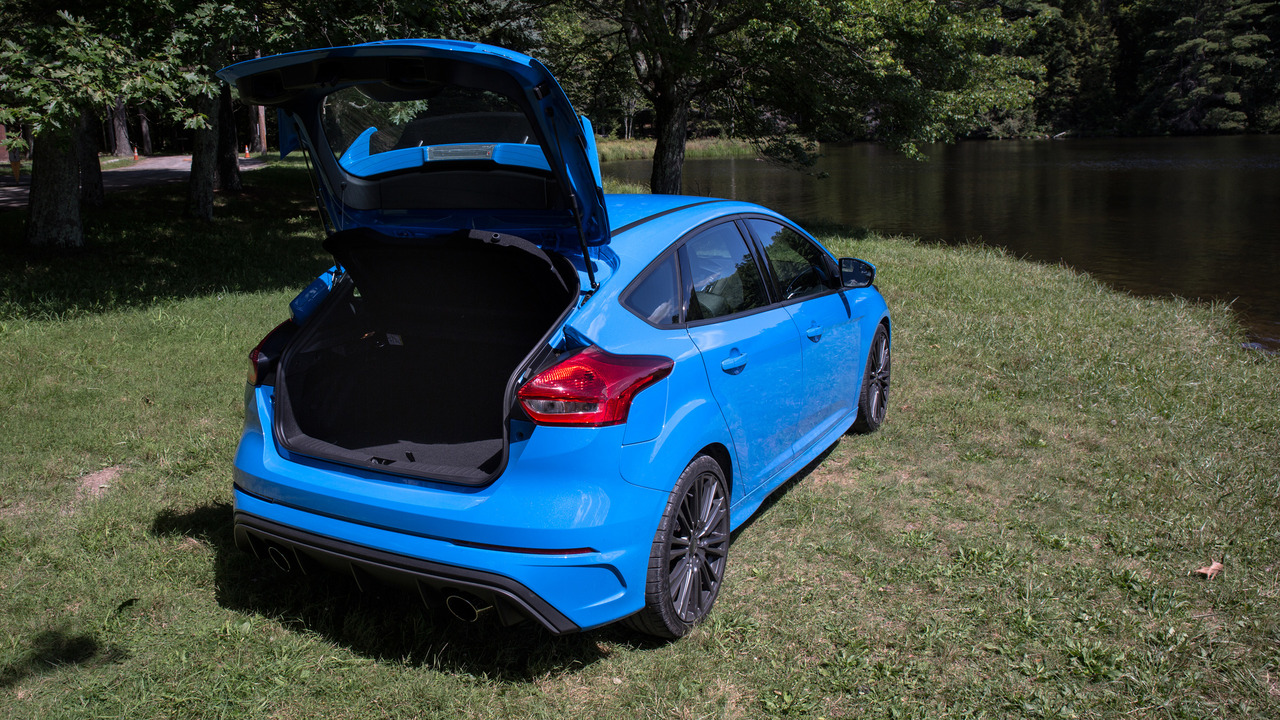


]]> feedback@motor1.com (Jeff Perez) https://www.motor1.com/reviews/807185/used-ford-focus-rs/