Home
News
A Chinese Company Is Reproducing Classic Car Bodies On The Cheap
Bringing classic Japanese sports cars, Porsches, and Mustangs back to life, one stamped steel panel at a time.
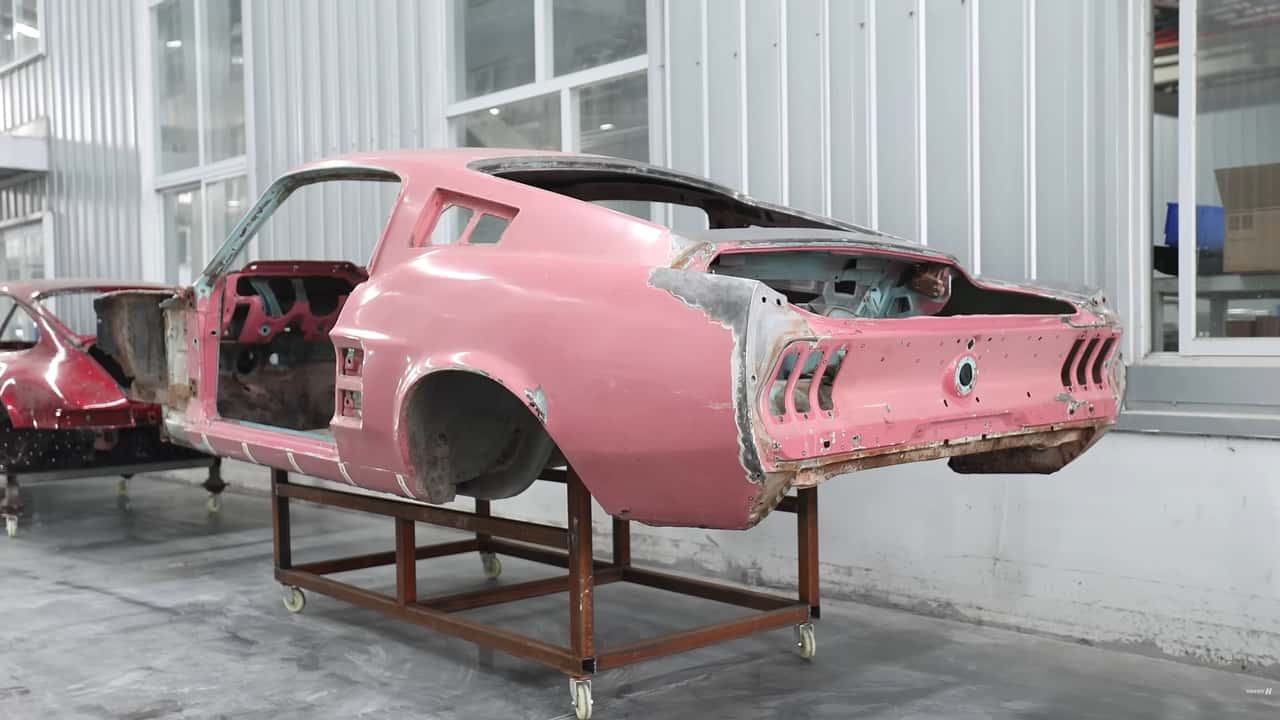
Photo by: Hagerty
Adrian Padeanu 
By: Adrian Padeanu
Nov 17, at 5:21am ET
Add Motor1.com as a preferred source in Google
- (https://twitter.com/intent/tweet?url=https%3A%2F%2Fwww.motor1.com%2Fnews%2F815688%2Fchinese-company-builds-new-classic-car-bodies%2F&text=A%20Chinese%20Company%20Is%20Reproducing%20Classic%20Car%20Bodies%20On%20The%20Cheap&via=motor1com)
- copy
Share
Comment
The Toyota Corolla AE86 has become something of a legend among car enthusiasts, but finding a clean example is getting increasingly difficult. Rust, decades of abuse, and the occasional drift-related mishap have taken their toll on the lightweight rear-wheel-drive coupe. Fortunately, a factory in China has an unusual solution: build brand-new bodies from scratch.
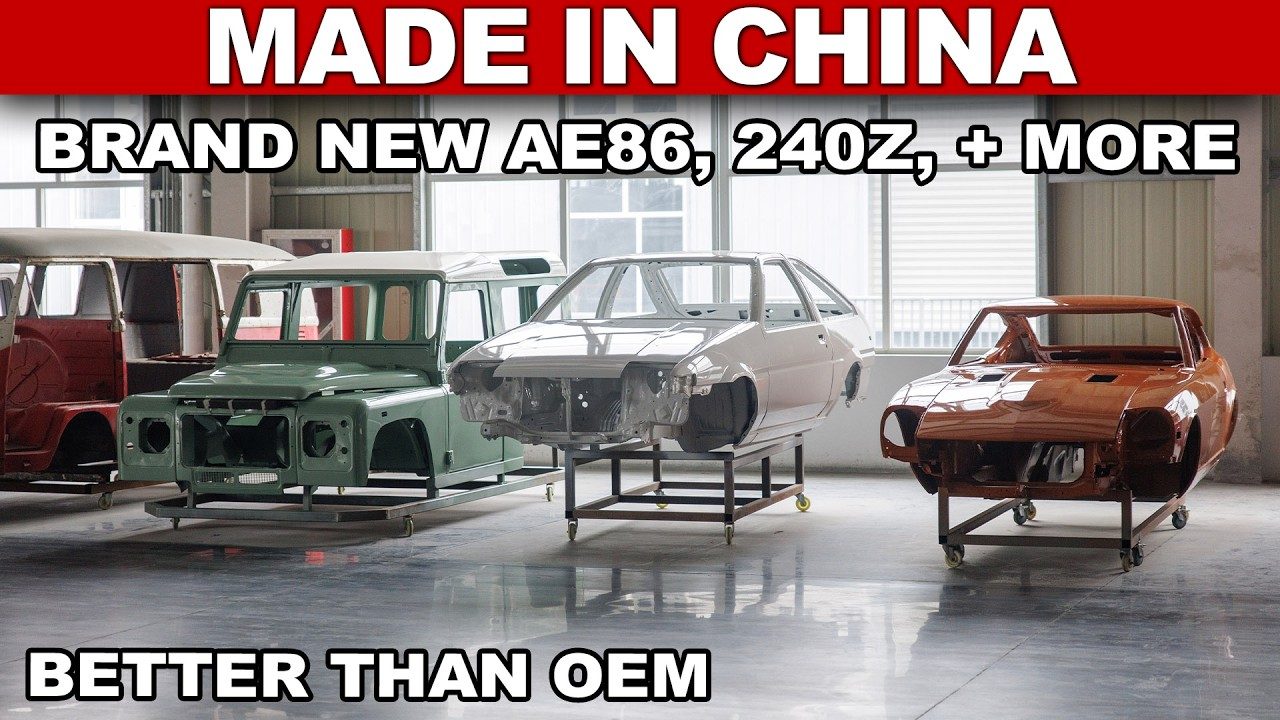
A recent visit by Hagerty to the Jiangsu Juncheng Vehicle Industry in Baoying offers a fascinating look behind the scenes. The company is manufacturing complete steel bodies for several classics, including the Toyota AE86 and Nissan 240Z. Prices start at less than $10,000, which sounds almost too good to be true considering the enormous amount of work involved.
The company has also expanded into American classics, including the first-generation Ford Mustang and Bronco. Its newest chassis is for the 1967 pony car, with a starting price of approximately $16,000. That's quite remarkable considering that around 95 percent of the manufacturing process happens in-house.
Recreating Classic Cars Starts With 3D Scanning
The company doesn't simply take measurements from old photographs and start stamping metal. The process begins with two original, unmodified cars. One is dismantled piece by piece, while the other serves as a reference to check whether the newly manufactured panels meet factory specifications.
Every component is 3D-scanned, with the resulting data cleaned up before the company creates stamping dies for the individual panels. This is particularly impressive, given that many of these cars were never officially sold in mainland China, meaning the company had to source suitable examples elsewhere.
Producing the dies is a massive undertaking in itself. They use two different manufacturing methods, depending on the component's complexity. Some are machined from high-strength steel blanks using CNC equipment, while larger and more intricate dies start as sandcastings that are subsequently refined.
A single CNC program can run for 40 hours to produce one die. Others require around 48 hours of machining, followed by several more hours of painstaking hand polishing. Workers must be extremely careful during this process, as they can remove only a tiny amount of material without ruining the die. The AE86 and 240Z each require more than 300 stamping dies to reproduce their respective bodies. Once the dies are ready, the company moves on to stamping the individual panels.
Robots Help, But Human Hands Do Most Of The Work
Unlike modern automotive factories, where robots typically handle loading and stamping, the company relies heavily on manual labor. Workers position each sheet by hand, with some components requiring multiple stamping stages before reaching their final shape.
The factory also uses robotic plasma cutters to remove excess material and create the necessary openings for assembly. Employees program the machines to follow specific cutting paths, combining traditional craftsmanship with modern manufacturing equipment. Every stamped component goes through an electroplating and coating process, followed by primer.
The company uses steel with the same thickness as the original manufacturer, keeping weight close to factory specifications while benefiting from improved material quality. Once all the panels are ready, workers weld them together by hand. It's a labor-intensive process that modern automakers have largely automated, but the result is a brand-new steel body that looks remarkably close to the original.
More Classic Cars:
 Classic Datsun 240Z Gets Twin-Turbo Power And Carbon Fiber Body
Ferrari 308 Tribute Brings Back Manual V8 And Carbon Body
You Can Buy This Wild 1967 Alfa Romeo Giulia Built Like A Le Mans Racer
A Hidden Corvette Collection Was Found In A Texas Trailer Park
A Growing Catalog Of Classic Car Bodies Comes At Low Prices
Juncheng produces complete steel body shells and individual replacement panels for several classic vehicles. The company also makes bodies and replacement components for the Land Rover Defender and Toyota FJ40, with a Porsche 911 (964) next. Its catalog includes everything from doors, hoods, and quarter panels to floors, roofs, and complete body structures.
Prices start at approximately $9,500 for the AE86 and 240Z bodies, while a new Mustang shell costs around $16,000. The upcoming 964-generation 911 and Mercedes 300 SL Gullwing reproductions are expected to cost approximately $18,000. Customers can also order individual panels rather than an entire body, making the company's products useful for conventional restorations as well as ground-up builds.
Classic cars are only part of the business. The company also manufactures replacement body panels for much newer vehicles, with its online catalog covering everything from American models such as the Dodge Challenger and Charger to products for Ford, Tesla, Jeep, and various European and Asian brands.
What do you think?
View
Comments
Reproduction Bodies Come With A Legal Catch
There are, however, some legal question marks surrounding these reproduction bodies. The company doesn't install VIN plates or manufacturer badges, arguing that the shells are replacement parts intended for restoring vehicles more than 25 years old. That means buyers cannot simply register one as a brand-new car.
Instead, some owners may be tempted to transfer the VIN from a donor vehicle, which puts the process in a legal gray area. As the market for reproduction classics expands, regulators will eventually have to draw a clearer line between restoring an existing car and effectively building a new one using an old identity.
Source: Hagerty / YouTube
We want your opinion!
What would you like to see on Motor1.com?
Take our 3 minute survey.
- The Motor1.com Team
Share this Story
- (https://twitter.com/intent/tweet?url=https%3A%2F%2Fwww.motor1.com%2Fnews%2F815688%2Fchinese-company-builds-new-classic-car-bodies%2F&text=A%20Chinese%20Company%20Is%20Reproducing%20Classic%20Car%20Bodies%20On%20The%20Cheap&via=motor1com)
- copy
GO TO COMMENTS
(
)
Got a tip for us? Email: tips@motor1.com
View all comments ( )
Popular
BMW Has 10 New Models Coming In 2027. Here's All Of Them
Driven: BMW's Electric M3 Is The Real Deal
GM Might Finally Build A Real F-150 Raptor Rival: Report
Where Did All The Bad Cars Go?
I Tried Mercedes' New Hands-Free Driving Tech. It Nearly Drove Me Everywhere
Latest Stories
- A Chinese Company Is Reproducing Classic Car Bodies On The Cheap Nov 17 - Classics -
- A $1.6 Million McLaren Senna Couldn't Find A Buyer. Now It's Sitting Neglected Nov 17 - Supercars -
- Aston Martin Is Taking Its Call Of Duty Off-Roader To The Dakar Rally With Fernando Alonso Nov 17 - Motorsport -
- Ford Maverick Buyers Can Get The 300-HP SV300T Package Before Taking Delivery Nov 17 - Official -
- Bentley's First EV Is Already Sold Out Through 2027. New Torcal Buyers Must Wait Until 2028 Nov 17 - Sales -
- Volkswagen Teases A Widebody, Winged GTI Concept Ahead Of November Reveal Nov 17 - Teasers -
- A Forgotten American Automaker Is Back, Promising A $21,500 Truck Nov 17 - Official -
RECOMMENDED FOR YOU
Ford Maverick Buyers Can Get The 300-HP SV300T Package Before Taking Delivery
A $1.6 Million McLaren Senna Couldn't Find A Buyer. Now It's Sitting Neglected
The Car That Changed It All
Aston Martin Is Taking Its Call Of Duty Off-Roader To The Dakar Rally With Fernando Alonso
Ford Showed Us Its Secret Car Vault Filled With Hundreds Of Hidden Gems
Bentley's First EV Is Already Sold Out Through 2027. New Torcal Buyers Must Wait Until 2028
Scout Has 212,000 Reservations. Here's What Those Drivers Own