Chinese EV Hits 312 MPH To Become The World's Fastest Production Car: Onboard Video
BYD's Yangwang U9 Xtreme reached 503.17 km/h on a public road in Abu Dhabi, beating its own record set in Germany last year.
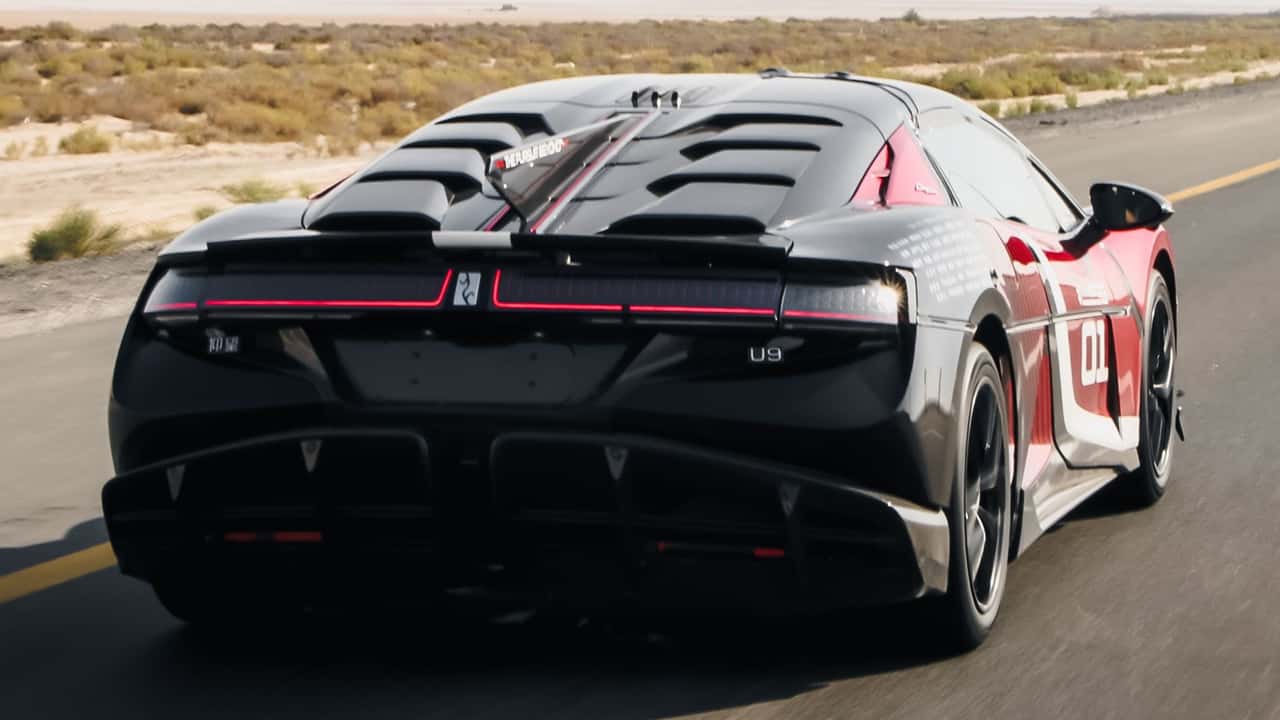

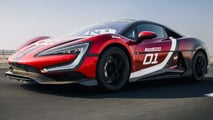
The race to build the world's fastest production car has entered uncharted territory. BYD's luxury brand, Yangwang, has pushed its U9 Xtreme hypercar beyond 500 km/h (310.7 mph), reaching an astonishing 503.17 km/h (312.65 mph) in Abu Dhabi. It's the first production car to cross that milestone, and the Fédération Internationale de l'Automobile (FIA) has now officially recognized the achievement.
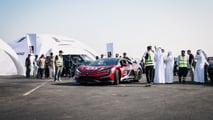
The record-breaking run took place on November 1, along Sheikh Khalifa Bin Zayed International Road (E11), in Abu Dhabi's Al Dhafra region. German racing driver Marc Basseng was once again behind the wheel, having also driven the same car to its previous record of 496.22 km/h (308.34 mph) at Germany's ATP Papenburg proving ground in September 2025.
The FIA confirmed the achievement on its website, adding another layer of credibility to Yangwang's remarkable accomplishment. The U9 Xtreme also secured two Guinness World Records: the highest speed achieved by a production car in a single-direction run and the highest speed achieved by an electric production car in a single-direction run.

A Record-Breaking Run With One Important Distinction
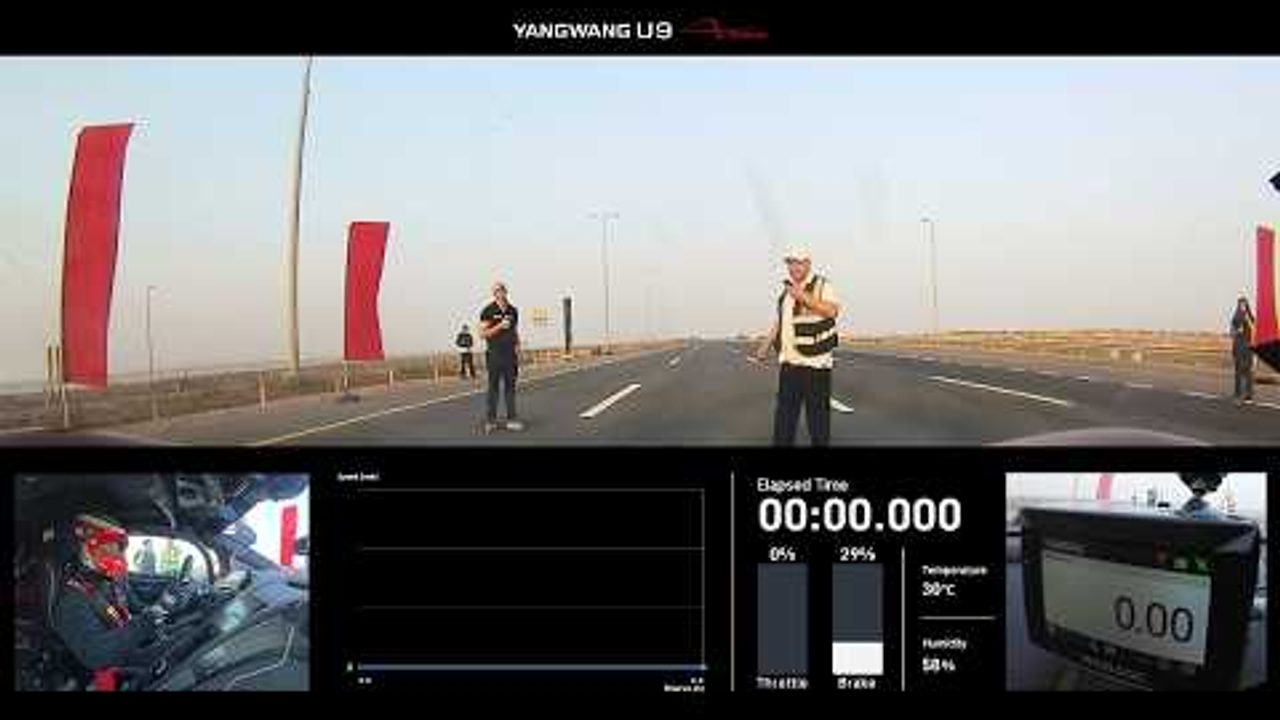
That last detail is important. The 503.17 km/h figure comes from a one-way attempt, rather than a two-way average that accounts for differences in wind and road conditions. Nevertheless, breaking the 500 km/h barrier is a major milestone, particularly for an electric vehicle.
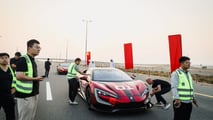
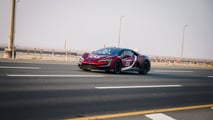
Unlike the previous attempt in Germany, Yangwang chose a public road in Abu Dhabi for its latest record bid. Local authorities closed a 10-kilometer (6.2-mile) section of the E11, including a seven-kilometer (4.3-mile) straight suitable for high-speed runs.
Preparing the road was no small task. Given its proximity to the desert and regular use by everyday traffic, the surface had to be swept and carefully inspected. Even tiny pieces of wire left behind by cleaning equipment could have damaged the tires or compromised the car's stability at such mind-boggling speeds.
The attempt unfolded over two days. Two runs on October 31 produced a maximum speed of 490 km/h (304.5 mph), prompting engineers to work overnight on several improvements. They optimized the preparation procedure to ensure the battery and electric motors reached their ideal operating temperatures before each run.

Yangwang U9 Xtreme sets fastest production car record
First Car To Crack 500 KM/H
The team also adjusted the rear wing to generate more downforce over the rear axle, revised the suspension software to increase rebound damping over subtle road imperfections, and fine-tuned tire pressures. Two more runs followed on November 1, with the second delivering the magic number: 503.17 km/h.
The U9 Xtreme is considerably more powerful than the regular Yangwang U9. Its four independently controlled electric motors each produce 745 hp for a rather ludicrous combined output of 2,977 hp. That's more than double the standard model's 1,287 hp.
Yangwang U9 Xtreme sets fastest production car record


What About The Tires?
Tire technology was another crucial part of the equation. Yangwang worked with Giti Tire to develop specialized semi-slick rubber capable of withstanding the extraordinary forces generated at extreme speeds. The wheel-rim interface also received special treatment to minimize tire slippage during hard acceleration and braking.
The Third Record
Top speed isn't the U9 Xtreme's only party trick. The same specification has also lapped the Nürburgring Nordschleife in 6 minutes and 59.157 seconds, making it the fastest production electric vehicle around the legendary German circuit.
That combination of straight-line speed and track performance makes the achievement particularly interesting. Building a car capable of briefly exceeding 500 km/h is one thing; developing one that can also tackle the Green Hell in less than seven minutes is another.
Yangwang U9 Xtreme sets fastest production car record
BYD Is Only Making 30 Cars
Yangwang has no plans to build thousands of these hypercars. Production will be limited to just 30 examples worldwide, and some customers have already signed on the dotted line.
The U9 project has come a long way in a remarkably short time. The regular model reached 309 km/h (192 mph) in January 2024, followed by 391.94 km/h (243.5 mph) later that year. The more extreme version then progressed from 472.41 km/h (293.54 mph) in August 2025 to 496.22 km/h a month later, before finally crossing the 500 km/h threshold in Abu Dhabi.
Of course, a single-direction top-speed run differs from an officially verified two-way average, so this doesn't settle every debate about the world's fastest production car. Still, the FIA's recognition makes the U9 Xtreme's achievement difficult to dismiss. And while the hypercar might be Chinese, its latest milestone is one that the entire automotive industry will have to reckon with.
Could A Combustion-Engine Car Go Even Faster?
It's also worth wondering how much faster an internal combustion-engined hypercar could go without the restrictions imposed by increasingly stringent emissions regulations. Automakers have had to rein in engine output and rethink high-performance powertrains to comply with ever-tightening rules, sometimes sacrificing outright performance in the process.
That makes us curious about what an ICE-powered hypercar could achieve if engineers didn't have to worry about emissions targets, noise limits, or road-legal requirements.
Your move, Bugatti or Koenigsegg.
More From BYD:
RECOMMENDED FOR YOU
Bugatti Celebrates 20 Years In America With A Spectacular Las Vegas Gathering
Jeep Is Taking Marvel Superheroes Off-Roading
Watch Mercedes-AMG's Ultimate CLE Lap The Nürburgring: Video
Driven: The Fiat Topolino Is Terrible. I Love It
BYD's $3-Million Hypercar Crashed Hard During High-Speed Testing: Video
GM Patents A Camera That Watches The Drag Strip Lights And Automatically Launches Your Car
The Man Who Designed The Lamborghini Gallardo Has A New Take Nearly 30 Years Later