GM Is Finally Bringing Hybrid Power To Three Of Its Largest SUVs
General Motors is spending $750 million to electrify the Traverse, Enclave and Acadia.


Because of their sheer weight, full-size SUVs need electrification more than most vehicles if automakers want to improve fuel economy. Their bulky bodies and three-row cabins make them practical family haulers, but they also make them thirsty at the pump. With gasoline prices remaining extremely high in the United States, adding a hybrid powertrain is a sensible way to cut fuel consumption without asking buyers to switch to a fully electric vehicle.
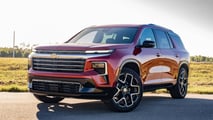
General Motors is finally moving in that direction. The American automaker plans to build hybrid versions of the Chevrolet Traverse, Buick Enclave, and GMC Acadia, according to a Reuters report. All three are three-row SUVs that GM currently builds at its Lansing Delta Township plant in Michigan. The company has confirmed plans to prepare the factory for hybrid production, although it hasn’t officially announced the models or revealed when they’ll arrive.
The decision marks a significant shift for GM, which has invested heavily in electric vehicles while largely leaving conventional hybrids to competitors such as Toyota and Honda. As buyers grow more concerned about fuel costs, the company is looking to broaden its powertrain lineup rather than bet everything on battery-electric vehicles.

2024 GMC Acadia
GM Is Reversing Course on Hybrids
GM announced on Tuesday that it would prepare Lansing Delta Township Assembly for future hybrid-electric vehicle production. The factory celebrated its 20th anniversary this year after building a record 291,000 vehicles in 2025.
The automaker says its investments across the Lansing region will exceed $2 billion over the next several years. That figure includes a previously announced $1.25 billion investment in Lansing Grand River Assembly, where GM plans to prepare for future vehicle production.
GM hasn’t disclosed launch dates or technical specifications for the hybrid SUVs. It also remains unclear whether the company will use a conventional hybrid setup, a plug-in hybrid system, or multiple electrified powertrains.
2026 Buick Enclave
Better Late Than Never?
GM’s renewed interest in hybrids follows years of prioritizing fully electric vehicles. Until recently, the company largely avoided conventional hybrid powertrains in its U.S. lineup, letting rivals capitalize on growing demand for vehicles that deliver better fuel economy without requiring owners to plug in.
That strategy is becoming harder to justify as gasoline prices remain elevated and customers look for ways to reduce running costs. A hybrid system could be particularly useful in large family SUVs, where a gasoline engine must move a substantial amount of weight, especially during stop-and-go driving.
GM CEO Mary Barra recently told analysts that hybrids would feature in multiple segments of the company’s lineup. She also said the automaker wouldn't need additional capital expenditure or engineering resources to introduce them.
The Traverse, Enclave, and Acadia would be a logical place to start. They share much of their underlying engineering, allowing GM to spread development costs across three brands while giving customers more fuel-efficient alternatives to their existing gasoline-powered SUVs.
The move also gives GM a better chance of competing with hybrid-heavy rivals that have already established themselves in this segment, while GM has largely watched from the sidelines.
GM Isn't "Tone Deaf" About What People Want
Earlier this month, GM's vice president of propulsion engineering, Mike Anderson, insisted the company wasn't “tone deaf” to what customers want, acknowledging that hybrids are part of the plan. It's a curious choice of words for an automaker that has spent much of this decade betting on an all-electric future while largely ignoring the conventional hybrid market.
Anderson told CNBC the company wants to give customers what they want “as quickly as we can,” but GM still hasn't disclosed a launch timeline, which raises an obvious question: why did it take so long to listen in the first place?
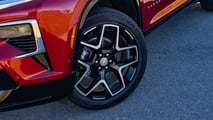
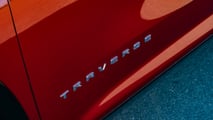
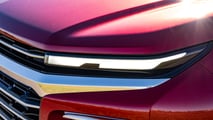
2025 Chevrolet Traverse Review
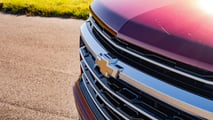
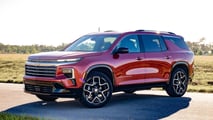
Going hybrid won't solve every problem, and these large SUVs are unlikely to become fuel-sipping champions overnight. Still, pairing a gasoline engine with an electric motor should cut fuel consumption, especially in urban driving, while preserving the long-distance usability that makes three-row SUVs so popular in the United States.
GM isn't abandoning electric vehicles, but it's becoming increasingly clear that an all-electric future won't arrive at the same pace for every customer. Sometimes, the most sensible way to make a big, heavy SUV more efficient is to add a battery rather than insist everyone go fully electric.
More About GM's Big SUVs:
RECOMMENDED FOR YOU
Chevy Wants The Next Corvette To Stay Affordable, Even With More Power
The New Tesla Roadster Has A Slick Retro-Futuristic User Interface
Only One Of These Crossovers Passed The IIHS’s Updated Crash Test
How A Tiny Ohio Town Became The Tire Capital Of The World
Wrangler Driver Pulls Up Next To Silverado. Then The 71-Year-Old Grandma Behind The Wheel Makes An Expensive Mistake
The Honda Passport Is Going Baja Racing
12 Cars With Names That Make Absolutely No Sense