Home
Mercedes-Benz
CLA-Class
News
Mercedes T Bones Two CLA Models In A Brutal Safety Test
Engineers ram a hybrid CLA Shooting Brake into an electric CLA at 35 mph to watch occupant injuries and the high-voltage battery response.
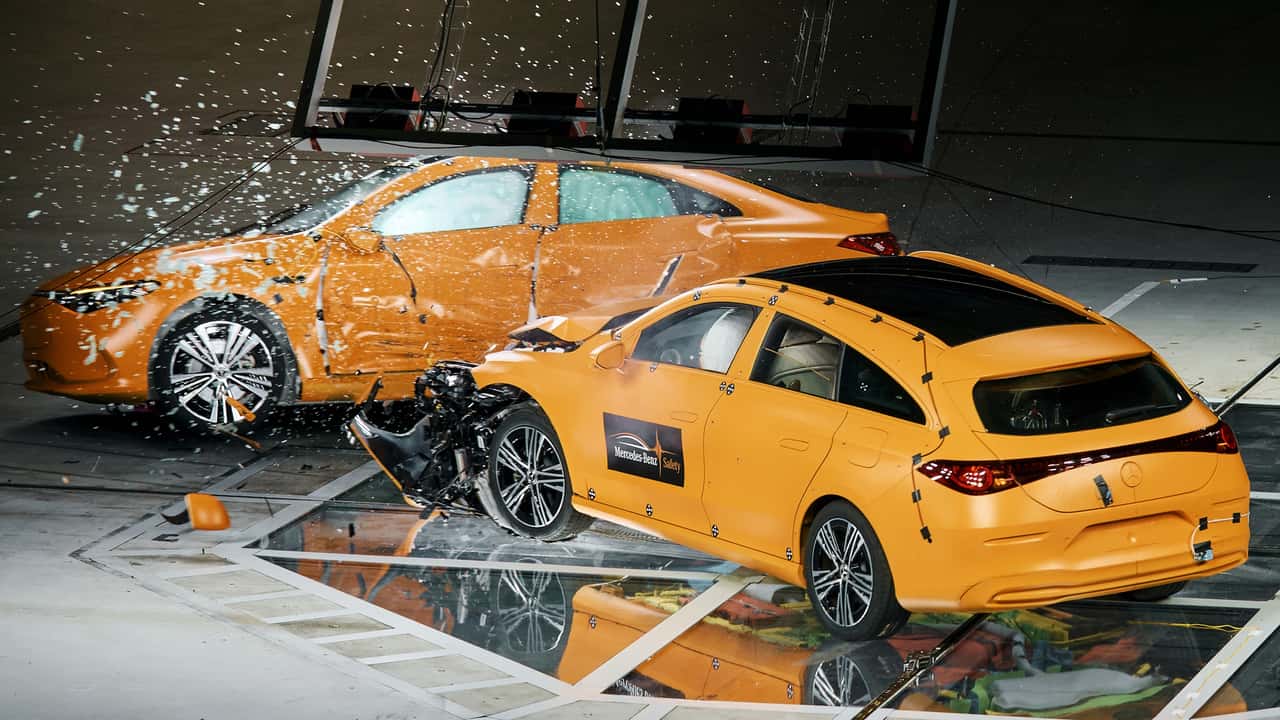
Photo by: Mercedes-Benz
Brian Potter 
By: Brian Potter
Oct 21, at 2:20am ET
Add Motor1.com as a preferred source in Google
- (https://twitter.com/intent/tweet?url=https%3A%2F%2Fwww.motor1.com%2Fnews%2F812673%2Fmercedes-benz-cla-crash-test%2F&text=Mercedes%20T%20Bones%20Two%20CLA%20Models%20In%20A%20Brutal%20Safety%20Test&via=motor1com)
- copy
Share
Comment
Mercedes-Benz drove two CLA models into each other on purpose at 56 km/h (35 mph) with nobody touching the brakes. The automaker calls it the world's first public high-speed side-impact test between two moving production vehicles.
A hybrid CLA Shooting Brake struck the driver's side of a fully electric CLA, recreating a T-bone collision at an intersection. Each car weighed around two tonnes. Eight crash-test dummies rode inside to measure what the impact did to the people.
Crash Test Results At 35 mph

Mercedes-Benz CLA High-Speed Crash Test
Photo by: Mercedes-Benz
The setup mirrored a real intersection crash with one car running perpendicular into the side of another, both moving, neither braking. The impact speed was 56 km/h, or about 35 mph. Mercedes-Benz describes that as the upper end of typical intersection crashes.
Mercedes-Benz says the passenger compartments of both CLA models stayed intact after the hit. That is the basic goal in any side-impact crash test, a cabin that holds its shape instead of folding in on the people inside.
"Mercedes-Benz's ambition is to build the safest vehicles in the world," said Jörg Burzer, the company's chief technology officer for development and purchasing. He called the test "a powerful demonstration of that ambition" and presented it as proof the automaker designs for how crashes actually happen.
Paul Dick, Mercedes-Benz's director of vehicle safety, linked the test to the brand's long-running habit of feeding real crash lessons back into new designs. He calls that approach "Real-Life Safety" and says the two-CLA demo shows it working in practice. The company has reconstructed roughly 6,000 real-world accidents since 1969 for exactly this kind of development work.
Eight Dummies And The Electric CLA Battery
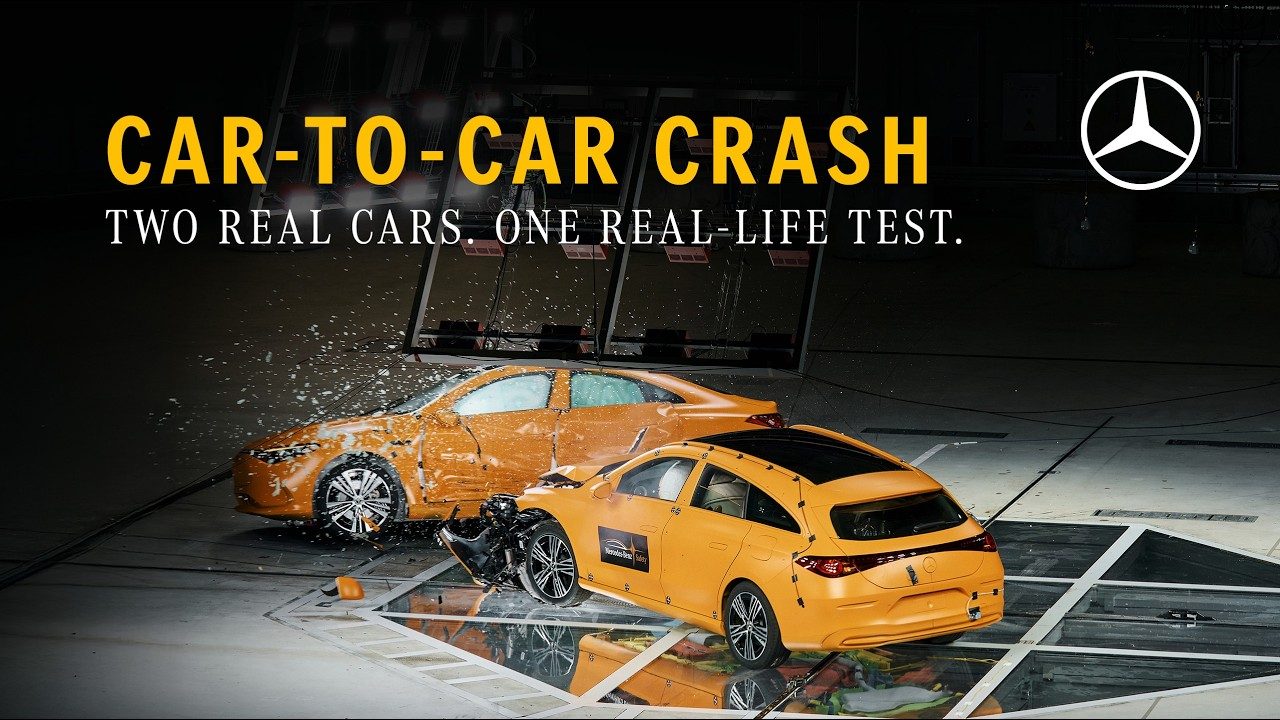
The eight dummies represented four adults and four children, seated to capture how the impact loads differ by size and position. Every reading came back below the biomechanical limits Mercedes-Benz uses to judge occupant protection.
That is the headline result behind the electric CLA's structure. The battery was the real question mark going in, since a side impact aims straight at the pack sitting under the floor. Mercedes-Benz reported the high-voltage battery stayed intact with no breach of its cells.
What do you think?
View
Comments
The electric CLA's high-voltage system also disconnected automatically on impact, a safeguard meant to cut electrical risk for occupants and first responders the moment a crash happens. Combined with an undamaged pack, that's the result an automaker needs before it can call a T-bone survivable.
This single test sits inside a much larger program. Mercedes-Benz runs around 150 physical crash tests and roughly 15,000 crash simulations for every new model, well past what regulators require. Regulatory and consumer programs usually fire a moving barrier into a stationary car. This public demo used two moving vehicles to showcase that wider, mostly hidden validation effort.
Watch More Crash Tests:
Two Popular SUVs Just Nabbed IIHS Top Safety Pick+: One Has A Catch
GMC Canyon Flunks IIHS Tests, Earns No Top Safety Pick Awards
Cadillac CT5’s Shocking IIHS Failure: Driver’s Head Hit Sill
Watch A New Chevy Blazer Obliterate A 1996 Model In A Crash Test
Source: Mercedes-Benz
We want your opinion!
What would you like to see on Motor1.com?
Take our 3 minute survey.
- The Motor1.com Team
Share this Story
- (https://twitter.com/intent/tweet?url=https%3A%2F%2Fwww.motor1.com%2Fnews%2F812673%2Fmercedes-benz-cla-crash-test%2F&text=Mercedes%20T%20Bones%20Two%20CLA%20Models%20In%20A%20Brutal%20Safety%20Test&via=motor1com)
- copy
GO TO COMMENTS
(
)
Got a tip for us? Email: tips@motor1.com
View all comments ( )
Popular
12 Cars With Names That Make Absolutely No Sense
BMW Kept This Hatchback A Secret For Decades
Bugatti Restores One-Off Veyron With A Mirror-Like Aluminum Body
The Gas BMW M3 Isn't Dead: Next-Gen Prototype Roars
latest articles
- Mercedes T Bones Two CLA Models In A Brutal Safety Test Oct 21 - Safety -
- Driver Goes Through Car Wash With Full Truck Bed—Then He Learns The Hard Way Why You Shouldn't Do That Oct 20 - Trending -
- Every Rolls-Royce Has A Hidden Feature Most People Don't Know About Oct 20 - Motor101 -
- Subaru Built A 510-HP Electric Wagon Without Toyota's Help Oct 20 - Official -
- The Strange Reason The Golf GTI Had A Golf Ball Shifter Oct 20 - Motor101 -
- Photos: Porsche's Mission S Concept Takes Over New York City Oct 20 - Design -
- The 2027 Honda Passport TrailSport Looks Noticeably Taller Next To Last Year's Model Oct 20 - Off-Road -
RECOMMENDED FOR YOU
Mercedes Isn't Sold On Extended-Range EVs: 'Would You Really Switch?'
Driver Goes Through Car Wash With Full Truck Bed—Then He Learns The Hard Way Why You Shouldn't Do That
Mercedes Says Coupe SUVs Are Here To Stay: 'There's A Fan Base'
Every Rolls-Royce Has A Hidden Feature Most People Don't Know About
Mercedes Admits It Underestimated The V8 Crowd, Teases A V12 Surprise
Subaru Built A 510-HP Electric Wagon Without Toyota's Help
Mercedes-AMG GT SUV Revealed: Up To 1,153 HP And Three Electric Motors