Home
News
Green
Bosch Warns Expensive EV Battery Repairs Could Shorten A Car's Life
The giant automotive supplier believes battery repairs and replacements must become more affordable.
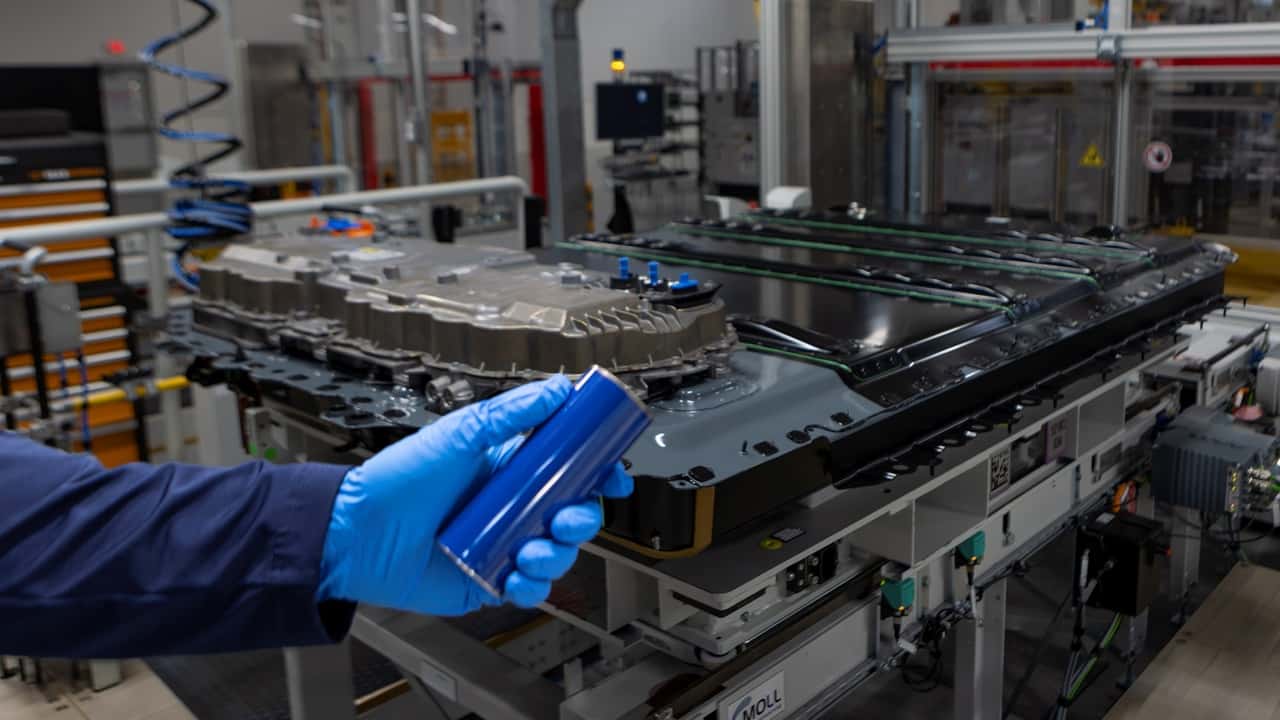
Photo by: BMW
Adrian Padeanu 
By: Adrian Padeanu
Sep 25, at 4:24am ET
Add Motor1.com as a preferred source in Google
- (https://twitter.com/intent/tweet?url=https%3A%2F%2Fwww.motor1.com%2Fnews%2F809542%2Fbosche-warns-cars-more-disposable-expensive-ev-batteries%2F&text=Bosch%20Warns%20Expensive%20EV%20Battery%20Repairs%20Could%20Shorten%20A%20Car%27s%20Life&via=motor1com)
- copy
Share
Comment
- Bosch argues that cars need to remain repairable throughout their entire lifecycles.
- Not every battery problem requires replacing the entire pack; individual module repairs could make EVs cheaper to maintain.
- The auto supplier believes the aftermarket will play an increasingly important role as EVs get older.
Cars are getting more expensive, more complicated, and increasingly dependent on high-voltage electronics. That combination could create a problem nobody really wants to talk about: shorter vehicle lifespans. Bosch Mobility Aftermarket chief Rupert Hoellbacher has warned that keeping cars on the road for a long time will depend on making repairs economically viable, particularly as the industry shifts toward electric vehicles.
His comments to Automobilwoche come as the aftermarket prepares for a very different type of repair business. The basic idea is pretty simple. A car can technically last for decades, but that doesn't mean it will make economic sense to repair it for decades. Once a major component costs more to replace than the vehicle is worth, owners are far more likely to send the car to the scrapyard rather than pay for the repair.
And that's where EV batteries become particularly important. A battery is the most expensive component in an electric car. While battery failures don't automatically mean the entire pack needs replacing, the economics can still get ugly when a vehicle is older and out of warranty. Bosch itself points out that many battery problems can be addressed by repairing individual modules rather than replacing the entire pack.

The aftermarket therefore plays a big role. If independent workshops can diagnose, repair, and replace individual battery components at reasonable prices, an EV could remain useful long after its original warranty expires. That matters because an expensive battery shouldn't automatically turn an otherwise perfectly usable car into a very large paperweight.
'If we fail to make battery repair or replacement more financially attractive, the answer is quite clearly: Yes. The life expectancy of cars will decline. This would not only represent a loss of aftermarket potential but also a significant step backward for sustainable business practices, because many vehicle components are designed for a significantly longer service life. Recycling and repair are therefore central tasks for the entire industry.'
Keeping Cars Alive Should Be The Goal
This approach offers an obvious environmental benefit, but it also has a more basic financial argument: keep fixing the car you already have. That becomes increasingly relevant as new-car prices keep climbing and the technology inside vehicles gets more expensive.
A car doesn't suddenly become useless because it has hundreds of thousands of kilometers on the clock. But if a battery or another major component costs an absurd amount to replace, the economic lifespan can end long before the mechanical one. The bigger point is that electrification shouldn't mean disposable cars.
This also ties into a broader problem I've raised before: automakers need to focus more on making cars durable and reliable instead of continually piling on technology and complexity. New features might help sell a car today, but what determines how long it can realistically stay on the road is making sure that car remains affordable to repair years down the road.
Europe's first battery recycling factory
28






Source: Mercedes-Benz
Motor1's Take: We've spent decades getting pretty good at keeping combustion-powered cars alive. Engines can be rebuilt, transmissions repaired, alternators replaced, and a huge aftermarket exists to keep older vehicles running. The EV era will need the same philosophy, just with different components.
What do you think?
View
Comments
And if battery repairs remain prohibitively expensive, the industry could end up with an unfortunate paradox: cars that are technically capable of lasting a very long time but aren't economically worth keeping alive.
Even if fewer things can go wrong in an EV than in a gas car, there's still a big problem if a battery issue has no economical fix.
More About EVs:
How Long Do EV Batteries Actually Last?
Why EVs Lose So Much Range In Cold Weather
Source: Automobilwoche
We want your opinion!
What would you like to see on Motor1.com?
Take our 3 minute survey.
- The Motor1.com Team
Share this Story
- (https://twitter.com/intent/tweet?url=https%3A%2F%2Fwww.motor1.com%2Fnews%2F809542%2Fbosche-warns-cars-more-disposable-expensive-ev-batteries%2F&text=Bosch%20Warns%20Expensive%20EV%20Battery%20Repairs%20Could%20Shorten%20A%20Car%27s%20Life&via=motor1com)
- copy
GO TO COMMENTS
(
)
Got a tip for us? Email: tips@motor1.com
View all comments ( )
Popular
12 Cars With Names That Make Absolutely No Sense
BMW Kept This Hatchback A Secret For Decades
Bugatti Restores One-Off Veyron With A Mirror-Like Aluminum Body
The Gas BMW M3 Isn't Dead: Next-Gen Prototype Roars
latest articles
- Subaru Built A 510-HP Electric Wagon Without Toyota's Help Oct 20 - Official -
- The Strange Reason The Golf GTI Had A Golf Ball Shifter Oct 20 - Motor101 -
- Photos: Porsche's Mission S Concept Takes Over New York City Oct 20 - Design -
- The 2027 Honda Passport TrailSport Looks Noticeably Taller Next To Last Year's Model Oct 20 - Off-Road -
- 12 Cars With Names That Make Absolutely No Sense Oct 20 - Lists -
- The Ford Ranger Is Getting A Bigger V6 For 2027: Report Oct 20 - Rumors -
- BMW Already Has A Deal On The New i3. But It's Not Cheap Oct 20 - Pricing -
RECOMMENDED FOR YOU
Mercedes-AMG GT SUV Revealed: Up To 1,153 HP And Three Electric Motors
The Strange Reason The Golf GTI Had A Golf Ball Shifter
Renault Has About 1,000 Orders For Its $180,000 Electric Hot Hatch
Photos: Porsche's Mission S Concept Takes Over New York City
The Next Volkswagen ID. Buzz Will Fix Its Biggest Problem: The Price
The 2027 Honda Passport TrailSport Looks Noticeably Taller Next To Last Year's Model
Volkswagen ID.4 Is Dead: Meet Its New Electric SUV Replacement