Home
Tesla
News
NHTSA Opens Audit Into Tesla Cybercab Hours After Austin Ride Launch
NHTSA is auditing how Tesla self-certified the steering-wheel-free Cybercab under existing US safety standards for automated robotaxis.
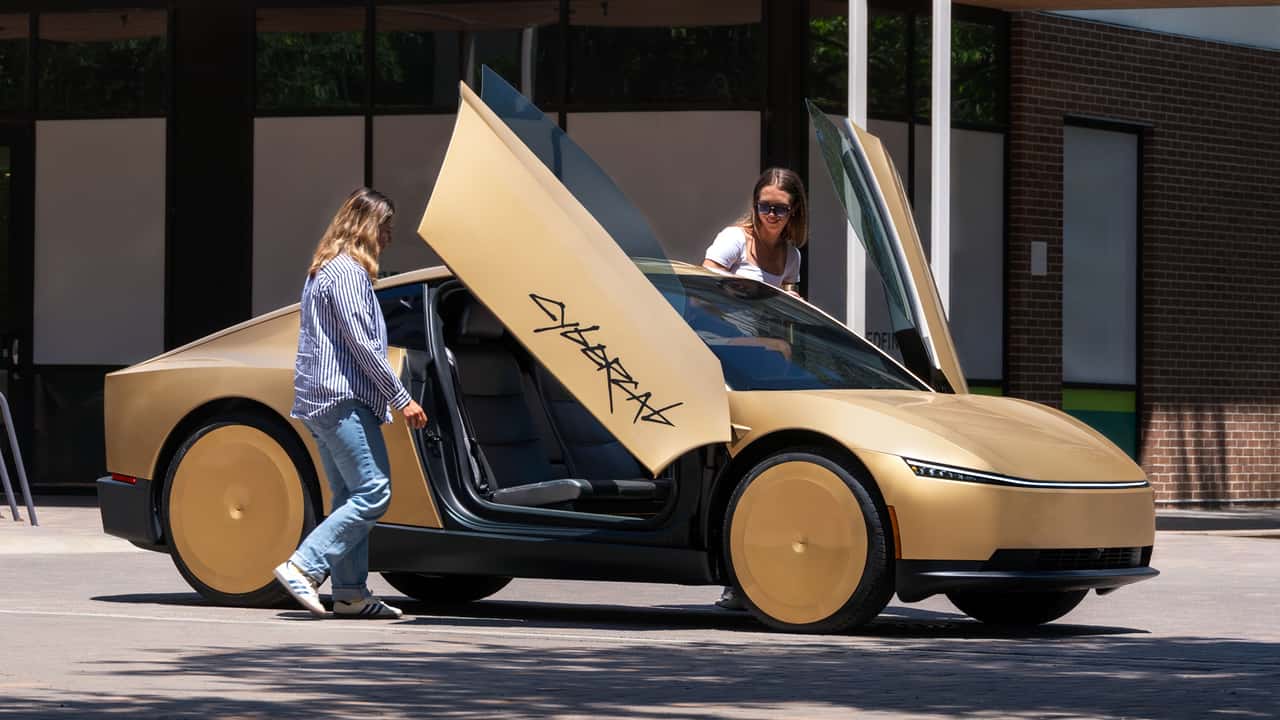
Photo by: Tesla
Brian Potter 
By: Brian Potter
Sep 7, at 6:21am ET
Add Motor1.com as a preferred source in Google
- (https://twitter.com/intent/tweet?url=https%3A%2F%2Fwww.motor1.com%2Fnews%2F807353%2Ftesla-cybercab-under-nhtsa-probe%2F&text=NHTSA%20Opens%20Audit%20Into%20Tesla%20Cybercab%20Hours%20After%20Austin%20Ride%20Launch&via=motor1com)
- copy
Share
Comment
- NHTSA opened Audit Query AQ26002 on September 3, 2026 targeting about 1,000 Cybercabs in Austin.
- The audit will check if Tesla bypassed federal safety rules when certifying the steering-wheel-free Cybercab.
- NHTSA is separately probing Full Self-Driving software across roughly 3.2 million Tesla vehicles.
Tesla began charging fares for Cybercab rides in Austin on September 3, 2026. Federal safety regulators responded the same day.
The National Highway Traffic Safety Administration opened Audit Query AQ26002 covering about 1,000 Cybercabs. The focus is how the two-seat robotaxi, built with no steering wheel, pedals, or mirrors, was certified under crash rules designed for traditional cars.
What NHTSA Is Actually Auditing
The audit does not test how well the Cybercab drives itself. Regulators want to know whether Tesla used the proper process when it declared the car legal.
In a September 4 statement, NHTSA said it will review how much Tesla's certification "depended on determinations that certain FMVSS are inapplicable to the Cybercab." Federal Motor Vehicle Safety Standards cover items like steering columns, mirrors, and brake pedals. Tesla told the agency it considers the Cybercab compliant with every standard that applies to a car lacking those parts.
The same self-driving software and compact two-seat layout also underpin the brand's other models. Separately, NHTSA has upgraded its probes into Tesla's Full Self-Driving system that now covers about 3.2 million vehicles, including unsupervised robotaxi services in Texas and Florida.
Gallery: Tesla Cybercab seen live

25


Source: Motor1.com
Self-Certification Meets a Car With No Wheel
Under US rules in 49 CFR Part 571, automakers certify their own compliance with safety standards. They build the vehicle, decide it meets Federal Motor Vehicle Safety Standards, then sell it without advance NHTSA approval.
NHTSA audits that paperwork after the fact and can open defect investigations if it sees problems. That system let Tesla start the Austin robotaxi rollout without waiting for signoff from Washington.
The agency has stressed that existing standards still apply in full to automated vehicles until it writes new rules. There is no separate rulebook for driverless cars yet. Tesla chose to rely on self-certification instead of seeking a formal exemption, which some rivals have used for unconventional designs.
The decision arrives soon after a robotaxi bollard crash in Austin drew attention to the new service. Amazon's Zoox followed a different path, first self-certifying its steering-wheel-free shuttle, then securing a temporary safety standard exemption that limits it to 2,500 exempt vehicles per year through July 31, 2028.
Tesla has said it wants to expand Cybercab service to more vehicles and more cities. How fast that happens now depends in part on how NHTSA reads the company's certification file and how it applies lessons from the Zoox case.
What do you think?
View
Comments
Motor1's Take: The audit could slow Cybercab expansion while regulators decide whether self-certification covers a car with no steering wheel. The key question is whether a paperwork strategy can carry a wheel-free design under rules written for human-driven cars.
NHTSA could demand exemptions, order recalls, or pursue enforcement. Every automaker planning driverless fleets will be watching this one closely.
More From Tesla:
Tesla Got Its Model Y L Range Wrong, EPA Gives It More Miles
Tesla's Grok AI Now Does 116 Voice Commands, But Many Owners Are Locked Out
Tesla Hikes Cybertruck Prices Up To 7 Percent
Why Tesla's Design Chief Preserved His Model S Plaid #001
Source: NHTSA
We want your opinion!
What would you like to see on Motor1.com?
Take our 3 minute survey.
- The Motor1.com Team
Share this Story
- (https://twitter.com/intent/tweet?url=https%3A%2F%2Fwww.motor1.com%2Fnews%2F807353%2Ftesla-cybercab-under-nhtsa-probe%2F&text=NHTSA%20Opens%20Audit%20Into%20Tesla%20Cybercab%20Hours%20After%20Austin%20Ride%20Launch&via=motor1com)
- copy
GO TO COMMENTS
(
)
Got a tip for us? Email: tips@motor1.com
View all comments ( )
Popular
The Rotary Engine Should Be Everywhere. Why Isn't It?
Honda's Mitsubishi-Based Truck Is Official, Coming In 2028
Mercedes-AMG Is Developing A New C63, And There Could Be Two Models
Volkswagen Wanted An Electric Bugatti Tourbillon, But Mate Rimac Pushed For A V16 Engine
Ferrari's Luce EV Costs Way More Than Its V12 Purosangue SUV
latest articles
- For Around $40,000, You Can Buy BMW's Sports Car Of The Future Oct 22 - Why Buy? -
- The Mercedes-AMG GLE53 Makes The 63 S Feel Unnecessary: Driven Oct 22 - First Drives -
- Ford's Electric Mustang Gets Cheaper And More Rugged For 2027 Oct 22 - Pricing -
- Honda Is Finally Bringing Race-Inspired Parts To Its Road Cars Oct 22 - Aftermarket / Tuning -
- Woman Takes Toyota To Shop Because It’s Making Weird Noises. Then The Tech Sends Her A Video: ‘I’ve Never Been So Embarrassed' Oct 22 - Trending -
- Toyota Land Cruiser Recall Covers 105,000 SUVs Over Fuel-Leak Fire Risk Oct 22 - Recalls -
- Turning Off Your Car's A/C Can Save Gas, But There's A Catch Oct 22 - Motor101 -
RECOMMENDED FOR YOU
Tesla Will Sell Cybercabs By The End Of 2026
For Around $40,000, You Can Buy BMW's Sports Car Of The Future
The Tesla Roadster Reinvents Pop-Up Headlights. Sort Of
The Mercedes-AMG GLE53 Makes The 63 S Feel Unnecessary: Driven
All Aboard The Hype Train: Tesla Says The New Roadster Could Hit 330 MPH
Ford's Electric Mustang Gets Cheaper And More Rugged For 2027
Tesla Roadster Will Be 'Sentient' And Perform Stunts Autonomously, Musk Says