China’s Car Market Slumps At Home As Exports Jump
Shrinking demand in China and a surge of low-cost EV exports are forcing Toyota, Volkswagen and Detroit brands to rethink future lineups worldwide.
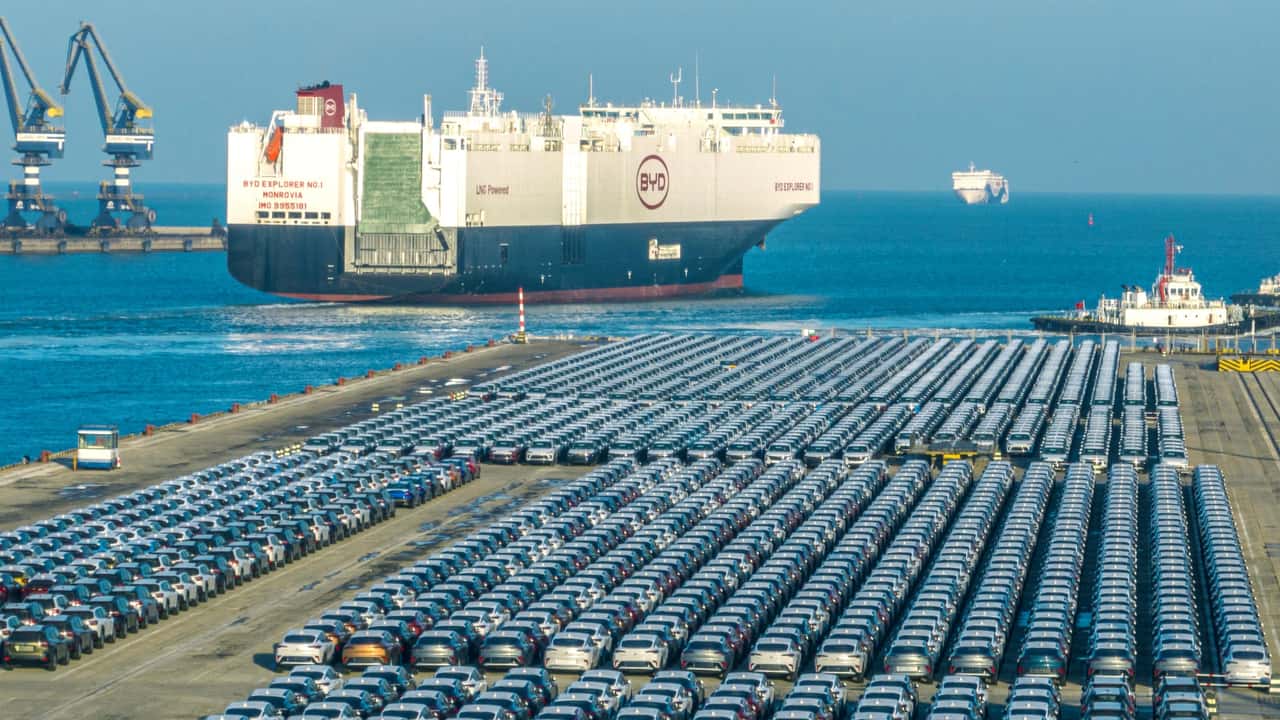

THE BREAKDOWN
- July 2026 domestic passenger sales fell roughly 20% year-on-year to about 1.47 million units.
- July 2026 car exports rose nearly 90% year-on-year to close to 1 million vehicles.
- Legacy foreign automakers are losing China share to low-cost Chinese EV exports, forcing model cuts and global lineup rethinks.
China’s car market just logged its 10th straight monthly drop, with July passenger sales down about one-fifth year-on-year even as exports nearly doubled. That split picture of quiet showrooms at home and packed export terminals is now a live stress test for legacy brands that long treated China as their profit engine.
Chinese makers are leaning on overseas buyers to keep factories busy, from small EVs to electric heavy trucks, while global names juggle shrinking share in China and rising Chinese competition in Europe and beyond. As Automotive News highlights, if you watch Toyota, Volkswagen or Detroit iron, the squeeze in China now shapes which models survive, which get cut and where future EV money gets spent.
China’s Slump At Home, Surge Abroad
July 2026 data from the China Passenger Car Association show domestic passenger sales down roughly 20 percent year-on-year at about 1.47 million units, the 10th monthly decline in a row, while car exports climbed nearly 90 percent to close to 1 million vehicles. Broader industrial numbers tell the same story of weak local demand but steady output for foreign buyers.
Electric vehicles are doing much of the work. In the first half of 2026, overall car sales in China slipped versus 2025, yet Chinese companies shipped about 2.4 million electric vehicles overseas, almost matching their full-year 2025 total, so Chinese automakers are increasingly treating the world as their real growth market.
Geely shows how this export pivot looks in practice. The company’s first-half 2026 exports hit about 474,000 vehicles, up more than 150 percent year-on-year and already above its 2025 total, and it has lifted its full-year target to around 920,000 units, helped by state support that European officials argue is warping trade and margins.

Geely Jisu Glory cargo ship with cars being loaded
Where The Pressure Lands On Legacy Brands
The squeeze on legacy automakers is two-sided. In China, German brands such as Mercedes, Volkswagen and BMW are losing share in a bruising EV price war as the overall market shrinks. Several Western carmakers now face the same problem GM ran into before its decision to wind down Chevrolet in China: heavy investment, falling volumes and local rivals that can undercut on price.
Those exports are landing in markets that used to be comfortable ground for legacy players. Chinese EVs are already reshaping Europe’s sales charts, and brands that depend on global volume to fund future lineups now have to budget for thinner margins or lost share. That strain shows up in reports that the auto industry is growing but still losing money on many EVs, while exporters such as Geely lean on overseas profits instead of home-market strength.
Motor1's Take: This massive industry shift forces older car companies to make tough choices about which models, factories, and technologies to save and which to drop. This speeds up industry consolidation and drives more money into global electric vehicle platforms.
More On China:
Source: Automotive News
RECOMMENDED FOR YOU
Not Dead Yet: Audi Might Save Its Five-Cylinder Engine After All
I Bought My Dream Mercedes SL For $8,000. Here's What It Really Cost Me
Dealer Says Polestar Engineered US Sales Ban In $25-Million Lawsuit
California Approved New Efficiency Rules For Replacement Tires. Here's What It Means
Prius Architect Hiroshi Okuda Dies At 93, Reshaped Toyota
2027 Genesis GV90 Debuts As A Flagship SUV With Coach Doors
Ford To End China-Built Lincolns For US By 2030