This Spanish Hypercar Puts The Driver Ahead Of The Software
The Hispano Suiza Carmen Sagrera uses sophisticated electronics to turn thousands of data points into a more intuitive driving experience.
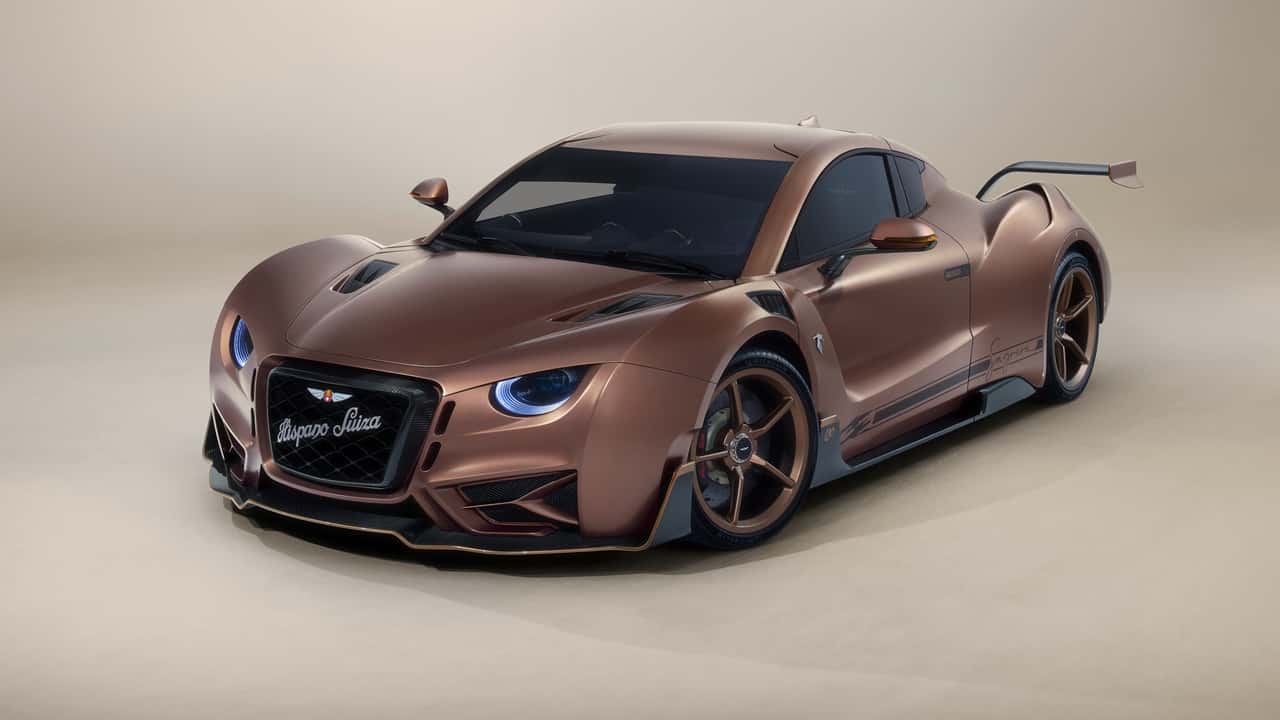

THE BREAKDOWN
- New software unlocks smarter performance and deeper vehicle customization.
- Updated electronics deliver more precise power and battery management.
- Real-time telemetry gives drivers greater insight on and off the track.
At a time when many cars are adding ever-larger screens, more digital features, and systems that play an increasingly prominent role in the driving experience, Hispano Suiza is taking a different path: developing technology that works in the background, leaving the person behind the wheel at center stage.
That philosophy takes shape in the Hispano Suiza Carmen Sagrera, the third electric hypercar in the Carmen family, unveiled to mark the Spanish automaker’s 120th anniversary. The model produces 1,115 horsepower, delivers a maximum of 856 pound-feet of torque, and accelerates from 0 to 62 mph in 2.6 seconds.
Behind those supercar-level numbers, however, is a distinctive approach: the electronics are not designed to replace the driver, but to support them. The goal is to create a more direct relationship between person and machine, with the systems stepping in only when necessary and without making the car’s responses feel artificial.
Managing Power Without Sacrificing Control
At the core of the Carmen Sagrera’s technology is Hispano Suiza Driver Dynamics (HSDD), the brand’s proprietary system that coordinates every aspect of the car’s dynamic behavior. The software controls traction, torque distribution, stability, regenerative braking, and drive modes, analyzing the car’s condition and the surrounding environment in real time.
Among the integrated functions are the Grip Enhancement System traction control, the Active Yaw Modulation system for stability management, and the Electronic Torque Stabiliser, which can apply independent negative torque to the rear wheels to improve the car’s balance while also contributing to energy efficiency.
The electronic management takes into account numerous parameters: steering position and steering speed, accelerator pedal pressure, wheel speed, brake pressure, chassis movements, acceleration along all three axes, temperature, battery state of charge, and the electric system’s current and voltage.
The result is not a driving experience filtered by electronic controls, but a more predictable and natural response. The system’s calibration was developed through simulations and track and road testing, with input from a development driver and former Formula 1 driver Luis Pérez-Sala, with the aim of preserving a high degree of freedom for the driver.
More Than 100 Sensors
The Carmen Sagrera uses an electronic architecture capable of collecting information from more than 100 sensors distributed throughout the vehicle. All of that data is processed by the dynamic management software to continuously adapt the hypercar’s behavior.

Hispano Suiza Carmen Sagrera
The system can process more than 200 million instructions per second and converts signals from the chassis and powertrain into information related to pressure, temperature, position, speed, acceleration, power, and torque.
This large volume of data allows the car to anticipate what is needed in the moment, progressively adjusting the response of the electric motors, traction, and energy management before the driver even notices potentially critical situations.
The Spanish automaker describes its philosophy as “Invisible Technology”: technology that does not seek attention for itself, but instead aims to intensify the relationship between car and driver. In an electric vehicle with more than 1,100 hp, the engineers’ job was to strike a balance among performance, safety, and engagement. The result? A car in which the electronics work behind the scenes to make every mile more engaging.
Motor1's Take: Modern hypercars evolve through software as much as hardware. Rather than chasing more horsepower, Hispano Suiza focused on refining the driving experience with a smarter electronic architecture and more advanced vehicle controls. The improvements should make the Carmen Sagrera feel more responsive, more customizable, and easier to exploit at the limit. It's a reminder that in the EV era, code can be just as important as carbon fiber.
More Supercars:
RECOMMENDED FOR YOU
Hennessey Revives The Analog Supercar
Car Buyers Don’t Want More Tech. They Just Want Heated Seats
Ferrari Is Sold Out Through 2027
Is A Hotter Toyota GR GT Already In The Works? Here's Everything We Know
Rezvani's New Off-Road Supercar Makes The Huracan Sterrato Look Tame
Ram's Rumble Bee SRT Can Make Over 900 HP With New Supercharger Kit
This New Italian Supercar Turns A Porsche 911 Into An 800-HP Custom Machine