'Walmart... They Let Me Watch': Man Goes To Jiffy Lube For An Oil Change. Then He Checks The Dealership
'I do my own.'
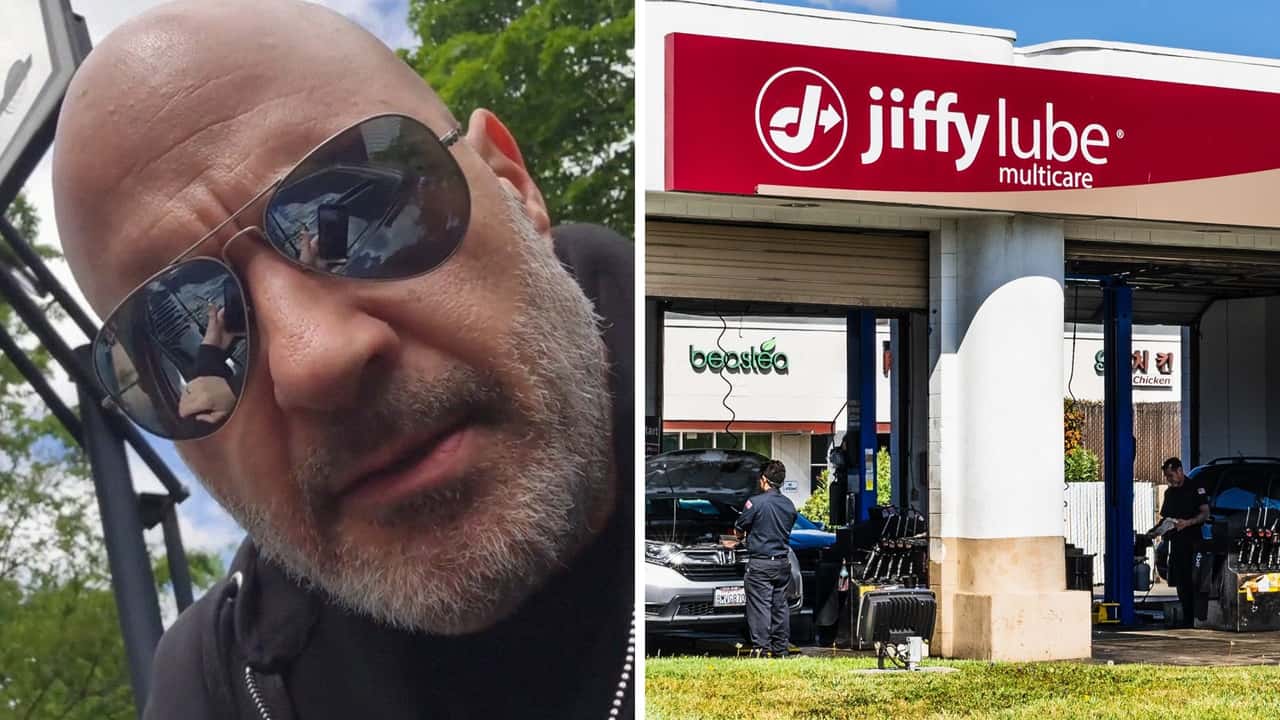

It can be hard to know where to go for your car’s regular maintenance. Is it worth it to go back to the dealership, hit up a local shop, or go to a quick lube place that does this day in and day out?
And one man has sparked a debate on which place is worth your time and money and will hopefully preserve your car’s longevity.
In a video posted by content creator Gary Macchione (@gary.macchione), he posed the question: dealer or Jiffy Lube?
In the video, Macchione shares that he's getting an oil change along with a full inspection but wonders where his followers take their cars when the time for maintenance comes.
"You guys go to a dealer, or you go to one of those Jiffy [Lubes]?" he asks.
Dealership VS. Quick Lube Spots: What's The Difference?
You may be surprised to find that the biggest difference between the two isn't always price.
According to ABC Advanced Automotive Service, dealerships use OEM-certified oil and filters matched to your specific vehicle's manufacturer specifications, while quick lube shops typically stock a limited range of oil weights and aftermarket filters.
For many everyday drivers with older vehicles out of warranty, that distinction probably doesn't matter much. But for newer cars, luxury vehicles, or anything with a turbocharged engine that calls for a specific synthetic blend, getting the wrong viscosity repeatedly can add up to real wear over time.
Cost-wise, the gap is real but not always as wide as people assume.
Quick lube shops typically run $30 to $75, depending on oil type, while dealerships tend to land between $60 and $150.
The dealership is more expensive, but it usually comes with a multi-point inspection that can catch other issues early.
According to the Center for Performance Improvement, roughly 65% of routine maintenance is done outside of dealerships, with Jiffy Lube accounting for about 15% of that. Their take is firmly pro-dealership, but even accounting for that bias, the technician training gap is worth knowing about. Quick lube staff turnover is high, and formal automotive certification isn't always required, whereas dealership lube techs generally have some level of brand-specific training.
Dealership VS. Jiffy Lube Debate: ‘Walmart. … They Let Me Watch’
In the comments section, responses ranged from viewers saying they do it themselves, go to a locally owned shop, go to a dealer, or go to a company other than Jiffy Lube.
“I change my own oil,” a top comment read.
“I go to the dealer to make sure that my warranty stays in place,” a person shared.
“Always the dealer when they mess it up its on them to fix it,” another wrote.
"Dealership every time, ive seen way [too] many horror stories with quick lube places,” a commenter added.
Motor1 reached out to Gary Macchione for comment via email and Instagram direct message and to Jiffy Lube via email. We'll be sure to update this if either responds.
RECOMMENDED FOR YOU

'Had To Pull Some Favors': Woman With No Credit Makes Offer On A $50,000 Chevrolet Silverado. Then She Gets A Response
Toyota's Fake Manual For EVs Might Be Too Real
Driver Takes Toyota Tundra To Mechanic Because Of Check Engine Light. Then The Mechanic Realizes He Shouldn’t Have: ‘Free Money’
California Wants To Regulate Fun Tires (Update)
'It’s In Stereo': Woman Gets On Route 66. Then She Starts Hearing Music Coming From Her Tires
Ford Defends Killing Sedans: It 'Absolutely' Was The Right Decision
Mechanic Quotes Porsche Owner $5,000 For Headlight Restoration. Then He Gets A Second Opinion: ‘Quick $200 Fix’