Home
News
Europe And China Are Finally Pushing Back Against Screen Overload
New rules are being put in place to curb over-reliance on screens and reintroduce tactile controls.
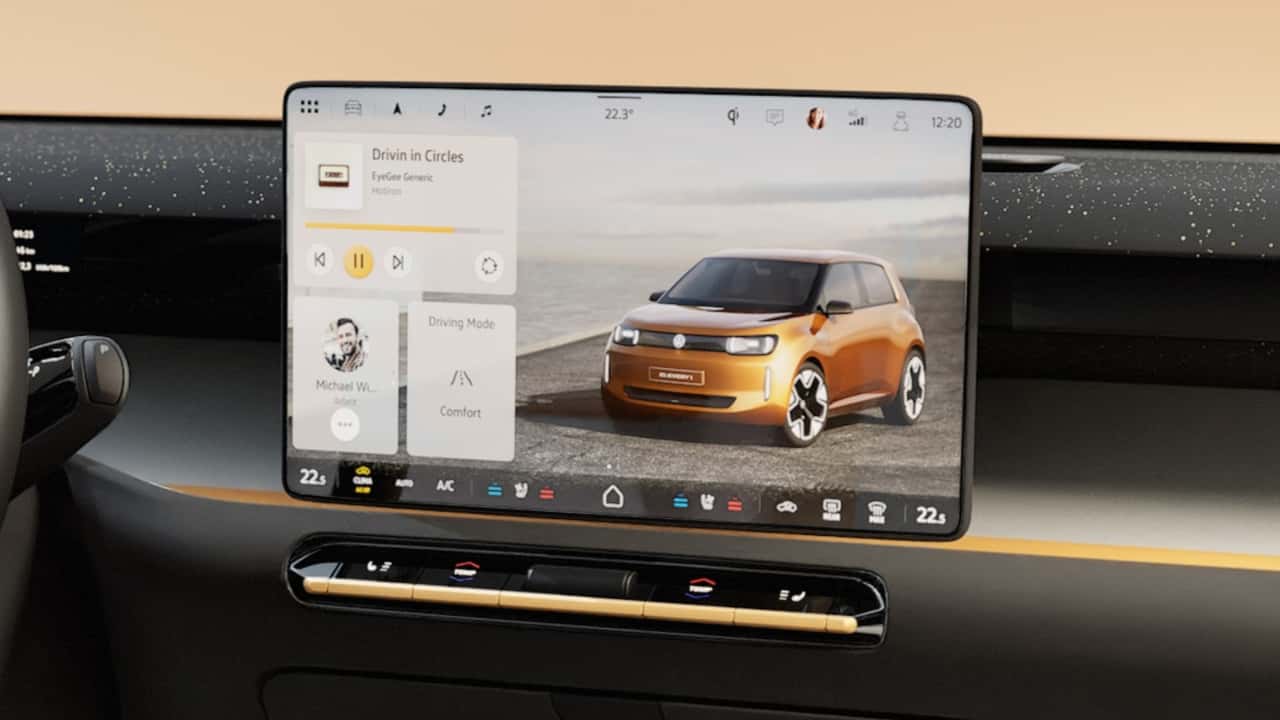
Photo by: Volkswagen

By: Francesco Stazi
Translated by: Jeff Perez
Feb 17, at 3:30pm ET
Add Motor1.com as a preferred source in Google
- (https://twitter.com/intent/tweet?url=https%3A%2F%2Fwww.motor1.com%2Fnews%2F787558%2Feurope-china-no-more-touchscreens-in-cars-buttons%2F&text=Europe%20And%20China%20Are%20Finally%20Pushing%20Back%20Against%20Screen%20Overload&via=motor1com)
- copy
Share
Comment
the breakdown
- Europe’s Euro NCAP and China’s Ministry of Industry and Information Technology are pushing for the return of physical buttons in cars.
- New safety guidelines require essential functions—like turn signals, hazard lights, and emergency calls—to have tactile controls.
- Major brands are reintroducing or reconsidering physical controls.
In the last few years, technology has essentially overtaken vehicle interiors, with massive touchscreens, minimalist interfaces, and fewer physical buttons than ever before. Automakers embraced these trends due to lower manufacturing costs and increasing customer demands—but it’s already starting to backfire.
More drivers are shying away from in-car touchscreens, while safety experts have raised concerns that this reliance on digital interfaces can distract drivers, particularly in situations where split-second reactions are crucial. Europe and China, two of the world’s largest and most influential auto markets, are leading the push to ensure that the digitalization of car cabins doesn’t compromise safety.
Europe Reintroduces Buttons

Volkswagen ID. Polo interior
Photo by: Volkswagen
In Europe, the debate over touch controls has resurfaced with updated Euro NCAP safety rating protocols, which took effect in January 2026. The independent organization—best known for crash tests and vehicle safety scores—now discourages cabins that rely exclusively on touchscreens.
To earn the coveted five-star rating, cars must have physical controls for key functions: turn signals, windshield wipers, hazard lights, the horn, and emergency calling. Vehicles that operate these functions solely through a touchscreen will lose points.
Euro NCAP guidelines aren’t legally binding, but their commercial impact is significant: a five-star rating is a major marketing asset, and few manufacturers can afford to forgo it.
Reducing Distractions Behind The Wheel
Tesla Model Y Standard Interior
Photo by: Tesla
The reasoning is straightforward: the more a driver has to dig through menus to perform basic functions, the longer their eyes are off the road. That increases the risk of accidents—especially in emergencies or when systems lag or freeze.
Europe’s approach is now mirrored by China, the world’s fastest-moving and most tech-driven auto market. The Ministry of Industry and Information Technology (MIIT) has proposed draft regulations requiring physical buttons for essential safety functions.
Under the draft—currently open for public consultation—turn signals, hazard lights, gear selection, and emergency calling must be operable via tactile controls with a minimum surface area of 10×10 millimeters. The goal is simple: keep critical functions easily accessible so drivers can act without taking their eyes off the road.
China, Of All Places
BYD Sealion 7 Interior
Photo by: BYD
This shift is particularly striking coming from China—the country that has most aggressively embraced screen-dominated interiors, following the Tesla model that many local brands copied. Now, priorities are swinging back toward usability and safety.
The new guidelines are already influencing automakers. Volkswagen admitted that relying too heavily on touchscreens was “a mistake” and is reintroducing physical buttons for key functions in new EVs. Mercedes-Benz maintains that traditional buttons are still the best solution for certain operations, while Hyundai is pursuing a hybrid approach, combining knobs and buttons for the most frequently used controls.
Even Tesla, long the poster child of all-touch interiors, is reportedly considering bringing back the traditional turn-signal stalk on some models.
China’s push isn’t limited to interiors. The government also plans tougher standards for Level 3 and Level 4 automated driving systems, requiring safety levels comparable to a human driver and the ability for vehicles to bring themselves to a stop if problems arise.
What do you think?
View
Comments
The result is a convergence between two major markets—Europe and China—on the same conclusion: digitizing the car cannot come at the expense of ergonomics and safety. After years of racing toward bigger screens, the industry seems ready to rediscover a simple but vital principle: for some functions, the physical button remains the most intuitive, immediate, and safest solution.
Motor1's Take: It's great to see buttons making their way back into the cabins of modern vehicles. Europe and China are leading the charge with aggressive new safety measures, and hopefully, the US follows suit.
Long Live Buttons
'If You Go Too Digital, You Lose The Connection:' Mini Won't Get Rid Of Buttons
Kia Refuses To Kill Buttons: 'There Are Certain Functions You Need'
We want your opinion!
What would you like to see on Motor1.com?
Take our 3 minute survey.
- The Motor1.com Team
Share this Story
- (https://twitter.com/intent/tweet?url=https%3A%2F%2Fwww.motor1.com%2Fnews%2F787558%2Feurope-china-no-more-touchscreens-in-cars-buttons%2F&text=Europe%20And%20China%20Are%20Finally%20Pushing%20Back%20Against%20Screen%20Overload&via=motor1com)
- copy
GO TO COMMENTS
(
)
Got a tip for us? Email: tips@motor1.com
View all comments ( )
Popular
12 Cars That Should Easily Make It To 250,000 Miles
Lamborghini's New 907-HP Spyder Has A Roof That Actually Improves Handling
The Volkswagen T-Roc R Is Officially Back, And It's More Than A Golf R On Stilts
BMW Reveals A Secret Extra-Long V12 7 Series That Never Happened
Watch A Chinese SUV Tow A Boeing 747 Using Only Two Wheels
Latest Stories
- This Abandoned Range Rover Sat For 5 Years. Then They Brought It Back To Life Nov 19 - Aftermarket / Tuning -
- Bentley Torcal Gets A Streetwear-Inspired Makeover From Hiroshi Fujiwara Nov 19 - Design -
- BMW Reveals A Secret Extra-Long V12 7 Series That Never Happened Nov 19 - Concept Cars -
- Over 1 Million Honda And Acura Vehicles Face Start/Stop Failure That Could Leave Drivers Stranded Nov 19 - Recalls -
- BMW Just Started Building Its First US-Made EV Nov 19 - Manufacturing / Production -
- A Fully Loaded Scout Traveler SUV Won't Hit $100,000 Nov 19 - Pricing -
- Volkswagen Secures ID. UP Name As New Electric City Car Takes Shape Nov 19 - Patents & Trademarks -
RECOMMENDED FOR YOU
Kia's Future Lineup Could Include A Hydrogen Minivan: Report
Bentley Torcal Gets A Streetwear-Inspired Makeover From Hiroshi Fujiwara
Hyundai Confirms Next-Generation Elantra Is Coming To The US
BMW Reveals A Secret Extra-Long V12 7 Series That Never Happened
New Hyundai Elantra N Caught Testing, And It Looks Spicy: Video
Over 1 Million Honda And Acura Vehicles Face Start/Stop Failure That Could Leave Drivers Stranded
Why Some Cars Have Two Clutches Instead Of One