Home
News
Trending
'My Package in There?:' Amazon Driver Says This 'Might' Be His Last Day. Then He Shows Why
"Y’all might as well just fire me."
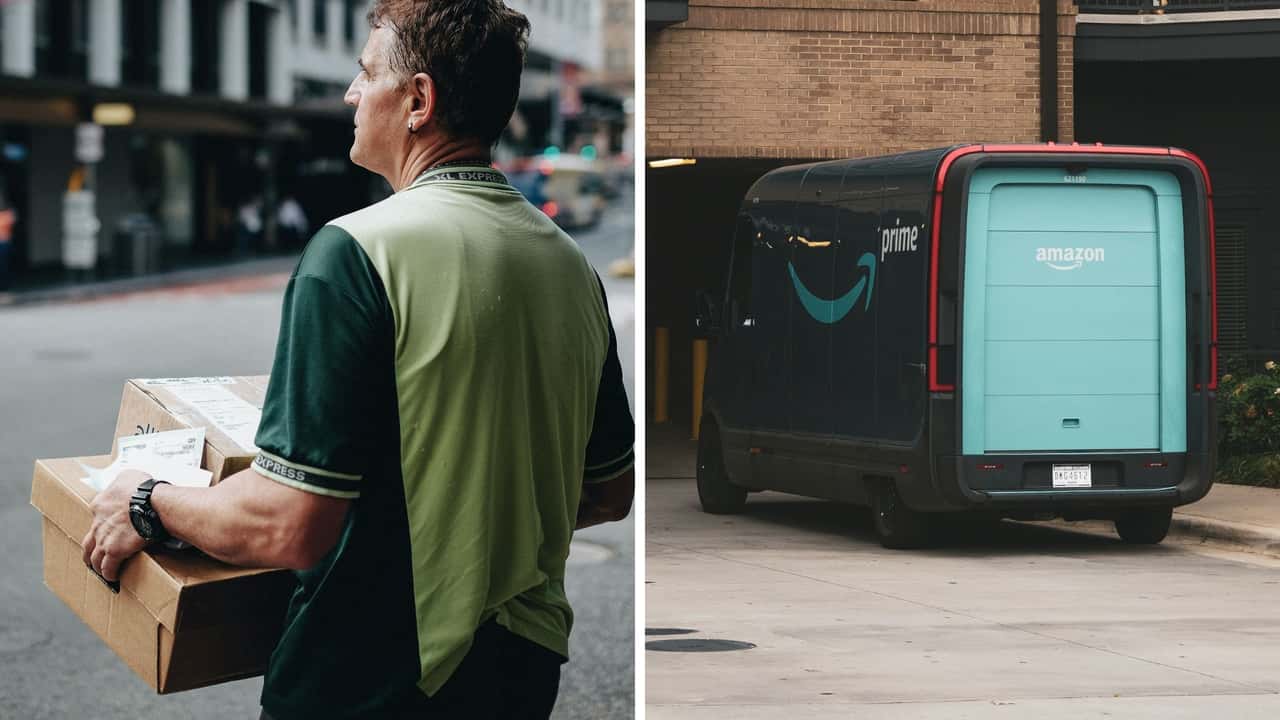
Photo by: Handy Wicaksono & Peter Muniz
Chad Swiatecki 
By: Chad Swiatecki
Dec 27, 2025 at 6:00am ET
Add Motor1.com as a preferred source in Google
- (https://twitter.com/intent/tweet?url=https%3A%2F%2Fwww.motor1.com%2Fnews%2F782717%2Famazon-driver-wrecked-van%2F&text=%27My%20Package%20in%20There%3F%3A%27%20Amazon%20Driver%20Says%20This%20%27Might%27%20Be%20His%20Last%20Day.%20Then%20He%20Shows%20Why&via=motor1com)
- copy
Share
Comment
"This might be my last [expletive] day." That’s how an Amazon driver introduces TikTok to a delivery van so badly damaged it looks like it lost a fight with a concrete wall, and kept driving anyway.
A viral clip from creator @jr_10m pans across an Amazon delivery van with its front and passenger sides so badly damaged that it looks like it lost a fight with the Incredible Hulk. Clearly, some Prime members experienced delays in receiving deliveries they expected to arrive quickly via Amazon’s almost-instant shipping.
"Y’all might as well just fire me," the driver is heard saying at the start of the clip, which has been viewed more than 10 million times, as he walks around the van to assess the damage.
The clip immediately triggered disbelief in the comments. Viewers weren’t just reacting to the extent of the damage, but were stunned that the van appeared upright, mobile, and still very much part of an active delivery route.
"My package in there?" one commenter asked, echoing countless similar jokes that turned the wrecked van into a punchline about Prime delivery expectations.
Others focused less on the humor and more on the reality of what the driver might be dealing with behind the scenes.
From an automotive perspective, the van’s condition looks catastrophic at first glance. The front fascia is largely gone, the passenger-side body panels are deeply creased, and the side door appears warped well beyond normal operation. But some signs explain why the vehicle was still moving.
Despite the visible damage, the roof structure appears intact, the wheels remain upright, and there’s no obvious evidence of suspension collapse or fluid pooling beneath the van. That distinction matters. Commercial delivery vans are engineered with durability and cargo protection in mind, often sacrificing exterior panels long before the underlying frame or drivetrain is compromised.
Many Amazon delivery fleets rely on vehicles like the Mercedes-Benz Sprinter, Ford Transit, and Ram ProMaster, platforms designed to withstand the abuse of high-mileage commercial service. Industry overviews from manufacturers like Ford and Mercedes-Benz emphasize reinforced frames, modular body panels, and drivetrain components intended to withstand daily stop-and-go use and occasional impacts without immediate failure.
"Drive Them Like Hellcats"
As the clip circulated, the comment section quickly filled with current and former delivery drivers from Amazon, FedEx, UPS, and DHL who said the video reflected a familiar reality. Several described driving aggressively, not for thrill, but to keep pace with demanding route schedules and stop counts.
Multiple commenters pointed to flat-rate or high-pressure performance models that reward speed and penalize delays, especially during peak delivery seasons. Former drivers explained that shaving seconds off each stop, accelerating harder between deliveries, or pushing speed slightly above posted limits can feel like the only way to finish a route before nightfall, particularly in rural areas where stops may be miles apart.
Those claims align with broader reporting on delivery work. Investigations by outlets such as the New York Times and ProPublica have documented how route-optimization software and strict delivery windows can create intense pressure on drivers, sometimes at the expense of safety or rest. Amazon has acknowledged the challenges of peak-season demand while maintaining that its safety systems and driver monitoring are designed to reduce risk.
What the viral clip ultimately captures is the gap between logistics software and real-world driving conditions. Route planning systems had long assumed consistent traffic flow, clear roads, and ideal weather, while drivers deal with ice, darkness, wildlife, unlit driveways, and fatigue.
Winter conditions add another layer of risk. Many delivery vans operate with rear-wheel drive and uneven weight distribution as packages are dropped throughout the day. According to safety guidance from organizations like the National Highway Traffic Safety Administration, traction loss and longer stopping distances are common hazards for large vans in cold or wet conditions, especially when loads shift.
Telematics systems, onboard cameras, and speed governors are intended to curb dangerous driving, but drivers in the comments argued that those tools don’t reduce workload expectations. Instead, they document performance while the underlying delivery demands remain unchanged.
Why He Still Might Have a Job
The line that fueled much of the internet’s disbelief—"this might be my last day"—prompted a wave of responses from people claiming firsthand experience with delivery operations. Many suggested the opposite was more likely, especially during peak season.
Fleet economics help explain why. Replacing or repairing a damaged van can be costly, but recruiting and training new drivers during periods of high demand is often more difficult. Industry analysts have noted that delivery vehicles are frequently treated as consumable assets, while experienced drivers are more difficult to replace quickly.
That calculus shows up repeatedly in the comments, with drivers recalling being asked to finish routes after breakdowns, collisions, or weather-related incidents. Whether exaggerated or not, the consistency of those stories reflects a system designed to prioritize delivery completion above nearly everything else.
The reason the video continues to resonate isn’t just the shock value of a battered Amazon van that may still be drivable, but also because the scene feels plausible. The idea that the route still needs finishing feels believable to anyone familiar with modern delivery logistics.
The clip also highlights an underappreciated truth about commercial vehicles; they’re built to endure far more punishment than most passenger cars, often remaining functional long after they look finished.
What do you think?
View
Comments
As one commenter put it, imagining that van pulling up to their house: the most surprising part isn’t the truck's condition. It’s that it still had somewhere to be.
Motor1 reached out to the creator via direct message and comment on the clip. We’ll update this if they respond.
We want your opinion!
What would you like to see on Motor1.com?
Take our 3 minute survey.
- The Motor1.com Team
Share this Story
- (https://twitter.com/intent/tweet?url=https%3A%2F%2Fwww.motor1.com%2Fnews%2F782717%2Famazon-driver-wrecked-van%2F&text=%27My%20Package%20in%20There%3F%3A%27%20Amazon%20Driver%20Says%20This%20%27Might%27%20Be%20His%20Last%20Day.%20Then%20He%20Shows%20Why&via=motor1com)
- copy
GO TO COMMENTS
(
)
Got a tip for us? Email: tips@motor1.com
View all comments ( )
Popular

Audi's Full-Size SUV Was Worth The Wait: Driven
Audi Reveals Which Models It Plans To Build In America
The 15 Best Movie Cars of All Time, Ranked
Mazda Drops The CX-70 For A Two-Row CX-90
latest articles
- Turo Now Lets You Rent A Tesla With Full Self-Driving Oct 27 - Autonomous Vehicles -
- Audi's Full-Size SUV Was Worth The Wait: Driven Oct 27 - First Drives -
- Toyota Put Snow Tracks On Five Of Its Trucks and SUVs. Because Why Not? Oct 27 - SEMA Show -
- Mazda Drops The CX-70 For A Two-Row CX-90 Oct 27 - Corporate / Financial -
- Police Recovered $54,000 Worth Of Hot Wheels After A Train Heist Oct 27 - Military / Police -
- This Copper Maserati Looks Like Nothing Else On The Road Oct 27 - Weird -
- The Toyota Corolla Is 60. Here's A Look Back At Every Generation Oct 27 - Classics -
RECOMMENDED FOR YOU
Woman Shops For Dodge. Then The Salesman Catches Her Doing A Straw Purchase
Why So Many Sports Cars Have Fake Vents
Woman Changes Battery In Honda. Now Her Radio And Backup Camera Don’t Work: ‘That’s Illegal’
Yes, Your Car Needs Software Updates. Even After You Buy It
Florida Woman Leaves Chipotle, Sees Tesla Being Towed. The Company Charges $185 To Get It Back—After They ‘Completely Ruined’ It
Alpine's Next Four-Seat Sports Car Is Ditching Retro Styling
Mercedes Driver Goes To The Dealership For New Windshield. They Say It’ll Be $4,500: ‘Take Care Of It For Me’