Home
News
Trending
'A Lawsuit Waiting to Happen:' Mechanic Inspects Pirelli Tires. Then He Learns They Aren't What They Seem
"Be careful if they're trying to upsell you."
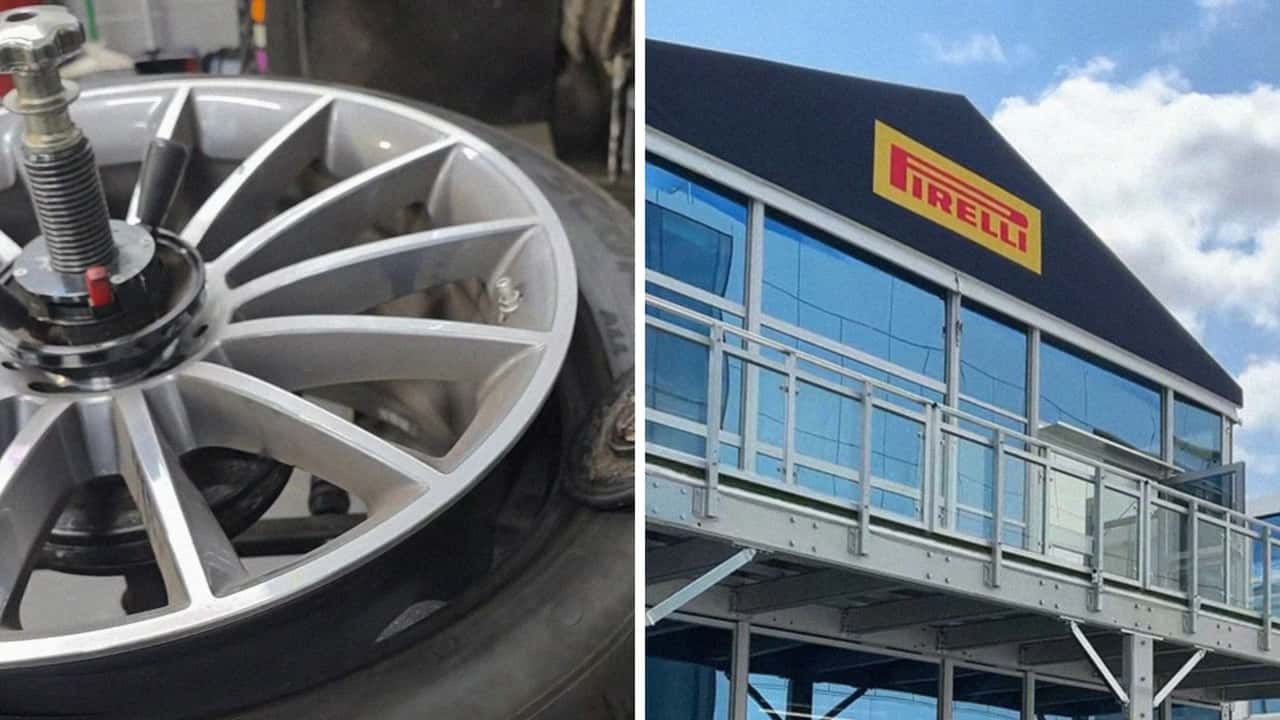
Photo by: techtales713 & pirelli_official
Chad Swiatecki 
By: Chad Swiatecki
Oct 14, 2025 at 2:00pm ET
Add Motor1.com as a preferred source in Google
- (https://twitter.com/intent/tweet?url=https%3A%2F%2Fwww.motor1.com%2Fnews%2F775734%2Fpirelli-pncs-rip-off%2F&text=%27A%20Lawsuit%20Waiting%20to%20Happen%3A%27%20Mechanic%20Inspects%20Pirelli%20Tires.%20Then%20He%20Learns%20They%20Aren%27t%20What%20They%20Seem&via=motor1com)
- copy
Share
Comment
They were designed to make your car whisper-quiet. But when the foam lining inside some Pirelli “noise-canceling” tires starts coming apart, the result is a bone-rattling vibration.
Automotive creator 1tachi (@techtales713) isn’t impressed by the premium “system” the Italian brand has brought to market, which he admits can dampen road noise as long as the foam insert stays in place. The problem, he said in a recent clip, comes when time and friction cause the insert to pull away and punch up inside the tire.
“When that adhesive fails, which most of the time it [does], the adhesive falls off of the foam, and the foam just basically comes off of the inside of the tire and starts to bunch up on one specific side, and then that causes a massive imbalance of the tire. … You get a huge vibration,” he said in the video that’s been viewed more than 8,000 times.
What PNCS Is Supposed to Do
Pirelli’s proprietary system, known as the Pirelli Noise Cancelling System (PNCS), uses a polyurethane foam insert affixed to the inner wall of the tire cavity. According to Pirelli, the foam works by absorbing resonant airwaves and reducing what the company calls “cavity noise,” cutting interior sound levels by two to three decibels, roughly halving perceived noise in some driving conditions. The company markets PNCS as a comfort-enhancing feature with “no impact on performance, balance, or durability.”
PNCS is offered on select Pirelli models such as P Zero and Scorpion in certain size configurations. The foam is not visible unless the tire is removed from the rim.
The mainstream context is clear: Automakers and tire suppliers see value in engineering quieter cabins, especially in electric and luxury vehicles, where road and tire noise become more noticeable.
What 1tachi describes in his video is straightforward: When the adhesive holding the foam fails, the foam can dislodge, cluster to one side, and upset the tire’s balance. Over time, this could generate a severe vibration inside the vehicle. His claim is that this is not an uncommon failure mode at tire shops. The vibration he warns of is not subtle: It’s significant enough to alarm drivers and complicate diagnostics in the shop.
His narrative is consistent with a growing number of anecdotal reports. In Tesla forums, some owners of Pirelli PNCS tires have reported shaking or vibration, and upon removal, saw foam debris inside the tire. In a Ford Explorer community, drivers have described sudden vibrations above 50 mph, suspecting PNCS foam may have peeled away. In one case, a BMW owner reported a delamination event leading to a violent sway and a tear along a seam of a Pirelli tire that still had tread remaining. Many of these reports occur at relatively low mileages, well before expected tire wear-out.
Gallery: Pirelli P Zero Family

48


Source: Pirelli
How Common Is the Issue?
Because PNCS is not a ubiquitous option across all tire lines, data is sparse, and Pirelli has not released widespread failure statistics tied to foam detachment. No known recall or National Highway Traffic Safety Administration (NHTSA) investigation specifically cites PNCS foam delamination as a defect as of this writing. That absence is notable: If such failures were common and dangerous, one might expect regulatory scrutiny.
Still, industry observers caution that the more complex a tire becomes, the more potential failure points there are. Foam inserts are not unique to Pirelli. Michelin (Acoustic Technology) and Continental (Silent Tires) have similar approaches to Pirelli. Tire shops experienced with these systems note that when the foam does fail or detach, the remedy is often to remove the foam and rebalance the tire, essentially reverting to a standard tire profile.
In some dealer forums, customers have reported that dealerships themselves remove PNCS pads under service bulletins, sometimes without consulting the vehicle owner, suggesting that service networks see occasional risk or trouble with the technology. This kind of intervention hints that automakers and dealers may view the foam as a manageable liability in certain cases.
Electric vehicles and modern luxury cars have heightened sensitivity to tire and road noise since engine hum no longer masks the sound. As a result, features like foam inserts become more valuable. But the reality of less ambient noise and greater occupant expectation of quiet also magnifies any defect. A minor vibration that might be trivial in a loud combustion car becomes intolerable in a hushed EV.
Additionally, foam adhesives degrade over time under heat, flexing, and environmental exposure. Repeat cycles of load, speed, and temperature swing can weaken bonding, particularly in high-stress or underinflated conditions. This sets up a classic trade-off: improved comfort vs. long-term durability.
For purchasers considering PNCS-equipped tires, vigilance is key. Drivers should confirm that advertised tires truly carry the PNCS designation by looking for PNCS marking on the sidewall, and that the shop handling installation is familiar with how to balance or service these tires if foam issues arise.
In routine maintenance, shops should monitor for signs of vibration or imbalance, especially outside the “normal” range of wheel alignment or road-runout problems. Early detection may allow for foam removal and rebalancing before the issue worsens.
What do you think?
View
Comments
Still, for average drivers on non-luxury vehicles, the added cost may not justify the risk. Unless noise is a major concern, a standard high-quality tire without foam tech might deliver a more reliable and less finicky experience over time.
Motor1 reached out to the creator via direct message and to Pirelli via email. We’ll be sure to update this if they respond.
What Owners Are Saying
'Noo Way:' Mechanic Shares Hack for Getting Behind Serpentine Belt. But Does It Work?
We want your opinion!
What would you like to see on Motor1.com?
Take our 3 minute survey.
- The Motor1.com Team
Share this Story
- (https://twitter.com/intent/tweet?url=https%3A%2F%2Fwww.motor1.com%2Fnews%2F775734%2Fpirelli-pncs-rip-off%2F&text=%27A%20Lawsuit%20Waiting%20to%20Happen%3A%27%20Mechanic%20Inspects%20Pirelli%20Tires.%20Then%20He%20Learns%20They%20Aren%27t%20What%20They%20Seem&via=motor1com)
- copy
GO TO COMMENTS
(
)
Got a tip for us? Email: tips@motor1.com
View all comments ( )
Popular
Bugatti Restores One-Off Veyron With A Mirror-Like Aluminum Body
BMW Kept This Hatchback A Secret For Decades
Skoda Wants You To 3D Print Pieces Of Your Car At Home
The Gas BMW M3 Isn't Dead: Next-Gen Prototype Roars
latest articles
- The Ford Ranger Is Getting A Bigger V6 For 2027: Report Oct 20 - Rumors -
- BMW Already Has A Deal On The New i3. But It's Not Cheap Oct 20 - Pricing -
- Remember The Ford Flex? This Weird SUV Is Now A Great Used Buy Oct 20 - Why Buy? -
- Mercedes Isn't Sold On Extended-Range EVs: 'Would You Really Switch?' Oct 20 - Interview -
- Cadillac Driver Is Fed Up With Auto Stop. Then She Buys A $9 Item On Amazon To Disable It Oct 20 - Trending -
- Bugatti Restores One-Off Veyron With A Mirror-Like Aluminum Body Oct 20 - Supercars -
- Lexus NX Goes Hybrid Only For 2027 Oct 20 - Official -
RECOMMENDED FOR YOU
Cadillac Driver Is Fed Up With Auto Stop. Then She Buys A $9 Item On Amazon To Disable It
The Ford Ranger Is Getting A Bigger V6 For 2027: Report
Woman Buys A Tahoe. Then Her Chevrolet Dealer Calls Her A Week Later And Says She Owes $4,200
BMW Already Has A Deal On The New i3. But It's Not Cheap
Man Gets Into New Car. Then He Tries To Shift Into Drive—And Crashes Out: 'Who Is Telling Car Manufacturers That?'
Remember The Ford Flex? This Weird SUV Is Now A Great Used Buy
Man Buys Ferrari. Then His Fiance Takes It For A Spin: 'I Don't Know If He's Gonna Be Mad...'