Home
Rolls-Royce
News
Rolls-Royce Camargue: The 1970s oddball that defied convention
It was designed by Pininfarina and built in very limited numbers.
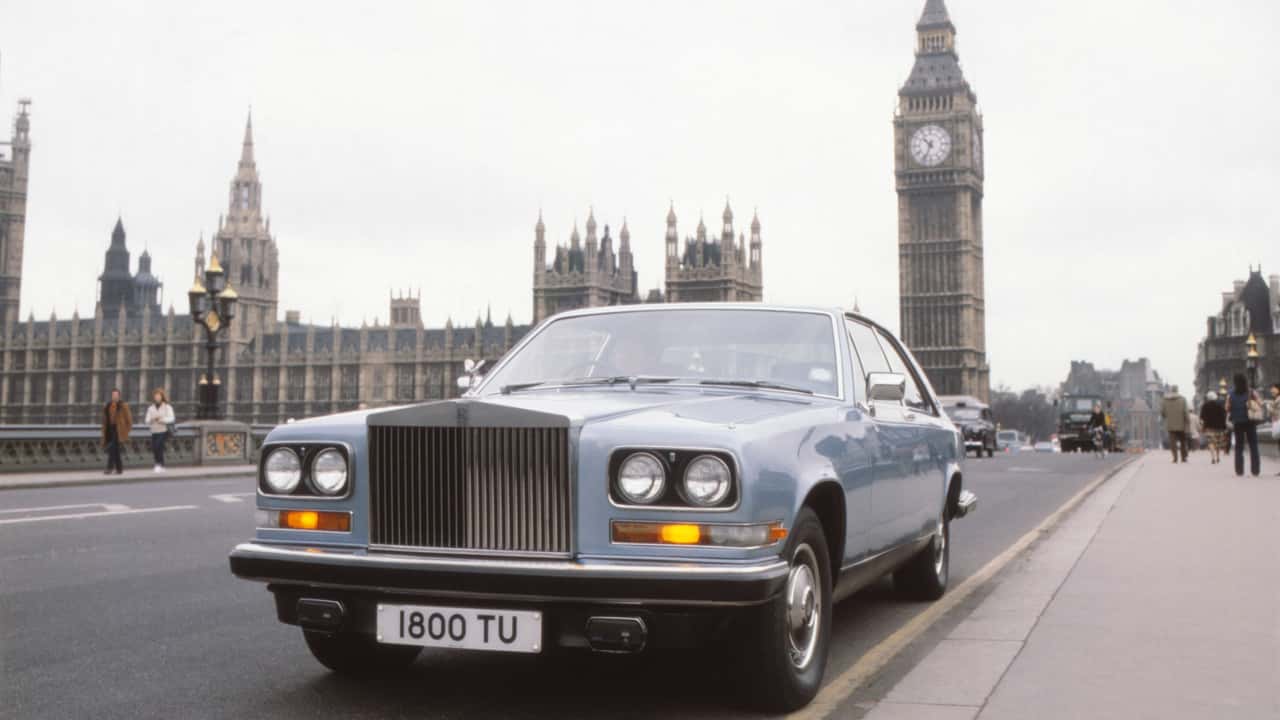
Photo by: Rolls-Royce
Angel Sergeev 
By: Angel Sergeev
Dec 30, 2024 at 3:02am ET
Add Motor1.com as a preferred source in Google
- (https://twitter.com/intent/tweet?url=https%3A%2F%2Fwww.motor1.com%2Fnews%2F745747%2Frolls-royce-camargue-by-pininfarina-history%2F&text=Rolls-Royce%20Camargue%3A%20The%201970s%20oddball%20that%20defied%20convention&via=motor1com)
- copy
Share
Comment
Rolls-Royce, the quintessential British carmaker known for its timeless designs and unflappable elegance, decided to shake things up in the late 1960s. What followed was a bold partnership with Italian design powerhouse Pininfarina that birthed one of the most polarising and exclusive models in the company’s history: the Camargue.
Back in 1969, Rolls-Royce sent a Mulliner Park Ward saloon to Pininfarina’s headquarters in Turin, Italy, with a single mission: make it dramatically different. Pininfarina, led by chief stylist Paolo Martin, didn’t hold back. Using the car’s original floorplan, they crafted a sleek, low-slung body that traded excessive chrome for clean, sculpted lines. And for the first time in Rolls-Royce history, the design was developed entirely in metric measurements. That’s right – centimetres, not inches, powered this revolution.
Gallery: Rolls-Royce Camargue

8


The result was a two-door coupé with bold features like an inclined windscreen, curved side windows, and the daring forward tilt of the iconic Pantheon grille. Purists gasped; modernists swooned. Either way, it was impossible to ignore.
While the exterior divided opinions, the Camargue’s interior was universally applauded. The dashboard was inspired by aircraft cockpits, featuring matte-black dials and switches designed for precision and ease. Rolls-Royce debuted its “Nuella” leather, an ultra-soft material that screamed luxury louder than a jet engine. Dual-level air conditioning (a world first) ensured passengers were cool no matter where they sat, and the rear seat was spacious enough to stretch out in style.
Rolls-Royce: future and past
Rolls-Royce gives the Ghost a facelift for 2024
Rolls-Royce Silver Shadow reimagined with 400 bhp for 2025
Launched in 1975 and priced at nearly double that of the already-lavish Silver Shadow, the Camargue wasn’t for everyone – and that was the point. Only 529 units were produced over 12 years, making it rarer than a sensible Hollywood sequel. Around 75 per cent of these found homes in the United States, where drivers didn’t mind standing out – or shelling out – for the privilege.
Beneath the flair was substance. The Camargue was built to meet rigorous safety standards, featuring a crash-resilient body, energy-absorbing materials, and seatbelts for all passengers. The 6.75-litre V8 engine and three-speed automatic transmission delivered the signature “Magic Carpet Ride” Rolls-Royce owners expected, while enhanced handling kept things smooth – even if public opinion about the design wasn’t.
Rolls-Royce Camargue
Photo by: Rolls-Royce
What do you think?
View
Comments
Though it retired in 1987, the Camargue remains a car enthusiast’s enigma. Was it a bold masterpiece or an overpriced oddity? Whichever camp you fall into, one thing is certain: the Camargue is unmistakably Rolls-Royce, embodying the audacity and elegance that made the brand legendary.
“Of all the Rolls-Royce models in this series, perhaps none is as distinctive as Camargue, whose design still provokes vigorous debate among car enthusiasts half a century after its launch," Andrew Ball, Head of Corporate Relations and Heritage at Rolls-Royce, recalls. "While its aesthetics remain a matter of personal taste, Camargue’s importance and place in the Rolls-Royce story are indisputable. Designed in collaboration with the legendary Italian house Pininfarina, it upheld the marque’s long tradition of continuous improvement over its predecessors in engineering, technology, performance and levels of comfort. It was also the first Rolls-Royce to be designed with safety in mind from the ground up. Though never built in large numbers, it was a great export success; today, its rarity and design, which for many perfectly capture the essence of the 1970s, make it a true modern classic and increasingly desirable with collectors.”
Source: Rolls-Royce
We want your opinion!
What would you like to see on Motor1.com?
Take our 3 minute survey.
- The Motor1.com Team
Share this Story
- (https://twitter.com/intent/tweet?url=https%3A%2F%2Fwww.motor1.com%2Fnews%2F745747%2Frolls-royce-camargue-by-pininfarina-history%2F&text=Rolls-Royce%20Camargue%3A%20The%201970s%20oddball%20that%20defied%20convention&via=motor1com)
- copy
GO TO COMMENTS
(
)
Got a tip for us? Email: tips@motor1.com
View all comments ( )
Popular
The Rotary Engine Should Be Everywhere. Why Isn't It?
The 2027 BMW X5 Is Hugely Improved Where It Matters Most: Driven
Toyota's Next Mid-Engined Coupe Is Going Racing This Weekend
Alfa Romeo Has Had It With Huge Screens
Subaru Teases A New Manual WRX, But Only For Japan
latest articles
- 2027 Toyota Crown Signia Adds Tech Without Changing Its Formula Oct 23 - Pricing -
- Woman Buys 4Runner. Then She Drives 2 Miles—And Realizes The Windows Don’t Work: ‘Is This Something…They Should Be Liable To Fix?’ Oct 23 - Trending -
- Barely Driven Ferrari 499P Modificata Heads To Auction For Over $8 Million Oct 23 - For Sale -
- How Does Automatic Emergency Braking Know When To Stop? Oct 23 - Motor101 -
- Porsche Builds A Rare 911 GT3 To Celebrate 75 Years In Britain Oct 23 - Special Editions -
- Mechanic Asks To Do Pre-Purchase Inspection On Ford. Then The Salesman Says Something Shocking Oct 23 - Trending -
- Volvo Blames 'A Very Tough Environment' As It Cuts Another 2,500 Jobs Oct 23 - Corporate / Financial -
RECOMMENDED FOR YOU
Every Rolls-Royce Has A Hidden Feature Most People Don't Know About
Mechanic Asks To Do Pre-Purchase Inspection On Ford. Then The Salesman Says Something Shocking
Woman Shares How To Find The Hole In Your Tire—All It Takes Is Some Dawn Powerwash
Volvo Blames 'A Very Tough Environment' As It Cuts Another 2,500 Jobs
Woman Learns What Happens When You Drive Way Past Empty—Now She Does It All The Time: 'Ghost Miles'
2027 Subaru Outback Base Trim Returns, Lowering Price
You Can Buy This Wild 1967 Alfa Romeo Giulia Built Like A Le Mans Racer