Home
News
Industry
Here's Why EVs Aren't Very Popular in the United States
Open roads and lower fuel costs keep bigger combustion cars on the highways of America.
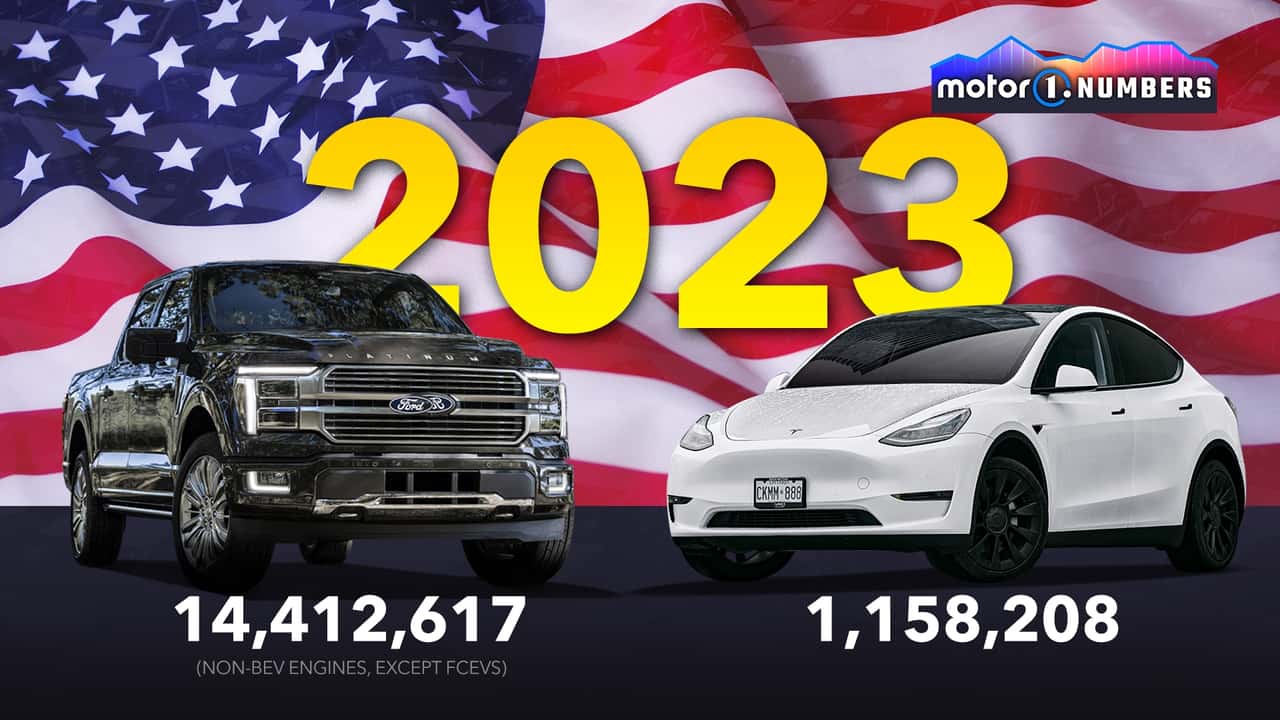
Photo by: Motor1.com

By: Juan Felipe Munoz
Adapted by: Christopher Smith
Mar 23, 2024 at 5:00pm ET
Add Motor1.com as a preferred source in Google
- (https://twitter.com/intent/tweet?url=https%3A%2F%2Fwww.motor1.com%2Fnews%2F713489%2Felectric-cars-not-popular-us%2F&text=Here%27s%20Why%20EVs%20Aren%27t%20Very%20Popular%20in%20the%20United%20States&via=motor1com)
- copy
Share
Comment
Global awareness of environmental issues and humankind's role in the changes is growing. Electric vehicles are not the solution to all the pollution problems created by combustion cars, but they can help reduce emissions from urban and rural mobility. As with most things, there are advantages and disadvantages to the tech. But the world is shifting in that direction, some places faster than others.
Among large economies where the auto industry is a key driver of wealth is the United States. EV growth has been slow in this region compared to others, relegating the electric segment to that of a minor player in the industry. Sales simply aren't taking off as some automakers expected. Why is that? There are four main reasons to consider.
Big Cars, Big Roads, Big Infrastructure:
SUVs and pickup trucks were born in America. The need for more cargo and cabin space to traverse the vast rural landscapes outside cities has made them very popular among US consumers. Americans like everything big, and that goes for horsepower as well. Having a large vehicle with plenty of power isn't necessarily about going fast, but simply having the guts to cover long distances without breaking a sweat. As such, there isn't another country in the world with more large vehicles than the United States.

Get the Motor1 Newsletter
back
Subscribe For more info, read our Privacy Policy & Terms of Use.
Checking out the numbers, we see the average weight for an SUV in the US was 4,969 pounds in 2023. Trucks were even heavier at 5,840 pounds. As you might imagine, it takes a lot of fuel to move those vehicles. However, the vast energy resources available in the US allow consumers to travel without worrying about filling up. The American economy is heavily based on the oil and gasoline industry. This is why muscle cars, pony cars, trucks, and SUVs have grown more in the States than anywhere else.
It takes time to shift from fossil fuels to electric power, both physically given the sheer size of the country, and culturally. Installing a reliable charging infrastructure to cover all areas will be a years-long effort. Getting drivers to transition from big engines to smaller electric motors could take longer.

Price At The Pump
The availability of energy sources in the US has a direct—and favorable—impact on fuel prices throughout the country. Gasoline and diesel costs remain much lower than those in many regions where government policies encourage less driving and electric alternatives through higher fuel taxes.
In France, for example, the average price of a gallon of gasoline was $7.50 in February 2024, compared to just $3.49 in the United States. Due to the relatively low costs of operating an ICE vehicle in the States, there is currently no strong financial incentive for consumers to go electric.
Import Laws Make EV Production A Challenge
As a result of growing competition from China and its global expansion plans, the US government has taken measures to promote localized production with the Inflation Reduction Act (IRA). Despite good intentions for the American economy, the regulations can have negative effects on battery-electric vehicle producers within the country. By trying to cut China out of the equation for battery manufacturing and metal suppliers, companies like Tesla, General Motors, Ford, and Stellantis may have a harder time building products locally once supply chain constraints are considered.
The lack of competitive raw materials could make IRA an obstacle for American automakers in producing BEVs. This is another reason consumers are delaying the switch from ICE to electric vehicles.
2023 2024 2025 2027 40 percent of the battery raw materials must come from the United States or countries with which America has a free trade agreement. Do not use battery components made in China. No battery metal mined or processed in China. 80 percent of the battery raw materials must come from the United States or countries with which America has a free trade agreement.
What do you think?
View
Comments
A Political Controversy:
US citizens are preparing for the electoral campaign that will decide the next president. The most likely candidates are Donald Trump and Joe Biden, and electric vehicles are set to become a key issue in the battle for the White House. On one hand, there is the current administration that tries to assert the country's interests with the IRA. On the other, there is a strong rhetoric that automatically links BEVs to China. Political uncertainty is forcing some automakers to delay their electrification plans, sending a negative message to potential electric vehicle customers.
The author of the article, Felipe Munoz, is an Automotive Industry Specialist at JATO Dynamics.
More Motor1 Numbers:
Tesla Model Y Is The World's Best-Selling Vehicle For 2023
Chrysler 300 And Honda E: End Of An Era For Two Icons
We want your opinion!
What would you like to see on Motor1.com?
Take our 3 minute survey.
- The Motor1.com Team
Share this Story
- (https://twitter.com/intent/tweet?url=https%3A%2F%2Fwww.motor1.com%2Fnews%2F713489%2Felectric-cars-not-popular-us%2F&text=Here%27s%20Why%20EVs%20Aren%27t%20Very%20Popular%20in%20the%20United%20States&via=motor1com)
- copy
GO TO COMMENTS
(
)
Got a tip for us? Email: tips@motor1.com
View all comments ( )
Popular
12 Underrated Performance Cars That Nobody Bought
This $41,000 Chevy Corvette C1 Lookalike Is Really A Supersized Miata
2027 Honda Accord Gets Split Headlights With Squinty Eyes, But Only In China
Acura Is Building An 'Adventure-Ready' SUV. Here's Everything We Know
Mazda Exec Claims The Company's Identity No Longer Depends On The Miata
Latest Stories
- Meet Ford's New Le Mans Fighter: The GT41 Nov 26 - First Look -
- Android Auto Keeps Disconnecting? Here's What Might Be Wrong Nov 26 - Motor101 -
- 2027 Toyota 4Runner Finally Adds Heated Seats, Then Crosses $45,000 Nov 26 - Pricing -
- Porsche Unveils One-Off 911 GT3 Tribute To Its Iconic GT1 Race Car Nov 26 - Special Editions -
- Audi Is Putting A Gas Engine In Its Chinese AUDI Electric SUV Nov 26 - Green -
- Toyota's First Range-Extended EV Is Coming, And It Looks Like A Highlander Nov 26 - Teasers -
- 2027 Honda Accord Gets Split Headlights With Squinty Eyes, But Only In China Nov 26 - Facelift -
RECOMMENDED FOR YOU
Mazda Exec Claims The Company's Identity No Longer Depends On The Miata
Audi Is Putting A Gas Engine In Its Chinese AUDI Electric SUV
Mate Rimac Reveals He Had A 'Huge Fight' With The Volkswagen Group Over Bugatti's Future
Toyota's First Range-Extended EV Is Coming, And It Looks Like A Highlander
Toyota Isn't Even Halfway Done Developing Its Mid-Engined Coupe
2027 Honda Accord Gets Split Headlights With Squinty Eyes, But Only In China
'We Can't Let That Happen:' Toyota Vows To Keep Fun Cars Alive For Young Drivers