Home
BMW
Features
Where Did BMW's Iconic Kidney Grille Come From?
The iconic design feature started with a real purpose, but decades of evolution have turned it into a controversial styling signature.
Dan Mihalascu 
By: Dan Mihalascu
Nov 28, at 4:00pm ET
Add Motor1.com as a preferred source in Google
- (https://twitter.com/intent/tweet?url=https%3A%2F%2Fwww.motor1.com%2Ffeatures%2F817028%2Fwhy-bmw-has-kidney-grilles%2F&text=Where%20Did%20BMW%27s%20Iconic%20Kidney%20Grille%20Come%20From%3F&via=motor1com)
- copy
Share
Comment
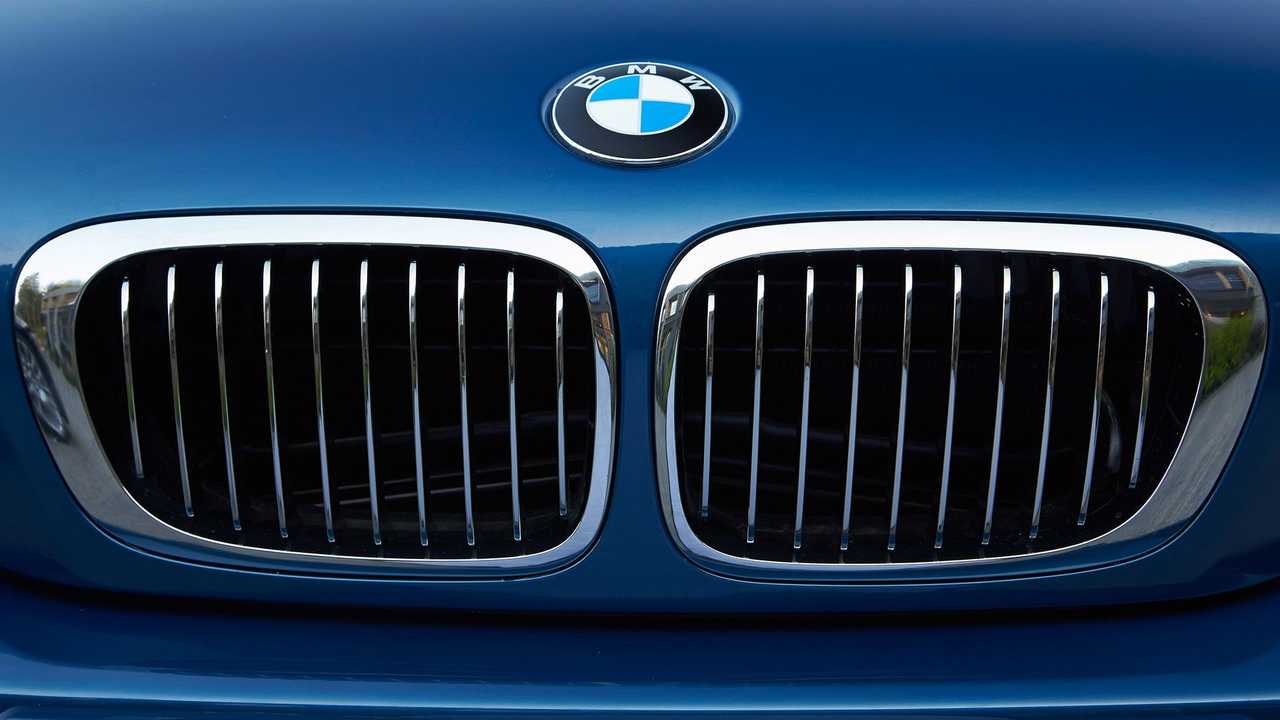
Few automotive design features are as recognizable as BMW's kidney grille. Whether it's a classic 3 Series, a sporty M car, or a modern electric SUV, those two openings on the front end have become a defining part of the brand's identity. Even people who aren't particularly interested in cars can often recognize a BMW just by looking at its front fascia.
But why does BMW use a pair of kidney-shaped grilles in the first place? The answer goes back more than 90 years, when the design had a practical purpose rather than simply making the cars look distinctive. Over time, however, the grille evolved from a functional radiator opening into one of the most important elements of BMW's design language.
The Kidney Grille First Appeared On The BMW 303
The kidney grille made its debut on the BMW 303, introduced in 1933. It was the first BMW automobile with a six-cylinder engine, and its front end featured a radiator grille divided into two vertically arranged sections.
The rounded shape gave the car a distinctive appearance, but the original design was primarily functional: It allowed air to reach the radiator and help cool the engine.
The split design also gave BMW a feature it could adapt as its cars evolved. The grille became an increasingly recognizable part of the brand's appearance, eventually earning the nickname "kidney grille" because of its resemblance to the shape of two kidneys, as BMW explains.
It Became One Of BMW's Most Recognizable Design Features
As BMW introduced new models, the kidney grille changed in size, proportions, and appearance. Some cars featured narrow, upright openings, while others used wider, more horizontal designs.
The BMW 507, introduced in 1956, was a notable departure, with a much wider interpretation of the traditional shape. Later models continued to adapt the design without abandoning its basic identity.
The grille's importance goes beyond cooling. Alongside BMW's roundel and familiar headlight designs, it helps make the brand's cars recognizable even when the badge is not visible. It also gives designers a familiar starting point: they can change the grille's proportions and details to suit a particular model while retaining a visual connection to older cars.
The Grille Has Changed Dramatically Over The Decades

BMW hasn't kept the kidney grille frozen in time. Its dimensions and styling have shifted considerably depending on the model and the design trends of each era. Some generations featured small, understated openings, while others made the grille a dominant part of the front end.
A few notable examples show how the design has evolved:
- BMW 303 (1933): Introduced the familiar twin-section radiator grille.
- BMW 507 (1956): Used a wider, more horizontal interpretation of the kidney shape.
- BMW 3 Series (1990s): Featured slimmer, more integrated grilles as the design became more restrained.
- BMW 4 Series (2020): Brought back a much larger, vertically oriented grille that sparked debate among enthusiasts.
- Modern electric BMWs: Use closed or partially functional grille panels that incorporate sensors and other technology.
The proportions may change, but the basic two-part identity remains. That's the advantage of having a design signature that can be reinterpreted rather than copied exactly.
Modern BMWs Don't Always Need The Grille For Engine Cooling
The biggest change to the kidney grille has come with modern powertrains. Traditional internal-combustion engines need substantial airflow to help manage heat, but electric vehicles don't have the same cooling requirements as gasoline-powered cars.
They still need thermal management for components such as batteries and electric motors, but the airflow demands are different. That gives BMW more freedom to rethink the grille. On some newer models, the kidney-shaped area is largely closed or serves as a housing for sensors and other technology.
Certain designs also incorporate active elements that open or close depending on cooling needs. BMW has even introduced illuminated kidney grilles on some models, turning the familiar shape into a prominent nighttime styling feature.
BMW Fans Can't Agree On The Kidney Grille
BMW's kidney grille has sparked plenty of debate among enthusiasts, especially as the automaker has introduced larger designs on newer models. In one discussion on r/BMW, users pointed out that oversized kidney grilles aren't entirely new to the brand. Some defended the design by referencing BMW's older models, while others argued that today's versions look disproportionate because they extend too far down the front bumper.
Another discussion asked why people dislike the newer kidney grilles. Opinions were divided: some owners liked the distinctive appearance on the M440i, while others felt the proportions simply didn't work. The conversation highlighted how subjective automotive styling can be, even among fans of the same brand.
A third thread on r/BMW revisited the grille's history, with one user noting that the design on the G80 M3 actually has similarities to earlier BMW models. That prompted a discussion about whether today's grilles are genuinely out of character or simply a modern interpretation of a feature BMW has used for decades. One thing is clear: the kidney grille is an essential part of BMW, but its changing proportions are polarizing.
BMW's Kidney Grille Is Now More About Identity Than Function
The kidney grille has outgrown its original job. While it still contributes to airflow and cooling on some vehicles, its role as a brand identifier is arguably more important today.
BMW can change the shape, make it larger or smaller, or adapt it for electric vehicles, but removing it entirely would mean abandoning one of the company's most recognizable design signatures.
What do you think?
View
Comments
That doesn't mean every version is universally loved. The oversized grilles on some recent BMWs have divided enthusiasts, with some welcoming the bold styling and others preferring the smaller openings found on older models.
Either way, the kidney grille remains a defining part of BMW's identity. What began as a practical radiator design in 1933 has become a symbol that connects the company's earliest cars with its latest electric models.
More From Motor101
 Volvo Invented The Modern Seatbelt. Then Gave Away The Idea For Free
Android Auto Keeps Disconnecting? Here's What Might Be Wrong
Why The 24 Hours Of Le Mans Is Exactly 24 Hours Long
What Happens To Concept Cars After The Auto Show Is Over? Sadly, Not All Of Them Survive
We want your opinion!
What would you like to see on Motor1.com?
Take our 3 minute survey.
- The Motor1.com Team
Share this Story
- (https://twitter.com/intent/tweet?url=https%3A%2F%2Fwww.motor1.com%2Ffeatures%2F817028%2Fwhy-bmw-has-kidney-grilles%2F&text=Where%20Did%20BMW%27s%20Iconic%20Kidney%20Grille%20Come%20From%3F&via=motor1com)
- copy
GO TO COMMENTS
(
)
Got a tip for us? Email: tips@motor1.com
View all comments ( )
Popular
12 Underrated Performance Cars That Nobody Bought
The On-Again-Off-Again TVR Griffith Is Back
This Massive Off-Road Camper Has a Washing Machine. And Two Kitchens
What Happens To Concept Cars After The Auto Show Is Over?
BBC Wanted Richard Hammond Back On Top Gear. He Refused
Latest Stories
- Where Did BMW's Iconic Kidney Grille Come From? Nov 28 - Motor101 -
- A Car Dealer Spent 40 Years Collecting Muscle Cars. Now He's Ready To Sell Nov 28 - Classics -
- Michelin's Winter Tires Were Put To The Test. The Results Reveal Some Surprising Differences Nov 28 - Tires -
- This Massive Off-Road Camper Has A Washing Machine. And Two Kitchens Nov 28 - Motorhomes -
- Jeep Wrangler Rubicon Vs Ford Bronco Badlands: Which Off-Roader Is Actually Better? Nov 27 - Comparisons -
- Michael Schumacher’s Porsche Carrera GT Is Going to Auction With A Remarkable Paper Trail Nov 27 - For Sale -
- Toyota Raises 2027 Tacoma Prices And Slashes Its Free Maintenance Program Nov 27 - Pricing -
RECOMMENDED FOR YOU
BMW Expands Over-The-Air Updates To 16 Million Vehicles Across 88 Countries
A Car Dealer Spent 40 Years Collecting Muscle Cars. Now He's Ready To Sell
Electric BMW M3 Reportedly Targets CES 2027 Debut With 838 HP
Michelin's Winter Tires Were Put To The Test. The Results Reveal Some Surprising Differences
No, BMW's Logo Isn't Actually An Airplane Propeller
This Massive Off-Road Camper Has A Washing Machine. And Two Kitchens
12 Underrated Performance Cars That Nobody Bought