Home
Features
Motor101
Most Drivers Have No Idea What The Little Switch Under Their Rearview Mirror Does
That tiny tab underneath your rearview mirror isn't just for show. It has a clever purpose that could make nighttime driving easier.
Dan Mihalascu 
By: Dan Mihalascu
Nov 21, at 7:00am ET
Add Motor1.com as a preferred source in Google
- (https://twitter.com/intent/tweet?url=https%3A%2F%2Fwww.motor1.com%2Ffeatures%2F816224%2Fwhy-car-rearview-mirror-has-second-position%2F&text=Most%20Drivers%20Have%20No%20Idea%20What%20The%20Little%20Switch%20Under%20Their%20Rearview%20Mirror%20Does&via=motor1com)
- copy
Share
Comment
Most drivers know how to adjust their rearview mirror, but there's a small feature underneath it that many rarely use. That little tab can be flipped into a second position, and while it might look like an outdated design detail, it actually serves a very practical purpose. It's there to make driving at night more comfortable and reduce the glare coming from vehicles behind you.
The feature is particularly useful when another driver's headlights shine directly into your eyes through the mirror. Rather than simply putting up with the glare or adjusting the mirror so you can no longer see what's behind you, you can activate its second position. Here's how it works, why your car has it, and why some newer vehicles no longer need the switch.
The Second Position Is Designed For Night Driving
That small lever underneath many traditional rearview mirrors activates what's known as the day-night mode, or manual anti-glare function.
During nighttime driving, headlights from vehicles behind you can reflect directly into your eyes. This can be distracting, particularly when you're driving on an unlit road or sitting in slow-moving traffic.
Flipping the tab changes the mirror's angle, reducing the intensity of the reflected light without completely eliminating your view of the road behind you. It's a simple solution to a problem drivers have dealt with for decades.
How The Rearview Mirror's Second Position Works
The trick is in the mirror's construction. Traditional day-night rearview mirrors use a wedge-shaped piece of glass with a reflective coating on its rear surface. There are actually two reflections involved: a weaker reflection from the front surface of the glass and a stronger one from the reflective coating behind it.
In the normal daytime position, the stronger reflection provides a clear image of the traffic behind you. When you flip the lever, the mirror tilts slightly, directing that stronger reflection away from your eyes.
What remains is the much weaker reflection from the front surface of the glass. This makes everything behind you appear darker, reducing the glare from headlights. In other words, the mirror doesn't dim the headlights themselves; it changes the angle at which their reflected light reaches your eyes.
When Should You Use The Nighttime Setting?
As its name suggests, the second position is primarily intended for nighttime driving, especially when headlights from vehicles behind you become uncomfortable or distracting. There are a few situations when activating it can be particularly useful:
- Driving on dark roads: Bright headlights can be especially distracting when there's little ambient lighting.
- Heavy traffic: When vehicles are following closely, their headlights can shine directly into your rearview mirror.
- Driving in poor weather: Rain and other challenging conditions can already make visibility difficult, so reducing unnecessary glare can help with comfort.
It's worth remembering that the nighttime setting also makes the image behind you darker. For that reason, you should switch the mirror back to its normal position during daylight hours to maintain the clearest possible view.
Why Some Modern Cars Don't Have The Little Lever
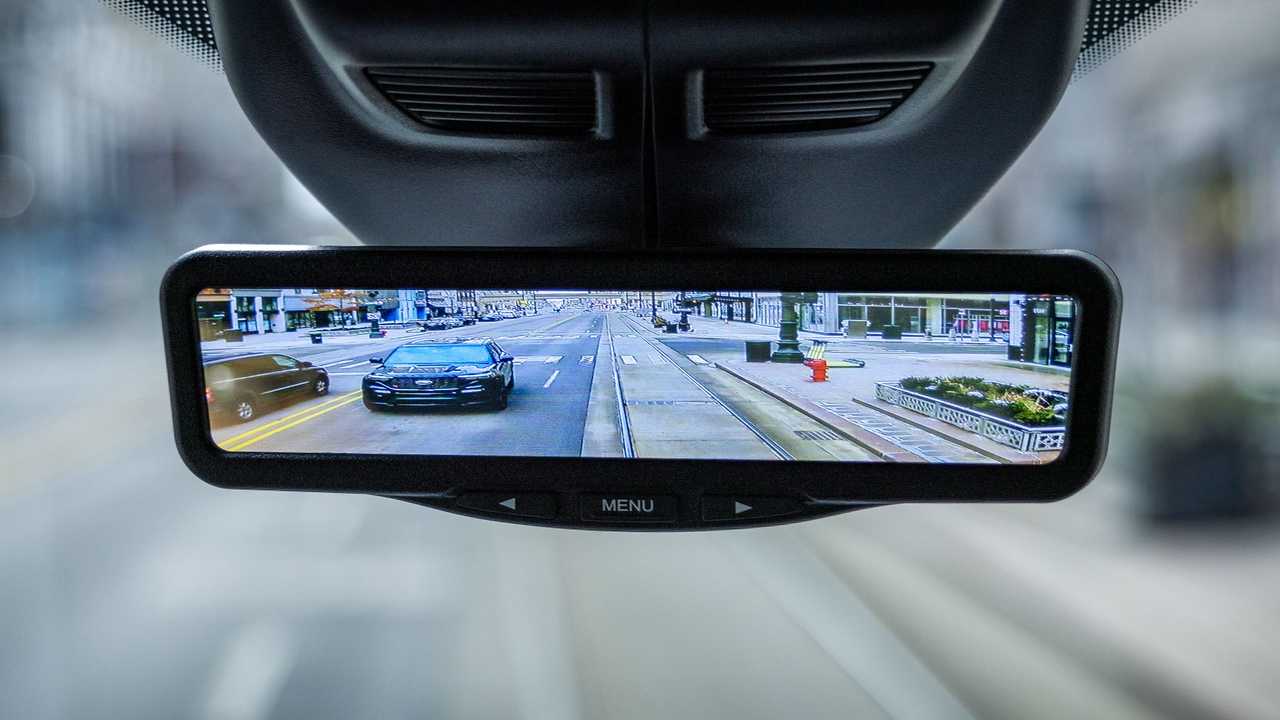
If your vehicle doesn't have a small tab underneath its rearview mirror, it might be equipped with an automatic-dimming system instead. These mirrors use light sensors to detect glare from headlights behind the vehicle.
Sensors located around the mirror detect the amount of light coming from behind the vehicle and compare it with the ambient light in front. When the system detects excessive glare, it sends an electrical current through the electrochromic material, causing the mirror to darken and reduce the amount of reflected light reaching the driver's eyes.
This means drivers don't have to manually switch between daytime and nighttime settings. The mirror adjusts itself depending on the lighting conditions. Once the glare disappears, the mirror gradually returns to its normal brightness without requiring any input from the driver.
Some modern vehicles also offer automatic-dimming exterior mirrors, extending the same convenience to the driver's and passenger's side mirrors.
Drivers Are Surprised By What The Little Switch Actually Does
A number of Reddit discussions show just how many drivers have misunderstood the small lever underneath their rearview mirrors. In a thread on r/CarsAustralia, one driver admitted they thought it was used to look at passengers in the back seat. They only discovered its nighttime anti-glare function after being nearly blinded by another driver's headlights.
Other discussions have focused on the actual science behind the feature. In threads on r/NoStupidQuestions and r/explainlikeimfive, users explained how tilting the mirror changes which reflective surface is visible, allowing drivers to see a dimmer image without losing sight of traffic behind them.
The discussions also highlight how much drivers appreciate the feature once they discover it. Some Reddit users even compared traditional manual mirrors with newer automatic-dimming versions, which perform the same job without requiring drivers to flip a switch. It's a small piece of automotive technology, but one that continues to surprise motorists years after they first get behind the wheel.
A Small Feature That Makes A Big Difference
The second position on your rearview mirror is one of those automotive features that's easy to overlook because it doesn't involve complicated technology or require any special maintenance.
What do you think?
View
Comments
Nevertheless, it solves a genuine problem that can affect drivers every night. By reducing the glare from headlights behind you, the manual anti-glare setting makes nighttime driving more comfortable while allowing you to maintain a view of the traffic behind your vehicle.
So, the next time you're driving after dark and find yourself squinting at the headlights of a vehicle behind you, take a look underneath your rearview mirror. That little switch might be more useful than you think.
More From Motor101
 Why Do Electric Cars Even Have Regenerative Braking?
The Underside Of Your Car Can Make A Big Difference In Performance
Running Out Of Gas Once Probably Won't Hurt Your Car. Making It A Habit Might
Germany's Autobahn Has Some Rules That Might Surprise You
We want your opinion!
What would you like to see on Motor1.com?
Take our 3 minute survey.
- The Motor1.com Team
Share this Story
- (https://twitter.com/intent/tweet?url=https%3A%2F%2Fwww.motor1.com%2Ffeatures%2F816224%2Fwhy-car-rearview-mirror-has-second-position%2F&text=Most%20Drivers%20Have%20No%20Idea%20What%20The%20Little%20Switch%20Under%20Their%20Rearview%20Mirror%20Does&via=motor1com)
- copy
GO TO COMMENTS
(
)
Got a tip for us? Email: tips@motor1.com
View all comments ( )
Popular
BYD's Boxy SUV Banned In The EU After Land Rover Defender Copycat Ruling
Honda Debuts New Three-Row SUV With Next-Gen Hybrid Technology
What If Koenigsegg Had A Sterrato Fighter? Meet The Jesko Terrang
Audi Has 7 New Models Coming In 2027. Here's All Of Them
Latest Stories
- Most Drivers Have No Idea What The Little Switch Under Their Rearview Mirror Does Nov 21 - Motor101 -
- BYD's Boxy SUV Banned In The EU After Land Rover Defender Copycat Ruling Nov 21 - Corporate / Financial -
- Ram CEO: New Dakota Will Do 'Some Serious Fun Things' Nov 20 - Manufacturing / Production -
- Can You Drive An American Car In Europe? Yes, But It's Complicated Nov 20 - Motor101 -
- Hyundai Sonata Dead In Australia, But America Still Wants Sedans Nov 20 - Manufacturing / Production -
- Waymo Just Paused Driverless Freeway Rides Across The US (Update) Nov 20 - Autonomous Vehicles -
- Hyundai's Supercar Dream Is (Probably) Dead Nov 20 - Manufacturing / Production -
RECOMMENDED FOR YOU
Can You Drive An American Car In Europe? Yes, But It's Complicated
BYD's Boxy SUV Banned In The EU After Land Rover Defender Copycat Ruling
How Does A Head-Up Display Actually Work?
Ram CEO: New Dakota Will Do 'Some Serious Fun Things'
The Underside Of Your Car Can Make A Big Difference In Performance
Hyundai Sonata Dead In Australia, But America Still Wants Sedans
Why Do Electric Cars Even Have Regenerative Braking?