Home
Features
Motor101
Your Car Has A Redline. What Happens If You Exceed It?
Your engine has a breaking point. Here's what happens when you push past it, and how one wrong shift can destroy your engine.
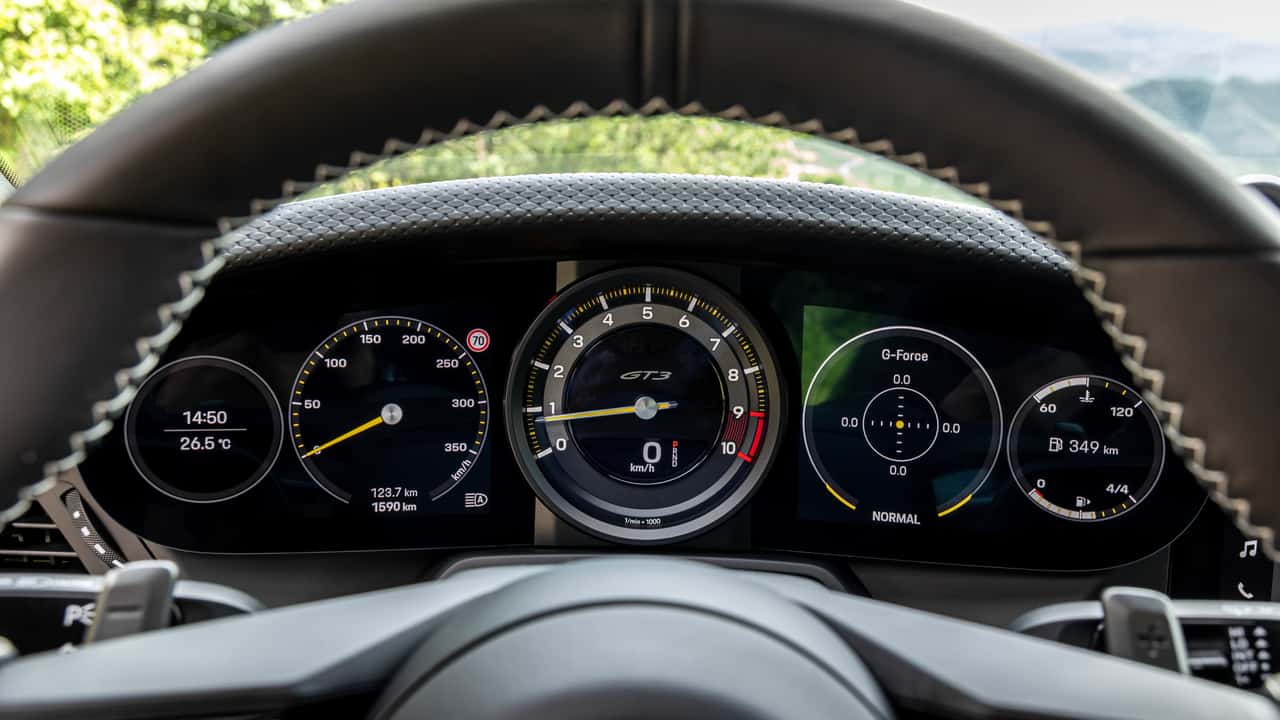
Photo by: Porsche
Dan Mihalascu 
By: Dan Mihalascu
Nov 16, at 9:00pm ET
Add Motor1.com as a preferred source in Google
- (https://twitter.com/intent/tweet?url=https%3A%2F%2Fwww.motor1.com%2Ffeatures%2F815593%2Fwhy-cars-have-redlines-what-happens-if-you-exceed-them%2F&text=Your%20Car%20Has%20A%20Redline.%20What%20Happens%20If%20You%20Exceed%20It%3F&via=motor1com)
- copy
Share
Comment
Your car's tachometer has a red zone for a reason. Whether you're driving an ordinary family hatchback, a turbocharged sports sedan, or a high-revving performance car, that red marking represents one of the most important limits of your engine.
It's called the redline, and while reaching it can be exciting, going beyond it can have serious mechanical consequences. But what exactly determines how high an engine can rev, and why can't manufacturers simply let it spin faster?
What Exactly Is An Engine Redline?
The redline is the maximum engine speed, measured in revolutions per minute (RPM), at which an engine is designed to operate within its specified mechanical limits. RPM indicates how many times the crankshaft rotates every minute, giving drivers an idea of how quickly their engine is working.
As engine speed increases, so does the frequency of movement inside the cylinders. Pistons travel up and down, connecting rods transfer their movement to the crankshaft, and valves continuously open and close to allow air and exhaust gases to flow. All these components must operate in precise synchronization.
However, every engine has physical limitations. Manufacturers establish a redline based on factors such as engine design, component strength, lubrication, cooling capacity, and intended use. A typical passenger-car gasoline engine might have a redline between 6,000 and 7,000 RPM, while some high-performance engines can rev beyond 8,000 RPM. Diesel engines generally operate at lower speeds.
The red markings on your tachometer indicate that you're approaching the engine's upper operating limit. They aren't necessarily an indication that immediate damage will occur the moment the needle enters the red zone, but they are a warning that you're approaching the limits the manufacturer has established.
Why Can't An Engine Rev Forever?
An internal combustion engine contains dozens of moving components that experience tremendous forces at high speeds. The faster the crankshaft rotates, the more frequently the pistons change direction, the more rapidly the valves operate, and the greater the mechanical demands placed on the entire assembly.
One particularly important factor is inertial force. The forces acting on reciprocating engine components increase approximately with the square of engine speed. In simple terms, doubling the RPM can produce roughly four times the inertial forces, assuming the same engine geometry.
Valve float is another important limitation. The valve springs must keep the valves synchronized with the camshaft, ensuring they open and close at precisely the right moments. At excessive engine speeds, the springs may struggle to maintain control, allowing the valves to move independently of their intended timing. In an interference engine, this can result in valves colliding with pistons, causing extensive damage.
Lubrication and cooling also become increasingly important. Engine oil must maintain a protective film between moving components, while the cooling system must remove the additional heat generated by combustion and friction. At excessively high RPM, these systems can face demands beyond their intended operating conditions.
What Happens If You Exceed The Redline?
Going beyond the redline doesn't automatically mean your engine will explode. The consequences depend on how far the engine exceeds its intended speed, how long it remains there, and whether the excessive RPM comes from acceleration or an incorrect gear selection.
Most modern gasoline-powered cars feature an electronic rev limiter programmed into the engine control unit (ECU). When the engine approaches its predetermined RPM threshold, the system can cut fuel delivery, adjust ignition timing, or reduce throttle input to prevent further acceleration. Drivers may notice the engine hesitating, stuttering, or refusing to accelerate further. This is intentional: the electronics are intervening to protect the engine.
However, a rev limiter is not a guarantee against mechanical damage. If the engine experiences an uncontrolled over-rev, several components can fail. Valve float can cause serious valvetrain damage, while excessive forces can damage connecting rods, bearings, and pistons. In particularly severe cases, a connecting rod can break and puncture the engine block.
Even when an engine survives an occasional encounter with excessive RPM, repeatedly operating beyond its intended limits can accelerate wear. Bearings, piston rings, valve springs, and other components may experience additional mechanical and thermal stress, as this NHTSA technical documentation shows.
The important distinction is that reaching the redline within the manufacturer's specified operating range is not necessarily harmful. Exceeding the engine's actual mechanical limits is another matter entirely.
Can You Over-Rev An Engine Even With A Rev Limiter?
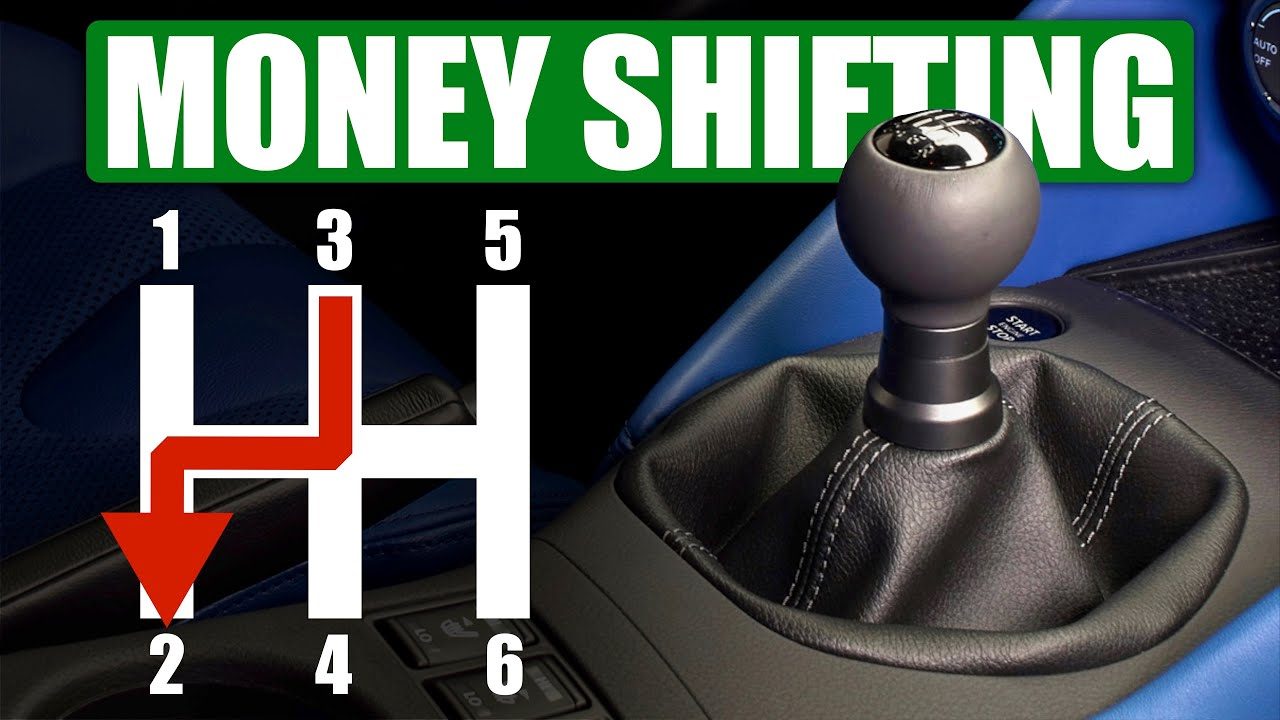
Yes, and this is one of the most important things manual-transmission drivers should understand. An electronic rev limiter can generally prevent the engine from exceeding its programmed RPM threshold while accelerating under its own power. However, it cannot necessarily protect against an over-rev caused by an incorrectly selected gear.
Imagine driving a manual car at highway speed in fourth or fifth gear and accidentally shifting into second instead of third. When you release the clutch, the rotating wheels can force the engine to spin much faster than its safe operating speed.
This is known as a mechanical over-rev, often called a money shift among automotive enthusiasts. Unlike an electronically induced over-rev, the engine is being driven by the transmission rather than accelerating under its own power. Consequently, cutting fuel or ignition may not prevent the crankshaft from exceeding its mechanical limits.
The results can be extremely expensive. Depending on the severity, an incorrect downshift can damage valve components, connecting rods, pistons, and the crankshaft. In some cases, the engine may suffer catastrophic failure almost instantly. This is why selecting the correct gear is essential when driving a manual-transmission vehicle.
What Do Car Enthusiasts Say About Hitting The Redline?
Experienced enthusiasts on Reddit agree on one thing: briefly reaching the redline is not necessarily harmful if the engine is properly warmed up and maintained. In a discussion on r/MechanicAdvice, users explained why occasional trips to the redline are generally acceptable, while sustained high-RPM operation and mechanical over-revving are different matters.
However, things can get expensive when drivers select the wrong gear. In one r/ManualTransmissions discussion, an MX-5 owner described accidentally shifting from third into second gear near the redline. A particularly sobering example appeared on r/CarTrackDays, where a GR Corolla owner reported a money shift that potentially resulted in an $18,000 engine replacement, excluding labor.
The subject also sparked debate in r/cars over whether manufacturers should honor warranties after an over-rev event, with commenters pointing out that a mechanical over-rev can bypass an electronic rev limiter. Another GR Corolla owner's experience showed that not every missed shift results in immediate engine failure.
Is It Bad To Reach The Redline Occasionally?
Not necessarily. In fact, many performance engines are specifically designed to operate at high RPM, and reaching the upper end of their intended operating range is part of their character.
What do you think?
View
Comments
Naturally aspirated sports cars, for example, often produce their best power at relatively high engine speeds. Some are engineered to rev beyond 8,000 RPM, rewarding drivers who allow the engine to explore its upper operating range. However, there are a few important considerations when pushing your engine toward its limits:
- Warm up the engine first: Avoid high RPM when the engine oil is cold. Allow the engine to reach its normal operating temperature before demanding maximum performance.
- Respect the manufacturer's limits: Every engine has a specified operating range. Don't assume that an electronic rev limiter makes repeated high-RPM operation harmless.
- Understand the power curve: Shifting at the redline is not always the quickest option. Depending on the engine's characteristics and gear ratios, changing gears earlier may deliver better acceleration.
- Maintain the lubrication system: Regular oil changes and using the manufacturer's recommended oil specification are particularly important for engines that frequently operate at high RPM.
Ultimately, the redline is there to protect your engine, not challenge you to see how far beyond it you can go. Reaching it occasionally in a properly maintained, fully warmed-up engine is generally nothing to worry about, provided you remain within the manufacturer's specified limits.
More From Motor101
 There's A Reason Your Car Door Doesn't Close Properly Anymore
Think Someone Is Tracking Your Car? Here Are The Warning Signs To Look For
Why Your Car's Windows Fog Up Even When It's Not Raining
We want your opinion!
What would you like to see on Motor1.com?
Take our 3 minute survey.
- The Motor1.com Team
Share this Story
- (https://twitter.com/intent/tweet?url=https%3A%2F%2Fwww.motor1.com%2Ffeatures%2F815593%2Fwhy-cars-have-redlines-what-happens-if-you-exceed-them%2F&text=Your%20Car%20Has%20A%20Redline.%20What%20Happens%20If%20You%20Exceed%20It%3F&via=motor1com)
- copy
GO TO COMMENTS
(
)
Got a tip for us? Email: tips@motor1.com
View all comments ( )
Popular
BMW Has 10 New Models Coming In 2027. Here's All Of Them
Driven: BMW's Electric M3 Is The Real Deal
GM Might Finally Build A Real F-150 Raptor Rival: Report
Where Did All The Bad Cars Go?
I Tried Mercedes' New Hands-Free Driving Tech. It Nearly Drove Me Everywhere
Latest Stories
- Your Car Has A Redline. What Happens If You Exceed It? Nov 16 - Motor101 -
- Novitec's Ferrari 12Cilindri Looks Surprisingly Good Nov 16 - Aftermarket / Tuning -
- Driven: BMW's Electric M3 Is The Real Deal Nov 16 - First Drives -
- What Is A Solid-State Battery, And Why Is Everyone Talking About It? Nov 16 - Motor101 -
- Maserati: Our Cars Don't Need Wild Styling To Stand Out Nov 16 - Design -
- GM Might Finally Build A Real F-150 Raptor Rival: Report Nov 16 - Rumors -
- Diesel Engines Make More Torque Than Ever, And It's Not An Accident Nov 16 - Motor101 -
RECOMMENDED FOR YOU
What Is A Solid-State Battery, And Why Is Everyone Talking About It?
Novitec's Ferrari 12Cilindri Looks Surprisingly Good
Diesel Engines Make More Torque Than Ever, And It's Not An Accident
Driven: BMW's Electric M3 Is The Real Deal
There's A Reason Your Car Door Doesn't Close Properly Anymore
Maserati: Our Cars Don't Need Wild Styling To Stand Out
Think Someone Is Tracking Your Car? Here Are The Warning Signs To Look For