Home
Features
Remember Aston Martin's Weird Little City Car? There's A Reason It Existed
The Cygnet was a tiny luxury city car based on a Toyota, complete with premium styling and a price tag that surprised everyone.
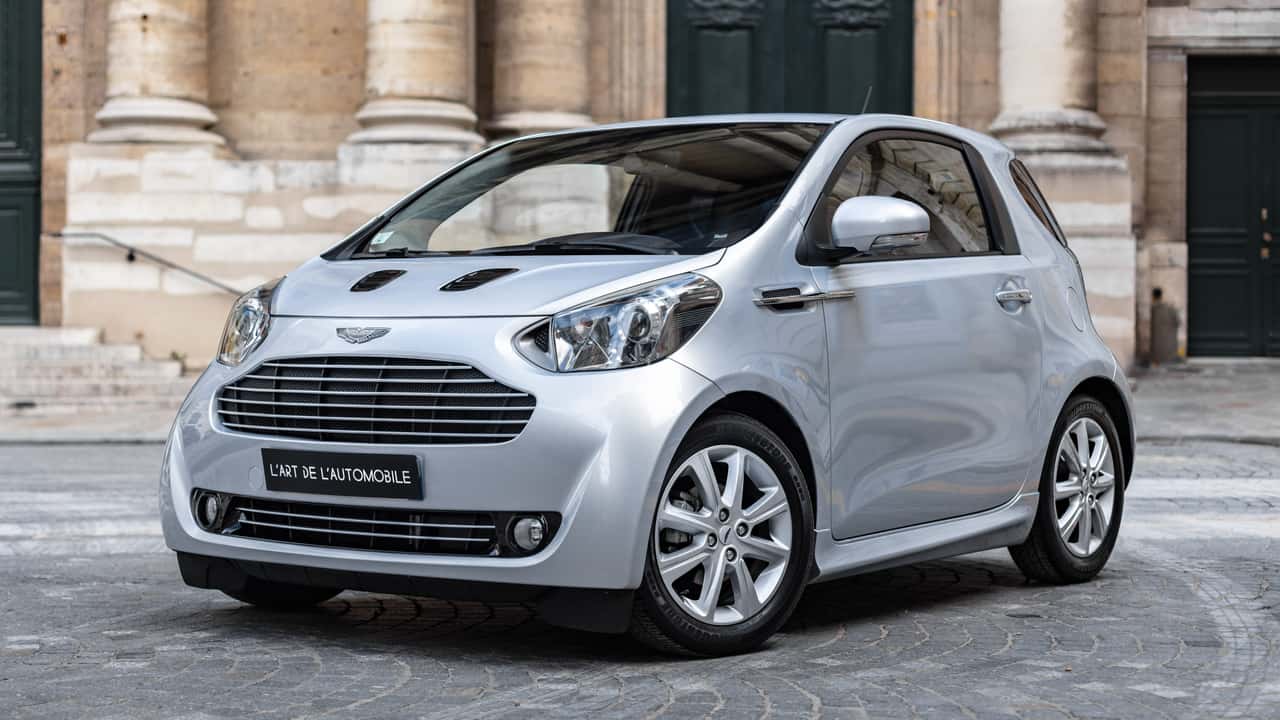
Photo by: Aston Martin
Dan Mihalascu 
By: Dan Mihalascu
Oct 22, at 5:00pm ET
Add Motor1.com as a preferred source in Google
- (https://twitter.com/intent/tweet?url=https%3A%2F%2Fwww.motor1.com%2Ffeatures%2F812882%2Faston-martin-cygnet-city-car-toyota-iq-v8%2F&text=Remember%20Aston%20Martin%27s%20Weird%20Little%20City%20Car%3F%20There%27s%20A%20Reason%20It%20Existed&via=motor1com)
- copy
Share
Comment
Aston Martin is best known for its elegant grand tourers, powerful V12 sports cars, and the kind of luxury machines that look right at home in a James Bond movie. But once upon a time, the British automaker made something totally unexpected: a tiny city car.
The Aston Martin Cygnet is one of the strangest cars ever to wear the famous wings. It hardly looks like an Aston Martin: it's short, narrow, and upright, with proportions more commonly associated with an economical urban runabout than a hand-built luxury car.
Yet this little hatchback was a genuine production model you could buy, complete with Aston Martin styling cues, a posh interior, and a steep price tag. Here's why it happened.

Aston Martin Cygnet
Photo by: Aston Martin
How Did The Cygnet Happen?
The reason why the Cygnet happened was relatively straightforward: Aston Martin needed to lower its average fleet CO2 emissions under strict European Union environmental regulations. So it turned to Toyota.
Rather than developing an entirely new vehicle from scratch, Aston Martin based its pint-sized luxury car on the Toyota iQ. Toyota had already engineered the iQ as an ultra-compact four-seat vehicle, making it a logical starting point for a premium commuter car.
The partnership was announced in 2009, and Aston Martin presented the Cygnet concept at the 2010 Geneva Motor Show. Production followed in 2011, with the cars assembled at Aston Martin's Gaydon headquarters in the United Kingdom.
Of course, simply sticking an Aston Martin badge on a Toyota wasn't the idea. The Cygnet received distinctive bodywork, including the brand's signature grille, bonnet detailing, and bright-metal side strakes. Its exterior was redesigned to give the little hatchback a recognizable Aston Martin identity, while the cabin received the kind of luxurious materials buyers expected from the marque.
Leather upholstery, Alcantara trim, and extensive personalization options helped distinguish it from its mass-market sibling. Buyers could choose from a wide range of paint and interior combinations, turning what was essentially a city runabout into a highly personalized luxury accessory. It was really unusual: a car with the footprint of an urban commuter and the finishing touches of an exclusive British grand tourer.
It Was Tiny, But Not Particularly Quick
Underneath the upscale styling, the Cygnet remained faithful to the Toyota iQ's mechanical formula. Power came from a naturally aspirated 1.33-liter four-cylinder gasoline engine producing 97 horsepower and 92 pound-feet of torque.
That power was sent to the front wheels through either a six-speed manual gearbox or an optional continuously variable transmission (CVT). Aston Martin quoted a 0-to-62-mph (0-to-100-km/h) time of 11.8 seconds for the manual version, while top speed reached 106 mph (170 km/h). Those figures didn't raise any eyebrows, and they certainly weren't what customers associated with a company famous for V8- and V12-powered sports cars.
But the Cygnet wasn't intended to chase lap records. At around 118 inches long, it was designed for tight urban streets, crowded parking lots, and journeys where maneuverability mattered far more than outright acceleration. It even retained rear seats, making it more practical than its tiny proportions suggested.
In other words, this was an Aston Martin designed for the morning commute rather than a spirited drive through the countryside.
Photo by: Aston Martin
The Price Was The Real Shock
The Cygnet's most controversial feature wasn't its modest engine or unusual proportions. It was the price. When the car launched in the UK, the six-speed manual version started at £30,995, putting it well above the Toyota iQ on which it was based and firmly into premium-car territory.
For that money, buyers weren't getting a miniature sports car with Aston Martin performance. They were paying for exclusivity, craftsmanship, and the opportunity to drive something that almost nobody would recognize as a genuine Aston Martin.
That made the Cygnet a difficult car to explain to traditional enthusiasts. Some appreciated its unusual character and upscale cabin, while others struggled to understand why anyone would spend so much on a small hatchback with less than 100 horsepower. Still, the Cygnet wasn't meant to compete with conventional economy cars on value alone. Aston Martin marketed it as a luxury commuter vehicle for customers who wanted something distinctive for city use.
There was also a business rationale. As a relatively small automaker with a lineup dominated by larger, thirstier vehicles, Aston Martin faced pressure to reduce its fleet-average carbon dioxide emissions under European regulations. A compact car with lower emissions offered a way to help improve that average.
The Aston Martin You Probably Forgot Existed Even Came With A V8
The Cygnet might seem like an odd detour in Aston Martin's history, but it offers a fascinating glimpse of what happens when a luxury automaker tries something radically different. Here are a few details that make this unusual model stand out:
- Toyota origins: It was based on the Toyota iQ, a car designed specifically for urban driving.
- Surprisingly practical: The tiny hatchback featured four seats and front-wheel drive.
- Luxury-car pricing: Its original UK starting price was £30,995, despite its modest size and performance.
- A short lifespan: Production ended in 2013, making it a rare sight today.
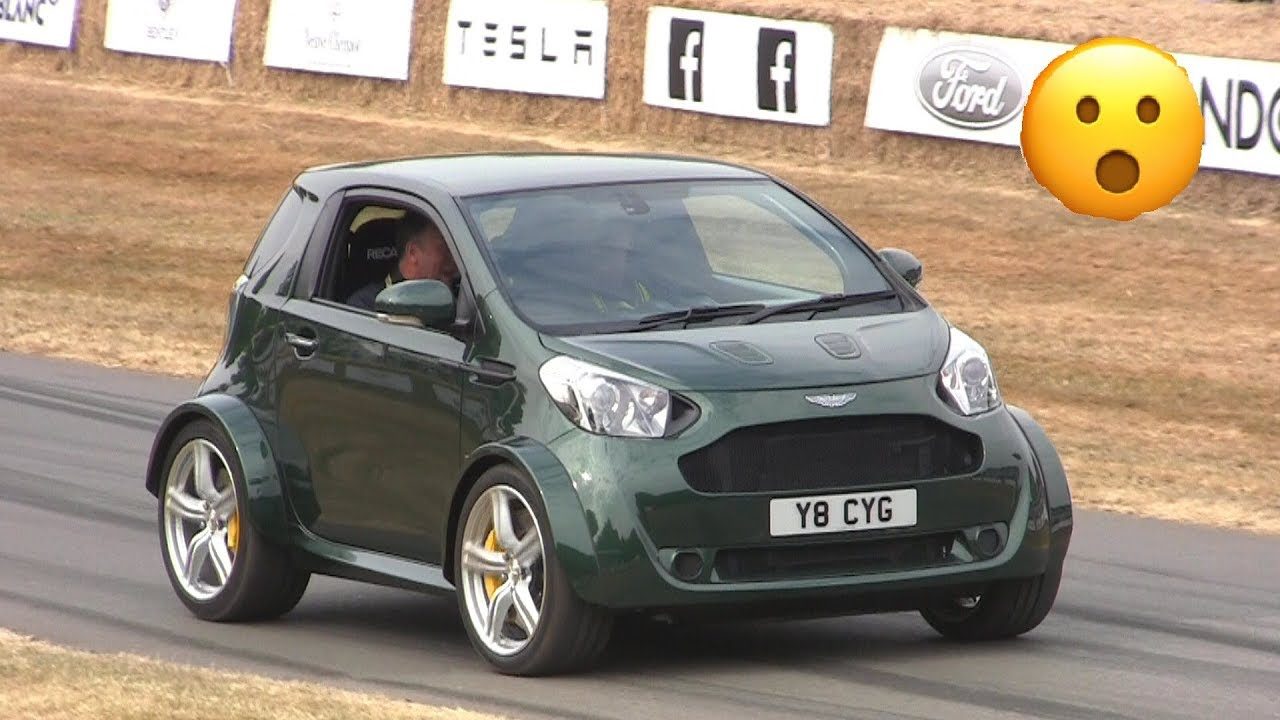
- A V8 twist: Aston Martin later built a one-off Cygnet powered by a 430-hp V8.
Yes, the story didn't end entirely with the original four-cylinder car. In 2018, Aston Martin's bespoke Q division unveiled a one-off creation that took the Cygnet concept to a completely different extreme. The V8 Cygnet received a 4.7-liter V8 borrowed from the Vantage S, producing 430 horsepower. It also featured extensive engineering changes, including a revised chassis and Vantage-derived suspension.
Aston Martin quoted a 0-to-60-mph time of just 4.2 seconds and a top speed of 170 mph. That transformed the humble city car into something approaching a miniature supercar, although it remained a one-off special rather than a revived production model.
What Do Car Enthusiasts Think Of The Aston Martin Cygnet?
The internet remains divided over the Aston Martin Cygnet, with some dismissing it as an overpriced Toyota iQ and others appreciating its unusual place in automotive history. Discussions on r/CarTalkUK highlight its emissions-related origins, luxury interior, and surprising appeal as a collectible.
Others see the Cygnet as a practical companion to a larger luxury car. In a discussion on r/AstonMartin, users explored its suitability for navigating narrow European streets and handling everyday errands where a full-size grand tourer might be less convenient.
The most extreme version, however, is arguably the most entertaining. The V8 Cygnet discussion on r/cars captures the fascination surrounding Aston Martin's one-off, 430-hp creation. For some enthusiasts, it's gloriously absurd; for others, it's exactly the kind of unconventional engineering that makes the Cygnet memorable.
Aston Martin Cygnet V8
Photo by: Aston Martin
Why Aston Martin Stopped Making It
Despite the attention it attracted, the Cygnet never became the commercial success Aston Martin needed. The company discontinued the model in 2013, just a couple of years after it entered production. Its high price and niche appeal made it difficult to attract buyers in sufficient numbers.
The Cygnet's brief production run has since become part of its appeal. It remains one of the most unusual vehicles to emerge from Aston Martin, representing a rare attempt to stretch the brand beyond the sports-car and grand-touring segments.
What do you think?
View
Comments
It wasn't the fastest Aston Martin, the most powerful, or the most conventionally desirable. But it was one of the most distinctive. Today, the Cygnet stands as a reminder that even a company synonymous with elegant sports cars can occasionally produce something completely unexpected.
If you ever spot one on the street, take a second look: that tiny hatchback really does have Aston Martin heritage.
More From Motor101
The Rotary Engine Should Be Everywhere. Why Isn't It?
The Michelin Man Has A Strange History. And His Original Design Was Terrifying
Every Rolls-Royce Has A Hidden Feature Most People Don't Know About
The Strange Reason The Golf GTI Had A Golf Ball Shifter
We want your opinion!
What would you like to see on Motor1.com?
Take our 3 minute survey.
- The Motor1.com Team
Share this Story
- (https://twitter.com/intent/tweet?url=https%3A%2F%2Fwww.motor1.com%2Ffeatures%2F812882%2Faston-martin-cygnet-city-car-toyota-iq-v8%2F&text=Remember%20Aston%20Martin%27s%20Weird%20Little%20City%20Car%3F%20There%27s%20A%20Reason%20It%20Existed&via=motor1com)
- copy
GO TO COMMENTS
(
)
Got a tip for us? Email: tips@motor1.com
View all comments ( )
Popular
The Rotary Engine Should Be Everywhere. Why Isn't It?
The 2027 BMW X5 Is A Huge Improvement Where It Matters Most: Driven
Honda's Mitsubishi-Based Truck Is Official, Coming In 2028
The BMW iX5 Makes A Strong Case Against The Gas X5: Driven
Volkswagen Wanted An Electric Bugatti Tourbillon, But Mate Rimac Pushed For A V16 Engine
latest articles
- Remember Aston Martin's Weird Little City Car? There's A Reason It Existed Oct 22 - Motor101 -
- The BMW iX5 Makes A Strong Case Against The Gas X5: Driven Oct 22 - First Drives -
- The 2027 BMW X5 Is A Huge Improvement Where It Matters Most: Driven Oct 22 - First Drives -
- Ford Explains Why Naming Cars Is So Hard: 'Everyone Has An Opinion' Oct 22 - Official -
- Cadillac Built A $239,000 Escalade-V To Celebrate 125 Years Oct 22 - Design -
- For Around $40,000, You Can Buy BMW's Sports Car Of The Future Oct 22 - Why Buy? -
- The Mercedes-AMG GLE53 Makes The 63 S Feel Unnecessary: Driven Oct 22 - First Drives -
RECOMMENDED FOR YOU
From Goldfinger To Goodwood: How One Man Built His Dream James Bond DB5
The BMW iX5 Makes A Strong Case Against The Gas X5: Driven
Aston Martin Delays Its First EV. CEO Says V8 And V12 Engines Will Run Through 2035
The 2027 BMW X5 Is A Huge Improvement Where It Matters Most: Driven
Aston Martin's New DBX Shows Its Softer Side
Ford Explains Why Naming Cars Is So Hard: 'Everyone Has An Opinion'
Turning Off Your Car's A/C Can Save Gas, But There's A Catch