Home
Toyota
Camry
Features
Why Hybrids Get Better MPG In The City
It sounds backwards, but hybrids can thrive in traffic. Here's how stop-and-go driving helps them save fuel.

Photo by: Toyota
Dan Mihalascu 
By: Dan Mihalascu
Oct 7, at 11:00am ET
Add Motor1.com as a preferred source in Google
- (https://twitter.com/intent/tweet?url=https%3A%2F%2Fwww.motor1.com%2Ffeatures%2F810924%2Fwhy-hybrid-cars-get-better-gas-mileage-in-the-city%2F&text=Why%20Hybrids%20Get%20Better%20MPG%20In%20The%20City&via=motor1com)
- copy
Share
Comment
It may seem counterintuitive, but conventional cars generally use more fuel in stop-and-go traffic, while hybrid cars can sometimes achieve their best fuel economy in exactly those conditions. A trip through city streets involves constant acceleration, braking, and idling—conditions that would seem particularly demanding for any powertrain.
Yet hybrids can turn much of that wasted energy into something useful.
The secret is the way a hybrid combines an internal-combustion engine with one or more electric motors and a battery. Instead of relying entirely on gasoline every time the car moves, a hybrid can use electricity at low speeds, recover energy when slowing down, and shut its engine off when it's not needed. Here's why that makes city driving such a sweet spot for many hybrids.
Hybrids Can Use Electric Power At Low Speeds
One of the biggest advantages hybrids have in urban traffic is their ability to operate on electric power, at least under certain conditions.
Traditional gasoline engines are generally less efficient when repeatedly accelerating from a stop. A hybrid can use its electric motor to provide some or all of the power needed to get moving, depending on the vehicle and battery charge.
Electric motors also produce maximum torque from very low speeds. That makes them particularly well suited to pulling a vehicle away from a traffic light without immediately relying on the gasoline engine. The result is less gasoline burned during one of the least efficient parts of driving a conventional car.
Regenerative Braking Turns Stops Into Energy
City driving means a lot of braking. Normally, when you slow down, much of the car's kinetic energy is converted into heat and lost through the brake system.
A hybrid can recover some of that energy through regenerative braking. Instead of simply using the brakes to turn the car's momentum into heat, the electric motor can operate as a generator when the vehicle slows down.
The process is relatively straightforward:
- The car slows down: The electric motor switches into generator mode.
- Kinetic energy is recovered: The vehicle's motion spins the motor, generating electricity.
- The battery stores the energy: That electricity is sent back to the hybrid battery.
- The energy is reused: The stored electricity can later help power the electric motor during acceleration.
It's not a perfect energy-recycling system—some energy is inevitably lost—but it can make a significant difference in urban driving, where a vehicle may repeatedly accelerate and slow down.
The Gas Engine Can Shut Off At Stops
Another reason hybrids perform well in cities is that the gasoline engine doesn't have to run continuously.
When you're stopped at a traffic light or sitting in slow-moving traffic, a hybrid can often shut its gasoline engine off completely. The vehicle's battery and electrical systems can continue powering necessary functions, while the engine remains silent.
When it's time to move again, the electric motor can get the car rolling before the gasoline engine restarts, depending on the system.
A conventional gasoline car with an automatic stop-start system can also shut its engine off at some stops, but hybrids can take this concept further because their electric motor is designed to work as an integral part of the powertrain.
Why Highway Driving Can Favor Gas Cars
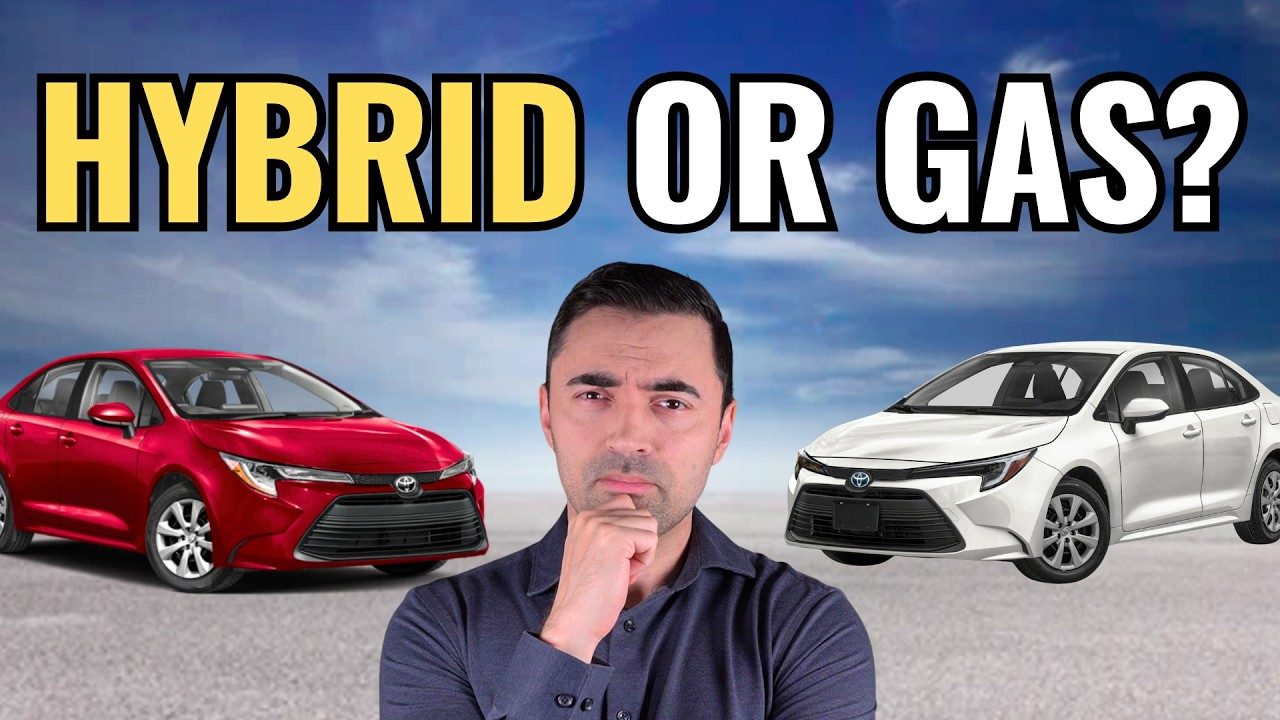
The advantages of a hybrid aren't equally strong at every speed. Once you're cruising steadily on a highway, there's much less braking energy to recover. The gasoline engine can also operate continuously in a relatively efficient range, without the repeated stops and starts that hurt fuel economy in urban traffic.
At higher speeds, aerodynamic drag becomes increasingly important, and the hybrid's additional weight from its battery and electric hardware can work against it.
That's why the gap between hybrid and conventional vehicles can shrink considerably during steady highway driving. Some hybrids are still extremely efficient on the highway, but their biggest advantage often appears when traffic provides frequent opportunities to recover energy and use electric propulsion.
Owners Say City MPG Depends On How You Drive
Reddit owners largely agree that hybrids can shine in city traffic, but real-world results vary. In an r/prius thread, owners reported city figures ranging from the 40s to more than 60 mpg, with several noting that gentle acceleration and braking made a noticeable difference.
Other owners point out that highway driving is not automatically worse. One r/prius discussion began with an owner getting 55–60 mpg on the highway but only around 40 mpg in the city. Another thread featured a 2020 Prius owner reporting roughly 50 mpg in the city but just 35 mpg on the highway.
Cold weather, short trips, aggressive acceleration, and high highway speeds can all change the equation. A 2021 r/prius discussion highlights several factors that can hurt city economy, including a cold engine, tire pressure, battery condition, and driving style. In other words, the hybrid advantage is real, but how you drive can matter just as much.
Are Hybrid Cars Always Better In The City?
Not necessarily. A hybrid's fuel economy depends on the specific vehicle, driving conditions, temperature, terrain, traffic, and how it's driven.
Plug-in hybrids add another variable because they can travel much farther on electricity when their batteries are charged. A plug-in hybrid used primarily for short urban trips may consume very little gasoline, while one driven long distances with an empty battery can behave more like a conventional hybrid.
What do you think?
View
Comments
Still, the basic principle remains the same: city driving gives a hybrid more opportunities to use its electric motor, shut down its gasoline engine, and recover energy through regenerative braking.
That's why a hybrid can seem to break one of the basic rules of fuel economy. While conventional cars generally dislike stop-and-go traffic, hybrids are specifically designed to make the most of it.
More From Motor101
 How Do Hybrid Cars Recharge Without Being Plugged In?
There's A Reason Taxi Cabs Are Almost Always Yellow
What Does 'Certified Pre-Owned' Actually Mean?
Does Your Car Actually Get Worse MPG In The Winter?
We want your opinion!
What would you like to see on Motor1.com?
Take our 3 minute survey.
- The Motor1.com Team
Share this Story
- (https://twitter.com/intent/tweet?url=https%3A%2F%2Fwww.motor1.com%2Ffeatures%2F810924%2Fwhy-hybrid-cars-get-better-gas-mileage-in-the-city%2F&text=Why%20Hybrids%20Get%20Better%20MPG%20In%20The%20City&via=motor1com)
- copy
GO TO COMMENTS
(
)
Got a tip for us? Email: tips@motor1.com
View all comments ( )
Popular
BYD Better Watch Out: Koenigsegg Is Still Chasing A 330-MPH Jesko Run
12 Underrated Performance Cars That Nobody Bought
Honda Shows Several New Hybrids Under Covers, Details All-New Modular Platform
Driven: New Audi Q7 And SQ7 Bring The Power And The Tech
Infiniti's New Manual Sports Sedan Could Bring Back A Beloved Name
Latest Stories
- Volkswagen Launches Mass-Market Vehicle-to-Grid Charging, Letting EV Owners Earn Money Nov 24 - Technology -
- This Forgotten Jeep Sat In The Woods For Decades. Now Someone Wants To Save It Nov 24 - Aftermarket / Tuning -
- Stellantis Promises More Fun Cars After Pulling Out Of Major Motorsport Championships Nov 24 - Corporate / Financial -
- Amazon Has Quietly Expanded Its Car-Buying Business To 35 Brands Nov 24 - Sales -
- This One-Owner 2004 Toyota Tacoma Is Still In Remarkable Shape. And You Can Buy It Nov 24 - For Sale -
- Pirelli Launches Its Smart Cyber Tire In The US Nov 24 - Technology -
- Audi Patents Hidden Buttons That Pop Out From Behind The Screen Nov 24 - Patents & Trademarks -
RECOMMENDED FOR YOU
Watch A Neglected Toyota Camry Go From Disgusting To Immaculate: Video
Amazon Has Quietly Expanded Its Car-Buying Business To 35 Brands
This One-Owner 2004 Toyota Tacoma Is Still In Remarkable Shape. And You Can Buy It
Pirelli Launches Its Smart Cyber Tire In The US
Honda And Toyota Recall 1.6 Million Vehicles Over Takata Airbag Risk
Audi Patents Hidden Buttons That Pop Out From Behind The Screen
The Toyota Sienna Gets A Big Hybrid Upgrade For 2027