Home
Features
Motor101
What Does MSRP Actually Mean?
It’s the manufacturer’s suggested price—not necessarily what you’ll actually pay at the dealership.
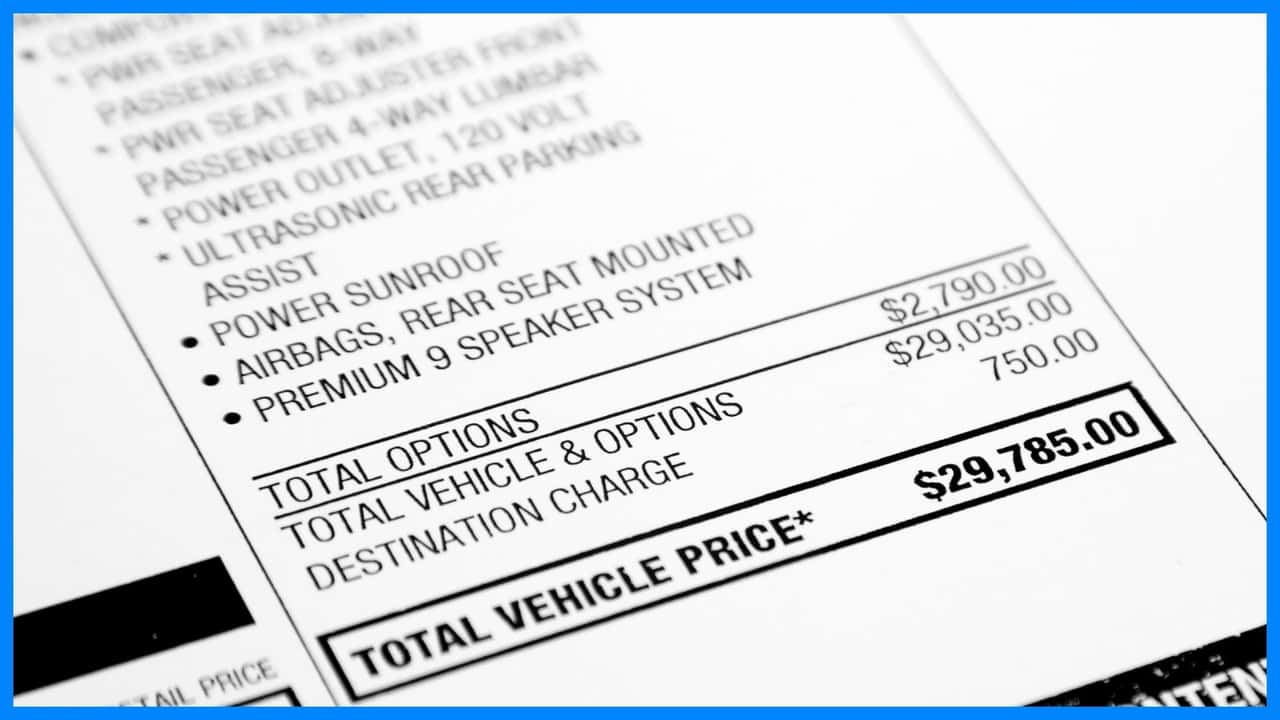
Photo by: Getty Images
Dan Mihalascu 
By: Dan Mihalascu
Oct 2, at 3:00pm ET
Add Motor1.com as a preferred source in Google
- (https://twitter.com/intent/tweet?url=https%3A%2F%2Fwww.motor1.com%2Ffeatures%2F810578%2Fwhat-does-mrsp-mean%2F&text=What%20Does%20MSRP%20Actually%20Mean%3F&via=motor1com)
- copy
Share
Comment
You’ve probably seen MSRP next to just about every new car for sale, but that number can be surprisingly easy to misunderstand. It shows up in glossy automaker ads, dealer listings, window stickers, and car reviews, often looking like the definitive price of a vehicle.
But MSRP is only one part of the pricing equation, and it doesn't necessarily represent what you'll actually pay. So, what does MSRP actually mean, and why can the price on the sticker differ from the number on your final bill? Understanding the term can make shopping for a new car considerably less confusing.
What Does 'MSRP' Stand For?
If you've ever shopped for a new car, you've probably come across the term MSRP. It stands for Manufacturer's Suggested Retail Price, which is the price an automaker recommends that a dealer charge for a particular vehicle. You'll find MSRP on automaker websites, window stickers, dealer listings, and automotive publications.
The word “suggested” is important. MSRP is not a fixed price that every dealer has to charge. A dealership can sell a vehicle below MSRP, at MSRP, or above it, depending on factors such as inventory, demand, discounts, and local market conditions.
For car shoppers, MSRP serves as a useful reference point. It gives buyers an idea of where the manufacturer believes a vehicle's retail pricing should begin, but it doesn't necessarily tell you how much money you'll ultimately spend. The final transaction can look quite different once other charges, discounts, and dealer-specific pricing are taken into account.
What Is Included In MSRP?
MSRP generally starts with the base price of a particular model and trim. If you choose additional factory-installed equipment, packages, or options, those can increase the vehicle's MSRP. That's why two cars with the same model name can have noticeably different MSRPs depending on their configurations.
The vehicle's window sticker can provide a more detailed breakdown of the price. It typically identifies the vehicle, its standard equipment, optional equipment, and various charges associated with that particular car. Looking at the sticker can therefore be more informative than simply relying on the starting MSRP advertised for a model.
One charge worth paying particular attention to is the destination or delivery fee. Automakers commonly list this separately from the base vehicle price, and it can add a substantial amount to the cost. Taxes, registration, documentation fees, and other applicable charges can push the final price even higher.
What Can Change The Final Price?
The difference between MSRP and the amount you actually pay can come from several sources. When comparing vehicles or dealership offers, it's worth checking the entire price breakdown rather than focusing only on the number in the advertisement.
Some of the most common factors include:
- Factory options: Additional equipment and packages selected from the automaker can increase MSRP.
- Destination charges: Transportation costs can be listed separately from the vehicle's base price.
- Dealer-installed accessories: Accessories or packages added by a dealership can increase the selling price.
- Discounts and incentives: Automaker or dealer offers can reduce the amount you pay.
- Taxes and fees: Sales tax, registration, documentation, and other charges can add to the final transaction.
Dealers can also use pricing adjustments that aren't reflected in the manufacturer's suggested price. For example, a dealership may add a market adjustment to a vehicle in high demand or charge separately for dealer-installed equipment. Conversely, a dealer may offer a discount that brings the selling price below MSRP.
Is MSRP The Same As Invoice Price?
MSRP and invoice price are not the same thing. Invoice price generally refers to the amount a manufacturer bills a dealership for a vehicle. It's sometimes used by shoppers as a reference when negotiating, but it shouldn't automatically be assumed to represent the dealer's true final cost.
Automakers can provide dealers with incentives, credits, bonuses, and other financial arrangements that aren't necessarily obvious from the invoice figure. As a result, the relationship between invoice price and a dealer's actual economics can be more complicated than simply subtracting one number from another.
MSRP, meanwhile, is designed as a suggested retail figure. Comparing MSRP with invoice price can provide useful context, but neither number guarantees what a particular dealership will charge. When evaluating an offer, shoppers should look at the complete transaction rather than relying on one pricing figure.
What Car Shoppers Say About MSRP Online
Reddit discussions about car buying frequently circle back to one point: MSRP is not necessarily the number that matters most when you're actually buying a car. In a recent discussion on r/carsales, one commenter argued that customers are primarily concerned with the out-the-door price rather than the dealer's invoice, holdback, or claimed profit margin. Another r/askcarsales thread centered on a shopper frustrated by dealers who wouldn't provide a straightforward out-the-door figure.
That distinction comes up repeatedly in older car-buying discussions, too. One shopper posted a breakdown showing an MSRP of $32,000 but a final out-the-door price of $37,000 after a dealer discount, accessories, dealership fees, registration, and taxes.
Another r/askcarsales thread featured a buyer who initially encountered an enormous gap between a vehicle's $26,600 MSRP and the proposed $38,000 total, largely because of aftermarket products and additional charges. The shopper eventually found another dealer offering an out-the-door price of about $31,000.
Why Does MSRP Matter?
MSRP matters because it gives consumers a consistent starting point for comparing vehicles. If you're considering several trims or competing models, looking at their respective MSRPs can help you understand how the automakers position them in terms of pricing.
However, MSRP shouldn't be confused with the out-the-door price. The latter is much closer to what you'll actually pay because it accounts for the relevant taxes, fees, options, discounts, and other charges associated with the transaction.
What do you think?
View
Comments
Ultimately, understanding MSRP can make the car-buying process easier to navigate. It tells you the manufacturer's suggested retail price, but it doesn't guarantee the final deal.
Before signing anything, compare the full out-the-door price and make sure you understand which charges are included. That way, you can distinguish between an attractive headline price and the actual cost of putting the car in your driveway.
More From Motor101
 You Don't Need A Mechanic For These Simple Car Maintenance Jobs
Why Does Your Car Door Have A Tiny Hole At The Bottom?
Cars Used To Have Huge Rubber Bumpers. Why Did They Disappear?
Those Old Ribbed Mercedes Taillights Weren’t Just For Looks
We want your opinion!
What would you like to see on Motor1.com?
Take our 3 minute survey.
- The Motor1.com Team
Share this Story
- (https://twitter.com/intent/tweet?url=https%3A%2F%2Fwww.motor1.com%2Ffeatures%2F810578%2Fwhat-does-mrsp-mean%2F&text=What%20Does%20MSRP%20Actually%20Mean%3F&via=motor1com)
- copy
GO TO COMMENTS
(
)
Got a tip for us? Email: tips@motor1.com
View all comments ( )
Popular
Driven: The New Audi A2 Is Proof Small Cars Still Make Sense
Aston Martin Is Taking Its Call Of Duty Off-Roader To Dakar
Ford Will Sell The Dark Horse SC's V8 And DCT, Minus The Mustang
Ford Maverick Buyers Can Get The 300-HP SV300T Package Before Taking Delivery
Inspiring The Next Generation Of Mechanics
Latest Stories
- Ford Will Sell The Dark Horse SC's V8 And DCT, Minus The Mustang Nov 17 - Engines -
- Cupholders In Cars Weren't Always A Thing Nov 17 - Motor101 -
- Used Nissan GT-Rs Cost Less Than You Might Think Nov 17 - Why Buy? -
- Gas Prices Are Finally Dropping. Here's The Cheapest And Most Expensive Gas In Every State Nov 17 - Lists -
- The Ford Mustang Cobra Arrives 'Late 2027' (Update) Nov 17 - Teasers -
- Driven: The New Audi A2 Is Proof Small Cars Still Make Sense Nov 17 - First Drives -
- Toyota Thinks $22,000 Is 'Reasonable' For Its Scion Kei Truck Nov 17 - Pricing -
RECOMMENDED FOR YOU
Cupholders In Cars Weren't Always A Thing
Ford Will Sell The Dark Horse SC's V8 And DCT, Minus The Mustang
As Hybrid Sales Climb, Here's What Drivers Should Know About Their Gas Engines
Used Nissan GT-Rs Cost Less Than You Might Think
Your Car Has A Redline. What Happens If You Exceed It?
Gas Prices Are Finally Dropping. Here's The Cheapest And Most Expensive Gas In Every State
What Is A Solid-State Battery, And Why Is Everyone Talking About It?