Home
Lexus
IS
Features
Your Car Knows When You're Getting Tired
Your car can't actually read your mind, but it is able to spots the subtle signs that you might be getting too tired to drive.
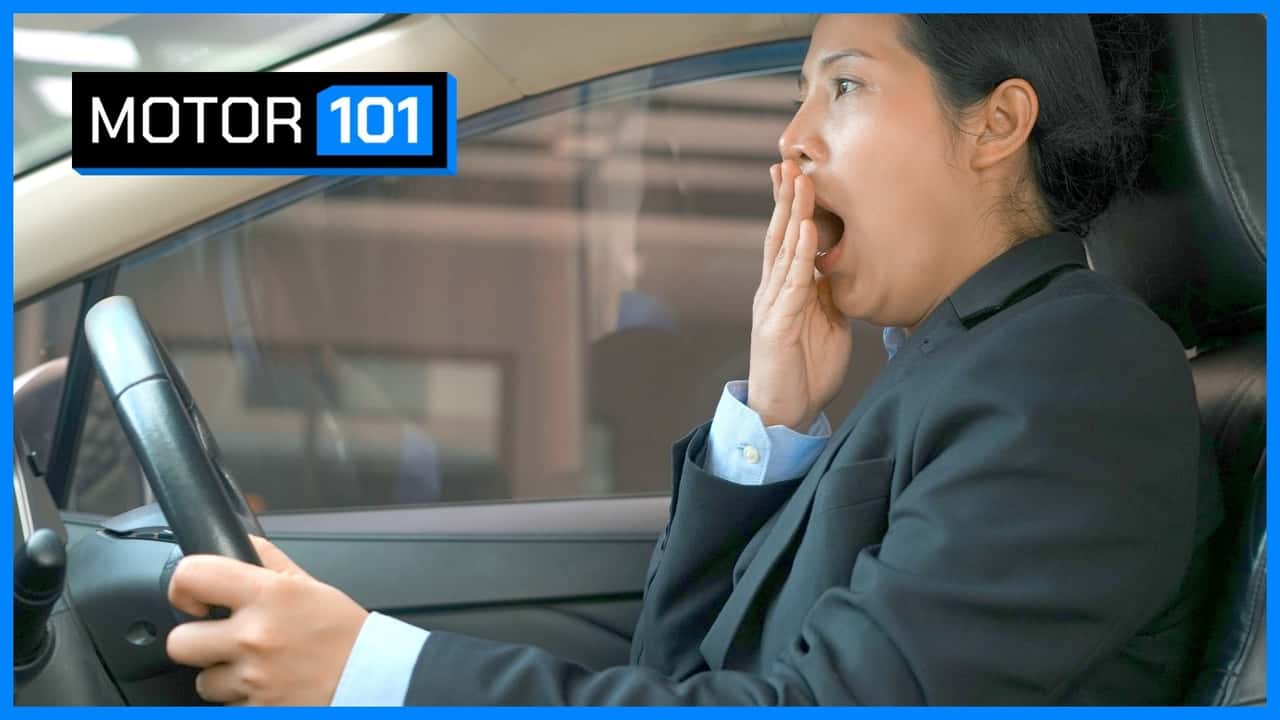
Photo by: Rattanakun
Dan Mihalascu 
By: Dan Mihalascu
Sep 24, at 7:00pm ET
Add Motor1.com as a preferred source in Google
- (https://twitter.com/intent/tweet?url=https%3A%2F%2Fwww.motor1.com%2Ffeatures%2F809408%2Fhow-your-car-knows-youre-getting-tired%2F&text=Your%20Car%20Knows%20When%20You%27re%20Getting%20Tired&via=motor1com)
- copy
Share
Comment
Your car can't read your mind, but some modern vehicles can get surprisingly good at figuring out when you're losing focus. If you've ever seen a little coffee-cup symbol appear on the dashboard and wondered how the car knew you were tired, the answer is a lot more interesting than a simple timer.
The car is watching what you do behind the wheel. Depending on the system, it can analyze things such as steering inputs, lane position, driving patterns, and even your eye movements. It's essentially looking for changes that suggest you aren't driving the way you normally would.
Your Car Can Watch How You Drive
One of the oldest approaches to fatigue detection doesn't require a camera pointed directly at your face. The car can learn from your driving behavior.
NHTSA says driver-monitoring systems can use things such as steering-wheel inputs and lane departures to look for signs of drowsiness. If the vehicle detects a pattern of wandering or inconsistent control, it can issue a warning telling you to take a break.
Ford's Driver Alert system is a good real-world example. Ford says its system uses a forward-facing camera to monitor the vehicle's position relative to lane markings and looks for unintentional sideways movements. If it detects signs of declining vigilance, the vehicle can display a coffee-cup warning and sound an alert.
That doesn't mean every lane departure proves you're tired. A poorly marked road, a gust of wind, or simply making a driving mistake can produce similar behavior. That's why these systems are designed to identify patterns rather than diagnose fatigue from one event.
Newer Cars Can Actually Watch Your Face
This is where the technology starts to feel a lot more like science fiction. Newer driver-monitoring systems can use an interior camera to watch the driver directly.
NHTSA's research describes systems that can monitor head position, eye closure and blink rate, alongside vehicle-control information such as steering angle and lane position. Combining several signals can make drowsiness detection more reliable.
Mercedes-Benz, for example, says its Attention Assist system can detect typical signs of driver fatigue and severe inattention. On certain vehicles and configurations, its system can also analyze the driver's eyelid movements with a camera.
Volvo has taken the idea even further. NHTSA documents the company's driver-monitoring work using interior cameras and other sensors to track eye movements, gaze direction and head orientation, while also considering how the vehicle is being controlled.
So if your car has a camera looking toward the driver, it may not just be there for convenience features or facial recognition. It could be part of a system designed to determine whether you're still paying attention.
Here's What Your Car Might Be Looking For
There are several driver behaviors that the car is analyzing, and the following ones are the most common.
- Lane wandering: Repeated movement toward or across lane markings can be a warning sign.
- Steering corrections: Changes in how frequently or smoothly you make steering inputs can indicate declining attention.
- Eye closure: Longer or more frequent eyelid closures can be associated with drowsiness.
- Blink patterns: Some systems analyze changes in blinking behavior.
- Head position: A driver's head orientation can provide another indication of reduced attention.
- Driving duration: Some systems consider how long you've been driving or how long it has been since your last break.
- Multiple signals together: More sophisticated systems combine driver behavior, vehicle movement and camera information instead of relying on one measurement.
The important part is that none of these signals alone proves you're tired. NHTSA describes drowsiness as something that can't be measured directly by the vehicle, which is why modern systems rely on indirect indicators.
Your Car Is Making An Educated Guess
The simplest way to think about fatigue detection is that your car is looking for a change from normal.
If you're driving smoothly and staying centered in your lane, the system has little reason to intervene. If your steering becomes inconsistent, the car starts detecting repeated lane departures, or a driver-facing camera sees changes in eye or head behavior, the system can decide that your attention may be declining.
Some vehicles can even escalate the response. NHTSA's research describes systems that use staged alerts to improve lane-keeping performance in drowsy drivers, while newer vehicles are being developed with increasingly sophisticated driver-monitoring technology.
But there's an important limitation: your car isn't a medical device and it can't determine exactly why you're struggling to concentrate. Fatigue, distraction, illness, road conditions and other factors can produce overlapping signals.
Owners Are Finding Out How Good Drowsiness Detection Really Is
Redditors have been sharing real-world experiences with cars that warn them when they may be getting tired. In a 2026 Mazda CX-30 discussion, one driver said the “time for a break” message appeared after nearly three hours of continuous driving, while other owners said the system had been surprisingly accurate at catching them when they were at least a little tired.
A similar Mazda discussion from 2021 asked whether anyone had actually triggered the driver-monitoring alert. One owner said a coffee-cup warning appeared during a windy drive when they were weaving slightly within the lane. Another commenter explained that some systems monitor driving behavior such as lane position and steering rather than directly watching the driver's eyes.
Newer systems are getting even more attention. In a 2026 Mitsubishi Outlander discussion, an owner said the drowsiness alert could be overly sensitive, sometimes reacting when they moved an arm near their head or briefly looked down to adjust the climate controls. That highlights one of the technology's biggest challenges: the same movements that might indicate fatigue can also have completely innocent explanations.
Redditors are also debating camera-based monitoring itself. A 2021 r/cars discussion about driver-monitoring technology focused on systems that track eye position and whether the driver is paying attention, while a 2026 r/DrivingUK thread about a Toyota described a dashboard camera repeatedly warning the driver to “sit up.” The experiences vary, but they illustrate how modern cars are increasingly combining driver behavior with direct observation of the person behind the wheel.
That Coffee Cup Is More Clever Than It Looks
The little warning on the dashboard is therefore doing something surprisingly complicated. Your car is collecting clues about how you're driving—and, in some vehicles, what your eyes and head are doing—and using those clues to estimate whether your attention is dropping.
What do you think?
View
Comments
Mercedes-Benz explicitly warns that its Attention Assist system is only an aid and cannot always detect fatigue promptly. Ford similarly describes its Driver Alert technology as a driver aid rather than a replacement for an attentive driver.
That's ultimately why the warning is telling you to take a break, rather than claiming that the car has definitively diagnosed you as tired. Your car doesn't actually know you're falling asleep. It's watching for the clues that you might be.
More From Motor101
 The Clever Technology That Makes Your Windshield Wipers Start By Themselves
Your Old Car Battery Doesn't Get Thrown Away At O'Reilly
Your Car's Tiny Spare Tire Has A Very Specific Job
Rear-Hinged Doors Used To Be More Common. So Why Did They Disappear?
We want your opinion!
What would you like to see on Motor1.com?
Take our 3 minute survey.
- The Motor1.com Team
Share this Story
- (https://twitter.com/intent/tweet?url=https%3A%2F%2Fwww.motor1.com%2Ffeatures%2F809408%2Fhow-your-car-knows-youre-getting-tired%2F&text=Your%20Car%20Knows%20When%20You%27re%20Getting%20Tired&via=motor1com)
- copy
GO TO COMMENTS
(
)
Got a tip for us? Email: tips@motor1.com
View all comments ( )
Popular
From Detroit To Tokyo: Where Every Major Automaker Calls Home
Scion Is Back, And It's Bringing A Tiny Kei Truck To America
New Lotus Esprit's Engine Revealed: Twin-Turbo V8 With Nearly 700 Horsepower
12 Crossovers That Are Surprisingly Good At Off-Roading
Holy Crap: The Ford Mustang Cobra Is Coming Back
latest articles
- CarMax Valued This Corvette Z06 At Just $32K. The Owner Wasn't Having It Nov 11 - For Sale -
- Disney Is Testing 'Cars' Robots To Help You Find A Parking Spot Nov 11 - Technology -
- They Spent Eight Years Building A Lancia Stratos. Now They Can Finally Drive It Nov 11 - Aftermarket / Tuning -
- Honda Recalls More Than 635,000 Vehicles Over Potential Power Steering Failure Nov 11 - Recalls -
- Want A Deal On A Used Car? Wait Until Winter: Study Nov 11 - Sales -
- Maserati Island Revealed: 840 Residences, Private Pools And A Floating Italian Restaurant In Dubai Nov 11 - Lifestyle -
- Acura Adds New Blacked-Out Urban Spec Trim To 2027 Integra, ADX, And MDX Nov 11 - Special Editions -
RECOMMENDED FOR YOU
16 Cars You Can Still Buy With A Naturally Aspirated V6
They Spent Eight Years Building A Lancia Stratos. Now They Can Finally Drive It
Woman Goes To Discount Tire. Then A Worker Goes ‘Above And Beyond’ And Does Something Shocking
Honda Recalls More Than 635,000 Vehicles Over Potential Power Steering Failure
'We Noticed From The Carfax': Woman’s Jiffy Lube Oil Change Turns Disastrous. Corporate Still Hasn’t Called Back
Want A Deal On A Used Car? Wait Until Winter: Study
Woman Buys From CarMax. Then She Goes Through Their Service Department